The Macallan

Set on Easter Elchies estate above the River Spey in Aberlour, The Macallan sits at the upper tier of Speyside whisky experiences, holding a Pearl 5 Star Prestige award for 2025. The distillery's tasting room format places it firmly in the specialist, low-capacity end of Scottish spirits tourism, where the substance of what's in the glass takes precedence over spectacle.
Arriving on the Spey: What the Setting Tells You Before You Taste Anything
The road into Easter Elchies estate drops toward the River Spey through a corridor of mature woodland, and by the time the distillery buildings come into view, the geography has already made an argument. This stretch of the Spey valley, shared with neighbours like GlenAllachie and anchored by the village of Aberlour, is as concentrated a whisky-producing corridor as exists anywhere in Scotland. The Macallan's position within it is not incidental. Easter Elchies House, the Georgian manor at the estate's centre, has anchored whisky production on this site since 1824, and the architecture carries that continuity visibly.
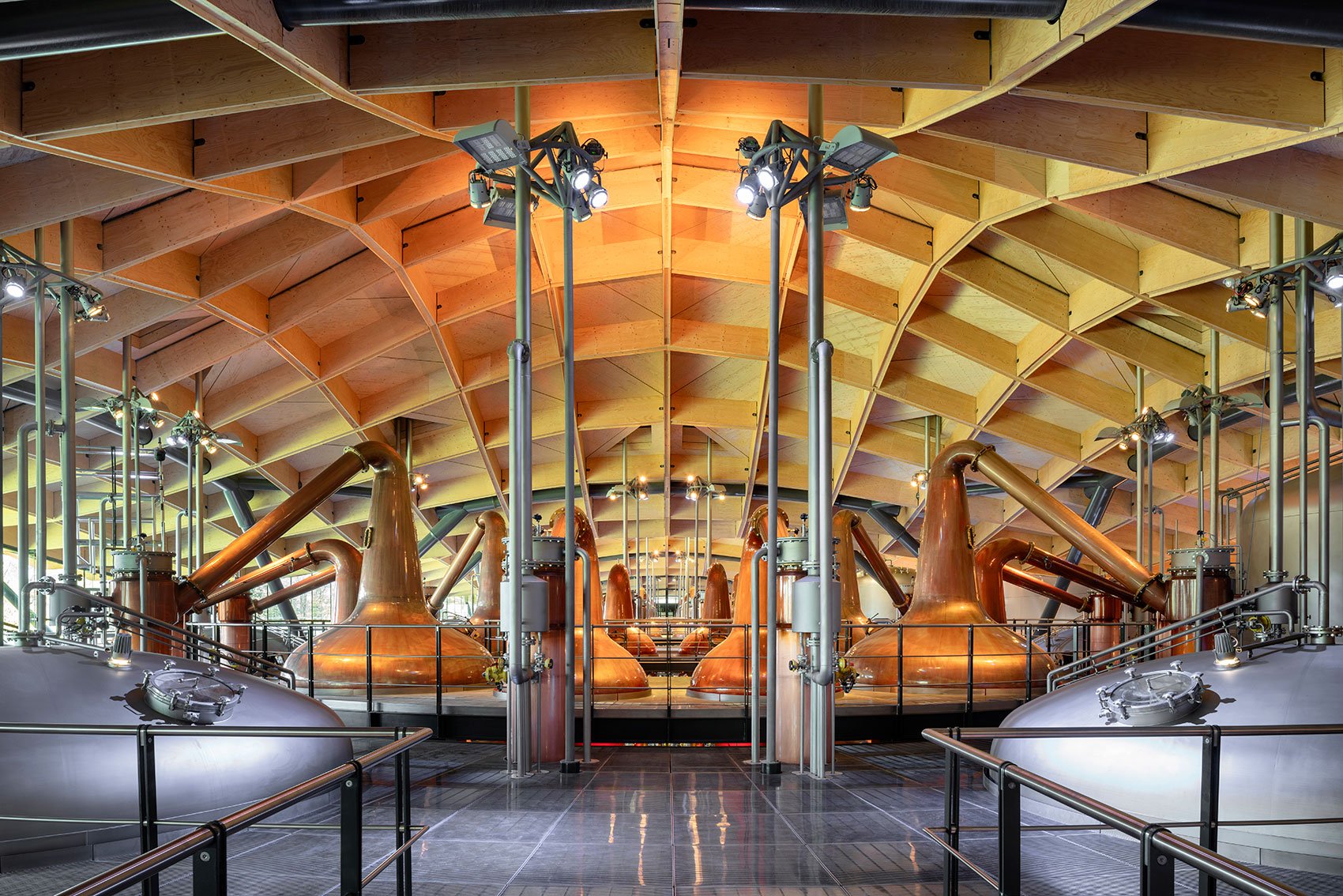
The distillery's visitor experience sits inside the award-winning contemporary facility completed in 2018, a wave-form structure by Rogers Stirk Harbour + Partners that curves into the hillside rather than imposing on it. What that building signals architecturally, the tasting format confirms in practice: this is a visitor operation that has been designed with considerable deliberateness, placing it at a different level from many Speyside drop-in stops. The Pearl 5 Star Prestige recognition for 2025 confirms a sustained commitment to premium execution rather than volume throughput.
The Speyside Context: Why This Corner of Scotland Produces Differently
Speyside accounts for roughly half of Scotland's active distilleries, concentrated into a relatively compact highland area that benefits from clean water sources, a cooler fermentation climate, and a production tradition oriented toward approachable, often sherried single malts. Within that tradition, the upper end of Speyside has split in recent decades between large-scale heritage houses operating significant visitor programmes and smaller, more technically focused operations appealing to collectors and connoisseurs. The Macallan occupies the former category while consistently targeting the latter audience.
The sherry-seasoned cask approach that defines The Macallan's house style places it in a narrow peer group within Scotch whisky. Most Speyside producers use a blend of seasoned and new cask wood; committing to sherry-seasoned oak at scale, sourced primarily from Spanish cooperages, is both an expensive and a logistically complex position to sustain. That commitment is what makes the distillery's aged expressions read differently from category peers, and it shapes the tasting experience significantly. Visitors are, in effect, tasting the consequences of a cask procurement strategy as much as they are tasting a distiller's technical choices. Comparable conversations about cask philosophy happen at operations like The Glenturret in Crieff and Dornoch Distillery in Dornoch, both of which have built reputations around transparency and specificity in production.
The Tasting Room: Format, Focus, and What to Expect
Premium spirits tourism in Scotland has undergone a clear shift over the past decade. The default format, a distillery tour concluding in a single complimentary dram, has given way at the upper end to structured tasting experiences with trained hosts, curated flight progressions, and pairing components. The Macallan's visitor programme sits firmly in that structured tier, offering a range of experience formats from introductory guided tastings to deeper archival explorations depending on booking level.
The tasting room itself operates on principles familiar from serious wine and spirits hospitality: controlled light, appropriate glassware, and a progression logic designed to let age statements and cask types build on each other rather than blur together. Hosts here are positioned as educators rather than sales staff, a distinction that matters at this price point. The conversation tends toward production specifics, wood science, and sensory vocabulary rather than brand mythology. For visitors who have spent time in the tasting rooms at Cardhu in Knockando or at craft operations like Dunphail Distillery in Dunphail, the difference in scale is immediately apparent, as is the difference in production transparency that comes with it.
The format rewards prior knowledge without requiring it. Someone arriving with a working understanding of cask science will find the conversation easily extended; someone arriving with no background will find the structured progression a solid introduction. That range is difficult to execute well and reflects the investment in host training that premium prestige recognition typically demands.
Positioning Within the Premium Scotch Tier
At the level The Macallan operates, the competitive reference points extend well beyond Speyside. The collector-market positioned expressions sit alongside aged Armagnacs, vintage Champagne, and allocation-model wines in the portfolios of serious enthusiasts. The distillery experience needs to justify that positioning in person, which means the visitor operation functions as both hospitality and brand argument. In that sense, the tasting room is doing analogous work to what you find at prestige wine estates globally, from Abadía Retuerta in Sardón de Duero to Accendo Cellars in St. Helena, where the physical visit is expected to deepen the relationship with the liquid.
What separates The Macallan's position from many peers in spirits tourism is the breadth of its age range available for tasting. Most distilleries are limited to current commercial releases. The Macallan's archival depth, combined with its allocation-model older expressions, means that a serious tasting visit can cover a timespan of maturation that few operations can match. This is not incidental to why the distillery attracts visitors with backgrounds in fine wine and premium spirits equally.
For context on how Speyside fits within the broader Scottish distilling scene, operations with distinct characters like Dornoch Distillery and Dunphail Distillery show the range of approaches the region accommodates. The Macallan represents the heritage-and-scale end of that spectrum, while the craft tier represents the opposite pole. Neither is definitively superior for all visitors; the question is what kind of conversation about whisky you want to be in.
Planning a Visit: Logistics and Timing
The Macallan distillery is located at Easter Elchies, Aberlour AB38 9RX, on the south bank of the Spey roughly three miles from the village of Aberlour itself. Driving is the practical approach from Inverness, approximately 45 minutes, or from Aberdeen, approximately an hour. The visitor programme operates across multiple experience tiers, and given the distillery's profile, advance booking is strongly advised for the structured and premium-tier experiences rather than assumed as a walk-in option. Checking the official website directly is the most reliable route to current availability and pricing, as the range of formats has expanded in recent years.
Seasonal timing matters modestly here. Summer months bring higher visitor volumes across all Speyside distilleries, which affects availability but not necessarily the quality of the tasting itself. Spring and autumn visits tend to offer quieter conditions and a version of the Speyside landscape that the summer crowds slightly dilute. The valley's character changes considerably between seasons, and the approach to Easter Elchies in October, with the river in low light, is a different experience than the same road in July.
Visitors building a broader Speyside itinerary will find the area well-stocked with complementary stops. Aberlour distillery and GlenAllachie are within easy reach, and the village of Aberlour itself offers accommodation and dining options covered in our full Aberlour restaurants guide, our full Aberlour hotels guide, and our full Aberlour bars guide. For a broader picture of distillery visits in the area, our full Aberlour wineries guide maps the range of options across the valley, and our full Aberlour experiences guide covers non-distillery activities for those building a longer stay.
Frequently Asked Questions
- What whisky is The Macallan famous for?
- The Macallan is associated primarily with sherry-seasoned single malt Scotch whisky produced in Speyside. Its house style is shaped by a commitment to sherry-seasoned oak casks sourced predominantly from Spain, which produces the richly coloured, dried-fruit-forward profile the distillery is known for across its age statements. It holds Pearl 5 Star Prestige recognition for 2025, placing it at the upper tier of premium Scotch whisky operations.
- What is the standout aspect of a visit to The Macallan?
- The tasting experience format separates The Macallan from most Speyside visitors centres. Rather than a standard tour-plus-one-dram structure, the distillery offers tiered programmes with trained hosts who guide guests through flight progressions covering different ages and cask types. The 2025 Pearl 5 Star Prestige award reflects a visitor operation that competes with premium spirits destinations beyond Scotland, positioned in Aberlour at the centre of one of the world's most concentrated whisky-producing areas.
- What is the leading way to book The Macallan?
- Booking through the distillery's official website is the recommended approach, particularly for premium-tier and archival tasting experiences. Walk-in availability at this level of Speyside visitor operation should not be assumed; the most in-demand formats at The Macallan's prestige price points book ahead. Checking current availability directly is advisable well in advance of travel, especially between May and September.
- How does The Macallan's visitor experience compare to other Speyside distilleries?
- The Macallan's visitor facility, housed in the award-winning contemporary structure completed in 2018, operates at a different scale and formality than most Speyside alternatives. The tiered tasting programme and trained-host format place it closer to the visitor experience model of prestige wine estates than to a typical distillery tour. For visitors also exploring neighbouring operations like GlenAllachie or further afield at The Glenturret in Crieff, the contrast in scale and production philosophy is a productive part of the itinerary rather than a drawback.
Access the Cellar?
Our members enjoy exclusive access to private tastings and priority allocations from the world's most sought-after producers.
Access the Concierge