
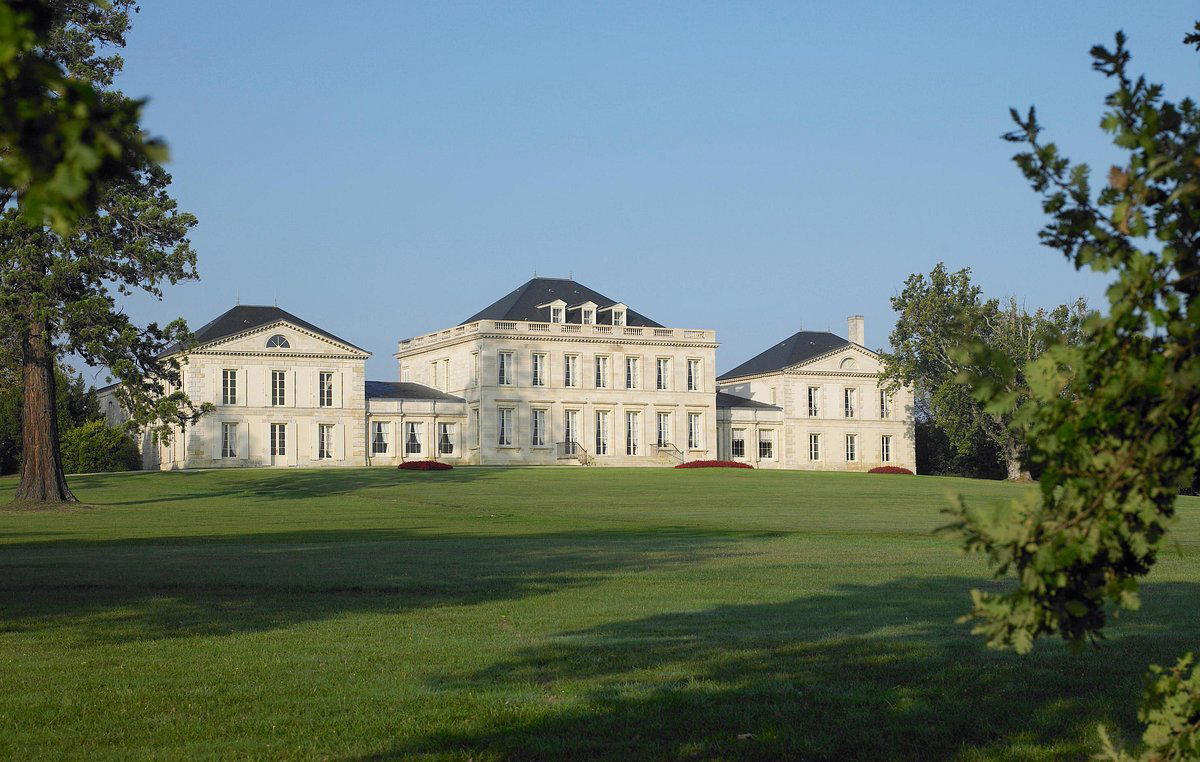
Château La Tour de By gives Médoc Cabernet a clear sense of place: gravel soils, estuary influence, old vines and a large family estate whose roots reach back to 1599. The visit is strongest for travelers who want a classic Left Bank setting rather than a polished luxury tasting room, with château buildings, barrel-room context and wide vineyard views shaping the experience.
Pearl is the En Primeur Club membership app — saves, bookings, and concierge access live there. Same editors, same standards.
- Address
- Bégadan, Médoc, Nouvelle-Aquitaine, Frankreich
 Saves & bookings on Pearl
Approaching the estate, the Médoc feels less like a postcard than a working agricultural edge: vines on gravelly ground, cellar buildings with age in their walls, and the Gironde estuary holding the horizon. Château La Tour de By belongs to that older Bordeaux register, where the landscape explains the wine before the first glass is poured. The former lighthouse tower is not decoration; it is a reminder that this part of the Left Bank has always been tied to water, weather and navigation as much as to Cabernet Sauvignon.
For a broader Begadan wine itinerary, the useful starting point is Our full Begadan wineries guide, with nearby estate pages including Chateau Laujac, Château Clos du Moulin, Château Greysac, Château Haut Condissas and Château La Branne. Begadan is a wine-first stop rather than a dense urban circuit, so it also helps to separate categories before planning meals, lodging or after-hours drinking through Our full Begadan restaurants guide, Our full Begadan hotels guide, Our full Begadan bars guide and Our full Begadan experiences guide.
Gravel, estuary air and a Cabernet-led Médoc profile
The estate’s 74 hectares are planted to 65% Cabernet Sauvignon, 30% Merlot and 5% Petit Verdot, a blend structure that reads firmly Left Bank. In the Médoc, Cabernet is not an affectation; gravel soils drain quickly, store heat and support the long ripening season needed for structure. The nearby Gironde and Atlantic influence moderate the growing conditions, giving the wines freshness rather than sheer weight.
That terroir story has unusual physical clarity here. The vineyard sits on a high ridge in this stretch of the Médoc, with panoramic views over vines and the estuary. The average vine age is 40 years, with some vines over 100 years old, which matters in a region where mature root systems can handle dry spells and extract from deeper soil layers. The result is a château whose interest lies less in fashion and more in the classical grammar of Médoc red wine: Cabernet frame, Merlot rounding, Petit Verdot seasoning.
Winemaking follows a pragmatic Bordeaux model rather than a minimalist slogan. Fermentation uses temperature-controlled stainless steel tanks and oak vats, malolactic fermentation takes place in vat, and aging runs for an average of 16 months in French oak, 30% new. Production is sizable, around 40,000 cases per vintage, so this is not an allocation cult estate. Its strength is consistency at scale, with enough cellar discipline to keep the wine in a recognizable Médoc lane.
A historic estate visit with cellar education rather than spectacle
The property dates to 1599, and that age gives the visit a different rhythm from newer cellar-door formats built around design statements. The experience centers on traditional cellar buildings, wooden barrels, vineyard views and a museum-style look at viticulture and cooperage tools. The tour format lasts about 60 minutes and can include standard tasting, tour-and-tasting, educational cellar context or private tasting, depending on arrangement.
Château La Tour de By is family-run, with Frédéric Le Clerc and Benjamin Richer de Forges managing the estate today. That detail is relevant because Médoc continuity often shows through vineyard decisions rather than personal mythology. Sustainable practice has been part of the estate’s approach since the 1980s, and machine harvesting is presented as part of its long-running ecological and vineyard-health strategy. For travelers interested in how Bordeaux estates balance tradition with modern vineyard management, this is the useful part of the visit.
The tasting emphasis is red and rosé wine, with the flagship Médoc red supported by La Roque de By and special cuvées within the wider portfolio. Recent critical signals place the wines in a reliable, accessible bracket: the 2025 flagship has been assessed at 89–91 points, the 2024 Heritage Marc Pages at 89–91 points, and the 2024 flagship at 88–90 points. Wine-Searcher’s David Allen MW has described the estate’s wines as classic, reliable and affordable, which is a fair frame for how to approach the bottles: not as luxury trophies, but as structured Médoc with heritage, volume and value in the same conversation.
Service style is relaxed rather than ceremonial. The atmosphere is conversational, casual and suitable for groups, families, solo visitors and travelers using wine education as the reason to spend time in Begadan. Outdoor space, accessible parking, wheelchair access and on-site parking make the visit easier than many older European wine properties. The estate also welcomes visitors in French, English and German, a practical advantage in a rural wine area where language can otherwise shape the depth of a cellar visit.
How to read this stop within a wider France wine route
A visit here works well when treated as terroir study: first the ridge and estuary, then the cellar, then the glass. The château’s appeal is the direct connection between physical setting and wine style. Many prestige Bordeaux conversations drift toward classification and scarcity; this estate is better understood through land, old vines and the practical economics of a large Médoc property.
Travelers building a broader French wine map can compare the Begadan experience with other regional traditions, from Champagne growers such as A. Margaine in Villers-Marmery to Languedoc estates and cellars such as Abbaye de Fontfroide in Narbonne and Abbotts & Delaunay in Marseillette. For a cross-border contrast in small-place wine culture, »der Steiner« Hans Steiner in Podersdorf am See and & Handwein in Mannheim show how different European regions express local identity through cellar format, grape choice and hospitality scale.
The editorial case for Château La Tour de By is clear: it gives visitors a grounded Médoc experience without turning Bordeaux heritage into theatre. The tower, the ridge, the estuary influence, the Cabernet-heavy planting and the 74-hectare scale all point in the same direction. This is a château for understanding why the northern Left Bank tastes the way it does, and why old agricultural sites can still explain wine better than polished tasting-room language.
Recognition history
Dated appearances from independent guides and award organizations, with the underlying list record or original source where available.
Falstaff Winery - 2 Stars
Falstaff
Continue exploring
More in Begadan
At a Glance
- Scenic
- Classic
- Well Known
- Rustic
- Romantic
- Group Outing
- Romantic Getaway
- Wine Education
- Solo Exploration
- Family
- Special Occasion
- Vineyard Tour
- Estate Grounds
- Barrel Room
- Historic Building
- Panoramic View
- Private Tasting
- Organic
- Sustainable
- Waterfront
- Vineyard
- Médoc AOC
- Cabernet Sauvignon
- Merlot
- Petit Verdot
- Still Red
- Still Rosé
- Standard Tasting
- Tour And Tasting
- Museum/educational Visit
- Private Tasting
Historic, family-owned Médoc estate with a classic Bordeaux feel, combining traditional cellars and impressive wooden barrels with a relaxed, welcoming atmosphere and panoramic views over vineyards and the Gironde estuary.