Cardinale Winery

Cardinale Winery sits on the Oakville corridor of Highway 29, one of Napa Valley's most closely watched Cabernet Sauvignon addresses. Awarded a Pearl 3 Star Prestige rating by EP Club in 2025, it operates in the upper tier of Napa estate producers whose wines reflect a clear argument about what this particular stretch of valley floor and mountain transition zone can yield in a glass.
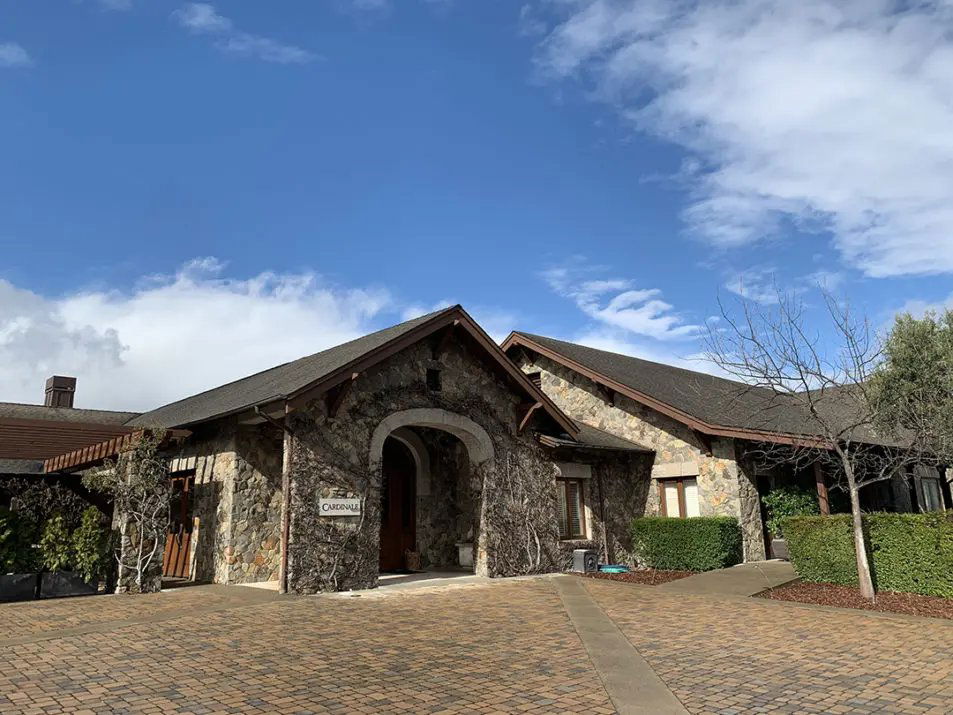
Where the Valley Floor Meets the Mountain Transition
The St. Helena Highway through Oakville is not a scenic drive so much as a topographic argument. From the road, the Mayacamas range presses in from the west and the Vaca Mountains define the eastern skyline, and vineyards planted between those two walls occupy some of the most closely debated ground in American wine. The soils shift within a matter of metres: deep alluvial gravels near the valley floor give way to heavier clays and eventually to the rocky, well-drained benchland that Napa's Cabernet producers have chased for decades. Cardinale Winery, located at 7600 St Helena Hwy in Oakville, sits within that corridor and draws its identity from precisely this contest between soil types and elevation.
That geographic specificity is not incidental. In Oakville, the interplay of morning fog from San Pablo Bay and long afternoon sun exposure creates a growing season that is cool enough to preserve acidity and long enough to develop tannin structure without coarseness. The result, in the hands of producers who source from multiple sites across the appellation, is wines that carry both freshness and weight — a combination that has made Oakville Cabernet a reference point rather than a regional curiosity. EP Club awarded Cardinale a Pearl 3 Star Prestige rating in 2025, placing it among the prestige-tier wineries in a corridor that includes names such as Groth Vineyards & Winery, Nickel & Nickel, and PlumpJack Winery.
Terroir as the Central Argument
Napa Valley's most serious Cabernet houses have, over the last two decades, shifted their public narrative away from winemaker personality and toward site specificity. That is not a marketing posture — it reflects a genuine evolution in vineyard understanding. When a wine's identity is anchored to a mapped block, a particular soil profile, or a documented elevation, it can be evaluated against something stable and repeatable rather than against the variable of any individual vintage or winemaker cycle. Cardinale operates within this tradition, and its placement on the Oakville corridor positions it within one of the appellation's most densely scrutinised growing environments.
The Oakville AVA itself was established in 1993, and in the three decades since, its internal geography has become considerably more granular in the way producers and critics discuss it. The western benchland, with its rocky Bale Clay Loam and proximity to Mayacamas drainage, consistently produces structured, age-worthy Cabernet. The valley floor, with deeper alluvial deposits, tends toward more generous fruit profiles and softer tannin architecture. Producers drawing from multiple blocks within the appellation, as Cardinale does under the broader Jackson Family Wines portfolio, have access to that full range and must make choices about which soils, which elevations, and which aspects to prioritise in any given year. Those choices are where an estate's philosophy becomes legible in the wine itself.
For context on how this compares across Napa, Robert Mondavi Winery built its reputation on To Kalon vineyard's deep, warm Oakville soils, while Silver Oak Napa Valley pursues a style with wider appellation sourcing and earlier approachability. Cardinale's prestige-tier recognition places it in a different conversation , one focused on concentration, structure, and cellaring potential.
The Oakville Peer Set
Oakville's upper tier of producers shares certain structural characteristics: limited production volumes, allocation-based sales models, and a tendency to position against comparators in the broader Napa Valley prestige segment rather than against entry-level or mid-tier regional wines. Within that group, differentiation comes down to site philosophy, stylistic restraint or generosity, and the degree to which a producer foregrounds appellation versus single-vineyard identity.
Cardinale's Pearl 3 Star Prestige award from EP Club in 2025 places it within a peer set that includes other high-recognition Oakville addresses. That tier in Oakville is not large. The appellation covers roughly 6,000 acres between Yountville and Rutherford, and the number of producers whose entire identity is anchored to Oakville Cabernet at the prestige level is proportionally small. The recognition also implies a consistency argument: 3 Star Prestige ratings reflect performance across vintages and categories, not a single-year spike.
Exploring further across Napa and beyond, the conversation about terroir-driven winemaking extends well outside the valley. Accendo Cellars in St. Helena represents a comparable commitment to Napa mountain and valley sourcing, while producers like Adelaida Vineyards in Paso Robles and Adelsheim Vineyard in Newberg demonstrate how the terroir-expression philosophy operates in California's Central Coast and Oregon's Willamette Valley respectively. International parallels exist too: Abadía Retuerta in Sardón de Duero and even the approach taken at Aberlour in Aberlour underscore that the argument about place over production is global, not parochial.
Visiting Oakville
The Oakville corridor along Highway 29 is most practically approached from either St. Helena to the north or Yountville to the south. The stretch between those two towns concentrates some of Napa's most visited estate addresses within a short drive, which makes Oakville a logical anchor for a multi-winery day. Appointment-based tastings are the norm at prestige-tier producers in this appellation; walk-in visits are rarely available at houses with allocation models, and Cardinale's profile as a prestige-rated estate makes advance planning advisable.
For those building an Oakville itinerary around serious wine, the leading approach is to commit to no more than two or three cellar visits per day, particularly at the structured, tannin-heavy end of the style spectrum, where palate fatigue sets in faster than at lighter-styled tastings. Morning appointments tend to offer better sensory conditions than late-afternoon slots.
EP Club's guides to the surrounding area offer a broader framework for planning time in this part of Napa: see our full Oakville wineries guide for the complete picture, alongside our full Oakville restaurants guide, our full Oakville hotels guide, our full Oakville bars guide, and our full Oakville experiences guide.
EP Club Assessment
The Pearl 3 Star Prestige recognition awarded in 2025 confirms Cardinale's position within Oakville's upper production tier. At this level, the expectation is wines that carry appellation character clearly , the structure and freshness that the Oakville growing environment produces in Cabernet Sauvignon when yields are managed and site selection is serious. Whether you're cellaring or evaluating current releases, that framing is the useful one: Cardinale is an argument about what Oakville ground, farmed attentively and vinified with restraint, can achieve in a bottle.
Frequently Asked Questions
What is the leading wine to try at Cardinale Winery?
Cardinale's reputation within the Oakville AVA is built around Cabernet Sauvignon, which is the variety the corridor is recognised for across its prestige-tier producers. The winery draws from Oakville's range of soil profiles, from alluvial valley floor to rockier benchland, which gives its Cabernet structural complexity across the growing season. The EP Club Pearl 3 Star Prestige award (2025) places Cardinale among a small group of Oakville estates whose Cabernet program operates at the appellation's upper reference tier , the benchmark for what to seek out in any visit. For regional context on how this wine positions against peers, cross-reference with Nickel & Nickel and Groth Vineyards & Winery, both of which pursue distinct stylistic positions within the same appellation.
Why do people go to Cardinale Winery?
Oakville is one of the most concentrated addresses for serious Napa Cabernet, and Cardinale's location at 7600 St Helena Hwy places it directly on the corridor that defines the appellation. Visitors who arrive at prestige-rated estates in this area are typically there for one of three reasons: tasting current releases from a production house with allocation access, evaluating Oakville terroir expression across a focused portfolio, or building a cellar with wines that carry structural longevity. The Pearl 3 Star Prestige rating from EP Club in 2025 is the clearest external signal of where Cardinale sits in that conversation: it is a producer at the leading of the Oakville recognition tier, which makes it a logical stop for anyone treating Napa wine seriously rather than casually. Specific pricing and visit format should be confirmed directly with the estate, as prestige-tier producers in this corridor typically manage access through appointment and allocation rather than open tasting room hours.
Access the Cellar?
Our members enjoy exclusive access to private tastings and priority allocations from the world's most sought-after producers.
Access the Concierge