
Borgo Maragliano is a Loazzolo winery shaped by altitude, sandstone-tuff soils and the maritime Marin wind that reaches this corner of Piedmont from Liguria. The visit centers on guided tasting and cellar context, with Metodo Classico sparkling wine, Moscato Bianco di Canelli and Loazzolo DOC late-harvest tradition carrying the estate’s strongest editorial interest.

Pearl is the En Primeur Club membership app — saves, bookings, and concierge access live there. Same editors, same standards.
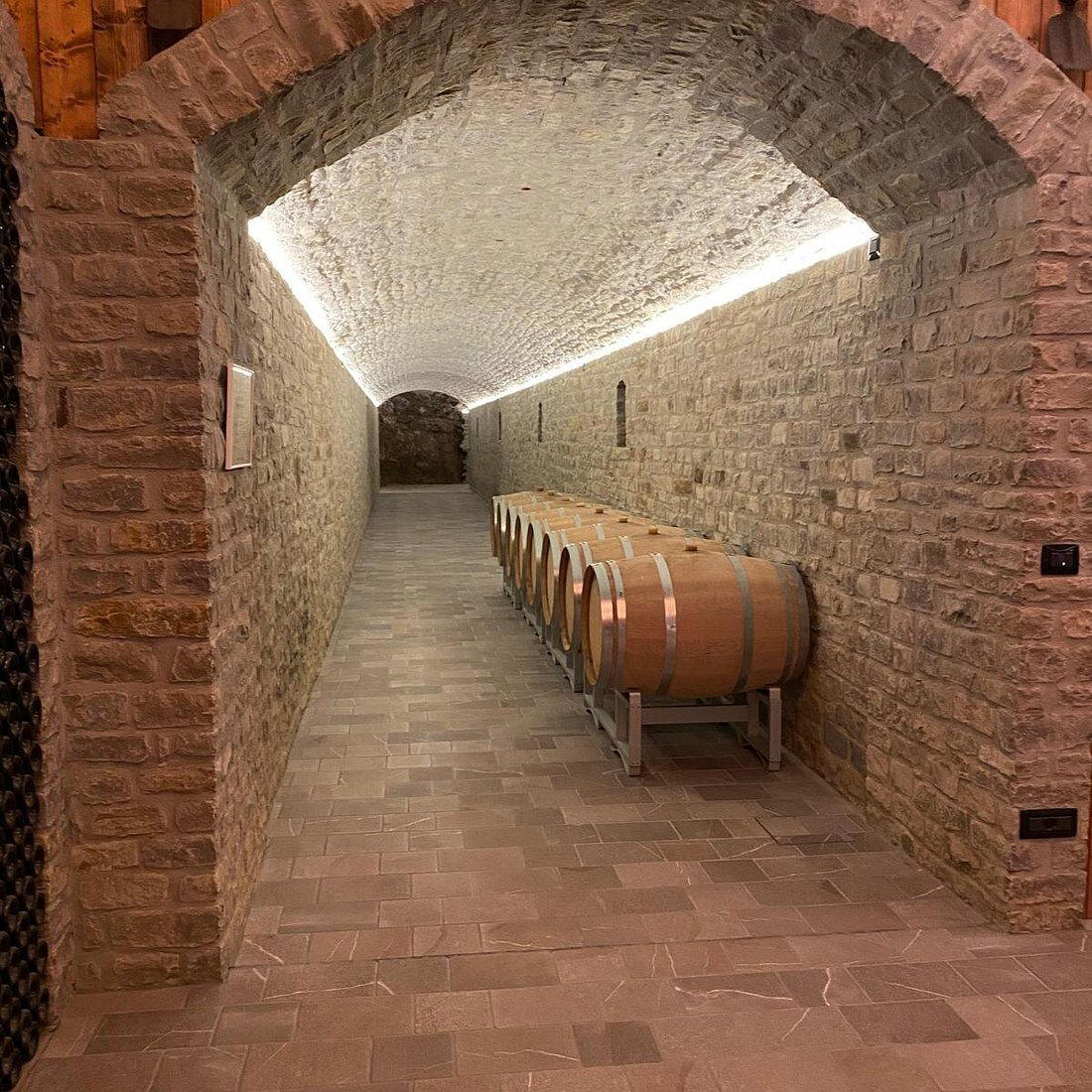
Approaching the cellar in Loazzolo, the first cue is topography rather than architecture: vines held on a hilltop terrace, open views across the Langhe, and a quiet cellar format that puts the region’s slope, wind and soil ahead of spectacle. Piedmont wine travel often concentrates around Barolo, Barbaresco and the better-known towns of the Langhe; Loazzolo works on a smaller frequency. Here the story is Moscato Bianco di Canelli, late-harvest patience and traditional-method sparkling wine made in a zone where altitude and air movement matter.
Borgo Maragliano belongs to that more specific Piedmontese conversation. The Galliano family has farmed here for six generations, and the current estate identity is tied to Loazzolo DOC, Alta Langa-style traditional-method work and the cellar’s position on a natural terrace in the Langhe hills. The setting is rustic rather than theatrical, with guided tasting and cellar-tour formats that suit drinkers who want production logic, not just a pleasant glass with a view.
Loazzolo's altitude, wind and late-harvest logic
Loazzolo’s significance comes from conditions that are easy to miss on a fast Piedmont itinerary. The vineyards sit around 450 metres above sea level, with sandy, tufaceous and calcareous soils that drain quickly and carry little clay. That matters for aromatic varieties: Moscato can retain perfume without becoming heavy, while Pinot Noir and Chardonnay have the structure needed for traditional-method sparkling wine. The Marin, an onshore wind from the Ligurian Sea, is a defining climatic influence, helping air move through the vineyards and reducing humidity pressure.
The late-harvest tradition gives the estate another register. The Loazzolo DOC wine is made from Moscato Bianco di Canelli left on the vine into mid-November and, in the estate’s stated production cycle, as late as December 8, allowing Noble Rot to develop. Fermentation in 225-litre oak barriques and a controlled process over three years place it far from the easy caricature of Moscato as simple dessert wine. This is where Loazzolo is at its most instructive: sweetness, acidity, botrytis and time are treated as structural tools rather than decorative effects.
Metodo Classico provides the counterpoint. Piedmont sparkling wine is often discussed through Alta Langa DOCG, where secondary fermentation in bottle and extended lees ageing move the conversation closer to structure and texture than to aperitivo-style fizz. Borgo Maragliano’s range includes sparkling, dessert and still white styles, with Moscato Bianco di Canelli, Pinot Noir, Chardonnay and Riesling among the listed varieties. That breadth makes the cellar a useful stop for understanding how one high-altitude site can speak in several idioms without losing its regional accent.
A tasting room built around explanation, not performance
The hospitality format suits the wines. Guided tastings and cellar tours give context to the production sequence, from vineyard exposure and pruning decisions to the slow maturation of traditional-method bottles. The mood is quiet and traditional: a rustic cellar setting, a hilltop terrace, and a guided rhythm that rewards attention. This is not a high-volume tasting bar designed for quick pours; the stronger reason to come is to connect the glass to Loazzolo’s specific climate and to the technical choices behind sparkling and late-harvest wines.
Food pairing is part of the experience, which makes sense for a cellar working with sweetness, acidity and lees-aged texture. The estate’s wine focus also suits mixed groups: sparkling wine offers an accessible starting point, while the late-harvest and cellar-tour elements give more serious drinkers something to parse. Families with young children are not the natural audience; wine education, private tasting, group outings and solo exploration fit the place better.
The estate’s trust signals are concrete rather than trophy-led. Awards are not the central argument here; the stronger evidence is format and craft: six-generation family stewardship, a Loazzolo DOC base, guided cellar access, traditional-method production and a late-harvest process that stretches from vineyard hang time to multi-year cellar work. Carlo Galliano is associated with the estate’s pioneering role in Piedmontese classic-method bubbles, while the listed winemaker name is Giovanni Galliano. In editorial terms, the family detail matters because it anchors continuity in a marginal, highly specific appellation, not because biography should overtake terroir.
How to place it within a Loazzolo wine day
Loazzolo rewards a slower itinerary than the larger Piedmont wine towns. The village’s appeal is not density; it is the chance to read one narrow zone through different cellar interpretations. For nearby context, EP Club’s Loazzolo winery coverage includes Forteto della Luja, Isolabella Della Croce and Pianbello. Broader local planning sits in Our full Loazzolo wineries guide, with separate Loazzolo pages for restaurants, hotels, bars and experiences.
Readers building a wider wine route beyond Piedmont can also use EP Club’s broader winery archive as a reference point, from 3GP SRL in Treviso and 47 Anno Domini in Trebaseleghe to A Mano Wine in Noci, a6mani in Fragagnano, Abbadia Ardenga in Torrenieri, »der Steiner« Hans Steiner in Podersdorf am See and & Handwein in Mannheim. Borgo Maragliano’s place in that larger map is clear: it is a terroir-led Piedmont cellar where the land’s altitude, wind and late-season discipline do the serious work.
Recognition history
Dated appearances from independent guides and award organizations, with the underlying list record or original source where available.
Falstaff Winery - Listed
Falstaff
Continue exploring
More in Loazzolo

At a Glance
- Scenic
- Rustic
- Classic
- Quiet
- Wine Education
- Group Outing
- Special Occasion
- Solo Exploration
- Vineyard Tour
- Historic Building
- Panoramic View
- Private Tasting
- Vineyard
- Mountain
- Loazzolo DOC
- Moscato Bianco Di Canelli
- Pinot Noir
- Chardonnay
- Riesling
- Sparkling
- Dessert
- Still White
- Guided Tasting
- Cellar Tour
Traditional, rustic cellar setting with a scenic hilltop terrace and a guided tasting atmosphere.