
Bodegas Quaderna Via puts Navarra’s organic turn into a visitor-friendly format: estate-grown Tempranillo, Garnacha, Cabernet Sauvignon and Merlot, interpreted through guided tastings, vineyard-and-cellar tours and food-paired sessions. The Ayegui winery’s modern 2,400 m² facility gives the experience structure, while the surrounding vineyard setting keeps the tone relaxed rather than technical for its own sake.
Pearl is the En Primeur Club membership app — saves, bookings, and concierge access live there. Same editors, same standards.
- Address
- Ayegui, Navarra, Comunidad Foral de, Spanien
 Saves & bookings on Pearl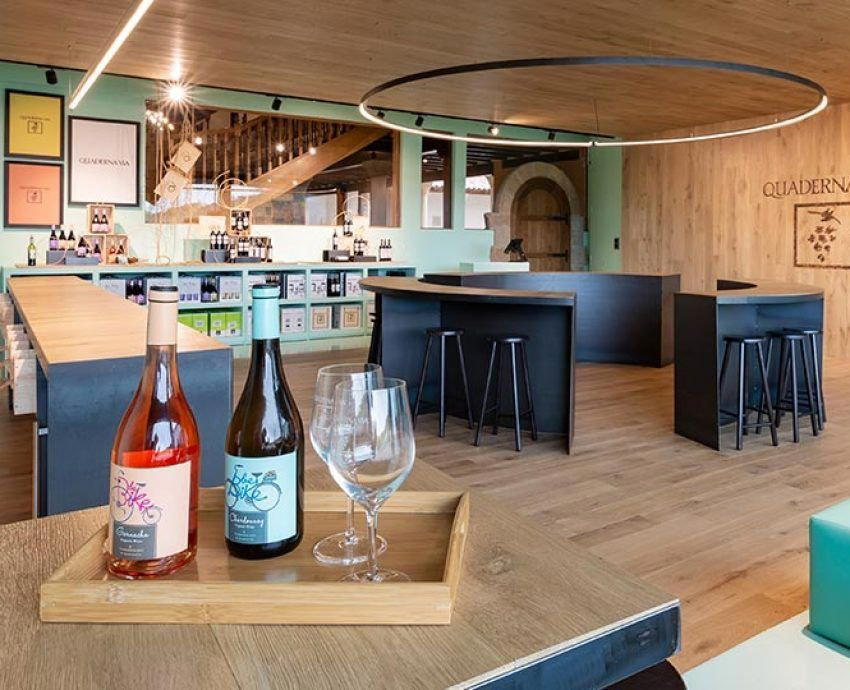
Approaching the vineyards around Ayegui, Navarra reads less like a single wine identity than a set of overlapping pressures: Atlantic freshness, Mediterranean warmth, old red-grape habits and a more recent appetite for certified organic farming. Bodegas Quaderna Via belongs to that last movement, but its interest is not only certification. The estate gives visitors a useful way to read the region through the glass: Tempranillo and Garnacha for local red-wine grammar, Cabernet Sauvignon and Merlot for the international layer Navarra absorbed over recent decades, and a modern cellar built to make the farming legible rather than decorative.
The winery opened in 2003 under Raúl Ripa and Jorge Ripa, a date that matters because Spain’s organic wine conversation was still far smaller then than it is now. Navarra has long had the raw materials for range: rosado tradition, structured reds, continental shifts in altitude and climate, and a position between more famous Spanish wine zones. In that context, organic production is not a lifestyle accessory. It changes the visitor’s frame from label recognition to vineyard management, soil health and estate control.
Navarra terroir seen through an organic estate lens
Navarra D.O. can be difficult to summarize neatly, which is part of its appeal. The region does not ask to be understood through a single grape or a single cellar style. At Bodegas Quaderna Via, the clearest through-line is estate-grown fruit farmed under an organic philosophy, then translated into still red, white and rosé wines. That makes the tasting format more educational than performative: the wines become a way to compare grape behavior, not just a sequence of pours.
Tempranillo gives the regional baseline, while Garnacha carries Navarra’s older Mediterranean thread. Cabernet Sauvignon and Merlot show the zone’s pragmatic side, where international varieties have been folded into local production rather than treated as imports with no context. The winery’s production scale is medium-sized, with its own-label wines made from estate-grown grapes in a purpose-built 2,400 m² facility. That number is useful because it places the experience between tiny farmhouse tasting and industrial visitor circuit. There is enough infrastructure for a structured route, but the format retains a family-run tone.
The stronger editorial reason to visit is the way organic farming is presented as part of production rather than an afterthought. Many European wineries now use sustainability language loosely; here, the positioning is more concrete: organic sourcing, sustainable practice and a visitor path that connects vineyards, cellar and wine bar. The result is accessible wine education with a regional accent, especially for travelers who want Navarra to feel distinct from Rioja next door rather than merely adjacent to it.
A tasting format built for learning, not ceremony
The hospitality style is relaxed by design. Guided tastings, vineyard-and-cellar tours, food-paired tastings and informal games-based tastings all point toward a winery that treats wine knowledge as something social, not a test of vocabulary. That matters in Navarra, where the visitor experience can easily split between serious cellar appointments and casual roadside tasting. This format sits in the middle: structured enough to teach, informal enough for mixed groups.
Typical visit type is by reservation, and the listed tour duration is 90 minutes. Tours are offered in Spanish and English, which broadens its usefulness for international travelers moving through northern Spain. The setting adds practical range: outdoor seating, vineyard and mountain views, on-site parking and a conversational noise level make it suitable for families, small groups, couples and solo travelers who want more context than a tasting-room pour. Children are accommodated, dogs are not.
Food-pairing option is another sign of how Navarra is positioning itself for wine tourism. Local products are not just garnish in this format; they help locate the wines within the region’s agricultural culture. A wine bar and estate grounds make the experience less formal than a seated dégustation, while private tasting and panoramic-view elements give it enough occasion value for a planned stop rather than a quick detour.
How it fits an Ayegui wine day
Ayegui’s appeal lies in concentration. A traveler can build a wine-focused day here without turning it into a long-distance itinerary, and Quaderna Via adds a clear organic counterpoint to the area’s broader cellar culture. For a comparative local route, pair it with Bodegas Irache or Pago de Larrainzar, then use our full Ayegui wineries guide to map the rest of the day.
The planning logic is simple: reserve ahead, allow enough time for the full vineyard-and-cellar route, and treat the tasting as a regional primer rather than a bottle-shopping stop alone. Payment options include cash, credit card, debit card and contactless methods, and shipping is available, which helps if the visit becomes more serious than expected. Dress remains casual, consistent with the winery’s social, outdoor-capable format.
For travelers extending the trip beyond wine, Ayegui works better when the categories are planned together. Use our full Ayegui restaurants guide, our full Ayegui hotels guide, our full Ayegui bars guide and our full Ayegui experiences guide to keep the day coherent. For a wider Spanish and European winery frame, see 3 Ases Bodegas y Viñedos in Quintanilla De Arriba, 4Kilos Vinícola in Felanitx, Aalto Bodegas y Vinedos in Quintanilla De Onesimo Valladolid, Abadia de Aribayos in Moraleja Del Vino, Abadía Retuerta in Sardón de Duero, Abel Mendoza Monge in San Vicente de la Sonsierra, »der Steiner« Hans Steiner in Podersdorf am See and & Handwein in Mannheim.
Recognition history
Dated appearances from independent guides and award organizations, with the underlying list record or original source where available.
Falstaff Winery - 2 Stars
Falstaff
Continue exploring
More in Ayegui
Wineries in Ayegui
Browse all →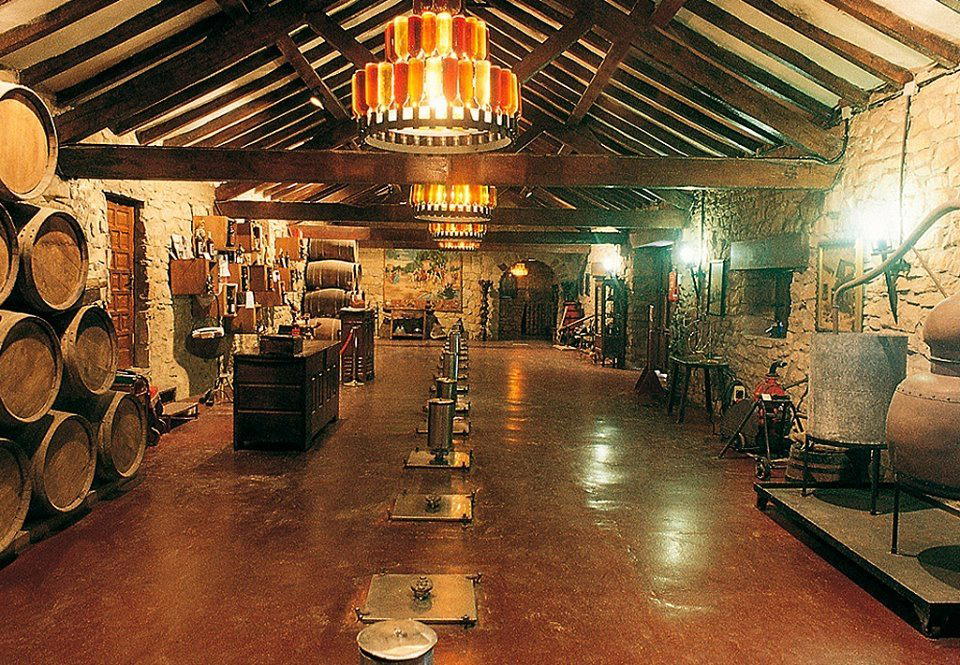

At a Glance
- Scenic
- Rustic
- Modern
- Lively
- Group Outing
- Family
- Wine Education
- Romantic Getaway
- Solo Exploration
- Vineyard Tour
- Estate Grounds
- Private Tasting
- Panoramic View
- Organic
- Sustainable
- Vineyard
- Mountain
- Navarra D.o.
- Tempranillo
- Garnacha
- Cabernet Sauvignon
- Merlot
- Still Red
- Still White
- Still Rosé
- Guided Tasting
- Vineyard & Cellar Tour With Tasting
- Food Paired Tasting
- Informal Games Based Tasting
Organic-focused Navarra winery in a modern, purpose-built 2,400 m² facility surrounded by vineyards, offering educational yet relaxed tastings with a friendly, family-run feel and informal games around wine.