
Tabelog 100 #37
Our verdict
Kagoshima’s pork culture has a serious hot-pot expression here: pork shabu shabu, shochu, private rooms, counter seating, and tatami rooms under one roof. Selection for Tabelog 100 Hot Pot 2024 gives Yushoku Tonsai Ichiniisan Kagoshima honten a useful signal for travellers sorting everyday local cooking from destination-worthy regional dining.

Pearl is the En Primeur Club membership app, where members save venues, book tables and use the concierge.
The menu
What to order
- Kagoshima kurobuta shabu-shabu with soba broth
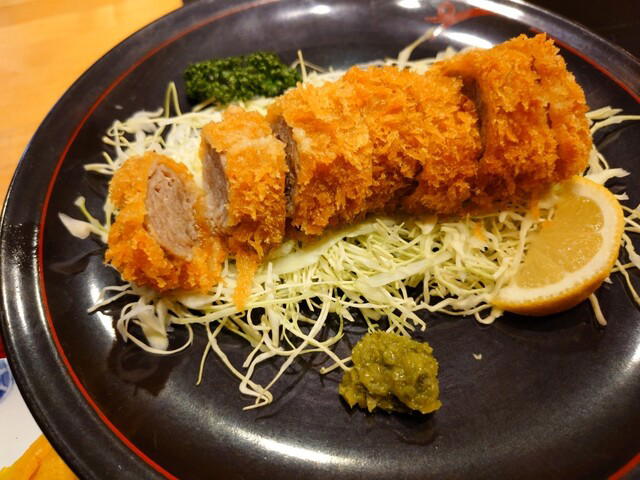
- Black pork tonkatsu
- Satsuma-age (fried fish cake)
- Local sashimi including kibinago
- Kagoshima Kuroge wagyu dishes
Approach Kagoshima dining through pork and the city starts to make sense. The room is best understood through steam, conversation, and repeat local use rather than ceremony, with hot pot setting the rhythm of the table. In a prefecture where pork is central to many meals, hot pot is not just a generic winter format. It is a way of reading local taste through broth, thin-sliced meat, and pacing.
Yushoku Tonsai Ichiniisan Kagoshima honten belongs to the pork shabu shabu side of that identity. The useful distinction for travellers is category, not glamour. Kagoshima has restaurants that specialise in noodles, grilled dishes, yakitori, and casual local formats; this venue sits in the broader group of places where a regional ingredient is treated as the main argument. For a wider map of that spread, compare it with other Kagoshima dining rooms that focus on pork, chicken, rice, or casual local formats.
Kagoshima pork, shochu, and the hot-pot argument
Kyushu hot pot often rewards patience more than spectacle. The format asks the table to focus on sourcing, cut, dip, and drink rather than a procession of composed plates. That matters in Kagoshima, where pork is not simply another protein on the menu. The prefecture’s pork reputation gives pork shabu shabu a different weight from the same dish in a city where the ingredient is imported into the concept. Here, the dish reads as local grammar: pork, broth, condiments, vegetables, and regional drinking culture working in a tight register.
The Tabelog 100 Hot Pot 2024 selection is the strongest public trust signal attached to the restaurant. It places the venue inside a national hot-pot conversation rather than only a Kagoshima one, while the listed categories keep the focus narrow: pork shabu shabu, shabu shabu, and pork dishes. That combination is useful because hot pot can be a vague label in Japan, covering everything from sukiyaki to seafood nabe. The clearer the specialisation, the easier it is to decide whether the meal belongs in a short itinerary.
Price tier also shapes the editorial read, even when the exact spend depends on order and appetite. The listed budget puts Yushoku Tonsai Ichiniisan Kagoshima honten in a practical band for travellers comparing it with Kagoshima options such as Ramen Kokinta, Torisen Ippo, Umeya, Yakitori Senmyou, and Yakitori Kouun. That makes this kind of pork shabu shabu a strong city-specific choice: more structured than a quick casual stop, less formal in feel than a special-occasion counter, and more regionally specific than a general izakaya meal.
The room favours groups, but the format stays ingredient-led
Hot pot works best when the product and table rhythm remain clear. Yushoku Tonsai Ichiniisan Kagoshima honten reads as a restaurant suited to sociable Kagoshima dining rather than a highly staged tasting-menu format. The editorial interest remains the same: a regional ingredient presented through a format that Japanese diners understand immediately.
The drinking context matters. Kagoshima is one of Japan’s great shochu territories, and pork shabu shabu gives local spirits a natural partner: fat, heat, and dipping sauces can handle bolder distilled character better than delicate raw fish or lightly seasoned kappo plates. Travellers who think of Japanese dining primarily through sake miss an important Kyushu axis. The local table often runs on regional habits, not as novelty but as part of the meal’s pace.
For visitors building a Kagoshima food route, the better approach is not to chase a single restaurant as the whole story. Use pork shabu shabu as one chapter, then add contrast. Our full Kagoshima restaurants guide gives the city-level frame, while Our full Kagoshima bars guide is useful after dinner, especially if shochu and local drinking culture are part of the plan. Our full Kagoshima hotels guide, Our full Kagoshima wineries guide, and Our full Kagoshima experiences guide help place the meal inside a broader stay rather than treating it as an isolated stop.
How it compares beyond Kagoshima
Hot pot does not travel through Japan as one fixed idea. In other cities, the centre of gravity may shift toward beef, seafood, charcoal cooking, noodles, or casual cafe-style dining. The comparison is not about ranking; it shows how Japanese regional dining changes when the central ingredient changes, and why a Kagoshima pork shabu shabu restaurant should be read on its own terms.
Kyushu context also matters. Other southern Japanese dining rooms can provide useful reference points, while farther afield, category-specific meals often define a city break more sharply than broad “Japanese food” planning. The same lesson holds outside Japan: focused formats carry cultural meaning when the menu does not try to explain everything at once.
The verdict is practical: choose Yushoku Tonsai Ichiniisan Kagoshima honten when the goal is to understand Kagoshima through pork rather than to collect a formal fine-dining experience. The award recognition, regional ingredient focus, and category clarity make it a strong city-specific meal, especially for travellers who want one dinner to say something concrete about where they are.
Frequently asked questions
Is Yushoku Tonsai Ichiniisan Kagoshima honten a family-friendly restaurant?
The venue is a Kagoshima pork shabu shabu restaurant, and the listed dinner range of JPY 3,000–3,999 keeps it in an accessible mid-range band for many travellers.
What's the vibe at Yushoku Tonsai Ichiniisan Kagoshima honten?
This is a shabu shabu restaurant in Kagoshima rather than a formal fine-dining counter. The focus is on pork shabu shabu, hot pot pacing, and a sociable regional meal.
Is Yushoku Tonsai Ichiniisan Kagoshima honten more mid-range or high-end?
Pricing at Yushoku Tonsai Ichiniisan Kagoshima honten is listed as Dinner: JPY 3,000 - JPY 3,999; Lunch: JPY 1,000 - JPY 1,999.
Where do I go for Yushoku Tonsai Ichiniisan Kagoshima honten?
Kagoshima.
Do I need a reservation for Yushoku Tonsai Ichiniisan Kagoshima honten?
The restaurant carries a Tabelog 100 Hot Pot 2024 selection, so planning ahead is sensible. It is in Kagoshima.
Snapshot
Comparable venues by cuisine and price in the same metro.
| Venue | Cuisine | Price | Awards | Notes |
|---|---|---|---|---|
| Yushoku Tonsai Ichiniisan Kagoshima hontenThis venue (the venue you are viewing) | Kagoshima black pork shabu-shabu & regional Japanese | $30–50 | Tabelog 100 #37 | Not listed |
| Unagi no Mitsuru | Japanese Unagi | $20–30 | Tabelog 100 #43 | Shimofukumotochō |
| Kawakyu (とんかつ川久) | Traditional Japanese Tonkatsu | $10–20 | Tabelog 100 #98 | 鹿児島中央 |
| Torisen Ippo | Traditional Yakitori & Chicken Izakaya | $30–50 | Tabelog 100 #14 | Tenmonkan |
| shirokuma cafe | Traditional Kagoshima shaved ice & dessert cafe | $10–20 | Tabelog 100 #12 | Tenmonkan |
| Tenmonkan Mujaki Amyu puraza ten | Japanese cafe & shaved ice (Shirokuma) | $1–10 | Tabelog 100 #21 | Kagoshima Chuo Station / Amu Plaza |
Recognition history
Dated appearances from independent guides and award organizations, with the underlying list record or original source where available.
Tabelog 100 #37 · No. 37
Tabelog · Tabelog 100 - Hot Pot - 2024
Continue exploring
More in Kagoshima
Restaurants in Kagoshima
All restaurants in Kagoshima →
Hotels in Kagoshima
All hotels in Kagoshima →
Wineries in Kagoshima
All wineries in Kagoshima →
Details
- Lively
- Cozy
- Classic
- Family
- Group Dining
- Casual Hangout
- After Work
- Celebration
- Private Dining
- Standalone
- Local Sourcing
- A La Carte
- Set Menu
- Shochu
- Pescatarian Friendly
Casual and bustling local favorite with a classic Japanese interior, counter and tatami seating, and a relaxed atmosphere suited to families and groups enjoying hotpot and black pork dishes.