
Tabelog 100 #45
Our verdict
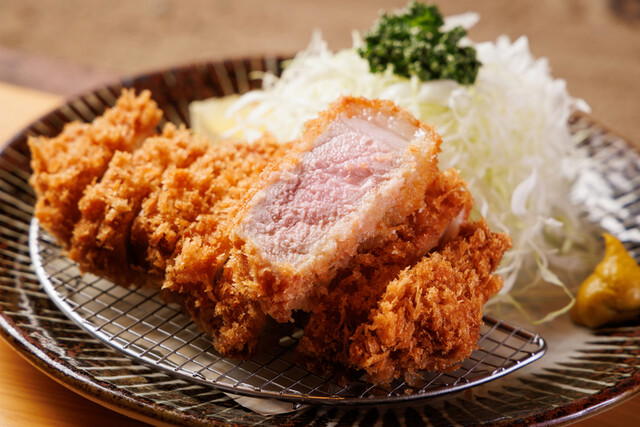
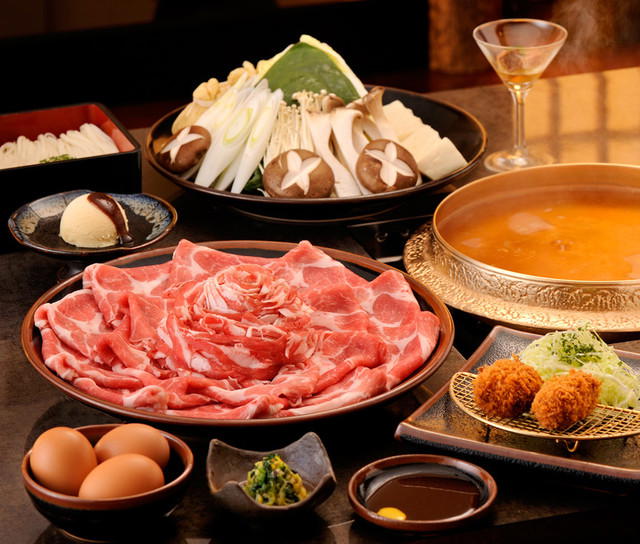
Kagoshima’s black pork culture gives tonkatsu a sharper local meaning than it has in many Japanese cities. Tonkatsu to, Shabushabu. Kurobuta Fukuya works in that lane, pairing pork cutlet with shabu-shabu and nabe formats, with Tabelog 100 Tonkatsu 2026 recognition placing it in a national conversation rather than a purely local one.

Pearl is the En Primeur Club membership app, where members save venues, book tables and use the concierge.
The menu
What to order
- Kagoshima kurobuta tonkatsu
- Kagoshima kurobuta shabu-shabu
- Shabuzen course
- Kurokatsu black-batter tonkatsu
Kagoshima’s restaurant streets invite quick decisions: crossings, compact dining rooms, and menus competing with frying oil, broth, and other local comforts before anyone sits down. In Kagoshima, pork-focused dining is more than generic comfort food, and tonkatsu is one of the clearest ways the city frames a satisfying meal.
Tonkatsu to, Shabushabu. Kurobuta Fukuya sits inside that conversation. Its categories are direct: tonkatsu, shabu-shabu, and nabe. The range matters because the restaurant is not limited to cutlets. Frying tests fat, crust, and thickness; shabu-shabu tests ingredients in broth; nabe moves the meal to the shared table. Working across those forms shows how the same address can shift between solo lunch, family dinner, and shared-meal territory.
Kurobuta makes the cutlet a regional argument, not just a fried-pork order
Across Japan, tonkatsu can be a station lunch, department-store meal, or specialist counter ritual. Kagoshima raises the stakes because pork-focused dining has a strong local presence alongside other everyday staples. The question is not only whether a cutlet is rich, but whether the cooking keeps the main ingredient central after breading, frying, sauce, cabbage, and rice arrive.
The 2026 Tabelog 100 Tonkatsu selection gives the room a measurable signal in a category crowded with wider national attention. Its Tabelog score of 3.72 and inclusion in the Tonkatsu list place it among recognized specialist addresses, while its Kagoshima location shifts the meaning from big-city scarcity to a local restaurant context. Visitors compare crust and juiciness, but also judge the meal against Kagoshima’s own expectations for pork-focused dining.
The format separates it from single-lane cutlet shops. Shabu-shabu and nabe widen the meal beyond fried pork, useful when dinners move through shared dishes rather than one plate. That broader structure feels natural for a table that wants more than a quick cutlet set. For a broader read on the city’s dining range, Our full Kagoshima restaurants guide maps pork specialists, seafood rooms, and casual set-meal counters.
Kagoshima keeps the meal practical without flattening the food
A Kagoshima setting puts the restaurant within the city’s wider eating culture, where visitors can make pork-focused dining part of the day without turning the evening into logistics. That matters for tonkatsu: the dish is often best when not treated as a formal pilgrimage. The format suits both a focused cutlet meal and a broader table built around hotpot.
Price clarifies its position. Lunch is JPY 1,000 to JPY 1,999; dinner is JPY 4,000 to JPY 4,999. That is a useful Kagoshima middle tier: more considered than a snack stop, less ceremonial than a long tasting-menu booking. Compared with Ichinii San Tenmonkan ten, in a similar lunch and dinner band, the distinction is format and recognition rather than raw spend. Unagi no Sueyoshi sits in an eel lane, while Tenjin Boumarushin reads as another Kagoshima dining reference. This is not a cheap-and-fast tonkatsu errand, but it is not priced like destination dining in Japan’s largest cities.
For a compact Kagoshima itinerary, pair the meal with other focused local addresses rather than a random crawl. Other Kagoshima pork-cutlet dining can give another reference point, while unnamed local rooms shift the lens to chicken, seafood, rice, or casual set meals. After dinner, other Kagoshima bars and late-hour spots can carry the evening in a different direction, while Our full Kagoshima bars guide is better for late hours.
How to place it in a Kagoshima trip
The strongest case for Tonkatsu to, Shabushabu. Kurobuta Fukuya is concentration, not novelty: one restaurant combines tonkatsu culture, hotpot formats, and a practical Kagoshima dining setting. That helps travelers with limited meals find one pork-focused sitting that does more than repeat a standard tonkatsu template.
The practical read is simple. Public information supports the core categories and the listed lunch and dinner price bands, so plan around the style of meal you want rather than a long list of amenities. Tonkatsu gives the most direct reading of the kitchen’s pork handling; shabu-shabu and nabe make more sense when the table wants a shared format. For current service details, confirm directly with the restaurant before building a tight schedule around the meal.
Build the meal around pork category rather than a named signature. Public information identifies tonkatsu, shabu-shabu, and nabe, but no single flagship dish. That absence is useful discipline: choose by format, appetite, and group size. Solo diners and quick lunches will read the restaurant through tonkatsu; groups and evening tables get a fuller sense of the restaurant through hotpot. For lodging and broader trip structure, use Our full Kagoshima hotels guide, Our full Kagoshima wineries guide, and Our full Kagoshima experiences guide.
For wider Japan planning, compare how regional comfort food changes by city: beef, fish, café culture, contemporary dining, curry, sake bars, and rice specialists all take different forms depending on place. Casual specialist formats have their own geography too, from neighborhood counters to compact destination rooms. Kagoshima’s version here is pork-led, category-specific, and more revealing when treated as regional dining, not just comfort food.
Frequently asked questions
When is Tonkatsu to, Shabushabu. Kurobuta Fukuya open?
Publicly provided details here confirm the venue and its lunch and dinner budget ranges, but specific opening hours should be checked directly with Tonkatsu to, Shabushabu. Kurobuta Fukuya before visiting.
What's the price range at Tonkatsu to, Shabushabu. Kurobuta Fukuya?
Pricing at Tonkatsu to, Shabushabu. Kurobuta Fukuya is listed as dinner JPY 4,000 - JPY 4,999 and lunch JPY 1,000 - JPY 1,999.
What part of town is Tonkatsu to, Shabushabu. Kurobuta Fukuya in?
Kagoshima.
What do critics highlight about Tonkatsu to, Shabushabu. Kurobuta Fukuya?
Critics singled it out for the Tabelog 100 Tonkatsu 2026 selection, which is the clearest signal here. The draw is the pairing of tonkatsu, shabu-shabu, and nabe in Kagoshima, alongside a Tabelog score of 3.72.
Can Tonkatsu to, Shabushabu. Kurobuta Fukuya adjust for dietary needs?
The public record confirms tonkatsu, shabu-shabu, and nabe categories, but it does not list a formal dietary-adjustment program. Guests with specific requirements should check the venue's official channels at +81-99-295-0676 before booking.
Is Tonkatsu to, Shabushabu. Kurobuta Fukuya child-friendly?
The provided public facts do not specify a child policy. Families should confirm directly with Tonkatsu to, Shabushabu. Kurobuta Fukuya before visiting.
Quick Comparison
Nearby venues at a similar price tier for orientation.
| Venue | Cuisine | Price | Awards | Notes |
|---|---|---|---|---|
| Tonkatsu to, Shabushabu. Kurobuta FukuyaThis venue (the venue you are viewing) | Kagoshima Kurobuta Tonkatsu & Shabu-shabu | $30–50 | Tabelog 100 #45 | Not listed |
| Maruman Ganso Yakitori | Traditional Kagoshima Yakitori (Satsuma Chicken) | $30–50 | Tabelog 100 #71 | Tenmonkan / Tenmonkandori |
| Aji no Tonkatsu Maruichi | Kagoshima Kurobuta Tonkatsu | $20–30 | Tabelog 100 #39 | downtown Kagoshima (Takamibaba) |
| Yakitori Kouun | Yakitori | $30–50 | Tabelog 100 #80 | Hinohiguchi-cho |
| Torisen Ippo | Traditional Yakitori & Chicken Izakaya | $30–50 | Tabelog 100 #14 | Tenmonkan |
| Ichiba Shokudo Jounan ten | Japanese market cafeteria with sushi and seafood set meals | $10–20 | Tabelog 100 #61 | Jounan, Kagoshima City |
Recognition history
Dated appearances from independent guides and award organizations, with the underlying list record or original source where available.
Tabelog 100 #45 · No. 45
Tabelog · Tabelog 100 - Tonkatsu - 2026
Continue exploring
More in Kagoshima
Restaurants in Kagoshima
All restaurants in Kagoshima →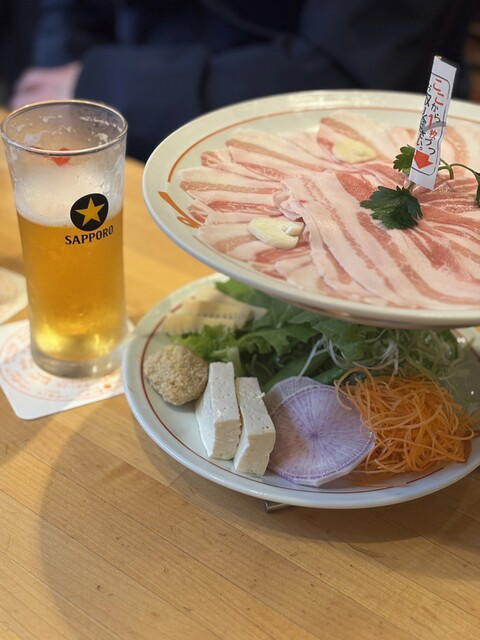
Hotels in Kagoshima
All hotels in Kagoshima →
Wineries in Kagoshima
All wineries in Kagoshima →
Details
- Cozy
- Classic
- Lively
- Family
- Group Dining
- Casual Hangout
- After Work
- Solo
- Standalone
- Local Sourcing
- A La Carte
- Set Menu
- Beer
- Sake
- Shochu
- Pescatarian Friendly
Current opening hours
- Monday
- 11 AM–2:30 PM, 5–10 PM
- Tuesday
- 11 AM–2:30 PM, 5–10 PM
- Wednesday
- 11 AM–2:30 PM, 5–10 PM
- Thursday
- 11 AM–2:30 PM, 5–10 PM
- Friday
- 11 AM–2:30 PM, 5–10 PM
- Saturday
- 11 AM–2:30 PM, 5–10 PM
- Sunday
- 11 AM–2:30 PM, 5–10 PM
Hours can change for holidays and private events. Hours as of .