
Michelin Plate
Our verdict
Thuns Dorfkrug has held the Michelin Plate in both 2024 and 2025, a signal of consistent kitchen standards unusual for a small Sauerland town at this price point. The international menu keeps the format accessible without the ambition of nearby starred houses. For Werdohl, it represents the clearest argument that serious cooking does not require a metropolitan postcode.

Pearl is the En Primeur Club membership app, where members save venues, book tables and use the concierge.
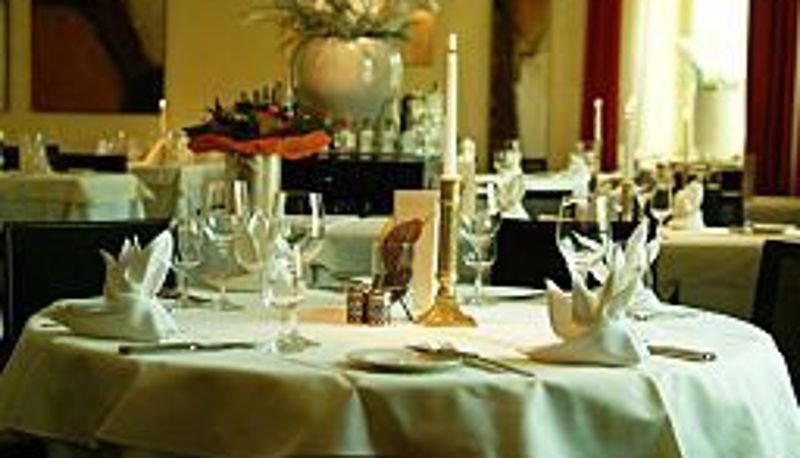
A Sauerland Village Pub With Something to Prove
Werdohl sits in the Märkisches Sauerland, a stretch of the Sauerland uplands in North Rhine-Westphalia where industrial history and forested valley walking trails occupy the same postcode. That makes the two consecutive Michelin Plate recognitions earned by Thuns Dorfkrug, for 2024 and 2025, a result worth reading carefully. The Michelin Plate is not a star, but its presence signals that Michelin's inspectors found food here meeting a standard of quality they considered worth directing readers toward. In a small industrial Sauerland town, that is a meaningful credential. The name, Dorfkrug, is a German compound meaning village inn or village tavern, a term with deep regional resonance in the landscape between Cologne and the Ruhr. Historically, the Dorfkrug was a working-class or agricultural community gathering point, function over flourish. The tension between that inherited vernacular format and the standard now recognised by a European guide forms the real story of this restaurant.
International Cooking in a Regional Frame
The listed cuisine type at Thuns Dorfkrug is International, a broad category that in German restaurant terms tends to indicate a kitchen working across multiple European and occasionally global reference points, rather than committing to a single national tradition. This approach has become common at mid-tier restaurants throughout smaller German cities and towns, partly because it allows a kitchen to adapt seasonally across multiple traditions, and partly because the format suits a local audience that visits frequently and values variety across visits.
Ingredient-sourcing question matters particularly in this context. Sauerland farms and small-scale regional producers supply a number of serious kitchens across North Rhine-Westphalia. A kitchen operating internationally with a Michelin Plate credential is making an implicit argument that local or regional sourcing, combined with broader technical ambition, can produce food worth serious attention. What makes this model credible at the Michelin Plate level is not the number of dishes or the length of a menu, but whether the kitchen is making deliberate choices about what enters it. That discipline separates Plate-recognised houses from the general German Gasthof format, which typically prioritises volume and comfort over curation. At the far end of the same country's restaurant spectrum, places like Aqua in Wolfsburg or Vendôme in Bergisch Gladbach operate at the €€€€ tier with multi-star Michelin recognition and the kind of formal tasting-menu sourcing programmes that involve named farms and documented supply chains. Schwarzwaldstube in Baiersbronn and Schanz in Piesport anchor their sourcing in strong regional identities, Black Forest and Moselle respectively, that give their menus a geographic coherence. Thuns Dorfkrug operates at the €€ price range, two full tiers below that level, which means its claim to Michelin recognition rests on an entirely different competitive logic: quality at accessible cost, in a location that demands no destination effort from a recognised guide.
Reading the Michelin Plate Signal
Two consecutive Michelin Plates represent something more specific than a single appearance. The 2024 and 2025 notations indicate that inspectors returned, or that the standard was sufficiently consistent to renew the signal. At smaller, owner-operated houses in German towns outside the major city hubs, consistency is frequently the hardest variable to maintain. Turnover in skilled kitchen staff is a well-documented challenge for regional restaurants that cannot compete with the salaries or professional profiles of operations in Frankfurt, Munich, or Hamburg. A kitchen sustaining Michelin Plate quality across two inspection cycles, at the €€ tier, in Werdohl, is doing something operationally as well as culinarily.
For readers familiar with the German Michelin landscape, the Plate tier is populated by restaurants that fall into the zone just below the first star. That zone includes kitchens actively working toward star recognition as well as those for whom the Plate represents an appropriate ceiling given format, price, or location. Further afield on the EP Club radar, restaurants such as Bagatelle in Trier, Haubentaucher in Rottach-Egern, and Loumi in Berlin sit within a loosely comparable territory of internationally framed cooking across different German contexts. For higher-end reference points in the wider German Michelin field, JAN in Munich, CODA Dessert Dining in Berlin, Restaurant Haerlin in Hamburg, Waldhotel Sonnora in Dreis, Victor's Fine Dining by Christian Bau in Perl, and ES:SENZ in Grassau illustrate how far the country's fine dining circuit extends from this kind of village-inn format.
A 4.5 average at that volume is not a cluster of enthusiastic regulars inflating a small sample. It reflects a sustained run of positive experiences across a meaningful number of guests, which aligns broadly with the Michelin signal rather than contradicting it. The €€ price range makes it realistic for a local dinner without advance financial planning, and the Dorfkrug format historically implies an atmosphere oriented toward relaxed, community-facing hospitality rather than formal service. For visitors planning a broader Werdohl stay, our full Werdohl restaurants guide, Werdohl hotels guide, Werdohl bars guide, Werdohl wineries guide, and Werdohl experiences guide cover the full picture.
Frequently asked questions
Is Thuns Dorfkrug child-friendly?
How would you describe the vibe at Thuns Dorfkrug?
Side-by-Side Snapshot
| Venue | Cuisine | Price | Awards | Notes |
|---|---|---|---|---|
| Thuns DorfkrugThis venue (the venue you are viewing) | French-International with Regional Influences | $30–50 | Michelin Plate | Not listed |
| Schwarzwaldstube | Modern French Fine Dining | $150–200 | 3 Michelin Stars · World's 50 Best #47 | French, Classic French |
| Aqua | Contemporary German, Italian/Japanese, Creative | Not listed | Michelin 3 Star | Not listed |
| CODA Dessert Dining | Dessert-Inspired Fine Dining | $200–300 | 2 Michelin Stars · World's 50 Best #79 | Creative |
| Tantris | Modern French, French Contemporary | Not listed | Michelin 2 Star | Not listed |
| Vendôme | Modern German Haute Cuisine | $200–300 | 2 Michelin Stars · World's 50 Best #47 | Modern European, Creative |
Recognition history
Dated appearances from independent guides and award organizations, with the underlying list record or original source where available.
Michelin Plate
Michelin
Full recognition history (2 entries)
Michelin Plate
Michelin
Continue exploring
More in Werdohl
Restaurants in Werdohl
All restaurants in Werdohl →

Bars in Werdohl
Browse all →
Details
- Elegant
- Cozy
- Classic
- Business Dinner
- Special Occasion
- Historic Building
- Extensive Wine List
- A La Carte
- Vegetarian Friendly
- Gluten Free Options
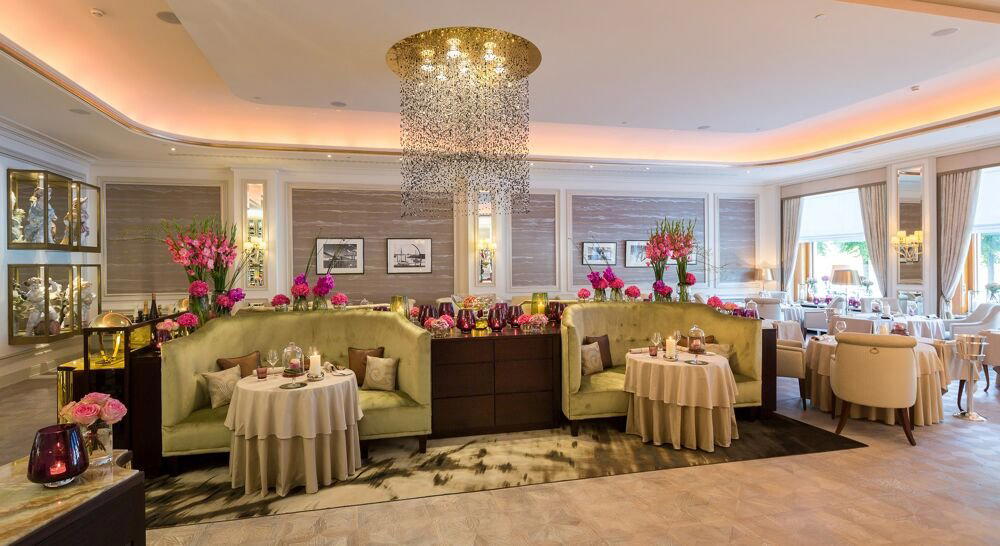
Simple and elegant decor with contemporary pictures, parquet flooring, and a refined, welcoming atmosphere.