
Tabelog 100 #19
Our verdict
Sakume places Hamamatsu’s eel culture in its proper setting: close to Lake Hamana, modest in scale, and built around ingredient confidence rather than ceremony. The restaurant’s Tabelog 100 - Unagi - 2024 selection, 17-seat room, and in-store registration format make it a serious stop for travelers who want Shizuoka’s unagi tradition without luxury-restaurant staging.

Pearl is the En Primeur Club membership app, where members save venues, book tables and use the concierge.
The menu
What to order
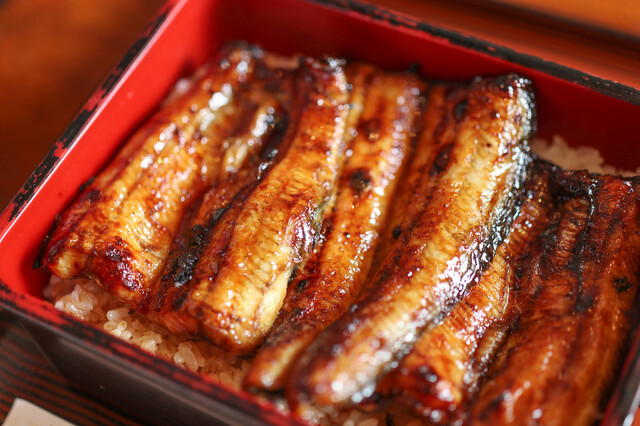
- Hamana-ko wild eel unajū
- Grilled eel over rice (unagi don)
Approaching Sakume in Shizuoka, the setting tells the story before the menu does. This is not metropolitan kappo theatre or a polished hotel dining room; it is a focused regional restaurant in a part of Japan where eel belongs to the local food grammar rather than a special-occasion import. In Shizuoka, unagi carries local weight and long-standing appetite. The point is context: eel eaten in a region associated with the ingredient carries a different cultural meaning from eel ordered as a token luxury in Tokyo or Kyoto.
That matters because unagi is a cuisine of sourcing and timing as much as technique. The cooking may look simple from the outside, but the category depends on judgment: fish quality, fat level, handling, grilling discipline, and rice that supports rather than distracts. In Shizuoka, the better eel houses are judged less by novelty than by whether they understand the ingredient’s place in the region. Sakume sits inside that tradition, with a Tabelog score of 3.71 and selection for Tabelog Hyakumeiten Unagi 2024 placing it among Japan’s recognized eel specialists rather than general Japanese restaurants that happen to serve eel.
Shizuoka eel culture, without metropolitan ceremony
Shizuoka’s dining identity is unusually ingredient-led. Tea, citrus, seafood, and eel all have regional force here, but eel carries a particular kind of civic confidence: it is everyday enough to be argued over and prized enough to justify travel. The stronger unagi rooms rarely need the choreography of fine dining. Instead, they rely on a clear menu logic and the public’s ability to judge the basics.
Sakume’s category is clear: Unagi (Eel), not a broad washoku restaurant with a little of everything. That narrowness is part of the appeal. In a market where premium Japanese dining often stretches into tasting-menu abstraction, the eel house remains refreshingly direct. Price also keeps the experience anchored: lunch is listed at JPY 3,000 - JPY 3,999, with dinner at JPY 4,000 - JPY 4,999. That puts it in a grounded spending band alongside comparison eel specialists such as Sumiyaki Unagi Kamo and Sumiyaki Unagi Hajime, rather than in the luxury kaiseki bracket.
The comparison is useful for travelers planning Shizuoka meals. Kaiseki addresses the season through courses and sequence; unagi addresses the region through a single ingredient treated with repetition and control. For a broader dining itinerary, Sakume pairs conceptually with Shizuoka restaurants where specialization does the heavy lifting, including other local dining rooms across the prefecture. Travelers looking for a more formal Japanese counterpoint can place it against unnamed ryokan or kaiseki-style meals, while other polished Shizuoka dining registers show how wide the local restaurant landscape can be.
A focused room changes the stakes
The room reads as focused and practical. That changes the rhythm. In a restaurant like this, a rush is not absorbed by the anonymity of a large dining room; it becomes part of the defining condition of the meal. The experience sits closer to regional Japanese queue culture than concierge-managed dining, and that plainness is part of its appeal.
This is where the practical and the editorial meet. A focused eel restaurant is not necessarily designed for a large, staged celebration. It works better for diners who understand that the value lies in the specialization, not in expansiveness. The format remains plain-spoken, and the restaurant’s recognition comes from its place within the unagi category rather than from luxury trappings or broad-menu ambition.
Access reinforces the regional character. Sakume is in Shizuoka, and the restaurant makes sense as a local food stop as much as a destination for visiting eaters. That balance is important: the appeal is not only that it serves eel, but that it does so in a region where the ingredient has real culinary meaning.
How to place it in a Shizuoka itinerary
Sakume makes strongest sense as an ingredient-focused meal in a Shizuoka trip, not as a substitute for the prefecture’s broader dining range. Build around it if eel is the point; place it alongside other categories if the goal is to read the region through food. The distinction matters. A traveler who wants theatre may be better served by a formal counter or ryokan meal. A traveler who wants Shizuoka’s eel culture in focused form will understand why a modest specialist can carry more regional meaning than a grander room.
Timing is part of the decision for any focused regional restaurant. Eel specialists can become day-shaping stops rather than casual drop-ins, especially when the meal is the reason for the detour. For a wider plan, use Our full Shizuoka restaurants guide to balance eel with sushi, kaiseki, Chinese, cafés, and regional cooking. If the trip extends beyond the table, Our full Shizuoka hotels guide, Our full Shizuoka bars guide, Our full Shizuoka wineries guide, and Our full Shizuoka experiences guide help frame the prefecture beyond lunch.
The broader Japan context is also useful. Regional specialization is one of the country’s strengths, whether the format is eel in Shizuoka, grilled cooking in a city dining room, café culture in an urban neighborhood, or local independent dining outside the main tourist routes. The same logic extends across Japan and beyond: the stronger meal is often the one with a narrow brief, clear sourcing logic, and no need to perform luxury.
Frequently asked questions
Is Sakume child-friendly?
Sakume is a focused unagi restaurant in Shizuoka. It may suit families who are comfortable with an ingredient-led meal, but the best fit is a quieter, planned visit rather than a sprawling group occasion.
Is Sakume formal or casual?
It reads as casual rather than formal: the venue is a focused eel restaurant in Shizuoka, with recognition tied to the Unagi (Eel) category rather than to polished luxury dining. Lunch is listed at JPY 3,000 - JPY 3,999, with dinner at JPY 4,000 - JPY 4,999.
Is Sakume more mid-range or high-end?
Pricing at Sakume is listed as Dinner: JPY 4,000 - JPY 4,999; Lunch: JPY 3,000 - JPY 3,999.
When can I go to Sakume?
Check current operating details before visiting Sakume, as hours and availability can change.
How It Stacks Up
Comparable venues by cuisine and price in the same metro.
| Venue | Cuisine | Price | Awards | Notes |
|---|---|---|---|---|
| SakumeThis venue (the venue you are viewing) | Traditional Unagi (Grilled Eel) | $20–30 | Tabelog 100 #19 | Not listed |
| Taihei | Traditional Japanese Izakaya & Seafood | $50–100 | Tabelog 100 #50 | Aoi Ward (Ryougaemachi) |
| Seki Beya | Traditional Japanese wagashi & Abekawa mochi | $1–10 | Tabelog 100 #47 | Aoi-ku |
| 成生 | Itamae Tempura | $150–200 | La Liste Top Restaurants · Tabelog Chef's Gold #7 | Autocity |
| Suehiro Zushi | Traditional Shimizu Sushi with Hagashi Tuna | $100–150 | Tabelog 100 #72 | Shimizu Ward |
| Aozora | Japanese cafeteria specializing in local sakura shrimp | $10–20 | Tabelog 100 #58 | Shimizu-ku (Yui Station area) |
Recognition history
Dated appearances from independent guides and award organizations, with the underlying list record or original source where available.
Tabelog 100 #19 · No. 19
Tabelog · Tabelog 100 - Unagi - 2024
Continue exploring
More in Shizuoka
Restaurants in Shizuoka
All restaurants in Shizuoka →

Details
- Classic
- Cozy
- Well Known
- Family
- Casual Hangout
- Solo
- Group Dining
- Waterfront
- Standalone
- Historic Building
- Local Sourcing
- Sustainable Seafood
- Waterfront
- A La Carte
- Counter Dining
- Tea
- Beer
- Pescatarian Friendly
Current opening hours
- Monday
- Closed
- Tuesday
- Closed
- Wednesday
- 11 AM–2 PM, 4–6 PM
- Thursday
- 11 AM–2 PM, 4–6 PM
- Friday
- 11 AM–2 PM, 4–6 PM
- Saturday
- 11 AM–2 PM, 4–6 PM
- Sunday
- 11 AM–2 PM, 4–6 PM
Hours can change for holidays and private events. Last verified .