Our verdict
Culinary tours. From wine tours to food tours: the many on offer are a great excuse to meet new people and try new things, but our favourite are Ljubljananjam Food Tours, where you are treated like one of the locals. They will teach you about the history of what you’re eating, but also feed your mind and you belly! Reservation is a priority.

Pearl is the En Primeur Club membership app, where members save venues, book tables and use the concierge.
The menu
What to order
- Jota
- Struklji
Walking Ljubljana One Bite at a Time
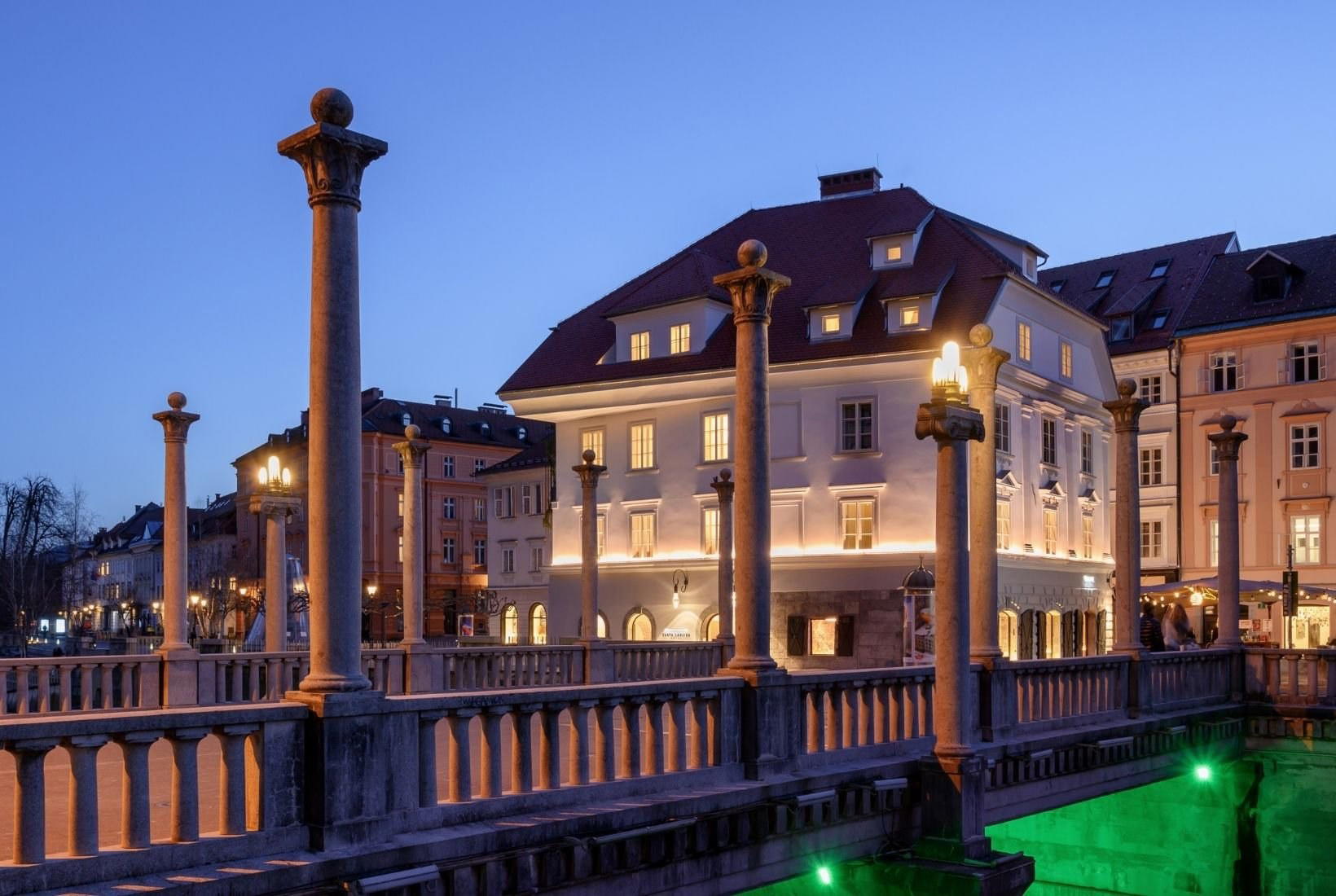
Ljubljana's compact centre rewards pedestrians more than most European capitals of its size. The Triple Bridge, the castle hill, the covered market along the Ljubljanica, these are the reference points that give the city its spatial logic. A food tour that traces that logic gives visitors something a single restaurant sitting cannot: a working map of how Slovenian culinary tradition layers inside a capital that has modernised quickly without abandoning its Central European pantry. LjubljanaNjam Food Tours operates in this format, using the city's walkable core as both backdrop and argument.
In many cities, food tours split between large-group bus operations that pause at tourist-facing restaurants and smaller specialist formats that move on foot through the actual market and neighbourhood infrastructure locals use. Ljubljana's scale, the old town is genuinely crossable in under twenty minutes, makes it better suited than most cities to the latter approach. The format becomes a way of reading the city rather than simply eating through it.
What the Slovenian Market Circuit Teaches You
Slovenia sits at a culinary crossroads that is often underexplained to first-time visitors. The country shares borders with Austria, Hungary, Croatia, and Italy, and each of those adjacencies shows up in the food supply in traceable ways: the dried cured meats have a logic that connects to both Alpine and Balkan traditions, the dairy, particularly aged cheeses from the karst and alpine regions, reflects a mountain economy, and the honey culture is serious enough that Carniolan bees are a recognised breed. A walking food tour through the central market on Pogačarjev trg makes these connections legible in a way that reading about them does not.
The market itself operates at its fullest on Friday and Saturday mornings, when producers from the surrounding regions bring seasonal goods directly into the city. This is where Slovenian food culture is least shaped for visitors, which is precisely why it is the most instructive stop on any route through the capital. Guides who know what to point at, which stalls, which producers, which seasonal markers, compress what might otherwise take several visits into a single coherent circuit.
Ljubljana in Its Regional Context
To understand what a Ljubljana food tour is placing in context, it helps to know where Slovenia's fine dining energy has concentrated. The country punches above its population weight in Michelin terms, with a cluster of starred restaurants outside the capital rather than inside it. Hiša Franko in Kobarid operates at international recognition level in the Soča Valley. Gostilna Pri Lojzetu in Vipava anchors the wine-producing southwest. Hiša Linhart in Radovljica and Hiša Denk in Zgornja Kungota extend the map further. Dam in Nova Gorica, Pavus in Lasko, and Grič in Dobrova Polhov Gradec fill out a constellation of destination kitchens spread across the country.
Ljubljana's restaurant scene is less starred but more varied. Restavracija Strelec represents the formal modern end, positioned at the castle with a menu built around Slovenian produce. Altrokè sits at the affordable regional end of the spectrum. AFTR and Allegria occupy the contemporary middle ground. Abi Falafel points at the city's growing street food diversity. A food tour sits differently from all of these, it is not a restaurant experience so much as a framework for understanding what feeds those restaurants and what the city's eating culture looks like below the level of plated cuisine. For broader orientation, the full Ljubljana restaurants guide maps the scene across price points and formats.
The Neighbourhood as the Argument
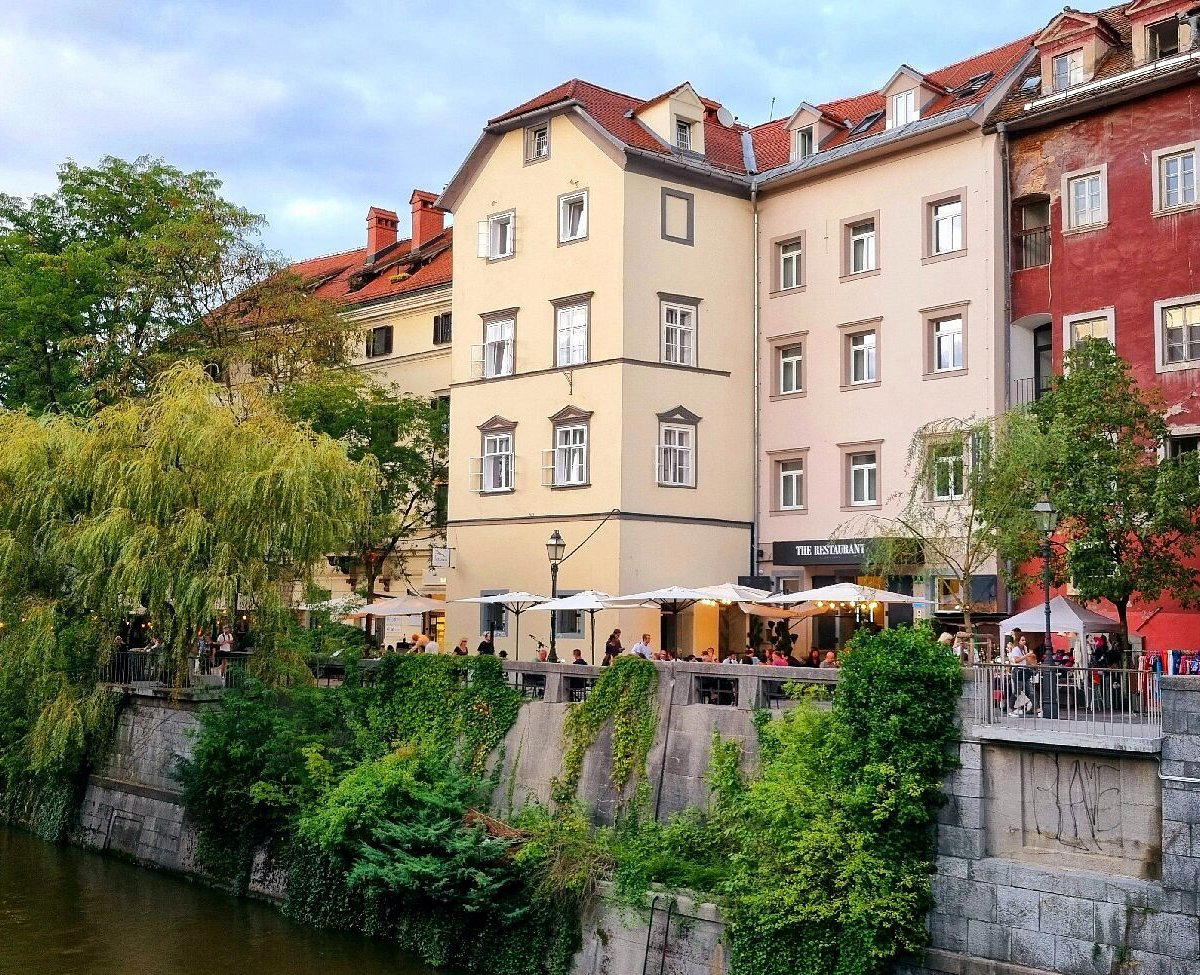
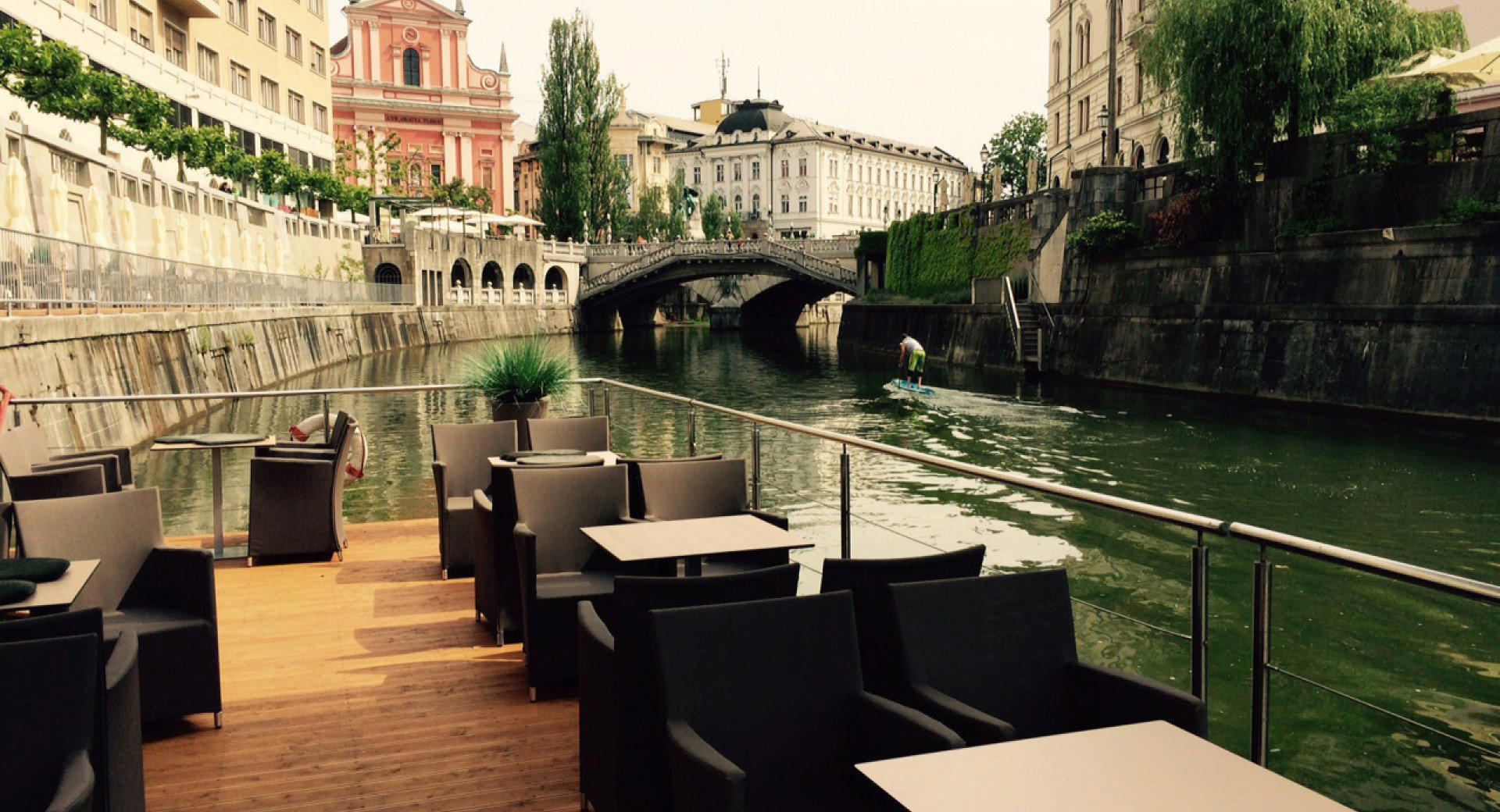
The editorial angle for a Ljubljana food tour is fundamentally geographical. The old town is small enough that a two-hour walk with stops can cover the market, the castle quarter, the riverside Breg area, and the streets south of Congress Square without straining pace or attention. Each of those zones has a distinct food character: the market is production-forward, the castle area is tourist-adjacent but has become genuinely interesting at the restaurant level, the riverside operates at a higher ambient price point, and the streets behind the main pedestrian axis carry the more local-facing spots. A guide who sequences those zones thoughtfully gives visitors a spatial argument about the city rather than a list of stops.
This is a meaningful distinction from the experience offered by individual restaurants. Sitting at Gostilna Skaručna in Vodice or Grič in Šentjošt nad Horjulom, both worthwhile destinations outside the capital, teaches you what a kitchen does with Slovenian ingredients at the gostilna level. Walking Ljubljana's market and old town teaches you where those ingredients come from and how the city organises its relationship with them. The formats are complementary rather than competitive.
How the Format Compares Internationally
Premium food tour formats have matured considerably in the past decade. Cities like San Francisco and New York have seen the category move from broad tourist activity toward specialist programming with genuine culinary depth, the kind of guided engagement that informs how someone later reads a menu at a place like Lazy Bear in San Francisco or how they approach the seafood sourcing conversation at Le Bernardin in New York City. In smaller European capitals, the specialist food tour is still establishing its credibility as a format separate from the generic sightseeing-with-snacks model. Ljubljana is well positioned for it: the city is small enough to cover coherently on foot, the ingredient culture is genuinely interesting and underexplained internationally, and the market infrastructure is real rather than tourist-facing. The format works where the city has something to show, and Ljubljana does.
Planning Your Visit
Because venue-specific booking details, pricing, and scheduling information for LjubljanaNjam Food Tours were not available at time of writing, visitors should check directly with the operator for current tour formats, group sizes, departure points, and availability. As a general guide to the format: food tours in Ljubljana's centre typically run two to three hours, operate leading in the morning when the market is active, and book up during the summer peak season between June and September, advance reservation is advisable during those months. Guests with dietary restrictions should communicate requirements directly when booking, as stop selections and tasting portions can often be adjusted by operators of this type.
For those planning a broader Slovenian itinerary alongside a Ljubljana visit, the starred dining circuit outside the capital warrants its own day trips: Milka in Kranjska Gora to the northwest and Dam in Nova Gorica to the southwest represent the range of what the country's regional kitchens are doing at high level.
Frequently asked questions
Is LjubljanaNjam Food Tours suitable for first-time visitors to Slovenia who want regional context beyond the capital?
Ljubljana sits within Central Slovenia and serves as the country's primary entry point, making it a practical starting frame for understanding the wider regional food picture. The tour's market-circuit format is built around explaining Slovenia's crossroads position between four neighbouring culinary traditions, which gives first-timers a working framework before travelling on to Primorska, the Karst, or the Soča Valley. That contextual grounding is something most standalone restaurant visits in the capital do not provide.
What dish is LjubljanaNjam Food Tours famous for?
The tour is structured around Ljubljana's position at a culinary crossroads between Austrian, Hungarian, Croatian, and Italian influences, so no single dish defines it. Expect stops covering Slovenian market staples rather than any one signature plate. The format is designed to show the range of the country's regional food culture as it concentrates in the capital's old town and covered market.
What's the best way to book LjubljanaNjam Food Tours?
Ljubljana's food tour market has grown alongside the city's broader tourism profile, and operators in this category typically book through their own websites or third-party platforms such as Airbnb Experiences or Viator. Searching 'LjubljanaNjam' alongside the current season will surface the most accurate availability.
What's the standout thing about LjubljanaNjam Food Tours?
The geographical argument is the strongest one: Ljubljana's compact old town means a two-hour walk with stops can cover the Triple Bridge, the castle hill approach, and the covered market in a single circuit. That density is rare in European food tour formats, where most cities require transit between neighbourhoods to achieve the same breadth. The result is a format where the city itself does much of the editorial work.
How does LjubljanaNjam Food Tours handle allergies?
Slovenia's market-based food culture does include dishes with common allergens such as gluten and dairy, particularly in pastry and cured meat stops. Raising requirements at the time of booking rather than on the day is standard practice for walking tour formats of this kind.
The Short List
| Venue | Cuisine | Price | Awards | Notes |
|---|---|---|---|---|
| LjubljanaNjam Food ToursThis venue (the venue you are viewing) | Slovenian Food Tour | $50–100 | Not listed | Not listed |
| Restavracija Strelec | Modern Slovenian Fine Dining | $100–150 | Michelin Plate · La Liste Top Restaurants | Modern Cuisine |
| AFTR | Modern Mediterranean Bistro | $50–100 | Michelin Plate | Modern Cuisine |
| Altrokè | Mediterranean Istrian Fine Dining | $50–100 | Michelin Plate | Regional Cuisine |
| Breg | Modern Fusion with Mediterranean & Middle Eastern Influences | $50–100 | Michelin Plate | Contemporary |
| Gostilna AS | Traditional Slovenian | $50–100 | Michelin Plate | Traditional Cuisine |
Continue exploring
More in Ljubljana
Restaurants in Ljubljana
All restaurants in Ljubljana →
Bars in Ljubljana
All bars in Ljubljana →
Hotels in Ljubljana
All hotels in Ljubljana →
Wineries in Ljubljana
Browse all →
Details
- Lively
- Trendy
- Casual Hangout
- Group Dining
- Historic Building
- Local Sourcing
- Street Scene
- Small Plates
- Craft Beer
- Wine
- Vegetarian Friendly
- Gluten Free Options
Energetic and engaging atmosphere during daytime walks with a focus on cultural immersion and generous tastings.