Our verdict
Jo & Carmen sits on Rue Anne de Bretagne in Réguiny, a small Breton commune in the Morbihan interior where the rhythm of rural life still shapes what ends up on the plate. The address places it firmly in provincial France rather than the restaurant-circuit cities, which is precisely what gives it its particular character. For travellers willing to leave the coast, it represents the kind of local dining that Brittany's smaller towns quietly sustain.

Pearl is the En Primeur Club membership app — saves, bookings, and concierge access live there. Same editors, same standards.
The menu
What to order
- Plateau de fruits de mer
- Palourdes farcies
- Magret de canard
- Filet de bœuf
Arriving in Réguiny: What Rural Brittany Asks of the Table
The drive into Réguiny from the Morbihan coast strips away the postcard scenery gradually. The salt marshes and oyster beds of the Gulf give way to bocage farmland, low stone walls, and villages where the weekly market remains the social anchor. By the time you reach Rue Anne de Bretagne, the address of Jo & Carmen, you are in the kind of interior Brittany that most visitors pass through without stopping. That context matters. The dining scene in towns like Réguiny is not organised around destination chefs or tasting menus calibrated for international guides. It is organised around produce that travels a short distance, a clientele that comes back week after week, and a kitchen that earns its reputation through consistency rather than spectacle.
This places Jo & Carmen in a recognisable tradition across rural provincial France: the neighbourhood restaurant that functions less as an occasion and more as an institution. The comparison is not with the three-starred rooms of Paris or Menton. For those, see Alléno Paris au Pavillon Ledoyen or Mirazur in Menton. The comparison is with the deeper tradition of French regional cooking: the premise that what grows within a day's reach should dictate what arrives at the table.
The Ingredient Logic of the Breton Interior
Brittany's culinary identity is most legibly coastal: lobster from the Sept-Îles, oysters from Cancale, fish landed at Lorient and Quiberon. But the interior of Morbihan tells a different story, one rooted in livestock farming, buckwheat cultivation, and the orchard and kitchen-garden culture that has sustained the region's inland communities for centuries. Buckwheat, the grain behind galettes bretonnes, was never a coastal ingredient. It came from the fields of the interior, and the tradition of milling and using it close to source is still legible in the way Breton galetteries operate inland versus near the tourist shoreline.
The farms around Réguiny supply pork, poultry, and dairy through circuits that predate the current enthusiasm for local sourcing by several generations. Restaurants in towns like this have always operated on short supply chains, not as a positioning choice but as a practical reality. The farm supplying the cream or the eggs is often known by name to the kitchen, not because that makes for good marketing copy, but because the farmer is someone's neighbour. This is the ingredient logic that shapes what a kitchen in this part of Morbihan can realistically offer.
For a sharper contrast in how French regional kitchens have formalised that same local-sourcing premise into international recognition, the trajectory of places like Bras in Laguiole or Auberge du Vieux Puits in Fontjoncouse is instructive. Both built their identities around the immediate landscape and its producers. The difference is scale of ambition and the machinery of recognition. Most rural French restaurants making genuine use of their local terroir never enter that circuit, and their absence from guides does not reflect the quality of what they serve.
Where Jo & Carmen Sits in the French Provincial Restaurant Tradition
The French provincial restaurant, at its functional leading, operates as a reliable weekly proposition rather than a once-a-year event. The price range tends to reflect local purchasing power. The menu shifts with what is available rather than following a fixed seasonal document. The room is rarely designed for photographic effect. These are not shortcomings. They are features of a format that the restaurant cities have largely lost, and which travellers to rural France still find, sometimes by accident.
It is not Georges Blanc in Vonnas or Auberge de l'Ill in Illhaeusern, both of which have operated as destination institutions for decades with the infrastructure that entails. Nor does it belong in the same bracket as the technically driven urban rooms such as AM par Alexandre Mazzia in Marseille or Assiette Champenoise in Reims.
Across Morbihan's inland communes, these restaurants tend to serve lunch as their primary service, with menus that run to two or three courses and prices that reflect a local rather than visitor economy. That structure alone positions them differently from the coastal or city restaurant, where evening dining and tourism premiums change the entire commercial logic.
Planning a Visit: Practical Considerations for Réguiny
Réguiny sits roughly 30 kilometres northeast of Vannes, which is the practical gateway to this part of Morbihan by rail. From Vannes, the journey inland requires a car; there is no viable public transport connection to a commune of this size. Visitors travelling from Rennes should budget around an hour by road. The village itself is small enough that 32 Rue Anne de Bretagne is findable without navigation difficulties once you are within the commune.
Rural restaurants in Morbihan frequently operate Thursday to Sunday, with lunch as the anchor service and dinner available only on certain days. This is a practical pattern across the region rather than anything specific to this address. Those planning a wider Breton itinerary might use the inland stop as part of a circuit that combines the Morbihan interior with the coast; for the broader picture of where Réguiny sits in the local dining scene, see our full Reguiny restaurants guide.
Travellers who routinely seek out the guide-listed rooms of France, from Troisgros in Ouches to Flocons de Sel in Megève, or who cross-reference French technique against transatlantic interpretations such as Le Bernardin in New York or Atomix, will find the register at Jo & Carmen entirely different. That difference is the point. The village restaurant in the Breton interior answers questions the destination room has stopped asking.
Frequently asked questions
Is Jo & Carmen child-friendly?
Réguiny is a small rural commune in Morbihan, and restaurants of this type in the French provincial tradition tend to welcome families as part of the regular weekly trade rather than treating them as an exception. That said, Jo & Carmen does not publish a children's menu or family policy through any publicly listed channel, so it is worth contacting the restaurant directly at 32 Rue Anne de Bretagne before visiting with young children.
What kind of setting is Jo & Carmen?
Jo & Carmen occupies a address on Rue Anne de Bretagne in Réguiny, a small inland commune roughly 30 kilometres northeast of Vannes in Morbihan. The surrounding area is agricultural bocage rather than coastal Brittany, which shapes the register of a restaurant operating here: closer to a dependable local table than a destination dining room. Expect a provincial French dining room context rather than a high-concept urban format.
Is Jo & Carmen worth the drive from Vannes for a meal in rural Morbihan?
Réguiny sits approximately 30 kilometres northeast of Vannes, making Jo & Carmen a deliberate rather than incidental stop — the kind of restaurant that rewards visitors already exploring the Breton interior rather than those looking for a quick detour off the coastal circuit. The French provincial restaurant tradition it operates within is built on consistent local value rather than occasion dining, which makes the journey logical for anyone spending time in inland Morbihan.
What dish is Jo & Carmen famous for?
No specific signature dish is documented in the available record for Jo & Carmen. Given the restaurant's location in the Breton interior, the kitchen likely draws on inland Morbihan produce — buckwheat, pork, freshwater fish, and seasonal vegetables from the bocage — rather than the coastal shellfish more associated with the region's coastal identity. For current menu information, check the venue's official channels at 32 Rue Anne de Bretagne, Réguiny.
Where exactly is Jo & Carmen?
Jo & Carmen is located at 32 Rue Anne de Bretagne, 56500 Réguiny, France, Reguiny.
Comparable Venues
Comparable venues nearby, for context on price, style, and recognition.
| Venue | Cuisine | Price | Notes |
|---|---|---|---|
| Jo & CarmenThis venue — the venue you are viewing | Traditional French Seafood & Regional Cuisine | $30–50 | Not listed |
| La Maison du Puits | Traditional French Bistro | $20–30 | Pleucadeuc |
| La Marine | Breton Crêperie | $10–20 | Historic Centre |
| Annadata | Gourmet Vegetarian French | Not listed | Intra-Muros |
| Coquille | French Bistro | $30–50 | Cathédrale |
| Cargo Culte | French Vintage Bistro | $10–20 | intra-muros |
Continue exploring
More in Reguiny
Restaurants in Reguiny
All restaurants in Reguiny →
Bars in Reguiny
Browse all →
Details
- Rustic
- Lively
- Classic
- Group Dining
- Celebration
- Family
- Private Event
- Private Dining
- Local Sourcing
- Set Menu
- A La Carte
- Pescatarian Friendly
Current opening hours
- Monday
- Closed
- Tuesday
- 7:30 AM–3 PM
- Wednesday
- 7:30 AM–3 PM
- Thursday
- 7:30 AM–3 PM
- Friday
- 7:30 AM–5 PM
- Saturday
- 8:30 AM–5 PM
- Sunday
- 8:30 AM–4 PM
Hours can change for holidays and private events. Last verified .
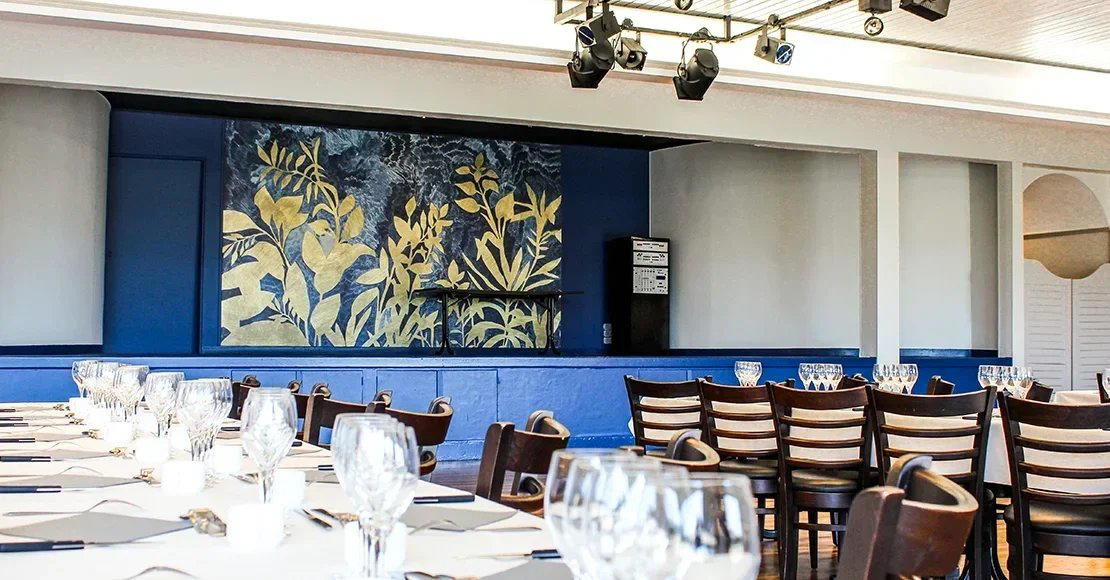
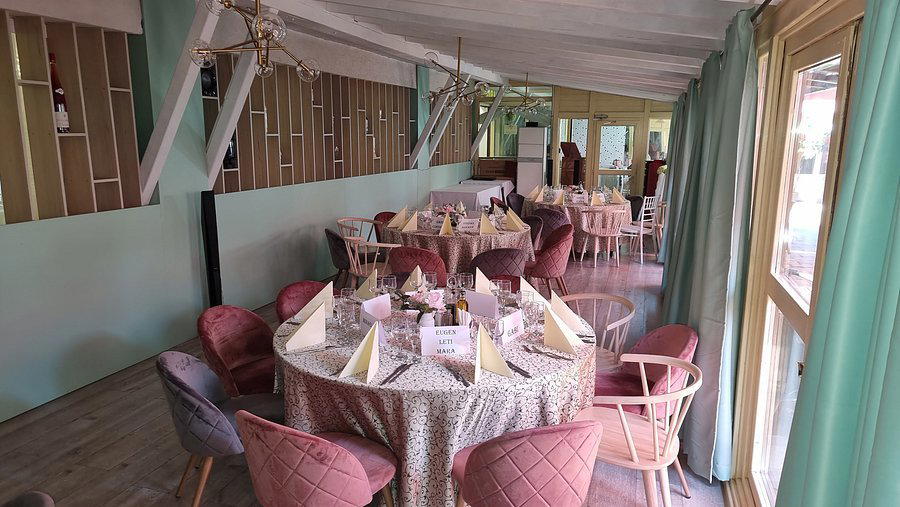
Casual, convivial dining hall atmosphere with simple décor; described as a spacious communal dining space where groups gather to eat and socialize rather than an intimate setting.