Our verdict
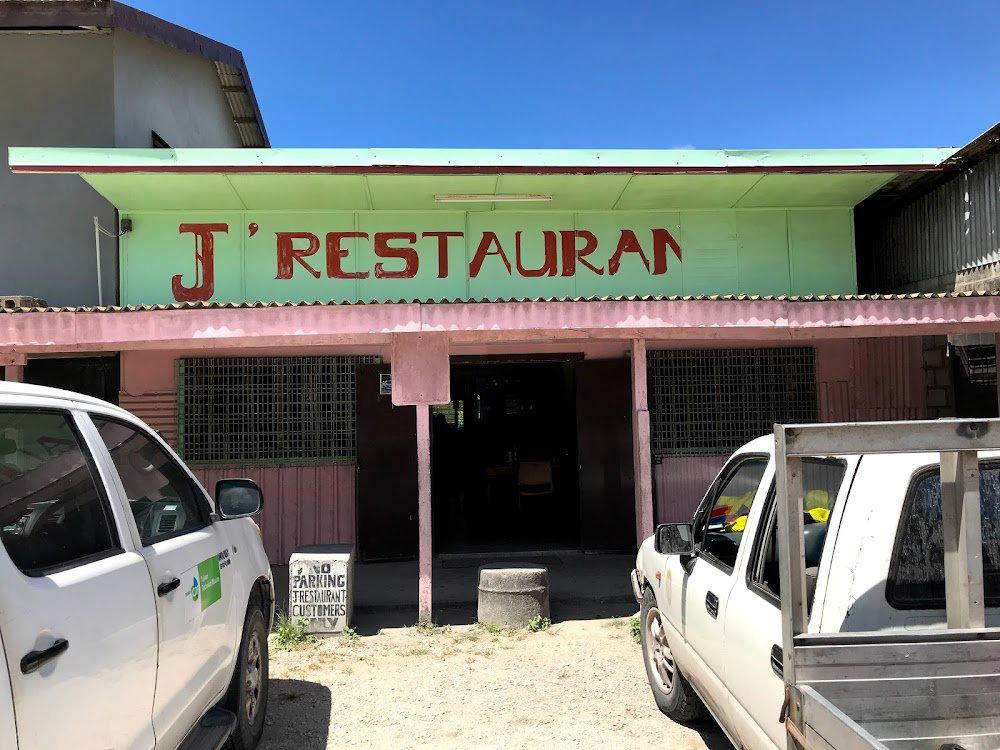
J Restaurant operates in Baiti, Nauru, a setting that places sourcing and simplicity at the centre of any serious dining conversation. On an island where supply chains are genuinely constrained, what arrives on the plate is a direct reflection of what the Pacific and local growers can provide. For travellers reaching one of the world's least-visited countries, J Restaurant represents a reference point in a dining scene with almost no international documentation.

Pearl is the En Primeur Club membership app — saves, bookings, and concierge access live there. Same editors, same standards.
The menu
What to order
- Sweet and sour pork
- Savory dumplings
- Szechuan-style stir-fried vegetables
Dining at the Edge of the Pacific Supply Chain
There are restaurants that talk about provenance, and there are restaurants where provenance is the only option. Nauru, one of the smallest island nations on earth, sits in the central Pacific with supply lines that make the phrase "locally sourced" carry more weight than it does in virtually any other dining context. What reaches Baiti's tables — fish pulled from surrounding waters, produce grown in the island's narrow cultivable strips, imported staples arriving by irregular freight — is shaped by geography in a way that no menu philosophy can replicate. J Restaurant, located in Baiti, operates inside that reality.
The broader context matters here. For a comparative sense of what Pacific island fine dining looks like with more infrastructure and tourism volume, The Bay in Anibare offers a useful point of reference within Nauru itself. But Baiti's dining character is distinct: quieter, less oriented toward visitor traffic, and closer in texture to the rhythms of the resident population. If you are building an itinerary, our full Baiti restaurants guide maps the wider options.
What Ingredient Sourcing Looks Like on a Phosphate Island
Nauru's food system has been shaped by decades of phosphate extraction, which left much of the island's interior landscape unsuitable for agriculture. The practical result is that fresh produce is a constrained commodity. What grows locally, what local fishermen bring in, and what arrives via shipping from Australia or Fiji forms the entire ingredient palette available to any kitchen operating here. At the scale and remoteness of Nauru, a kitchen that handles this constraint thoughtfully is doing something structurally different from a restaurant in a capital city that opts into a farm-to-table framework as a marketing choice.
The Pacific tuna fishery surrounding Nauru is among the most productive in the world. The exclusive economic zone around the island contains skipjack and yellowfin stocks that are the subject of international fishing agreements, and that proximity to a deep-water catch matters on the plate. Restaurants operating in this geography have access to fish at a freshness level that most urban fish programs cannot match, regardless of price point. Compare that to the sourcing model at Aponiente in El Puerto de Santa María, where the kitchen's entire identity is built around marine ingredients from a specific tidal ecosystem, the logic is similar even if the scale and formality are entirely different.
The constraints on dry goods and produce are the harder challenge. Nauru imports a significant proportion of its food, and the rhythm of that supply chain is not consistent. A kitchen that works within irregular availability rather than against it, adjusting what is on offer based on what has arrived, what the sea has yielded, what the week has produced, is practising a form of ingredient discipline that more celebrated programs in larger cities approximate only by choice.
The Setting: Baiti in Context
Baiti is one of the fourteen districts that ring Nauru's single coral plateau. The island measures roughly 21 square kilometres in total area, which means that any description of a "neighbourhood dining scene" carries a different meaning than it would in a city like Hong Kong or Paris. What Baiti has is proximity to the water on one side and a community scale that shapes how restaurants function, these are places that serve residents first, and occasional visitors second. That ordering of priority tends to produce a directness in the food that visitor-facing restaurants in more touristed locations often lose.
For travellers accustomed to the theatrical formality of places like Alain Ducasse at Louis XV in Monte Carlo, or the technical precision of tasting-menu formats at Atomix in New York, or Alinea in Chicago, J Restaurant represents a different register entirely. The value here is not in elaborate technique or extended course sequences. It is in the specificity of place, in eating something that could only plausibly exist at this coordinate on the map, prepared for a community that lives here year-round.
Other contexts where sourcing from a constrained, place-specific ecosystem produces genuinely distinctive food include Atelier Moessmer Norbert Niederkofler in Brunico, which operates under a strict Alpine-only sourcing rule, and Azurmendi in Larrabetzu, where the kitchen's relationship to Basque agricultural suppliers is part of the formal dining proposition. The situations are not equivalent in ambition or format, but the underlying logic, that where ingredients come from defines what a kitchen can honestly do, connects them.
Planning a Visit
Reaching Nauru requires routing through Brisbane or Nadi, Fiji, via Our Airline, which operates limited weekly services. There are no direct connections from major Asian hubs. Baiti is accessible from the island's main settlement of Yaren within a short drive, and the island's compact size means that no district is more than fifteen minutes from any other by road. Accommodation options on-island are limited in number and range, and advance planning is advisable for anyone travelling specifically to explore the food and hospitality environment.
Travellers should verify directly on arrival or through local contacts. This is, frankly, consistent with how most hospitality operates in Nauru: documentation for international audiences is sparse, and the most reliable information tends to come from people already on the ground. For broader eating and drinking context across the region, Le Bernardin in New York, Amber in Hong Kong, Arpège in Paris, Lazy Bear in San Francisco, Atelier Crenn in San Francisco, Alléno Paris au Pavillon Ledoyen, Aqua in Wolfsburg, Arzak in San Sebastián, Emeril's in New Orleans, and 8½ Otto e Mezzo Bombana in Hong Kong are all documented on EP Club with verified sourcing data and editorial assessments.
Frequently asked questions
Is J Restaurant a family-friendly restaurant?
No specific family policy is documented for J Restaurant. Given Baiti's position as a residential district on an island of roughly 21 square kilometres with limited dining alternatives, the local context suggests a general-community orientation rather than a specialist adults-only format. Visitors travelling with children should check the venue's official channels before arrival to confirm arrangements.
What kind of setting is J Restaurant?
J Restaurant is located in Baiti, one of the fourteen districts ringing Nauru's single coral plateau. Nauru's isolation from major supply chains and its phosphate-extraction history have shaped a food environment unlike most Pacific destinations, meaning the setting reflects practical, locally-anchored dining rather than resort infrastructure. Expect a stripped-back context shaped by geography rather than hospitality design.
Is J Restaurant one of the only dining options in Baiti, Nauru?
Nauru's total land area of approximately 21 square kilometres and its status as one of the world's least-visited nations mean the overall restaurant count across all fourteen districts is extremely low. Baiti is a residential district rather than a commercial centre, which places J Restaurant in a context where dining options are scarce by any measure. Travellers routing through Brisbane or Nadi via Our Airline should factor this scarcity into meal planning across their entire stay.
What do regulars order at J Restaurant?
On an island where imported goods arrive via limited freight routes through Brisbane or Nadi, the available ingredients tend to define what any Nauruan kitchen can consistently deliver. Asking staff directly on arrival about that day's provisions is the most reliable approach.
Continue exploring
More in Baiti
Restaurants in Baiti
All restaurants in Baiti →
Details
- Cozy
- Casual Hangout
- Waterfront
- Local Sourcing
- Waterfront
- A La Carte
- Vegetarian Friendly
Inviting atmosphere with picturesque waterfront setting.