Dylan’s Criccieth

The Good Food Guide GFG Good
Our verdict
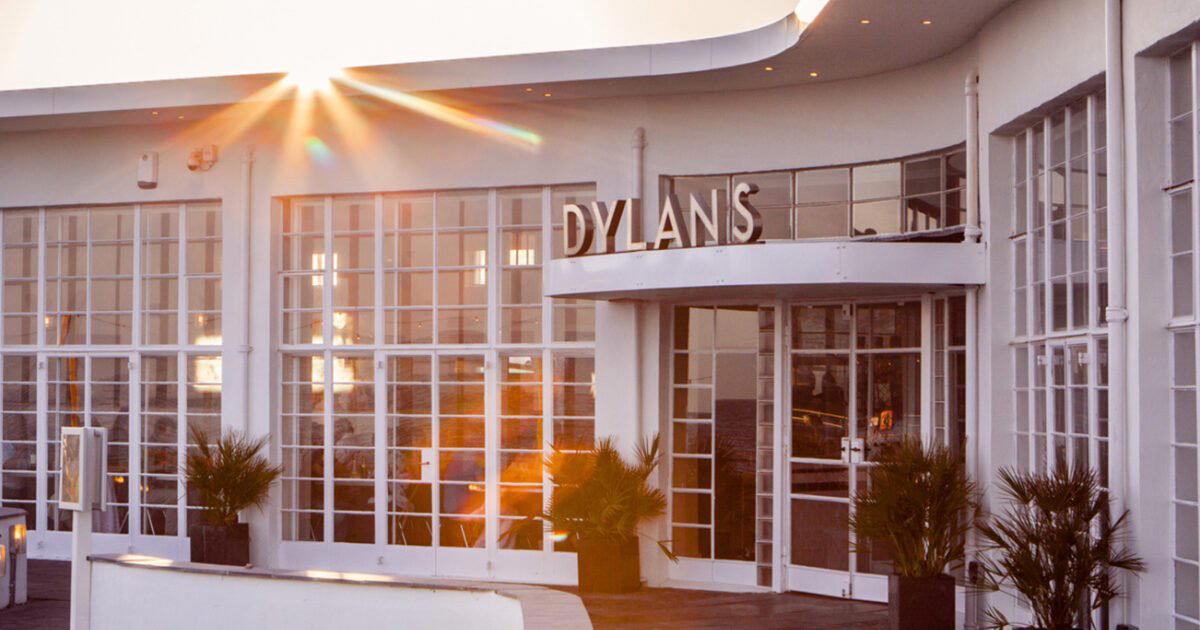
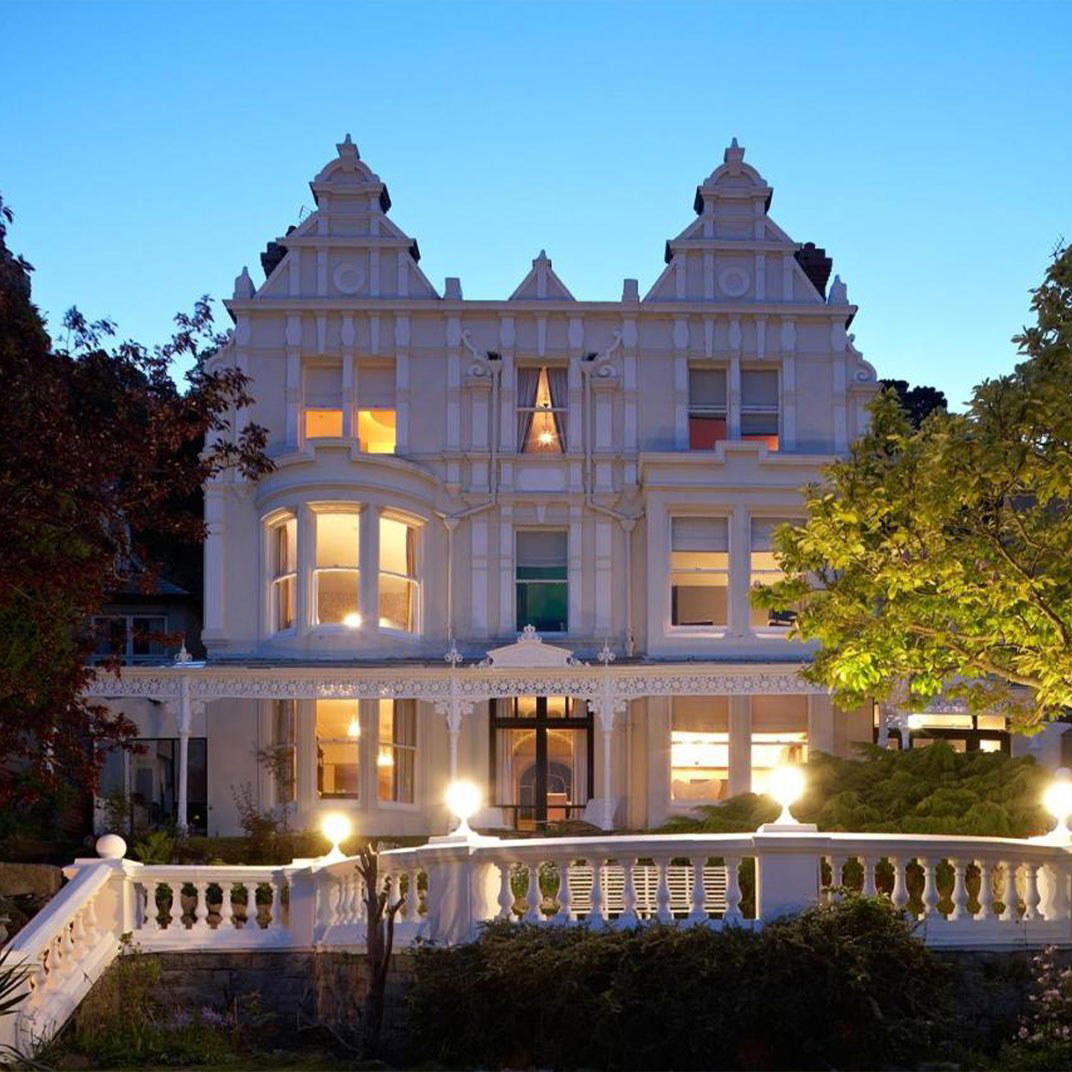
Occupying Clough Williams-Ellis's Art Deco seafront building in Criccieth, Dylan's pairs Welsh coastal ingredients, Halen Môn sea salt, Anglesey lobster, local crab, with a menu broad enough to satisfy a family straight off the beach. The setting, separated from the sand by little more than a lawn, does much of the work, and the food more than keeps pace.

Pearl is the En Primeur Club membership app, where members save venues, book tables and use the concierge.
The menu
What to order
- Gambas pil pil
- Seafood linguine
- Sticky toffee pudding
A Seafront Address That Earns Its View
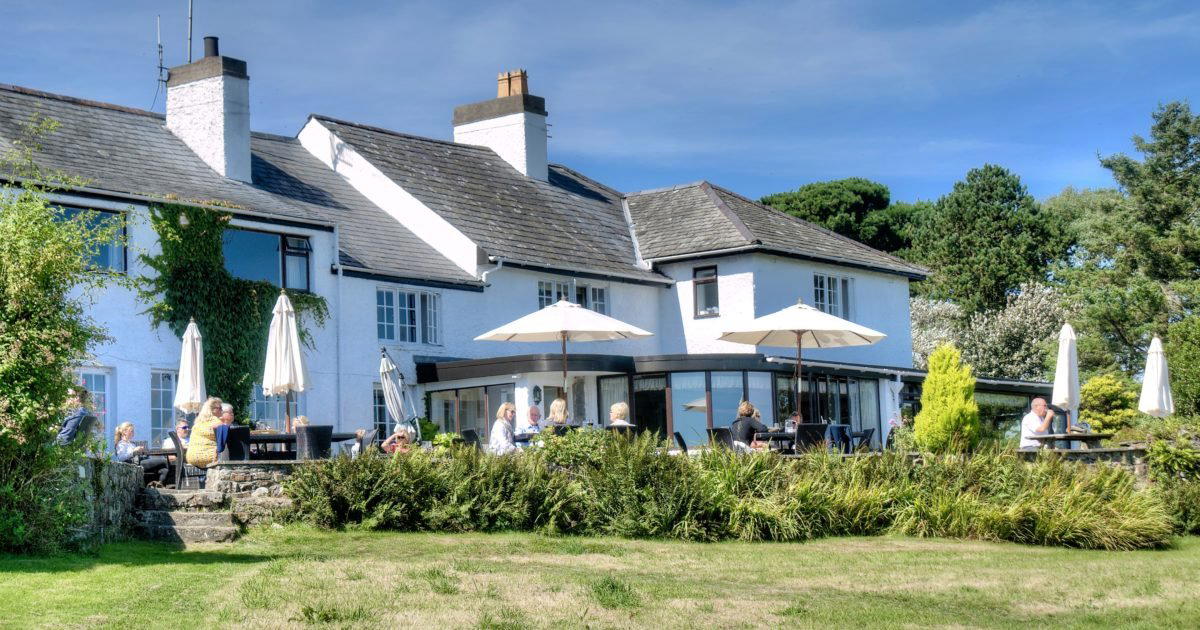
The approach to Dylan's in Criccieth sets expectations that the kitchen has to work to meet. The building, designed by Clough Williams-Ellis, the architect behind Portmeirion, is a winged Art Deco structure on the Esplanade, positioned so that the sea fills most of the windows and only a lawn and a few steps separate the dining room from the beach. Arriving after a day on the coast, with the castle on its promontory behind you, the transition from outside to inside is gradual rather than abrupt. That permeability is partly architectural, partly the deliberate tone set by staff who are described, accurately, as friendly and unflappable in the face of family-heavy, holiday-mode crowds.
Criccieth sits on the southern edge of the Llŷn Peninsula in north Wales, a stretch of coastline that has remained comparatively underdeveloped by the standards of other scenic Welsh destinations. Restaurants in this tier of the market, in small coastal towns without a year-round urban catchment, tend to face a binary choice: pitch to the visitor trade with broad menus and diluted ambition, or hold a tighter culinary line and risk alienating a mixed crowd. Dylan's takes a third route, grounding the menu in strong Welsh provenance while building enough range to accommodate the table where three generations have different priorities entirely. For context on how different the high-end British coastal dining register can look, Gidleigh Park in Chagford or L'Enclume in Cartmel operate with tasting-menu formality and controlled sourcing narratives aimed at destination diners. Dylan's occupies an entirely different position on that spectrum, and it is not trying to occupy the same one.
Where the Ingredients Come From, and Why It Shows
The sourcing at Dylan's is specific enough to function as an editorial statement about what north Welsh coastal cooking can look like when it takes its geography seriously. Halen Môn sea salt, harvested from the Menai Strait on Anglesey, appears as the seasoning of choice, a decision that does more than add a local footnote: it places the kitchen inside a broader Welsh food identity that has spent the last two decades building credible artisan credentials. Anglesey lobster and scallops reach the table in a bao bun with pickled samphire, a format that signals the kitchen's willingness to draw on broader culinary references without obscuring where the core ingredient comes from. Local crab takes the opposite route, landing in a simple salad alongside brown bread, a preparation that asks the ingredient to carry the plate rather than supporting it with technique.
This tension between anchored provenance and wide-ranging inspiration is one of the more interesting aspects of how Dylan's reads as a menu document. Sourdough pizzas, blistered and appropriately oozy, sit beside Welsh seafood without the menu feeling incoherent, because the kitchen's base commitment to local salt, local shellfish, and local drink (Welsh beers, ciders, and whisky are available throughout) provides a thread that holds things together. It is an approach that mirrors what the better end of British coastal dining has been working toward more broadly: using sourcing rigour as the organising principle rather than imposing a rigid cuisine category.
For comparison, the kind of precision sourcing that defined the conversation at places like Moor Hall in Aughton or Restaurant Sat Bains in Nottingham operates at a different price point and ambition level entirely, but the underlying logic, that where an ingredient comes from shapes what you can honestly do with it, is the same. At Dylan's it translates into a much more accessible format, without the tasting-menu structure or the price bracket that those restaurants require.
The Full Table: From Kids' Menu to Dessert
The range of what Dylan's asks of its kitchen is worth noting directly, because it is broader than most restaurants manage without at least one tier of the offering falling below the standard of the others. The kids' menu avoids the usual reductive approach, providing options that are designed for younger diners without being condescending about it. Desserts are where the kitchen shows the clearest individual voice: a baked lemon cheesecake arrives with delicately candied zest and blueberries concealed inside a ball of lemon ice cream, a construction that requires more pastry technique than the casual register of the room might lead you to expect. A brownie occupies the other end of the complexity spectrum but is described in terms that suggest it earns its place through execution rather than effort.
The wine list is priced accessibly, which at a family-oriented seaside restaurant in north Wales is a genuine practical consideration rather than a throwaway point. Welsh options extend to beer, cider, and whisky, giving the drinks programme a coherent local identity that reinforces the sourcing ethos in the kitchen. This kind of alignment between what is on the plate and what is in the glass is something that, at the higher reaches of the British dining tier, venues like The Ledbury in London or Midsummer House in Cambridge are expected to deliver as a baseline. At Dylan's the principle is the same, the execution calibrated to a different audience.
The Criccieth Location in Context
Dylan's operates two other branches, at Llandudno and Menai Bridge, and each occupies a similarly characterful waterside building. The model, then, is not a single-site exercise in destination dining but a small group with a consistent identity applied across multiple north Welsh coastal settings. This positions it differently from the independent one-site operators that populate most regional dining conversations. For visitors to Criccieth specifically, Dylan's sits within a wider set of options worth orienting around: see our full Criccieth restaurants guide for broader coverage, and our full Criccieth hotels guide, bars guide, wineries guide, and experiences guide for the fuller picture of what the town offers.
The Esplanade address on the Maes y Mor means arriving on foot from the town centre or beach is direct; the building is visible from the seafront and the lawn-level access makes the transition from beach to table feel natural rather than formal. Given the volume of family visitors the restaurant handles with apparent ease, arriving outside peak holiday hours or booking ahead in summer is the sensible approach.
Frequently asked questions
Is Dylan’s Criccieth award-winning?
Dylan’s Criccieth has received recognition including: After a day of beachcombing and castle-gazing, Dylan's is a tempting prospect; something to wash your face for, but relaxed enough to cope admirably with a whole family of holiday-hungry visitors (staff are friendly and unflappable). The wi….
What part of town is Dylan’s Criccieth in?
Dylan’s Criccieth is located at Esplanade Maes y Mor LL52 0HU, United Kingdom, Criccieth.
Do they take walk-ins at Dylan’s Criccieth?
Reservations are recommended for Dylan’s Criccieth in Criccieth. Confirm current policy via the venue's official channels.
What is Dylan’s Criccieth known for?
Dylan’s Criccieth is best approached by focusing on the core concept and signature offerings.
At-a-Glance Comparison
Comparable venues nearby, for context on price, style, and recognition.
| Venue | Cuisine | Price | Awards | Notes |
|---|---|---|---|---|
| Dylan’s CricciethThis venue (the venue you are viewing) | Modern Seafood Gastropub | $30–50 | The Good Food Guide GFG Good | Not listed |
| Old School Restaurant | Modern Scottish Seafood | Not listed | Not listed | Dunvegan |
| The Scallop Shell | British Seafood & Upmarket Fish & Chips | $30–50 | The Good Food Guide GFG Good | Bath |
| Oudh 1722 | Awadhi fine dining from Lucknow in a historic Borough townhouse | $100–150 | National Restaurant Awards One to Watch | Borough |
| Bonnie Gull | British Seafood Shack | Not listed | Not listed | Soho |
| Gina | Modern British-Italian Chophouse | $50–100 | Not listed | Chingford |
Recognition history
Dated appearances from independent guides and award organizations, with the underlying list record or original source where available.
The Good Food Guide GFG Good
The Good Food Guide
Continue exploring
More in Criccieth

Details
- Scenic
- Cozy
- Classic
- Family
- Date Night
- Casual Hangout
- Waterfront
- Historic Building
- Local Sourcing
- Waterfront
- A La Carte
- Vegan Options
- Vegetarian Friendly
Current opening hours
- Monday
- 11 AM–10 PM
- Tuesday
- 11 AM–10 PM
- Wednesday
- 11 AM–10 PM
- Thursday
- 11 AM–10 PM
- Friday
- 11 AM–10 PM
- Saturday
- 11 AM–10 PM
- Sunday
- 11 AM–10 PM
Hours can change for holidays and private events. Hours as of .
Light and bright interior with inviting atmosphere enhanced by Art Deco details, though seating location can affect noise levels.