Chishuru



Chishuru holds a Michelin star and a place in the OAD Top 600 European restaurants, making it one of a small number of London addresses where West African cooking operates at this level of technical precision. Chef Adejoké Bakare's £75 five-course dinner menu works palm nut creams, fermented rice cakes, and uziza leaf into a format the city's fine-dining circuit has largely ignored until recently.
Pearl is the En Primeur Club membership app — saves, bookings, and concierge access live there. Same editors, same standards.
- Address
- 3 Great Titchfield St., London W1W 8AX, United Kingdom
- Phone
- 020 3915 1198
- Website
- chishuru.com
- Directions
- Get directions
 Saves & bookings on Pearl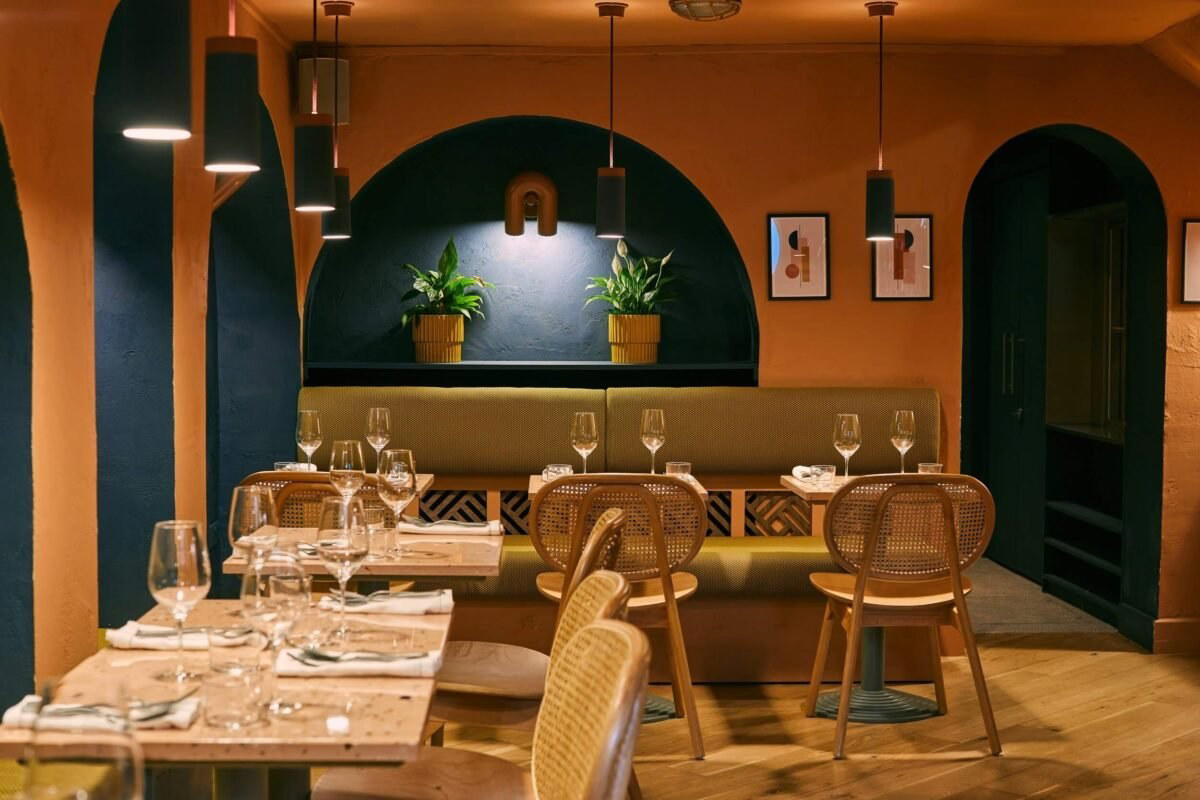
West African Cooking at Michelin Level: What Chishuru Represents in London's Fine-Dining Scene
Walk along Great Titchfield Street on a weekday evening and Fitzrovia's restaurant density makes itself felt within a few steps. The neighbourhood sits between the expense-account tables of Marylebone to the west and the media-lunch circuit of Soho to the south, and it has long supported a tier of restaurants that are serious without being ceremonial. Chishuru operates in that register, though what it does with Nigerian and West African cooking places it outside any obvious local peer group. It is a Michelin-starred kitchen working palm nut cream, fermented rice, and uziza leaf into the same structural conversation as the tasting menus happening a few postcodes away at CORE by Clare Smyth or The Ledbury.
From Pop-Up Roots to Fitzrovia Fixture: The Arc of the Restaurant
London's current generation of West African fine-dining has followed a pattern familiar from other underrepresented cuisines: pop-up format first, residency second, permanent address third, then critical validation. Chishuru moved through those stages faster than most. Adejoké Bakare launched the concept in supper-club form, built an audience among the city's Nigerian diaspora and food-press circuit simultaneously, and eventually landed a permanent Fitzrovia site. The Michelin star confirmed what that trajectory suggested: the restaurant was no longer being evaluated on the merit of its premise but on the precision of its execution.
That evolution matters because it reframes what Chishuru is now versus what it was at launch. The supper-club model rewarded accessibility and enthusiasm. The current format, with a £50 four-course lunch and a £75 five-course dinner, rewards the kind of focused attention that Michelin's inspectors look for: consistency across visits, sauce-making at a level that transforms familiar ingredients, and the ability to handle produce, such as turbot, with the same care a French kitchen would bring to it. A banga-style fish stew built on turbot, palm nut cream, and green crab sauce is the kind of dish that makes a case for the cuisine rather than simply representing it.
The Room and What It Signals
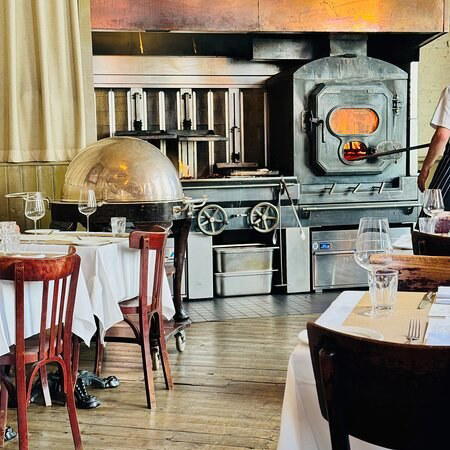
The ground-floor dining room at 3 Great Titchfield Street reads as contemporary London: bare tables, wood floors, an open kitchen visible from the main space. Downstairs, the basement runs warmer in tone and lower in light, with an intimacy that the ground floor, longer and narrower, cannot quite match. Neither room is trying to signal luxury through material excess. The design language is closer to the stripped-back aesthetic of a certain type of modern European restaurant than to the decorative ambition of, say, Sketch, The Lecture Room and Library. That restraint is a choice: it keeps attention on the food rather than the setting, and it positions the restaurant as a neighbourhood place even as the food operates at a different level.
That neighbourhood quality is not incidental. Fitzrovia's character, walkable, mixed in use, with independent operators alongside media companies, means Chishuru draws a room that is curious rather than performative. The service, described across multiple reviews as charming and efficient, reinforces that tone.
The Menu's Technical Logic
Nigerian cuisine's structural reliance on starchy foods, ogi, moi moi, ekoki, ginger fried rice, fried plantain, gives Bakare's menus a foundation that differs from both European tasting-menu convention and the lighter, acid-forward formats that dominate contemporary London fine dining. The dishes that have drawn the consistent praise are those where sauce construction carries the narrative. A moi moi, the steamed bean pudding common across West Africa, arrives here with lamb broth-cooked tomato, shrimp shito, and a salted egg sauce. A peppersoup course comes with pickled oyster mushroom, compressed beetroot, apple, and uziza leaf. An ekoki corn cake is paired with coconut cream and a date-and-tamarind sauce.
The spicing across these dishes is what reviewers return to most often: the use of grains of paradise, the yaji rub on mutton, the Timur pepper in the dessert course. These are not decorative references to a culinary tradition; they are load-bearing elements in dishes that depend on them for balance. The wine list, European in selection and chosen to complement rather than compete with the food, suggests the kitchen has thought carefully about what sits alongside fermented, spiced, and palm oil-rich sauces.
Dessert follows the same logic. Soursop ice cream with burnt marshmallow, moringa biscuit, and citrus dressed with Timur pepper is a course that makes use of West African produce in a format that reads as fine dining without erasing where the ingredients come from.
Where Chishuru Sits in London's Broader Map
London's West African restaurant scene has expanded significantly in the past decade, but the fine-dining tier within it remains small. Akara operates in a related space, and the broader African fine-dining conversation extends internationally to addresses like Dōgon in Washington, D.C. and Bintü Atelier in Charleston. Within London, Chishuru now occupies a position that no other restaurant in the city holds: a Michelin-starred address where the cooking is rooted specifically in Nigerian culinary tradition at the level of technique that the award implies.
The price tier, £££, means Chishuru does not price against Restaurant Gordon Ramsay or the comparable four-star European rooms, means Chishuru does not price against its Michelin peers in the way those rooms do. A £75 dinner tasting menu sits below the entry point of many starred London restaurants.
For those extending into the UK beyond the capital, the country's longer-established destination restaurants, among them The Fat Duck in Bray, L'Enclume in Cartmel, Moor Hall in Aughton, Gidleigh Park in Chagford, Hand and Flowers in Marlow, and Le Manoir aux Quat' Saisons in Great Milton, offer a useful frame for understanding where Chishuru sits in the national critical conversation.
The Minimal Set
Comparable venues nearby, for context on price, style, and recognition.
| Venue | Cuisine | Price | Notes |
|---|---|---|---|
| ChishuruThis venue — the venue you are viewing | Fitzrovia, Modern West African | $$$ | Not listed |
| Akoko | Not listed | $$$$ | Fitzrovia, Modern West African Fine Dining |
| 64 Goodge Street | Fitzrovia, Classical French Bistro | $$$ | Not listed |
| Kitchen W8 | Not listed | $$$ | South Kensington, Modern English with French Soul |
| The Ninth | Not listed | $$$$ | Fitzrovia, Modern Mediterranean Sharing Plates |
| AngloThai | Not listed | $$$ | Marble Arch, Modern Anglo-Thai Fine Dining |
Recognition history
Dated appearances from independent guides and award organizations, with the underlying list record or original source where available.
Michelin 1 Star
Michelin
National Restaurant Awards Top 100 #77 · No. 77
National Restaurant Awards · 2026 National Restaurant Awards Top 100
Opinionated About Dining Top Restaurants in Europe Recommended
Opinionated About Dining
Michelin 1 Star
Michelin
National Restaurant Awards Top 100 #40
National Restaurant Awards
Opinionated About Dining Top Restaurants in Europe Ranked #593
Opinionated About Dining
The Good Food Guide GFG Good
The Good Food Guide
Michelin 1 Star
Michelin
Continue exploring
More in London
Restaurants in London
Browse all →
Bars in London
Browse all →
Hotels in London
Browse all →

At a Glance
- Modern
- Trendy
- Cozy
- Intimate
- Date Night
- Special Occasion
- Open Kitchen
- Natural Wine
- Craft Cocktails
Current opening hours
- Monday
- 12–1:45 PM, 5:30–9:30 PM
- Tuesday
- 12–1:45 PM, 5:30–9:30 PM
- Wednesday
- 12–1:45 PM, 5:30–9:30 PM
- Thursday
- 12–1:45 PM, 5:30–9:30 PM
- Friday
- 12–1:45 PM, 5:30–9:30 PM
- Saturday
- Closed
- Sunday
- Closed
Hours can change for holidays and private events. Last verified .
Warm, bright neighborhood feel with a fun atmosphere, dark green and ochre walls creating a subdued, comfortable setting with good acoustics.