Carlos Oyarbide Bistronomiko


Guía Repsol 1 Sol · Macarfi 8.2 Food Rating
Our verdict
Carlos Oyarbide Bistronomiko gives San Adrián a serious contemporary dining marker in a part of Navarra better known for market produce than destination tasting rooms. Its 1 Sol recognition in Guía Repsol 2026 places it in Spain’s national conversation, with the strongest editorial case built around the Ribera Navarra pantry and a bistronomic format that suits a smaller town.

Pearl is the En Primeur Club membership app, where members save venues, book tables and use the concierge.
The menu
What to order
- Marinated tuna salad
- Ajoarriero
- Hake with pil pil peppers and spider crab
- Beans with spider crab
- Cod
- Shank of meat
San Adrian does not announce itself with grand dining-room theatre. The town’s appeal is quieter, with the approach to a restaurant shaped more by the matter-of-fact rhythm of a smaller community than by a polished hotel-lobby sense of arrival. That setting matters. In this part of Spain, a serious table can carry weight through consistency, local relevance and the confidence to make a meal feel rooted without turning the surrounding context into performance.
Carlos Oyarbide Bistronomiko belongs to the kind of Spanish restaurant that asks to be read beyond simple categories. The point is not luxury coded through ceremony; it is a more direct kind of ambition applied in a local setting. Guía Repsol’s 1 Sol recognition for 2026 gives the restaurant a national credential, but the more interesting story is geographic: San Adrian is not one of Spain’s larger dining capitals. A dining room here has to justify travel through substance rather than scene.
San Adrian gives the restaurant its centre of gravity
The broader dining identity around a smaller town is built as much on context as on any single room. Local habits, regular diners and the pace of the place shape the way many visitors understand a meal, while the wider culture of Spanish eating can pull the table toward longer visits and a stronger sense of place. Contemporary restaurants in this setting work best when they respect that base instead of disguising it under borrowed signals.
That is the lens through which Carlos Oyarbide Bistronomiko is easiest to understand. The restaurant’s position suggests a middle path: more ambitious than a conventional everyday dining room, less dependent on the ceremony of a formal destination. In Spanish provincial towns, that middle tier has become important. It gives restaurants room to be current and considered while keeping the meal connected to local habits.
The 1 Sol from Guía Repsol is a useful signal because Repsol often captures the texture of Spanish regional dining with more breadth than international award systems. In a town the size of San Adrian, that recognition does not simply decorate the door; it marks the restaurant as part of a wider movement in which smaller municipalities compete through clarity, confidence and execution, not metropolitan spectacle.
A serious small-town table, not a city restaurant in disguise
The comparison set is instructive. In northern Spain, regional restaurants such as Túbal operate with a more established sense of place, while contemporary addresses such as Morro Tango point to a different register. Carlos Oyarbide Bistronomiko sits between those poles: contemporary enough to matter beyond San Adrian, grounded enough that the town remains part of the experience rather than a postal detail.
That distinction matters for travellers planning around Navarra. Dining in the region is often split between capital-city meals, wine-country stops and country tables built around local supply. San Adrian’s appeal is quieter: it offers a version of Navarra that is not staged for the visitor. The restaurant’s recognition makes the detour easier to defend, particularly for diners already tracing routes through smaller towns and the surrounding food culture.
There is also a practical editorial point here. Spain’s dining map has become increasingly decentralised, with serious rooms appearing in towns that previously functioned as agricultural or transit stops rather than obvious culinary destinations. Awards can flatten that story into badge collecting. The better reading is economic and cultural: when a small-town restaurant earns national notice, it suggests enough local support, demand and craft to sustain cooking above the everyday tier.
How to place it in a San Adrián itinerary
San Adrian is not a city for restaurant hopping in the way larger Spanish destinations can be. The stronger plan is to treat a meal here as part of a Navarra route built around smaller towns and a slower sense of place. For readers mapping the wider area, Our full San Adrian restaurants guide is the natural companion, while Our full San Adrian hotels guide, Our full San Adrian bars guide, Our full San Adrian wineries guide and Our full San Adrian experiences guide help turn the meal into a fuller stop rather than a single reservation.
Across Spain, the useful comparison is not only between nearby restaurants but between formats. Major-city dining density, northern regional addresses, eastern urban rooms, island restaurants and coastal dining all show how strongly Spanish restaurants change with geography. That broader contrast clarifies why San Adrian’s value lies in place-specific context rather than imported trends. Carlos Oyarbide Bistronomiko should be read on those terms: not as a copy of a metropolitan dining room, but as a small-town restaurant with national recognition and a clear reason to be considered on a Navarra route.
The verdict is measured but positive. Carlos Oyarbide Bistronomiko is strongest for travellers who care about how a place eats, not just where awards have landed. Its case rests on San Adrian and the credibility of Guía Repsol’s 2026 1 Sol. In Navarra, that combination is enough to make the town more than a waypoint.
Frequently asked questions
Does Carlos Oyarbide Bistronomiko work for a family meal?
Yes, it can suit a family meal for diners looking for a serious but approachable restaurant in San Adrian. The Guía Repsol 1 Sol 2026 suggests a recognized table without needing to frame the visit as a highly formal occasion.
What's the overall feel of Carlos Oyarbide Bistronomiko?
It reads as a focused restaurant in San Adrian rather than a casual everyday stop. The Guía Repsol 1 Sol 2026 frames it as a restaurant with clear regional credibility.
Is Carlos Oyarbide Bistronomiko open every day?
Current opening days and hours are not specified in the provided record. Check the venue's official channels before planning a visit.
Where exactly is Carlos Oyarbide Bistronomiko?
San Adrian.
What do critics highlight about Carlos Oyarbide Bistronomiko?
The clearest critical signal is the Guía Repsol 1 Sol 2026. That places Carlos Oyarbide Bistronomiko in a recognized Spanish guide system, which matters more here than generic praise because the restaurant’s case rests on consistency and regional credibility in San Adrian.
In Context: Similar Options
Comparable venues by cuisine and price in the same metro.
| Venue | Cuisine | Price | Awards | Notes |
|---|---|---|---|---|
| Carlos Oyarbide BistronomikoThis venue (the venue you are viewing) | Modern Navarrese–Basque tasting menu | $50–100 | Guía Repsol 1 Sol · Macarfi 8.2 Food Rating | Not listed |
| Morro Tango | Contemporary Spanish Regional | $20–30 | Michelin Bib Gourmand · Macarfi 8.1 Food Rating | Contemporary |
| Túbal | Traditional Navarrese Cuisine | $30–50 | Michelin Plate · Macarfi 7.5 Food Rating | Regional Cuisine |
Recognition history
Dated appearances from independent guides and award organizations, with the underlying list record or original source where available.
Guía Repsol 1 Sol
Guía Repsol
Macarfi 8.2 Food Rating
Macarfi
Continue exploring
More in San Adrian
Restaurants in San Adrian
All restaurants in San Adrian →
Bars in San Adrian
Browse all →
Hotels in San Adrian
Browse all →

Details
- Cozy
- Intimate
- Elegant
- Date Night
- Special Occasion
- Celebration
- Solo
- Standalone
- Extensive Wine List
- Local Sourcing
- Sustainable Seafood
- Tasting Menu
- Set Menu
- Wine
Current opening hours
- Monday
- Closed
- Tuesday
- 1:30–3:30 PM
- Wednesday
- 1:30–3:30 PM
- Thursday
- 1:30–3:30 PM
- Friday
- 1:30–3:30 PM
- Saturday
- 1:30–3:30 PM
- Sunday
- 1:30–3:30 PM
Hours can change for holidays and private events. Hours as of .
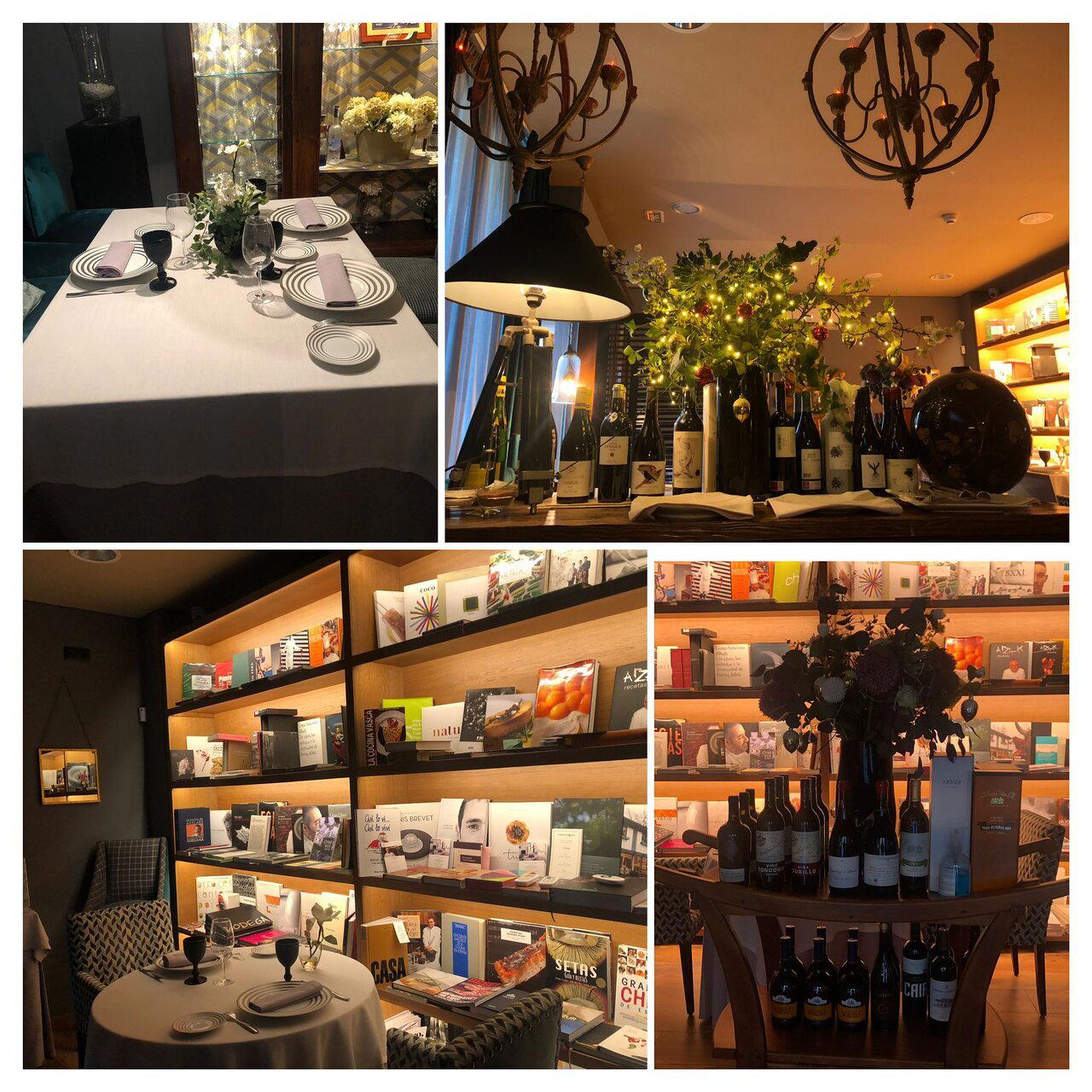
Warm and inviting small dining room run by a couple, with attentive, delicate service and a relaxed, unhurried atmosphere suited to lingering over a haute‑cuisine tasting menu.