
Michelin Plate
Our verdict
A Michelin Plate holder on Rue Croix des Petits Champs, Campelli sits in the mid-price creative bracket that separates Paris's grand three-star institutions from its neighbourhood bistros. The lunch proposition, in particular, warrants attention for those tracking value in this postcode.

Pearl is the En Primeur Club membership app, where members save venues, book tables and use the concierge.
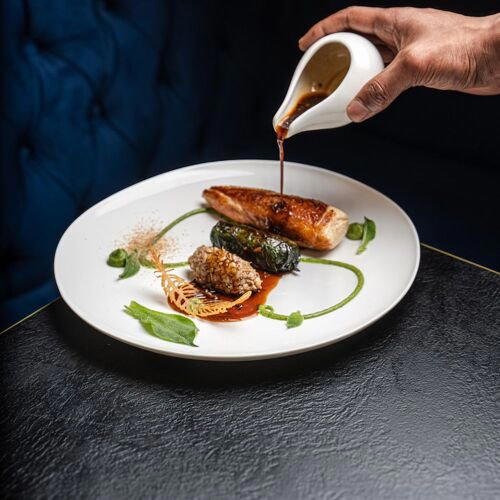
The menu
What to order
- Flora's cauliflower
- Crispy skin chicken
- Chocolate mousse with chicken skin tuile
- Caucasian manti
- Monkfish fish and chips with chicken kefta
A Creative Address in the 1st Arrondissement
The Rue Croix des Petits Champs runs quietly through the 1st arrondissement, a few blocks north of the Palais-Royal gardens and just east of the Bibliothèque nationale de France's Richelieu site. This is not a street that appears on most Paris dining itineraries, which is precisely what makes it interesting. The neighbourhood is dense with financial institutions, government offices, and the administrative texture of central Paris, not the kind of setting that typically produces a restaurant with consecutive Michelin Plate recognition in 2024 and 2025. Campelli is an exception worth understanding in context.
The Michelin Plate, for those unfamiliar with the guide's lower tier, signals cooking that inspires quality without reaching the star threshold. It is not a consolation prize, the distinction marks restaurants where technique and ingredients meet a standard the inspectors consider worth flagging. In the 1st arrondissement, where the dining room at Le Meurice Alain Ducasse represents the baroque apex of Parisian formal dining and Alléno Paris au Pavillon Ledoyen commands the upper reaches of the creative category at €€€€, a €€ creative address holding consecutive Plate recognition occupies a meaningful, if underoccupied, position in the market.
Where Campelli Sits in the Paris Creative Tier
Paris's creative restaurant category has become polarised. At the leading, multi-star operations like Arpège and Le Gabriel at La Réserve Paris demand both advance planning and significant spend. At the accessible end, a growing cohort of neo-bistros and natural-leaning tables have claimed the creative label without the Michelin apparatus to support it. Campelli occupies a credible middle position: Michelin-recognised, mid-priced, and operating outside the tourist circuits that cluster around the Louvre and the Seine.
The comparison is instructive. Restaurants like Blanc represent the more visible end of Paris's contemporary creative movement. That sample size matters: it takes a dining room cycling through hundreds of covers to accumulate 473 ratings at that average, and it suggests reliability rather than a single high-profile service.
For a broader sense of where this fits in the city's full dining picture, our full Paris restaurants guide maps the creative category across all arrondissements. The Paris bars guide, hotels guide, wineries guide, and experiences guide cover the wider picture if you are building a trip around this neighbourhood.
The Lunch vs. Dinner Proposition
In Paris, the divide between lunch and dinner service at mid-tier creative restaurants is rarely just about timing. Lunch in the 1st arrondissement carries a particular character: the clientele skews local and professional, the pace is more compressed, and the value proposition is almost always stronger. Dinner, by contrast, draws a more varied mix of occasion diners, tourists staying nearby, and those with more time to spend.
At the €€ price point, Campelli's lunch service is the sharper argument for a visit. The mid-range positioning suggests a formule or abbreviated menu during the day, which is standard practice for creative kitchens trying to maintain quality at accessible price points without compromising the more expansive dinner format. This kind of operational discipline, running a tighter lunch against a fuller evening offer, is what separates restaurants that hold Michelin recognition at this tier from those that simply list themselves as creative without the backing to prove it.
Evening service at a creative address like this tends to allow the kitchen more latitude: longer sequences, more elaborate preparation, a menu that can breathe. For first-time visitors, dinner is the more complete picture of what the kitchen is attempting. For those returning, or for anyone with a tight midday schedule in the 1st, the lunch offer is where the real value sits relative to the tier.
This lunch-or-dinner calculus is worth comparing against what the €€€€ end of the market demands. A table at the kind of three-star operations that define the upper bracket of Parisian creative dining, Alléno Paris or Arpège, typically requires weeks or months of advance planning and a significantly larger outlay. Campelli's combination of Michelin recognition and €€ pricing compresses the barrier to entry considerably.
France's Creative Tradition and Where Campelli Connects
The creative category in French fine dining has deep roots outside Paris. Restaurants like Troisgros in Ouches, Bras in Laguiole, and Flocons de Sel in Megève established the principle that creative French cooking does not require a Parisian address to achieve distinction. The tradition of Paul Bocuse and Auberge de l'Ill in Alsace built a regional counterweight to the capital's dining establishment. Mirazur in Menton, operating at the French-Italian border, represents the internationalised end of the French creative tradition.
What Paris offers that these addresses cannot is density of competition and the particular discipline that comes with operating in a city where a Michelin inspector might walk through the door on any given Tuesday lunch. Holding consecutive Plate recognition in that environment carries a different weight than doing so in a destination setting. Campelli's 2024 and 2025 Plate awards reflect sustained performance under those conditions.
The creative category also connects across borders. Cocina Hermanos Torres in Barcelona and Enrico Bartolini in Milan represent how southern European creative kitchens have developed their own registers within the broader tradition. Paris remains the reference point, but the category is now genuinely pan-European in its ambitions and its competitive benchmarks.
Know Before You Go
| Address | 36 Rue Croix des Petits Champs, 75001 Paris |
| Price Range | €€ (mid-range) |
| Cuisine | Creative |
| Recognition | Michelin Plate 2024 and 2025 |
| Arrondissement | 1st, near Palais-Royal and Bibliothèque nationale |
| Leading for | Lunch value in a Michelin-recognised creative kitchen; dinner for a fuller menu experience |
What Should I Eat at Campelli?
Campelli holds two consecutive Michelin Plates (2024 and 2025) in the creative category, which means the kitchen is producing food that the guide's inspectors consider worth singling out for quality at this price point. For a creative kitchen at the €€ tier, the expectation is ingredient-led cooking that goes beyond the standard bistro register, likely with a tighter lunch format and a more expansive evening menu. Visiting at dinner gives the fullest read on what the kitchen is attempting; lunch is the value play within that same framework.
A Lean Comparison
| Venue | Cuisine | Price | Awards | Notes |
|---|---|---|---|---|
| CampelliThis venue (the venue you are viewing) | Modern French-Levantine Fusion | $100–150 | Michelin Plate | Not listed |
| Alléno Paris au Pavillon Ledoyen | Modern French Fine Dining | $150–200 | 3 Michelin Stars · World's 50 Best #79 | Creative |
| Kei | Modern French with Japanese Influences | $300–500 | 3 Michelin Stars · World's 50 Best #93 | Contemporary French, Modern Cuisine |
| L'Ambroisie | Classic French Haute Cuisine | $300–500 | 2 Michelin Stars · World's 50 Best #23 | French, Classic Cuisine |
| Le Cinq - Four Seasons Hôtel George V | Modern French Fine Dining | $300–500 | 3 Michelin Stars · World's 50 Best #24 | French, Modern Cuisine |
| Plénitude | Modern French Sauce-Led Fine Dining | $300–500 | 3 Michelin Stars · World's 50 Best #14 | Contemporary French |
Recognition history
Dated appearances from independent guides and award organizations, with the underlying list record or original source where available.
Michelin Plate
Michelin
Full recognition history (3 entries)
Michelin Plate
Michelin
Michelin Plate
Michelin
Continue exploring
More in Paris
Restaurants in Paris
All restaurants in Paris →
Bars in Paris
All bars in Paris →
Details
- Elegant
- Intimate
- Modern
- Sophisticated
- Date Night
- Special Occasion
- Celebration
- Group Dining
- Open Kitchen
- Private Dining
- Extensive Wine List
- Craft Cocktails
- Sommelier Led
- Tasting Menu
- A La Carte
- Prix Fixe
- Wine Pairings
- Craft Cocktails
- Mocktails
- Vegetarian Friendly
- Allergy Accommodating
Current opening hours
- Monday
- 12–2 PM, 7–10 PM
- Tuesday
- 12–2 PM, 7–10 PM
- Wednesday
- 12–2 PM, 7–10 PM
- Thursday
- 12–2 PM, 7–10 PM
- Friday
- 12–2 PM, 7–10 PM
- Saturday
- Closed
- Sunday
- Closed
Hours can change for holidays and private events. Hours as of .
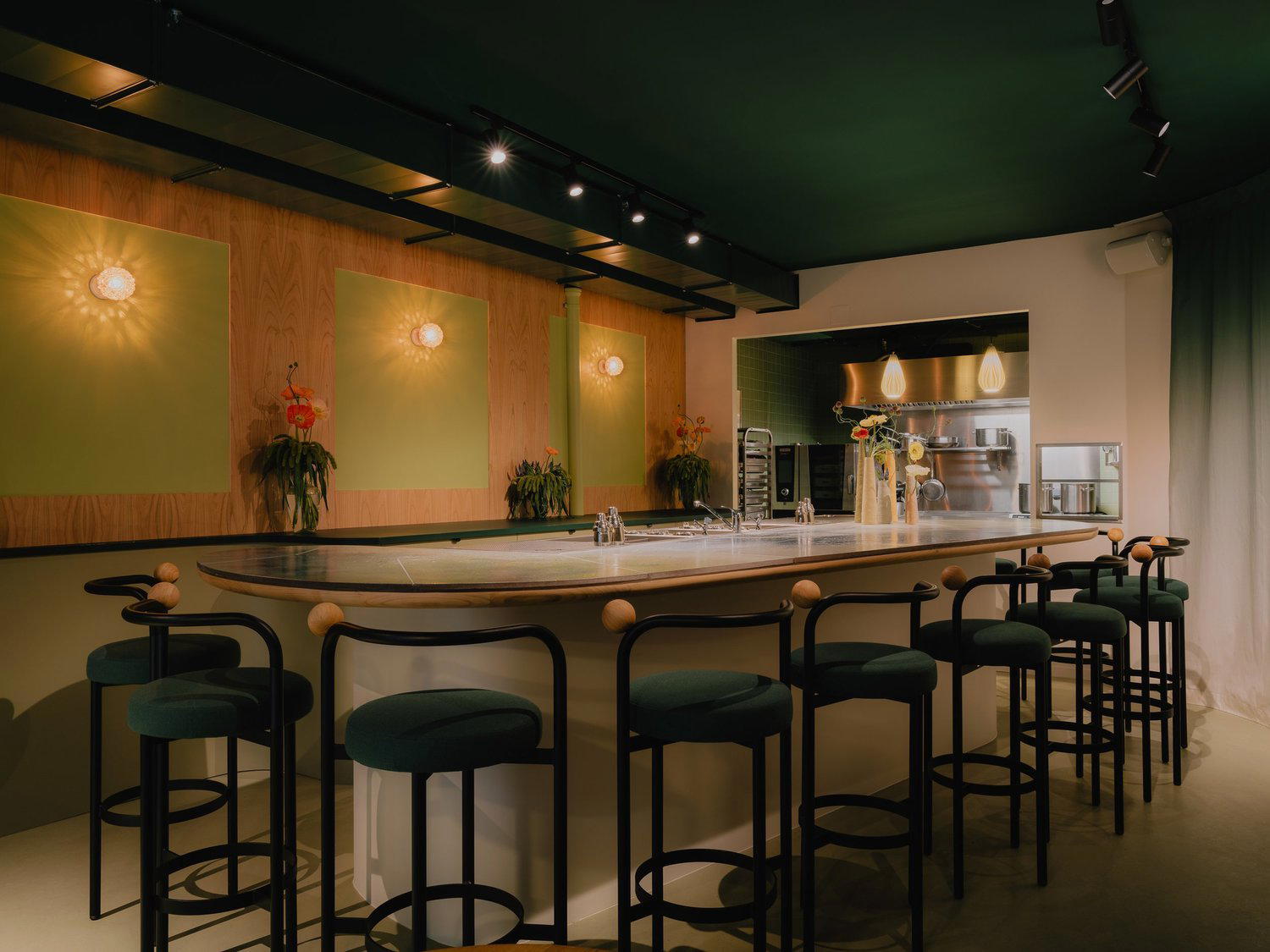
Warm, welcoming atmosphere with soft lighting, elegant decor, exposed stone walls, deep blue velvet banquettes, and an open kitchen visible from the dining room; Italian soundtrack adds to the refined yet relaxed setting.