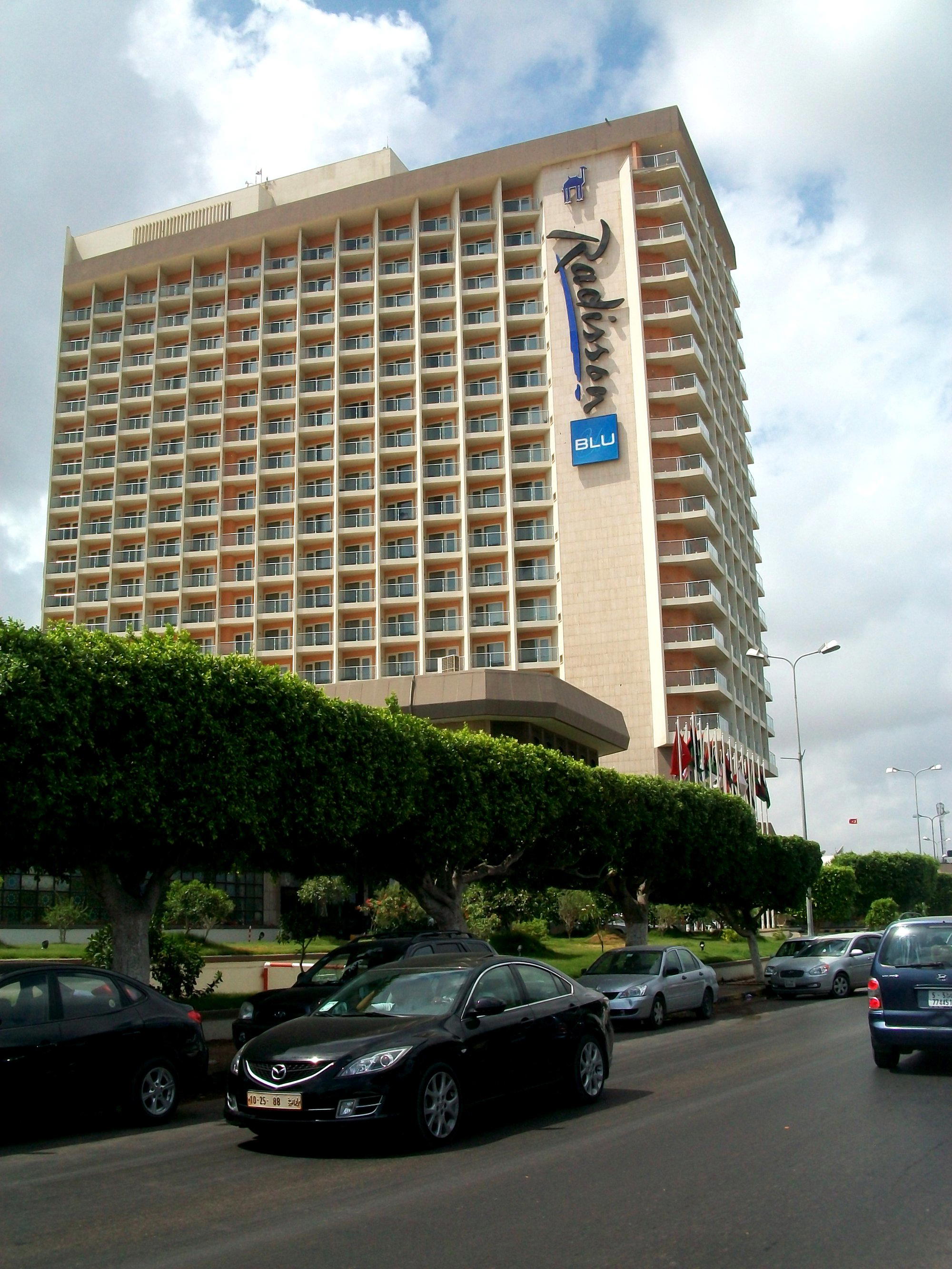
On Tripoli's Corniche, the Radisson Blu Al Mahary occupies one of the city's most prominent seafront positions, where the Mediterranean forms a constant backdrop to the architecture. For travellers seeking an internationally recognisable framework in a city with limited hotel infrastructure, it functions as the de facto reference point for business and diplomatic stays alike.

Pearl is the En Primeur Club membership app, where members save venues, book tables and use the concierge.
Where the Corniche Meets International Standards
Tripoli's hotel sector is thin by regional comparison. The city lacks the layered hospitality infrastructure that characterises Casablanca, Cairo, or Tunis, which means the few internationally affiliated properties carry outsized weight for anyone arriving on business, diplomatic assignment, or as part of a broader North African itinerary. The Radisson Blu Al Mahary sits on Al Fatah Street along the Corniche, the seafront promenade that defines Tripoli's civic edge, with the Mediterranean directly in front and the Old City's low skyline behind. That address is not incidental. In a city where orientation is partly navigational and partly symbolic, a Corniche position places a property at the boundary between Tripoli's historic centre and its open coastal face.
The building reads as a product of the late-modernist hotel tradition common across the Mediterranean basin in the 1970s and 1980s, when large-format concrete and glass structures became the default framework for international-standard accommodation in cities that were rapidly expanding their foreign-facing infrastructure. That lineage gives the Al Mahary a visual weight and a sense of permanence that newer, lighter-touch properties in comparable cities often lack. It is a serious building in the way that Tripoli is a serious city: deliberate, direct, without the decorative softening that resort-adjacent properties tend to apply.
The Architecture as Civic Landmark
In many North African capitals, the flagship international hotel is also, by default, an architectural landmark. The Al Mahary functions in precisely that register. Its massing along the Corniche gives it a presence that smaller or more recent properties in the city cannot match, and the seafront elevation, oriented toward the water, makes it legible from a considerable distance when approaching along the coastal road. Travellers arriving from the airport along the coastal route encounter it as a marker before they encounter it as a destination.
This matters for a particular kind of traveller: one for whom the hotel is not simply accommodation but a spatial anchor in an unfamiliar city. Tripoli does not make itself easy to read for first-time visitors. The Old City's medina logic, the sprawl of newer residential quarters, and the limited English-language signage create a navigational density that other North African capitals have partially resolved through tourism infrastructure. The Radisson Blu Al Mahary's Corniche location gives guests an immediate relationship with a legible geographic feature, the sea, which functions as both orientation and relief.
The interior design follows the pragmatic register of the Radisson Blu brand globally, which sits in the upper-midscale to upscale tier and applies a broadly consistent design language across its international portfolio. Guests familiar with Radisson Blu properties in other markets, say, Mandarin Oriental Bangkok or The Siam in Bangkok for Southeast Asian reference points, will note that the Al Mahary operates in a considerably different tier. Those Southeast Asian properties represent the design-led, locally rooted end of the luxury spectrum. The Al Mahary belongs to the internationally legible, operationally reliable end, where consistency is the primary design value. For Tripoli specifically, that consistency is itself a meaningful offering.
Positioning Within the City's Hospitality Tier
Libya's hotel market has operated under structural constraints that have shaped what is available in Tripoli. In that context, the Al Mahary occupies the best of a narrow market rather than the middle of a broad one. It is less analogous to a mid-tier hotel in a deep-market city like London or Dubai and more analogous to the sole internationally branded property in a capital with limited alternatives.
That positioning has practical implications for guests. The property functions as a meeting point for the international business and diplomatic community in Tripoli, which concentrates a particular kind of activity, formal meetings, working lunches, delegations in transit, that shapes the atmosphere of common areas. This is not a retreat-oriented property. It is operational by nature, and travellers arriving with leisure expectations should calibrate accordingly. For comparison, properties like Hotel Esencia in Tulum or Amangiri in Canyon Point represent the opposite end of that spectrum: low-key, design-intensive, deliberately retreat-like. The Al Mahary is closer in spirit to the working hotel tradition of Hotel Sacher Wien in Vienna or Le Bristol Paris, properties where the business of the city passes through the lobby.
Planning a Stay: What to Know
For travellers putting together a broader North African itinerary, the Al Mahary's Corniche position makes it the logical base for accessing both the Old City's archaeological layers and the coastal road network. The medina and the Arch of Marcus Aurelius are walkable from the seafront, and the proximity to government and commercial districts along Al Fatah Street makes the hotel practical for business visitors who need to move between appointments on foot or by short transfer.
Booking for Tripoli in general requires attention to entry logistics: Libya's visa requirements are among the more complex in the region, and independent travel is limited relative to North African neighbours. Most guests arriving at the Al Mahary do so with institutional support, through employer, embassy, or organised group travel. Those planning independent visits should verify current entry conditions well in advance, as requirements have shifted repeatedly in recent years.
For those comparing the Al Mahary against the broader register of properties covered by EP Club, it is worth reading our full Tripoli restaurants guide for context on what dining options surround the property. Guests who move between high-design international properties, such as Aman Venice, Cheval Blanc Paris, or Castello di Reschio in Lisciano Niccone, will find the Al Mahary a different kind of proposition: its value is contextual and logistical rather than aesthetic. In Tripoli, that is a meaningful distinction.
Other internationally affiliated properties worth cross-referencing for structural comparison include Badrutt's Palace Hotel in St. Moritz, Hôtel de Paris Monte-Carlo, and Mandarin Oriental Ritz, Madrid, each of which operates as a civic landmark hotel in its respective city, a category the Al Mahary belongs to by function if not by tier. Additional context on how branded hotels serve as anchors in complex markets can be found through properties like Bvlgari Hotel Tokyo, HOTEL THE MITSUI KYOTO, La Réserve Paris, Hotel Plaza Athénée, Aman New York, The Fifth Avenue Hotel in New York City, Hotel Bel-Air in Los Angeles, The Beverly Hills Hotel in Los Angeles, Hotel Du Cap-Eden-Roc in Cap d'Antibes, Cipriani, A Belmond Hotel, Venice, Casa Maria Luigia in Modena, and One&Only; Mandarina in Riviera Nayarit.
Continue exploring
More in Tripoli
Restaurants in Tripoli
All restaurants in Tripoli →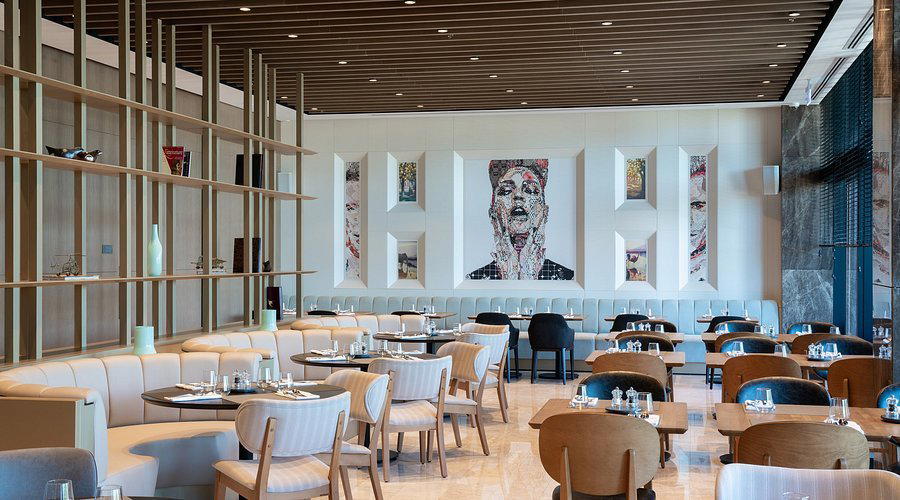
Details
- Modern
- Elegant
- Sophisticated
- Business Trip
- Weekend Escape
- Waterfront
- Rooftop Pool
- Panoramic View
- Wi Fi
- Pool
- Spa
- Fitness Center
- Room Service
- Concierge
- Business Center
- Waterfront
- Skyline
- Wheelchair Accessible
- Elevator
Tastefully decorated, clean, and comfortable rooms with a modern and elegant atmosphere enhanced by sea views.