
Leading Hotels of World Member
Pearl Gallery Hotel occupies a considered position within Guiyang's emerging premium accommodation tier, carrying Leading Hotels of the World membership as of 2025. The property's address in the Ayunduocang district places it within one of the city's more architecturally deliberate neighbourhoods. For travellers seeking design-led lodging in a Chinese provincial capital rarely covered by international travel media, it warrants serious attention.

Pearl is the En Primeur Club membership app, where members save venues, book tables and use the concierge.
Guiyang's Emerging Luxury Design Scene
China's interior provincial capitals have been quietly producing a more interesting generation of design hotels than the coastal megacities, partly because the competitive pressure is lower and the architectural briefs tend to be more personal. Guiyang, the capital of Guizhou province, sits at roughly 1,100 metres above sea level, surrounded by karst terrain that has historically kept it off the standard luxury circuit. That geographic isolation, paradoxically, has created space for properties to develop a distinct aesthetic identity rather than defaulting to the international five-star template. Pearl Gallery Hotel operates within that context, drawing its membership in the Leading Hotels of the World network from a positioning that prioritises design specificity over brand scale.
That membership is not automatic: the LHW collection applies consistent inspection standards, and properties that carry it are generally operating in a different register from convention hotels, regardless of the star count on the door. In Guiyang's context, that credential matters more than it might in Shanghai or Beijing, where competition creates its own hierarchy. Here, it is the clearest available signal of where the property sits in the local market.
Architecture and Physical Character
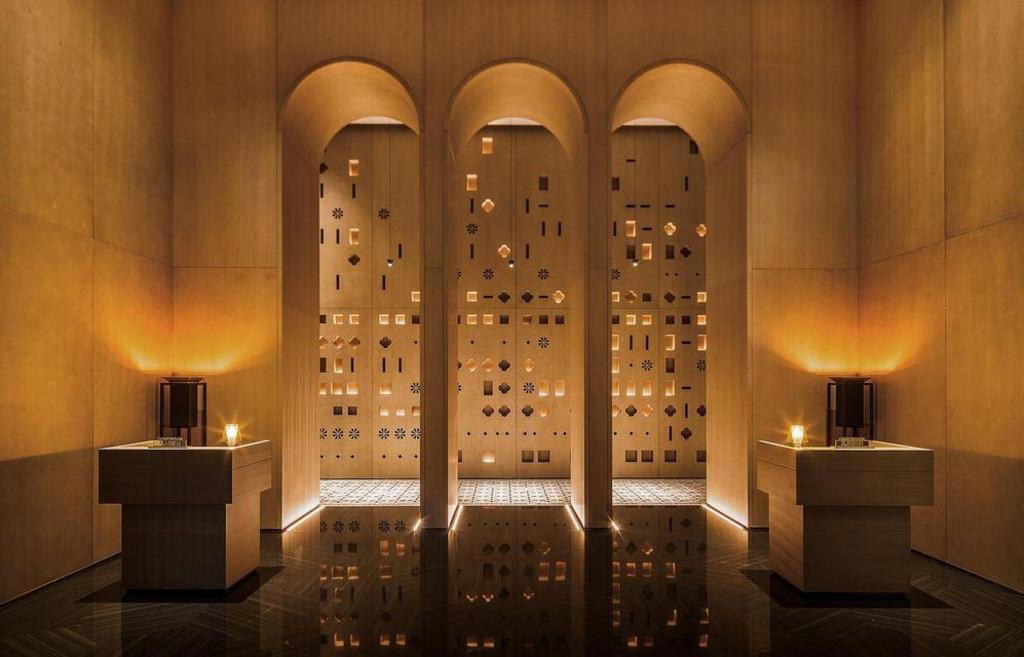
The hotel's address in Ayunduocang places it within one of Guiyang's more deliberately composed districts, where the built environment has been shaped with more attention to material and proportion than the utilitarian blocks that dominate much of the city's mid-century expansion. Properties that carry the gallery framing in their name tend to make a deliberate argument about the relationship between hospitality space and art or craft objects, and that framing shapes the visitor's relationship with the physical environment from arrival onward.
In the broader context of Chinese luxury hotel design, the split has sharpened between two models over the past decade. The first is the large international footprint: high-floor towers with panoramic views, branded fitness and spa infrastructure, and F&B; concepts imported from elsewhere. The second, and more interesting for design-oriented travellers, is the smaller-scale, materiality-led property that makes a specific argument about place. Amandayan in Lijiang and Amanfayun in Hangzhou represent the upper end of that second cohort, where local architectural language is built into the property at a structural level, not applied as decorative overlay. Pearl Gallery Hotel's LHW membership aligns it conceptually with that design-led tier, even if its price point and scale occupy a different bracket.
What distinguishes Guizhou's architectural vernacular, and by extension what any property serious about local design identity in Guiyang would draw on, is a tradition shaped by minority cultures including the Miao, Dong, and Buyi peoples. Their material vocabulary encompasses specific timber-joinery techniques, distinctive textile patterns, and spatial logics that differ substantially from Han Chinese courtyard architecture. Whether Pearl Gallery Hotel's interior programme engages with that vernacular at depth is something leading confirmed directly with the property, but the regional context is the relevant frame for understanding what an architecturally considered Guiyang hotel could, and arguably should, be doing.
Where This Property Sits in the China Premium Hotel Picture
Properties like Green Lake Hotel Kunming represent the kind of regionally embedded luxury that competes on local character rather than international brand recognition. Similarly, Xiamen Yunding Resort and Elite Spring Villas in Anxi demonstrate how design-led properties in non-primary Chinese cities can build a compelling case around landscape and materiality.
At the other end of the China spectrum, Mandarin Oriental Qianmen in Beijing and JW Marriott Hotel Shanghai at Tomorrow Square represent the branded tower model, with the infrastructure and F&B; depth that comes from operating in China's most competitive hospitality markets. Pearl Gallery Hotel is not competing in that register. It is operating in a niche where the value proposition rests on the quality of the physical environment and the specificity of the experience rather than on the breadth of amenity offering. That is a legitimate and increasingly attractive position as more travellers prioritise design coherence over points programmes.
For those planning a broader Southwest China itinerary, Guiyang functions as a practical base for Guizhou province's considerable natural and cultural assets: the rice terraces of Qiandongnan, the drumtower villages of the Dong minority, and the Huangguoshu waterfall complex are all within reach. A hotel that makes a considered architectural argument about its setting enhances that kind of travel rather than existing in isolation from it. Booking direct with the property is the standard approach for LHW members and affiliates; the LHW website also provides a direct channel and typically offers member rates for Virtuoso and equivalent luxury travel adviser networks.
Planning a Stay
Guiyang is served by Guiyang Longdongbao International Airport, which has direct connections to most major Chinese cities including Beijing, Shanghai, Guangzhou, and Chengdu. High-speed rail from Chengdu takes approximately three to four hours; from Guangzhou, the journey is around two and a half hours on the faster services. The city sits at altitude, with a notably mild climate by Chinese provincial standards, making late spring and autumn the most comfortable windows for visiting.
Travellers with broader China itineraries might pair a Guiyang stay with properties in neighbouring provinces: Banyan Tree Chongqing Beibei to the north or Amandayan in Lijiang to the west for a Southwest China circuit that prioritises design-led accommodation throughout. For properties at different price points within Guiyang itself, the LHW affiliation is the clearest available benchmark for what Pearl Gallery Hotel is targeting in terms of quality and positioning. Specific room rates, availability, and booking terms are best confirmed directly with the property or through a LHW-affiliated travel adviser.
At-a-Glance Comparison
Comparable venues nearby, for context on price, style, and recognition.
| Venue | Cuisine | Price | Awards | Notes |
|---|---|---|---|---|
| Pearl Gallery HotelThis venue (the venue you are viewing) | Art gallery boutique hotel fusing Guizhou ethnic culture with ornate Versailles-inspired luxury. | $100–200 | Leading Hotels of World Member | Not listed |
| ME Guangzhou | Lifestyle luxury hotel positioned as a cultural hub within Guangzhou’s emerging second CBD. | Not listed | Not listed | Guangzhou International Financial City–Huangpu Bay Business Circle |
| DongFengYun Hotel Mi’Le - MGallery | Artistic luxury boutique in vineyard setting with post-modern red brick architecture | $100–200 | Michelin Selected | Dongfengyun Art Town |
| Shangri-La Hotel, Fuzhou | Modern luxury tower hotel | Not listed | Michelin Selected | Gulou District |
| Park Hyatt Shenzhen | Luxury contemporary design hotel positioned as a sophisticated urban sanctuary blending Asian heritage with modern technology. | $200–300 | 1 Michelin Key | Futian |
| 百萬石温泉飯店 Hyakumangoku Onsen Hotel | Contemporary Japanese luxury resort with wabi-sabi design philosophy and Eastern Zen aesthetics, featuring eight architectural pavilions integrated with natural forest and snow elements. | Not listed | 5-Star | 浦东 |
Recognition history
Dated appearances from independent guides and award organizations, with the underlying list record or original source where available.
Leading Hotels of World Member
Leading Hotels of World
Details
- Modern
- Elegant
- Sophisticated
- Romantic Getaway
- Business Trip
- Weekend Escape
- Design Destination
- Wi Fi
- Fitness Center
- Restaurant
- Bar
- Room Service
- Concierge
- Elevator
- Elevator
Art-filled spaces with high-end aesthetics, modern lighting, and a serene, gallery-like atmosphere praised for its cultural storytelling and Instagrammable elegance.