Au Presbytère de Saigneville

Michelin Selected
A Michelin Selected property in the Somme estuary village of Saigneville, Au Presbytère de Saigneville occupies a converted presbytery on the rue de la Falise. The setting places it among a small cohort of characterful religious conversions that define northern France's chambres d'hôtes tradition. It suits travellers using the Baie de Somme as a base rather than a stopover.

Pearl is the En Primeur Club membership app, where members save venues, book tables and use the concierge.
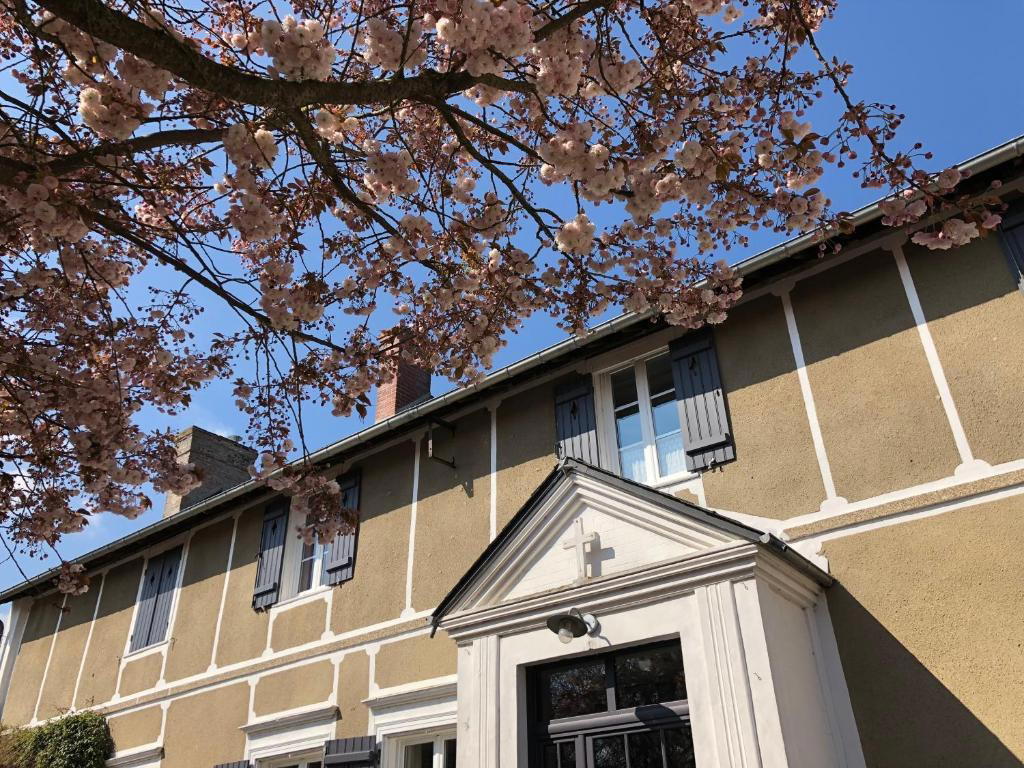
A Converted Presbytery in the Somme Estuary
Northern France's most compelling small stays tend to occupy buildings that were never designed as hotels: farm complexes, wine estates, manor houses, and, occasionally, the village presbytery. The last category is genuinely rare. Clerical architecture in rural Picardy runs to solid stone construction, walled gardens, and a relationship with the village church that gives the property a specific kind of rootedness, the building was, for centuries, the social and spiritual centre of the community around it. Au Presbytère de Saigneville, at 3 rue de la Falise in the small Somme commune of Saigneville, sits in that tradition. The stone walls, the proportions of the main building, and the address itself all read as history rather than decoration.
Saigneville sits inland from the Baie de Somme, that wide tidal estuary that draws naturalists, cyclists, and slow-travel visitors who treat the bay's villages as a circuit rather than a single destination. The bay's profile has risen considerably over the past decade as French travellers looked closer to home for landscape-led escapes, and the surrounding communes, Le Crotoy, Saint-Valery-sur-Somme, Cayeux-sur-Mer, have seen small properties of real quality emerge to serve that demand. Saigneville itself is quieter than any of those, which is precisely why a converted presbytery works here in a way it might not in a more touristically saturated setting.
The Architecture as the Proposition
Religious conversions succeed or fail on how honestly they handle the original fabric. The temptation in conversion projects, particularly at the smaller, owner-operated end of the French hospitality market, is to overlay the character of the building with decorative choices that dilute rather than amplify what made the structure worth converting in the first place. The better properties in this category, whether Normandy farmhouses or Burgundy priories, tend to preserve structural honesty: exposed stone, original window proportions, the relationship between interior volume and exterior mass.
Presbytery buildings specifically carry a formal quality in their public-facing rooms that distinguishes them from agricultural conversions. These were buildings meant to receive parishioners, to project a degree of institutional solidity, and to endure. That formal quality, translated into a hospitality context, tends to produce spaces that feel considered rather than improvised, a useful counterpoint to the more rustic texture that dominates chambres d'hôtes in this part of France.
The property's Michelin Selected designation in the 2025 guide places it within a tier of small French stays that Michelin's hotel inspectors have assessed as meeting a threshold of quality, character, and consistency. That designation, while not a star rating, carries weight precisely because Michelin's hotel selection is built on the same inspection framework as its restaurant guide, anonymous visits, repeated if necessary, with emphasis on the coherence of the experience rather than the scale of the facilities. For a property in a village as small as Saigneville, inclusion in that list signals that the quality holds up against scrutiny rather than simply benefiting from a lack of competition.
The Baie de Somme as Context
Understanding why a stay at Au Presbytère de Saigneville works requires understanding what the Baie de Somme offers as a destination. The estuary is one of the largest in France, a protected natural site where the tidal rhythm shapes everything from the light to the local food culture. Moules de bouchot, lamb raised on the salt marshes (agneau de pré-salé), and the freshwater eels and shrimp of the estuary channels are the ingredients that define the region's table, and small properties in the surrounding villages tend to connect guests to that food culture more directly than the larger hotels in Abbeville or Amiens can.
The bay is accessible by train from Paris Nord to Abbeville, with the journey running under two hours. From Abbeville, road access to the bay's villages, including Saigneville, requires a car or local taxi. This is not a destination for visitors who expect to arrive without their own transport; the villages are spread across a range of marshes and low hills that is leading experienced by driving or cycling between them.
For travellers building a longer northern France itinerary, the Baie de Somme pairs logically with Normandy to the west. Properties like La Ferme Saint-Siméon in Honfleur represent the Norman end of that coastal arc, a property with its own deep history of artistic and agricultural heritage. The contrast between the two regions, Normandy's orchard-and-cream register against Picardy's flat estuary light, is exactly the kind of editorial difference that makes combining them worthwhile. Alternatively, travellers who prefer to stay within northern France's quieter circuits will find the Somme valley and the Côte d'Opale form a coherent loop.
Positioning Within the French Small-Stay Market
France's Michelin Selected hotel tier includes properties at very different price points and scales, from small urban boutique hotels to rural chambres d'hôtes with two or three rooms. What the designation signals is quality consistency rather than luxury category. Au Presbytère de Saigneville's positioning, a religious conversion in a small Somme village, places it in a niche that competes on character and setting rather than on facilities or food-and-beverage programming. This is a different competitive conversation than the one happening at properties like Domaine Les Crayères in Reims, where Michelin-starred dining and historic château architecture operate at the higher end of the category, or Royal Champagne Hotel & Spa in Champillon, where vineyard views and spa infrastructure anchor a contemporary luxury proposition.
The French countryside stay market has, over the past decade, bifurcated fairly clearly between large-format château hotels with full amenity suites and smaller, more personal properties where the building itself and the local context carry most of the value. Au Presbytère de Saigneville belongs to the second category, where the absence of a spa or restaurant is not a gap but a position. Guests who book here are typically choosing the Baie de Somme as a destination first and seeking accommodation that fits the texture of that choice rather than layering luxury infrastructure on top of it.
That said, the Michelin selection does imply a standard of welcome, room quality, and overall coherence that separates it from the broad and variable world of French chambres d'hôtes where quality assurance is minimal. Travellers who have navigated that broader market will understand the value of that signal. Explore our full Saigneville guide for further context on where this property sits within the local accommodation picture.
For reference across the wider French Michelin Selected hotel tier, properties like Château du Grand-Lucé in Le Grand-Lucé and La Bastide de Gordes in Gordes illustrate the range of settings and scales that share this designation, from Loire Valley formal grandeur to Provençal village integration. Au Presbytère de Saigneville occupies the quieter, less scenically branded end of that range, which is, for the right traveller, the more interesting place to be.
Planning Your Stay
Saigneville is not a spontaneous stop. The village has no train station and limited public connection, so arriving by car from Abbeville (roughly 15 kilometres) or from Amiens (approximately 50 kilometres) is the practical approach. The Baie de Somme is most atmospheric in late summer and autumn, when the light over the estuary shifts through the flat greys and golds that made the region a subject for painters in the nineteenth century, and when the pré-salé lamb is in season. Spring visits work well for birdwatching and cycling, as the estuary hosts significant migratory bird populations through March and April. Booking directly with the property, given the absence of listed website information, is leading approached via the Michelin guide listing or through a travel specialist familiar with this part of northern France.
At-a-Glance Comparison
Comparable venues nearby, for context on price, style, and recognition.
| Venue | Cuisine | Price | Awards | Notes |
|---|---|---|---|---|
| Au Presbytère de SaignevilleThis venue (the venue you are viewing) | Restored 18th-century presbytery with modern annex and gypsy caravans | $1–100 | Michelin Selected | Not listed |
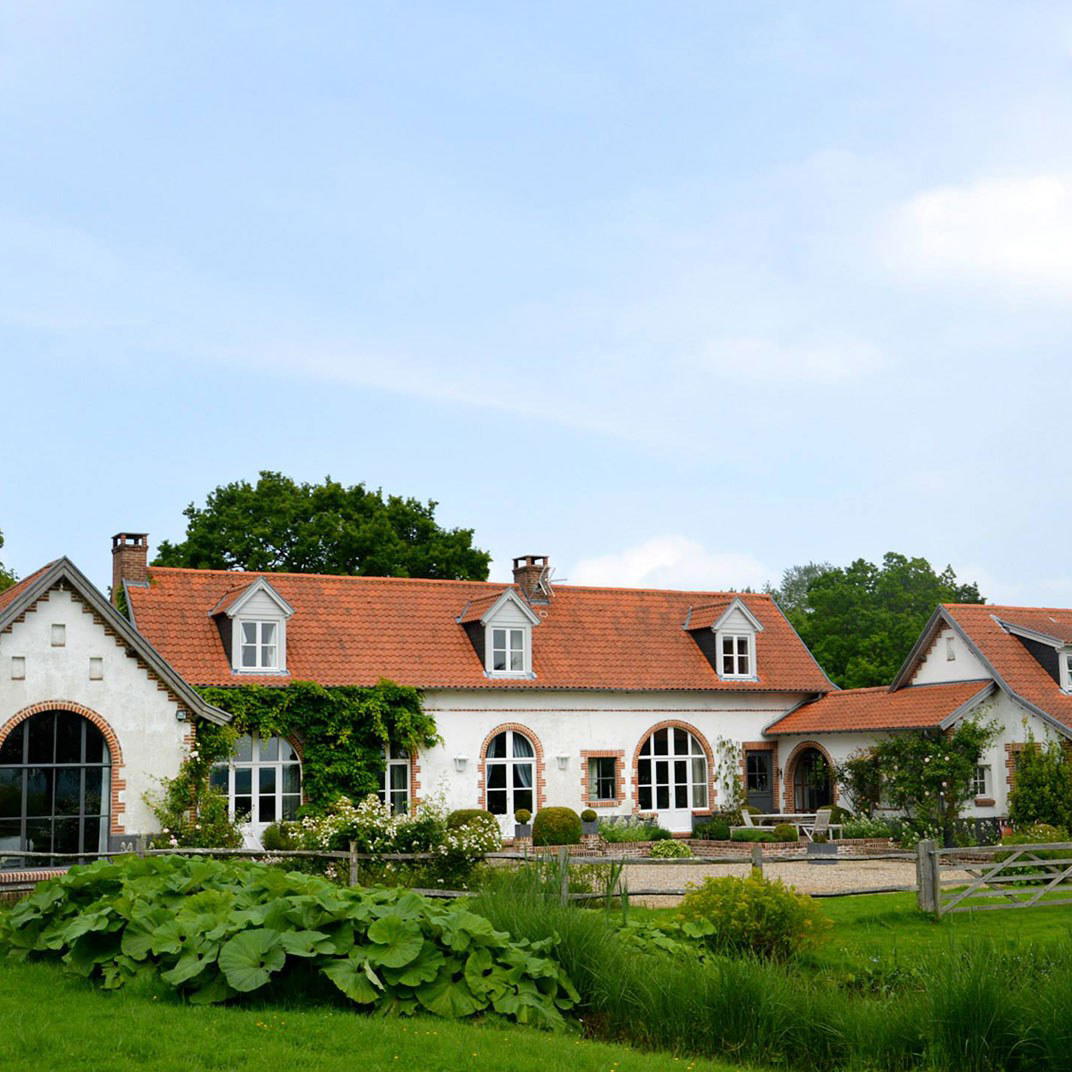
| Le Pré Rainette | old-fashioned country manor with red-tiled roof and whitewashed walls | Not listed | Michelin Selected | Sorrus |
| RockyPop Chamonix - Les Houches | Playful, offbeat mountain lodge breaking traditional hotel codes with pop culture vibes. | $1–100 | Michelin Selected | Les Houches |
| Scarlett | Contemporary boutique in repurposed industrial space | $100–200 | Michelin Selected | Belleville / 20th Arr. |
| Chateau de Saint Georges | Historic château converted to intimate bed & breakfast with contemporary comfort integrated into period architecture | $200–300 | Michelin Selected | Berry countryside |
| The People Belleville | Trendy lifestyle hostel in renovated Art Deco building blending hostel accessibility with boutique hotel style. | $1–100 | Not listed | Belleville |
Recognition history
Dated appearances from independent guides and award organizations, with the underlying list record or original source where available.
Michelin Selected
Michelin
Continue exploring
More in Saigneville
Hotels in Saigneville
All hotels in Saigneville →
Details
- Quiet
- Cozy
- Rustic
- Romantic
- Classic
- Romantic Getaway
- Weekend Escape
- Garden
- Historic Building
- Terrace
- Wi Fi
- Garden
- Restaurant
- Garden
Contemporary classic with whitewashed walls, vaulted ceilings, pale wood furnishings, and colorful textiles in caravans, offering tranquility and calm.