← Guides
Madrid’s best wine bars now point drinkers toward Gredos Garnacha, Toledo growers and the capital’s own Vinos de Madrid DO.
Madrid’s best wine bars now point drinkers toward Gredos Garnacha, Toledo growers and the capital’s own Vinos de Madrid DO.
Bodegas Canopy sits 70 kilometers from Madrid in Camarena, and its €14 Tres Patas and 2,000-bottle La Viña Escondida matter to collectors following the capital’s wine bars. Madrid wine bars have become the easiest way to taste central Spain’s revival, from old-vine Garnacha in the Sierra de Gredos to Toledo’s high-plateau vineyards and the city’s own Vinos de Madrid DO (Domentrida3).
A Madrid wine bar can pour central Spain by the glass. A glass in Malasaña can lead to Vinos de Madrid DO, a bottle in Lavapiés can point west toward old-vine Garnacha in Gredos, and a dinner in Retiro can place Rioja or Ribera beside less obvious bottles from Méntrida DOP or Castilla IGP.
Less than 100km west of Madrid, the Sierra de Gredos includes the high-elevation Alberche valley around Burgohondo, cited at about 830m-850m at its centre, and Cebreros, cited at 750m. Gredos-area wines may appear under Vinos de Madrid DO, Cebreros DOP, Méntrida DOP or Vino de la Tierra de Castilla y León, depending on origin.
Laredo is in the Retiro district, with a produce-focused menu and a list that reflects classic and modern Spanish producers. Retiro gives the room a different rhythm from Lavapiés or Malasaña: calmer, more dining-led, and well suited to a bottle opened across lunch or dinner.
The list covers Spain broadly rather than following one fashion. Classic producers provide a baseline. Modern Spanish names show how quickly the country’s regional drinking map has broadened. If older vintages appear, they offer the kind of reference that helps you separate youthful perfume from cellar development in Garnacha, Tempranillo or other Spanish varieties.
Laredo is suited to a food-led evening. Madrid can pour both the canonical and the recently rediscovered without requiring a train timetable.
García de la Navarra, also tied to the Retiro district, shares Laredo’s produce-led appeal and a wine list that includes both classic and modern Spanish producers. The pairing of restaurant discipline and bottle depth makes García de la Navarra one of the clearest Madrid addresses for understanding how the capital drinks now.
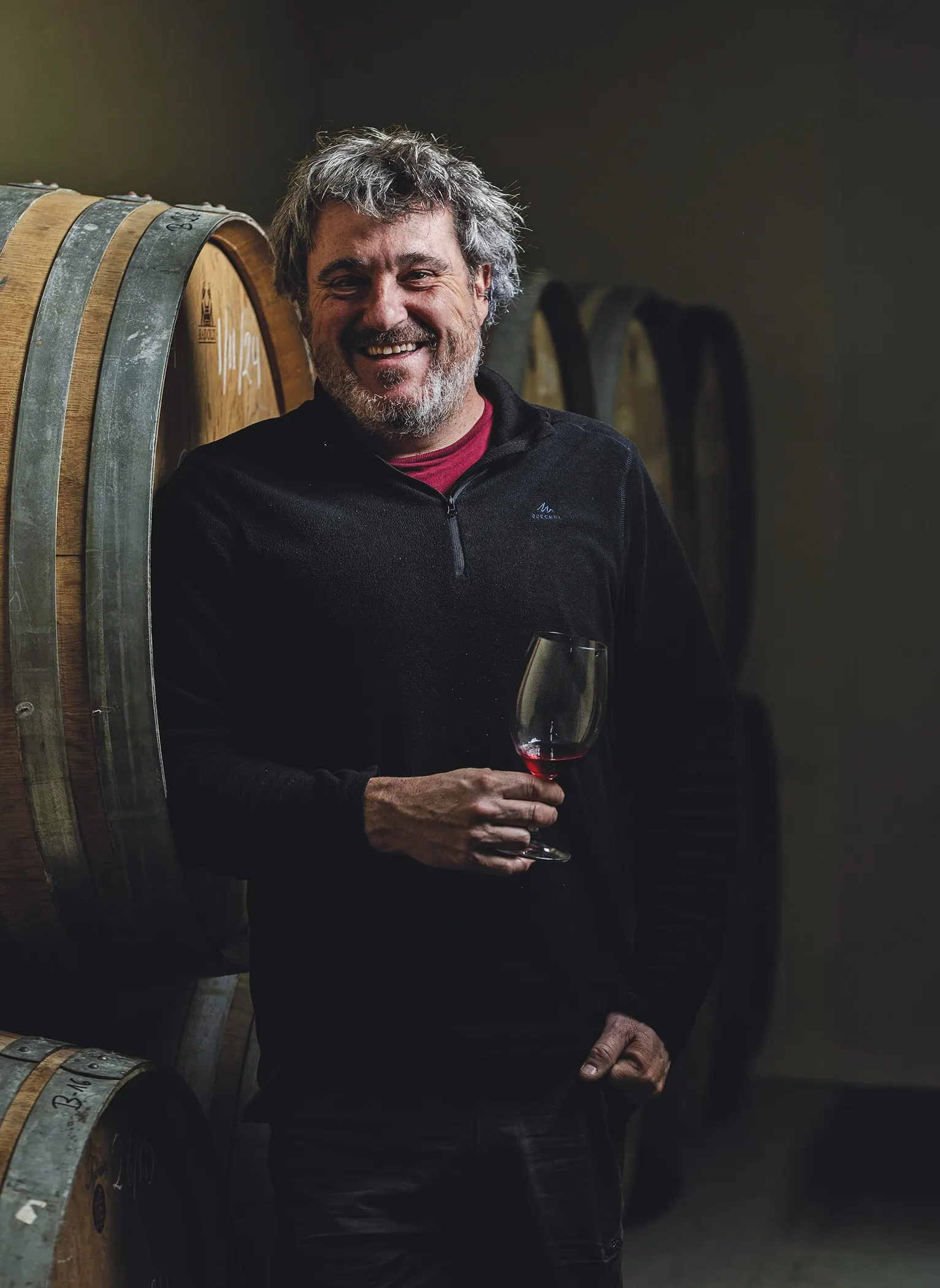
The room suits diners who want Spanish wine with a table rather than a standing-bar snapshot. That matters if you are tasting through regions with different structures: a Garnacha from Gredos, a Cencibel from the Toledo area, or a more established Rioja behaves differently once food brings salt, fat and heat into the glass.
Madrid wine bars and restaurants with this level of regional reach show why central Spain’s producers now have a stronger urban audience. A grower from Camarena or Gredos does not need to be discovered only at the cellar door. The bottle can meet an informed table in the capital, then send that table outward toward the vineyard.
Ganz sits in Barrio de las Letras, between El Retiro park and the city centre, and works as a contemporary, wine-focused bistro for drinkers who want modern Spanish bottles in a literary quarter rather than a formal dining room. Ganz is in central Madrid.
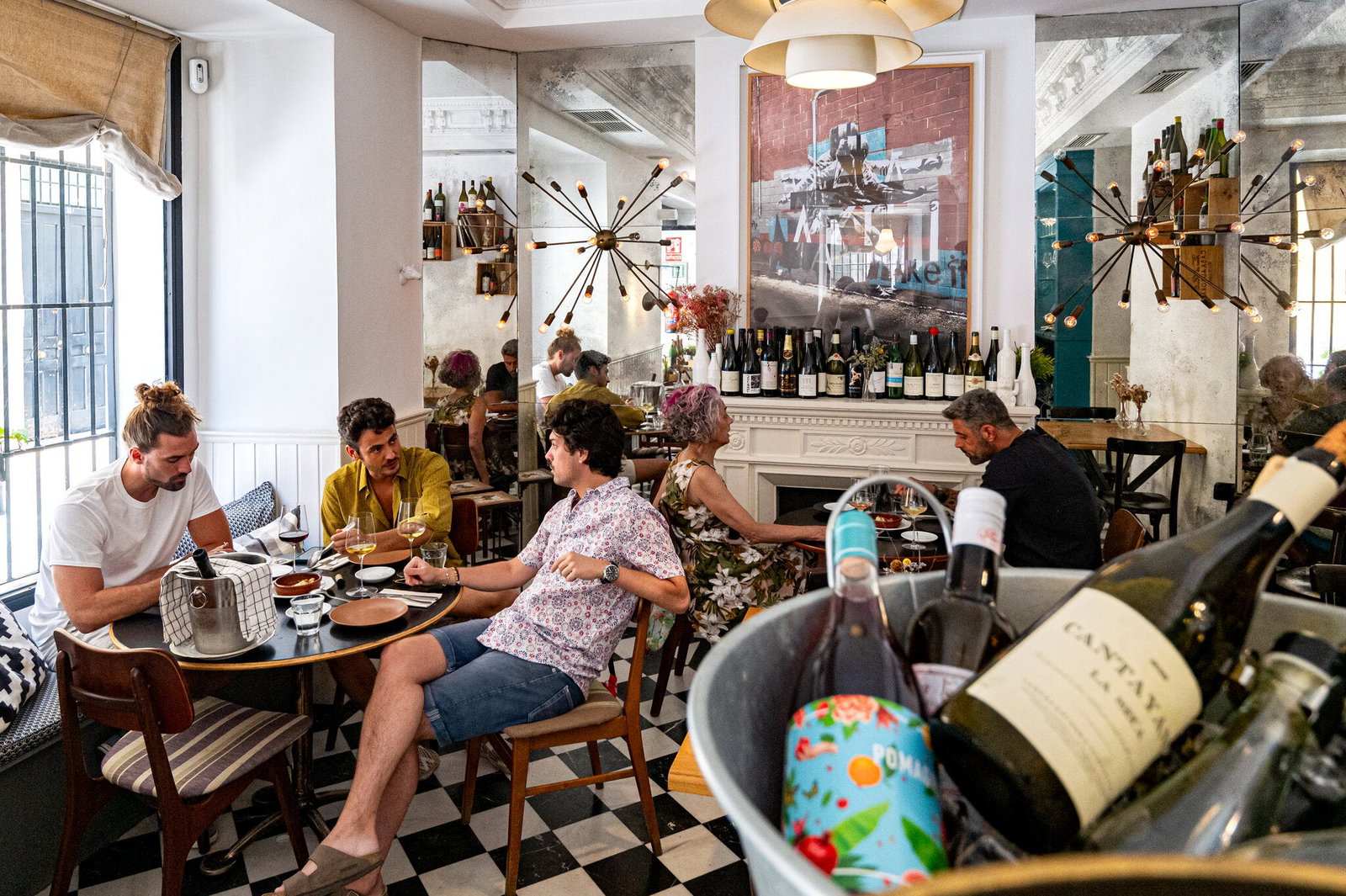
The bistro format lets Ganz work with a focused bottle, a shorter stop, or a meal built around Spanish producers that may not have appeared on the old capital-city lists a generation ago. Madrid’s current wine culture depends on producers from several regions finding space beside long-established names.
Ganz highlights producer names from Gredos, Toledo, Vinos de Madrid DO and Méntrida DOP. They can matter before demand hardens around a mailing list or a tiny single-parcel bottling.
La Caníbal in Lavapiés brings a different format to the city: a large selection of bottles and a changing range of wines on tap. Wines on tap allow tasting across central Spain without committing to a full bottle at every stop.
Lavapiés gives La Caníbal a social, restless setting, and the wine program emphasizes breadth over ceremony. A changing tap list also rewards repeat visits, since the selection can shift with producers, vintages and the bar’s current interests. La Caníbal is a useful first-night stop for deciding which bottle or region to pursue later in the trip.
The format can turn a complicated map of appellations into a flight of glasses, and that is exactly where Madrid wine bars earn their place in a regional itinerary.
Vinology in Chamberí, run by Pilar Oltra, specialises in winemaker dinners and curated tasting events.
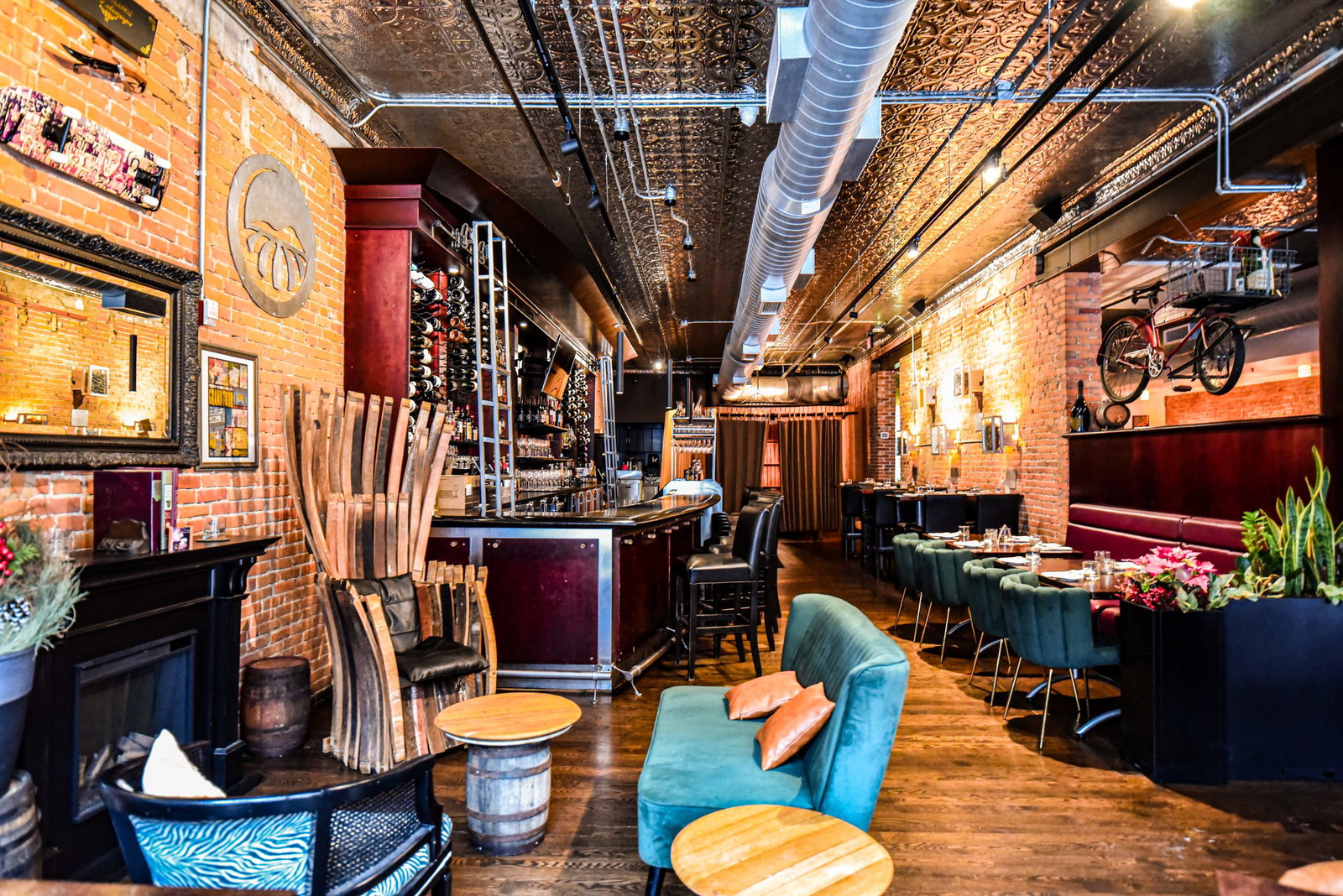
Chamberí sits north of the centre, and Vinology suits the drinker who plans around calendars rather than wandering into the nearest bar. Winemaker dinners can reveal why a producer chose Garnacha, how a vineyard classification shaped the label, or why a wine falls under Vinos de Madrid DO rather than Cebreros DOP, Méntrida DOP or another nearby designation.
De Vinos, owned by Yolanda Morán in Malasaña, pairs a traditional facade with a modern wine spirit. The list places Rioja and Ribera alongside wines from local Madrid vineyards, small producers around Spain, and an international selection that includes Burgundy, Champagne and Italy.
That range makes De Vinos especially valuable for drinkers who want the local and the canonical in the same sitting. Malasaña gives the bar a neighborhood edge, and the list moves from familiar Spanish regions toward bottles from Madrid’s surrounding vineyards.
Morán has framed the moment around two forces: Spain’s breadth of high-quality wines and consumers who have become more curious and knowledgeable. De Vinos turns that curiosity into a practical route. Rioja or Ribera provide an anchor, then a local Madrid producer or a smaller Spanish grower comes next once the palate has its bearings.
Bodegas Canopy provides a cellar-door link to Madrid’s wine bars. Alfonso Chacón founded the winery at Camarena in 2003 after recuperating vines in the Sierra de San Vicente, and the bodega sits 40 kilometers from Toledo and 70 from Madrid. The team is made up of three people: Chacón, Belarmino Fernández and Lorena Díaz (Domentrida3).
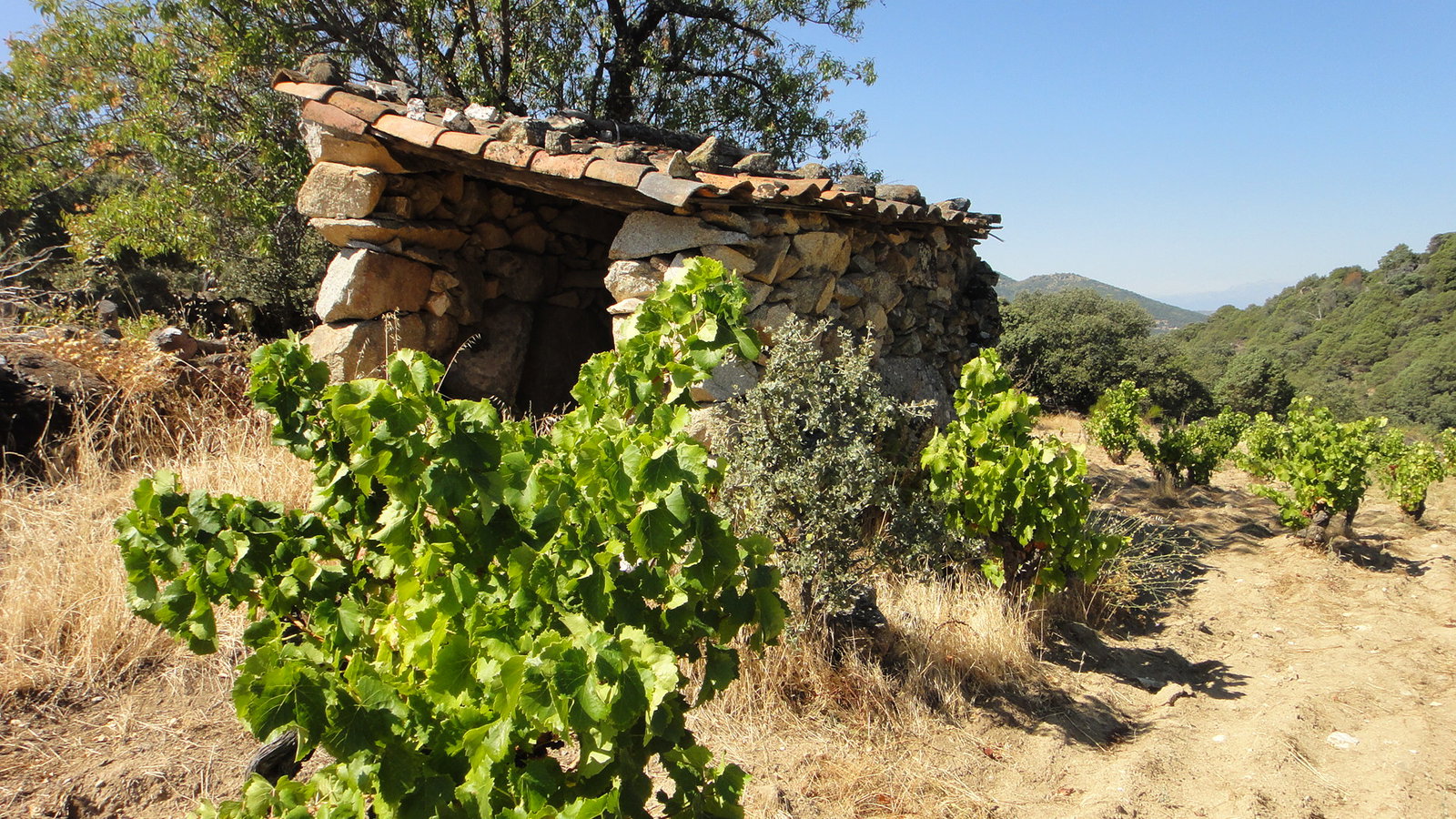
Bodegas Canopy has 19 hectares, of which 12.5 are their own. The entry-level red Castillo de Belarfonso costs €9, Tres Patas is priced at €14 and made in 12,000 bottles, and the single-vineyard range starts with La Viña Escondida at €25, with just over 2,000 bottles. In 2018, the winery launched Ganadero blanco (Spanishwinelover4).
Canopy also links Madrid’s wine bars to the vineyards south-west of the capital. A bottle poured in the city can lead directly to Camarena, where Méntrida’s revival feels less theoretical and more like a set of vineyards, prices and bottling sizes.
Details:
Bodegas Más Que Vinos brings Toledo’s eastern high plateau into the same orbit as Madrid’s bars. Margarita Madrigal is winemaker and co-owner, with vineyards 40 minutes east of Toledo on the high plateau of Ocaña at up to 800m.
The Toledo route is easy to underestimate because the high-speed Avant train runs from Madrid’s Atocha station to Toledo in just over half an hour, and many visitors focus on the alcázar, cathedral and El Greco. The surrounding vineyards add another reason to look beyond the city walls.
Ocaña’s meseta identity also gives central Spain a different register from Gredos. Where Gredos draws attention through granite, altitude and Garnacha, the Toledo area brings Airén, Cencibel and plateau conditions into the conversation. Madrid wine bars that pour both regions can show those differences in one evening.
Old-vine Gredos Garnacha links Madrid’s wine-bar culture with the mountain vineyards to the west. The Sierra de Gredos has become internationally associated with Garnacha grown on granitic and high-altitude sites, and producers began recovering vineyards in the 2000s after phylloxera, rural depopulation, low grape prices and a bulk-wine market had pushed many old vines toward abandonment.
Daniel Landi, one of the four founders of Comando G, has argued that Gredos can adapt to climate change through its combination of elevation, granite soils and Garnacha, which is suited to heat. He also points to the human network behind the vineyards: "There are people with passion, with wine at the heart of their lives not just as their business, embracing the philosophy of terroir, single parcels and fine and fresh wines." said Daniel Landi.2
Southeast of Madrid, Vinos de Madrid DO gives way to Uclés DO and the northern parts of La Mancha DO, so a serious Madrid list may carry several nearby identities under one roof. Airén, Garnacha and Cencibel appear in Toledo, especially where Méntrida DOP or Castilla IGP appears on the label.
The next phase for Madrid will depend on how confidently its wine bars keep pouring central Spain beside the established classics.
Madrid provides access to central Spain’s wine regions. You can drink a local DO bottle in the capital, taste Gredos Garnacha without driving west, follow a producer dinner in Chamberí, and still be within reach of Camarena or Toledo the next day. Small-production wines from revived vineyards appear on Madrid lists.
| Venue | Area | Format or setting | Wine focus stated in the article |
|---|---|---|---|
| Laredo | Retiro district | Produce-focused, dining-led restaurant suited to lunch or dinner | Classic and modern Spanish producers; established appellations and newer central-Spain names |
| García de la Navarra | Retiro district | Produce-led restaurant with bottle depth and table service | Classic and modern Spanish producers; examples include Gredos Garnacha, Toledo-area Cencibel and Rioja |
| Ganz | Barrio de las Letras, between El Retiro park and the city centre | Contemporary, wine-focused bistro | Modern Spanish bottles and Spanish producers |
Laredo and García de la Navarra, both tied to the Retiro district, are presented as produce-led, dining-focused addresses. The article highlights them for bottles opened across lunch or dinner rather than quick standing-bar tastings.
They can taste wines from Vinos de Madrid DO, Gredos, Méntrida DOP, Castilla IGP and nearby Toledo-linked areas without travelling to each vineyard zone. The article frames Madrid as a practical tasting hub for understanding central Spain’s revived old-vine and high-plateau wine regions.
Bodegas Canopy is described as sitting 70 kilometers from Madrid in Camarena. Its €14 Tres Patas and 2,000-bottle La Viña Escondida are used to show why the capital’s wine bars matter to collectors.
Ganz is in Barrio de las Letras, between El Retiro park and the city centre. Ganz is a contemporary, wine-focused bistro suited to modern Spanish bottles.
Get the App
Take the shortlist into the En Primeur Club app for concierge access, saved places, and the next step after discovery.
Get Exclusive AccessMore from the editors