← Guides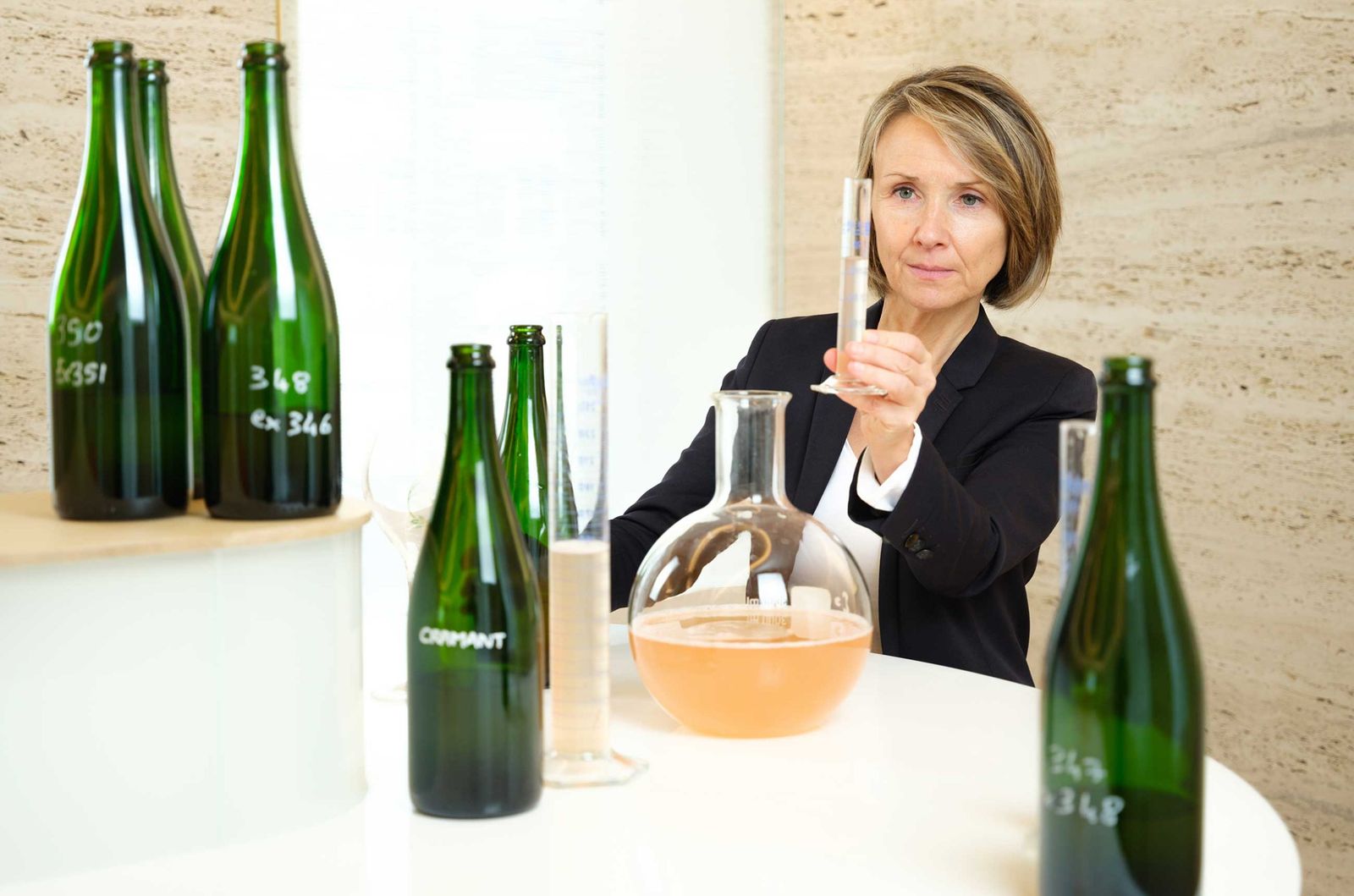
Séverine Frerson’s brief at Perrier-Jouët begins with house style, then moves through hundreds of still base wines and committee tastings.
Séverine Frerson’s brief at Perrier-Jouët begins with house style, then moves through hundreds of still base wines and committee tastings.
Séverine Frerson is the Perrier-Jouët cellar master, and she defines the role in one sentence: “My goal is to stay true to the house style.” In Champagne, that sentence carries more weight than it first appears to. More than 90% of the region’s production is non-vintage wine, so the chef de caves is not simply interpreting a single harvest; she is protecting continuity through hundreds of base wines, reserve wines from previous years, and committee tastings that decide whether a blend belongs under a house name.
That is the useful way to read Frerson’s role at Perrier-Jouët. Not as a romantic cellar title. Not as a public-facing flourish. The cellar master’s first responsibility is to the wines themselves, and in Champagne the wines arrive as fragments before they become a cuvée. Once fermentation has finished and the base wines have fallen still, the work becomes architectural: selecting, assembling, testing, and returning to the glass until the blend answers to the house.
The phrase “house style” can sound too neat until you place it beside the mechanics of Champagne. A house must shape wines from different growers, villages, years, tanks, and reserves into a final blend that tastes recognisably its own. For the Perrier-Jouët cellar master, Frerson’s stated aim gives the job its axis: stay true to the house style.
That brief is not passive preservation. A cellar master has to decide which base wines carry the necessary freshness, which wines supply mid-palate, which reserves bring maturity without overtly marking the blend, and which components should be left aside because they would push the final wine away from its line. The decision happens in glass after glass, not in a slogan.
Champagne rewards that kind of discipline because the consumer often returns to a house for continuity. A collector may parse disgorgements, a sommelier may compare lots, and a private client may keep older bottles for the shift in texture that comes with time, but the first promise remains consistent identity. Frerson’s comment matters because it places Perrier-Jouët’s continuity above any temptation to make the cellar master the story. The wines come first.
The public sees Champagne in finished form: mousse, bead, dosage, label, glass. The cellar master sees it earlier, once the base wines have fallen still after fermentation. At that stage the wines are not yet Champagne in the sensory sense most drinkers understand; they are quiet, dry, unadorned components waiting for a future second fermentation and a final shape.
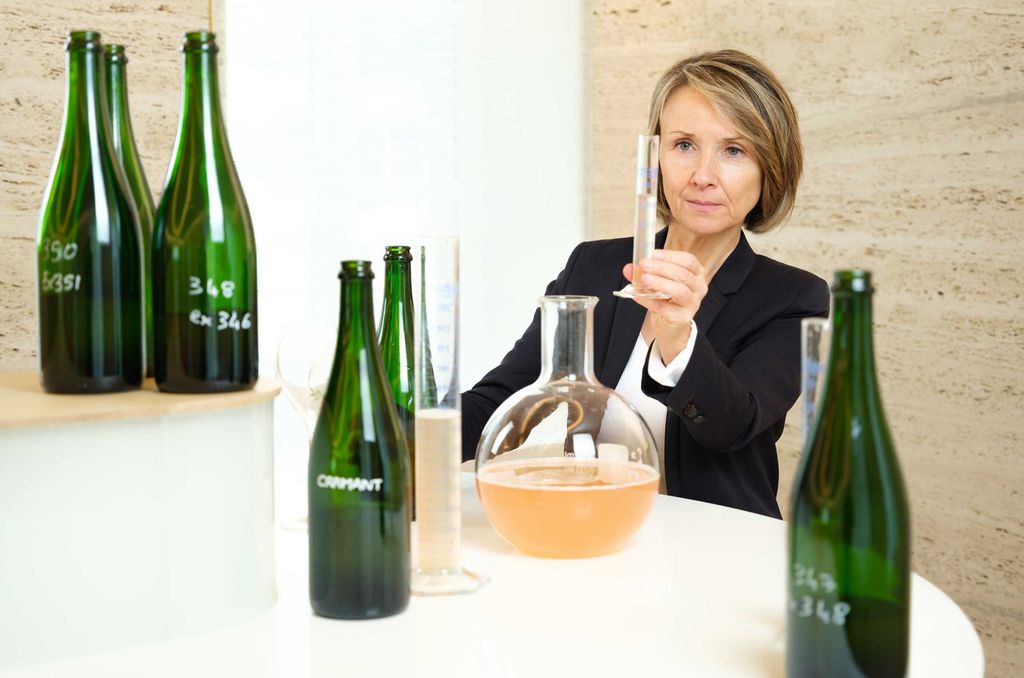
This is where cellar masters become the masterminds behind blending sessions. They may not spend their days on every basic cellar-management task, but they carry responsibility for the choices that determine the house’s wines. The work is technical, repetitive, and exacting. It asks the palate to hold memory: the current harvest, the reserves, the accepted profile of the house, and the way those elements will behave after the lengthy process that turns still wine into Champagne.
For Frerson at Perrier-Jouët, the challenge sits inside that quiet stage between harvest and release. A base wine may show promise in isolation yet fail in the ensemble. Another may seem modest alone but give the blend its necessary length or restraint. Champagne blending asks for humility from individual components. The finished wine is the point.
I come with the blends 97% complete, and the remaining 3% we discuss as a committee1
Julie Cavil, Cellar Master at Krug
That is also why the role resists easy romance. The decisive moment is not always a dramatic vintage declaration or a trophy bottle opened at dinner. It is often a still wine tasted in sequence, considered beside dozens of others, then measured against a house memory that must be carried by people as much as by paperwork.
Cellar masters do not blend in isolation. They work with winemaking teams to present blends composed of hundreds of individual wines to a committee, which votes on whether those blends fit the style and quality goals of the house. That committee structure matters because it places the chef de caves at the centre of a shared discipline rather than a solitary performance.
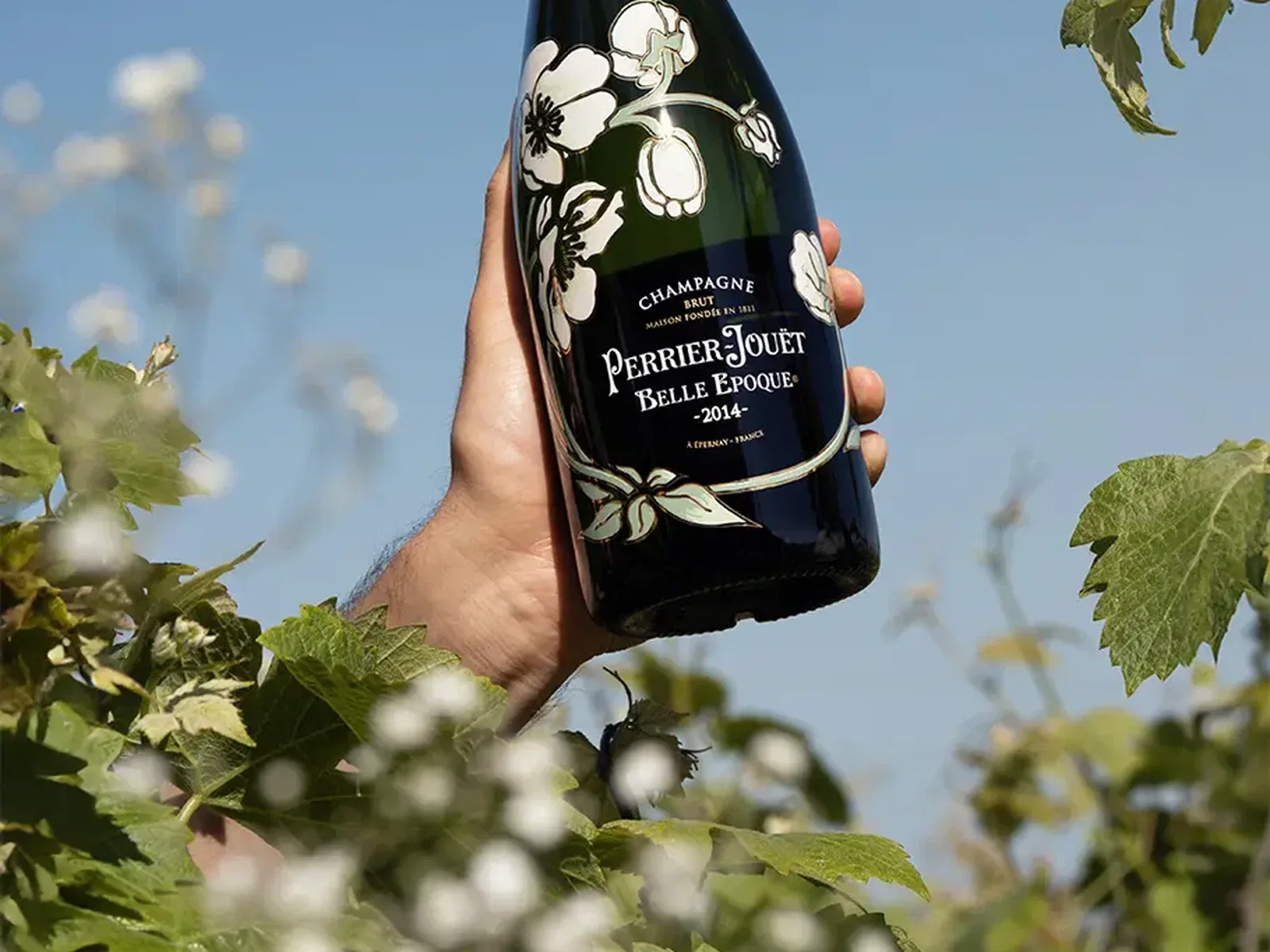
At family-run houses such as Billecart-Salmon, cellar master Florent Nys presents potential blends to a committee that includes other winemakers and family members. At Krug, Julie Cavil describes bringing blends that are 97% complete, with the remaining 3% discussed by committee. In 20 years, she says, unanimity has always followed. At Krug, Cavil has the casting vote: “I say OK!”
Those examples sharpen the picture around Frerson. The Perrier-Jouët cellar master works within the same Champagne reality: a blend must satisfy both the technical demands of winemaking and the less easily quantified recognition of house style. The committee vote is not theatre. It is a safeguard against drift.
There is another final adjustment before the wine leaves the cellar: dosage. The committee is often called back to decide the dosage before release. Nys at Billecart-Salmon has built a mini-winery of 51 different dosage liqueurs based on different grape varieties, vinifications, and ageing profiles. That detail gives you the scale of the final act. The addition may be minute, but it is not casual.
For collectors, dosage is one of those choices that can alter the way a wine carries itself at the table. It affects balance, texture, and the impression of finish. In Champagne houses working at scale, the cellar master must make that last adjustment without disturbing identity. A few grams can change the conversation in the glass.
Champagne’s complexity begins before any committee sits down. The houses own only 10% of the land in the region, while more than 16,000 individual growers supply grapes and wines to the houses. That structure makes Champagne unlike regions where an estate can lean mostly on its own contiguous vineyards and speak of terroir through a narrower set of parcels.
A Champagne house works through relationships, contracts, tastings, and selection. The cellar master has to understand how a grower wine behaves in the year of harvest, how it might support a non-vintage blend, and whether it has the capacity to become part of a reserve system. The map is not merely geographic. It is a map of people, tanks, past decisions, and future needs.
For the Perrier-Jouët cellar master, staying true to house style therefore begins well before the final blend. It starts with the raw material made available to the house and continues through the tasting of base wines once fermentation is complete. The numbers make the job plain: hundreds of wines, multiple reserves, and a final blend that must read as Perrier-Jouët rather than as a collection of separate origins.
This is where serious Champagne travel becomes more interesting than a cellar photograph. Reims and Épernay can seduce with façades and crayères, but the intellectual pleasure lies in understanding how houses make consistency from a fragmented region. The grand houses are not simply bottling place. They are blending place, memory place, and decision place.
Reserve wines are Champagne’s private archive. They are wines kept from previous harvests, held in different vessels according to the house’s approach, and used to shape future blends. Their role is especially important for non-vintage Champagne, which accounts for more than 90% of the region’s production.
That is the scale of Frerson’s task. Every house has its own reserve philosophy, and every cellar master must know not only what a reserve wine is today, but what it can safely become inside a blend that may not reach the drinker for years.
This is the part of Champagne that rewards patience from collectors. A non-vintage bottle can look simple on a wine list, yet behind it sits a series of decisions about reserve age, harvest character, dosage, and consistency. Frerson’s house-style brief belongs to that realm. The label may not name every component, but the cellar master has tasted through them.
The modern cellar master is also increasingly an ambassador. The old image of a cellar-dweller with no public role no longer fits many grandes maisons. Some chef de caves now travel, lead masterclasses, speak to journalists, meet clients, and explain technical decisions to audiences who expect both precision and charm.
Frerson’s quote at Perrier-Jouët is valuable because it resists the performance side of the job. The statement is short, cellar-first, and disciplined. It tells you that the public role may expand, but the central responsibility has not moved: the wine must still taste like the house.
For collectors, the point is not to reduce Perrier-Jouët to a single quote. The point is to use Frerson’s sentence as a lens for tasting. If the Perrier-Jouët cellar master is working to stay true to house style, then the informed drinker should pay attention to the through-line between releases rather than only chasing the weather signature of one harvest.
That does not mean vintage character disappears. It means Champagne houses have an additional responsibility: they must decide how much of a year to show, how much reserve character to deploy, and how to keep the house recognisable across changing conditions. In still wine regions, a difficult vintage may be allowed to speak more plainly. In Champagne, especially for non-vintage wine, the cellar master has more tools and a stricter promise.
When you taste Perrier-Jouët, taste first for continuity. Then ask where the blend feels shaped: the freshness at the front, the breadth in the middle, the role of dosage, the way maturity appears or stays tucked behind primary fruit. Those questions are more useful than asking for a single heroic intervention from the chef de caves. Champagne at this level is a team sport, but the cellar master holds the line.
Frerson’s profile also clarifies why visits to Champagne reward repeat attention. The first trip may be about cellars, labels, and the pleasure of drinking in the region. The next one should be about systems: growers, base wines, reserve libraries, tasting committees, and dosage decisions. That is where the region’s fine-wine seriousness lives.
The next time Perrier-Jouët appears on a list or in a collector’s cellar, Frerson’s sentence gives the glass a useful frame. House style is not an abstract inheritance; it is remade through still wines, committee judgment, reserves, and the final decision to let the wine leave the cellar only when it speaks in the house’s voice.
Tagged
Get the App
Take the shortlist into the En Primeur Club app for concierge access, saved places, and the next step after discovery.
Get Exclusive AccessMore from the editors