← Guides
Inside Stag's Leap Wine Cellars: How to Book the Visit That Earns Its Place in 2026 Yes, you can visit Stag's Leap Wine Cellars, and the estate does welcome guests by appointment.
Inside Stag's Leap Wine Cellars: How to Book the Visit That Earns Its Place in 2026 Yes, you can visit Stag's Leap Wine Cellars, and the estate does welcome guests by appointment.
Yes, you can visit Stag's Leap Wine Cellars, and the estate does welcome guests by appointment. The harder question is which experience to book, because the winery offers tiered tastings ranging from a seated estate introduction to cellar-depth sessions focused on the S.L.V. vineyard that produced the 1973 S.L.V. Cabernet Sauvignon that competed at the 1976 Judgment of Paris, held at the InterContinental Hotel in Paris on May 24 of that year,1 where it outscored Bordeaux's first growths. Demand is steady year-round, and particularly immersive formats fill quickly, particularly in summer and harvest season. The single best route for most visitors: book directly through the winery's own reservations page well in advance, and target a weekday if your schedule allows.
The Stag's Leap District sits at the southern end of the Napa Valley, a narrow corridor of volcanic palisades and benchland soils that produces some of California's most age-worthy Cabernet Sauvignon. Stag's Leap Wine Cellars, not to be confused with the neighboring Stags' Leap Winery, carries the specific provenance of the Paris tasting. That distinction draws a particular kind of visitor: collectors who want to stand in the vineyard where the S.L.V. Cabernet grows, not just taste the wine at a hotel bar in Yountville.
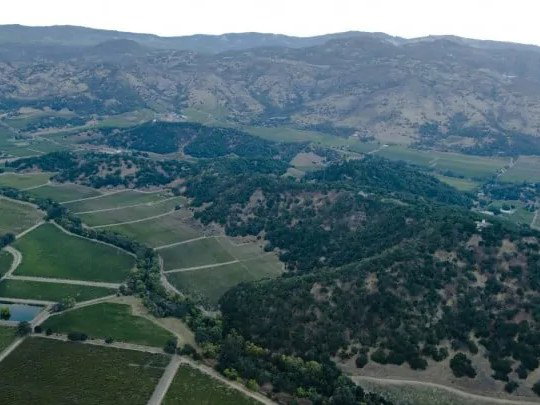
The estate's tasting room sits on a relatively compact footprint. Napa Valley's broader tourism infrastructure funnels a high volume of visitors into a small number of historically significant addresses, and Stag's Leap Wine Cellars is near the upper end of that list. Weekend slots, especially between May and October, are the first to go. Confirm availability directly when you book.
The booking calendar appears to roll on an ongoing basis rather than opening in a single drop. In practice, this means checking availability early and often rather than waiting for a specific date.
The safest approach: plan your Napa visit first, then open the winery's reservations page as soon as your travel dates are confirmed. For harvest-season visits (roughly September through October), earlier is better, those weeks attract both tourists and trade, and particularly experiential formats are the first to sell out. If your preferred date shows no availability, contact the estate directly to ask about cancellations or alternative formats.
Stag's Leap Wine Cellars handles reservations through its own website. The booking surface is the winery's official Judgment of Paris and visit page,2 where you can browse available experience formats and select dates. This is the primary channel. The winery does not appear to list availability through third-party platforms like Tock or Viator, so going direct is both the reliable and one efficient path.
The winery is owned by Marchesi Antinori, which acquired full ownership in 2023 after buying out Ste. Michelle Wine Estates' stake in the winery, a pairing that has kept the estate's distribution relatively broad. That means allocation access to the wines themselves, particularly the S.L.V., Cask 23, and Fay Vineyard Cabernets, runs through a combination of the winery's mailing list, fine wine merchants, and the secondary market, rather than being locked behind a single closed list. Joining the mailing list via the winery's website is one direct route to allocation offers and early-release notifications.
The S.L.V. Cabernet Sauvignon collection is available for purchase directly on the winery's website,3 with current offerings including recent vintages, a useful fallback if your visit window doesn't align with a live allocation release.
What insiders do differently: Regulars who want substantive access tend to book the cellar or vineyard-focused formats rather than the standard estate tasting, these sessions typically involve smaller groups and more direct conversation with the winery team. They also join the mailing list before visiting, so the visit itself becomes a reinforcement of an existing relationship rather than a cold introduction. If you're serious about securing allocations of Cask 23, the flagship blend that draws on both S.L.V. and Fay fruit, establishing purchase history through the winery's direct channel matters.
The four errors that consistently derail a Stag's Leap visit:
Booking the wrong tier for your interest level. The estate offers multiple experience formats. Arriving for a standard tasting when you wanted a vineyard walk or cellar session, because you didn't read the format descriptions carefully, means you've spent the visit in a room rather than in the S.L.V. block. Check what each format actually includes before confirming.
Arriving without an appointment. Stag's Leap Wine Cellars operates by appointment. Walk-ins are not a reliable option, and the winery's location on Silverado Trail means there's no casual foot traffic to blend into. Showing up unannounced wastes the drive.
Visiting on a weekend in summer without booking well ahead. Summer weekends in Napa are one competitive window. If your dates are fixed and you haven't booked, call the winery directly rather than assuming the online calendar shows everything, cancellations sometimes open slots that don't surface immediately on the booking page.
Conflating Stag's Leap Wine Cellars with Stags' Leap Winery. The apostrophe placement is different; the estates are separate. Both are worth visiting, but they are not the same address, and the Paris tasting provenance belongs specifically to Stag's Leap Wine Cellars and its S.L.V. Cabernet.
For collectors who want the wines more than the visit, the allocation picture is more accessible than at many Napa cult producers. Cask 23, the estate's top Cabernet, is produced in quantities that allow for merchant distribution; it appears regularly at fine wine retailers and at auction. The S.L.V. and Fay single-vineyard Cabernets are similarly available through trade channels, though the stronger vintages move quickly after release.
The mailing list remains one direct route to new-release pricing and first access to library wines; the secondary market (Hart Davis Hart, Acker, Zachys) is the fallback for older vintages of Cask 23, where strong vintages from the 1980s and 1990s appear with some regularity. En primeur or futures offerings for Stag's Leap Wine Cellars wines are not a standard feature of the estate's release model, releases are made as finished wines, not as barrel samples.
Ridge Vineyards, whose Monte Bello Cabernet also competed at the Paris tasting, offers a parallel mailing-list route: Ridge's mailing list4 keeps subscribers current on wine releases and special offers, worth joining if you want to track both California estates that shaped the Paris result. Ridge is also marking the 50th anniversary of the Judgment of Paris in 20264 with tasting room events and club programming, making it a natural companion stop for anyone building a Paris-tasting itinerary.
If Stag's Leap Wine Cellars is fully booked on your dates, or if you want to build a district-focused day, these three estates offer comparable access to the same benchland terroir:
| Estate | Booking Difficulty | Primary Format | How to Book | Paris Tasting Connection |
|---|---|---|---|---|
| Stag's Leap Wine Cellars | Moderate, High (weekends) | Seated tasting; vineyard/cellar options | Direct via winery website | Yes, S.L.V. Cabernet, 1976 |
| Clos Du Val | Moderate | Seated estate tasting | Direct via winery website | Yes, also competed at Paris 1976 |
| Shafer Vineyards | High (small-group, appointment only) | Vineyard walk + seated tasting | Direct; limited availability | No direct Paris connection |
| Silverado Vineyards | Lower | Walk-in and appointment options | Direct or walk-in | No direct Paris connection |
Clos Du Val is especially historically resonant alternative, its 1972 Cabernet was among the California wines that placed at the Paris tasting on May 24, 1976,1 making a paired visit to both estates a coherent trip rather than a detour. Shafer Vineyards' Hillside Select Cabernet is the district's other benchmark bottling, though Shafer's Paris connection is indirect, the draw there is the benchland terroir and the small-group format rather than the 1976 provenance.
The estate sits on Silverado Trail, the quieter eastern road that runs parallel to Highway 29. The approach through the Stag's Leap palisades, the volcanic rock formation that gives the district its name and creates the afternoon wind shadow that slows ripening and preserves acidity in the Cabernet, sets the context before you've tasted anything.
The standard tasting format is seated and guided, moving through the estate's range from the AVETA Sauvignon Blanc through the Artemis Cabernet and into the single-vineyard S.L.V. and Fay bottlings. The S.L.V. vineyard, the parcel whose fruit anchors the Cask 23 blend, is visible from the property. Confirm those details when booking, particularly if you're planning around a specific departure time or coordinating with other Napa visits on the same day.
The more immersive formats include time in the vineyard itself, which gives the tasting notes a physical anchor that a hotel tasting room cannot replicate. The cellar-focused sessions go deeper into the winemaking program: the barrel aging regime for Cask 23, the blending philosophy that draws on both S.L.V. and Fay fruit, and the library wines that show how the estate's style has evolved since the Paris tasting. These formats run longer and involve smaller groups, the right choice if you're there to understand the wine rather than simply to check the address.
The 30th anniversary re-enactment of the Judgment of Paris was held on May 24, 2006, with simultaneous tastings in London and in Napa at Copia,4 a reminder that the estate's significance has been formally marked at decade intervals, and that the 50th in 2026 is likely to draw heightened visitor interest. Plan accordingly if your visit falls in that window.
This visit earns its effort for collectors and enthusiasts who want the physical context for a wine they already know on paper. If you've cellared a bottle of Cask 23 or the S.L.V. Cabernet, standing in the vineyard that produced it changes how you read the wine, the iron-rich volcanic soils, the afternoon shadow from the palisades, the proximity to the San Pablo Bay's cooling influence. That's not sentiment; it's the kind of terroir literacy that makes tasting notes legible.
It's less essential for visitors whose primary interest is Napa's broader Cabernet landscape rather than the Paris tasting specifically. If you're building a Napa itinerary around Howell Mountain or the Oakville benchland, the Stag's Leap District is a detour rather than a centerpiece, plan accordingly.
The stronger occasions: a focused Stag's Leap District day paired with Clos Du Val and one of the smaller district producers; a harvest-season visit when the vineyards are at their most visually compelling; or a trip timed around a library release or vertical tasting event, which the winery occasionally hosts for mailing-list members.
For anyone serious about California Cabernet, yes, but the visit rewards preparation. The estate is accessible by appointment, the booking process is direct, and the wines are available through trade channels without requiring cult-producer-level allocation maneuvering. What you're paying for here is context: the S.L.V. block, the palisades, the specific address where a 1973 Cabernet Sauvignon changed how the world thought about California wine.
Book particularly immersive format your schedule allows, join the mailing list before you arrive, and pair the visit with Clos Du Val for a Paris tasting double-header that no single-estate visit can replicate on its own. The allocation list is one reliable route to Cask 23 at release pricing; the secondary market handles the rest.
For most visitors, the vineyard session is the version worth waiting for, the standard tasting is fine, but the S.L.V. block is the reason you drove to Silverado Trail in the first place. With the 50th anniversary of the Paris tasting approaching in 2026, the estate's place in the California Cabernet story is unlikely to feel less relevant anytime soon.
Stag's Leap Wine Cellars operates by appointment only. Walk-ins are not a reliable option. Book through the winery's official reservations page before your visit, arriving without an appointment is likely to result in being turned away, particularly on weekends.
There is no advance-notice rule. In practice, booking as early as your travel dates are confirmed is the safest approach, especially for summer weekends and harvest season (September, October), when availability tightens fastest. If the online calendar shows no availability, contact the winery directly to ask about cancellations.
The cellar or vineyard-focused formats offer greater depth, smaller groups, more direct engagement with the winemaking team, and time in the S.L.V. block itself. The standard estate tasting covers the range but doesn't go as deep into the Cask 23 program or the single-vineyard Cabernets. Check the winery's current format offerings when booking, as the lineup can change seasonally.
No. These are two separate estates with similar names and different apostrophe placements. Stag's Leap Wine Cellars, the estate whose S.L.V. Cabernet Sauvignon competed at the 1976 Judgment of Paris, is on Silverado Trail. Stags' Leap Winery is a distinct property. Confirm the address before you drive.
The mailing list is the primary channel for new-release pricing and early access to library wines. Cask 23 also appears through fine wine merchants and at auction, so the list is not the only route, but it is one direct one for release-price access.
Get the App
Take the shortlist into the En Primeur Club app for concierge access, saved places, and the next step after discovery.
Get Exclusive AccessMore from the editors