← Guides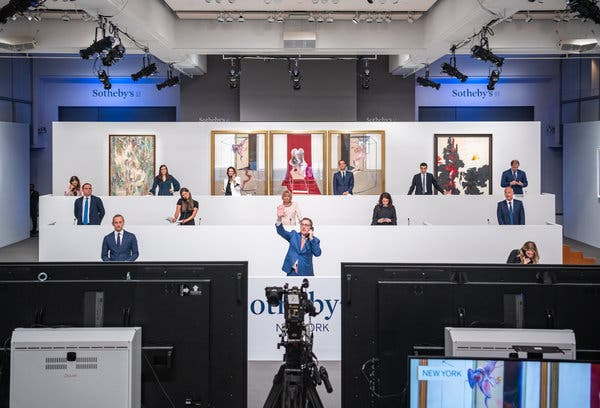
A wine auction buying guide for 2026, covering Sotheby's, Zachys, Hong Kong sale rooms, bidder registration, previews, premiums, and when the paddle is worth raising.
A wine auction buying guide for 2026, covering Sotheby's, Zachys, Hong Kong sale rooms, bidder registration, previews, premiums, and when the paddle is worth raising.
Registering to bid at Sotheby's Wine, Zachys, or the major Hong Kong sale rooms is open to anyone; there is no invitation list, no minimum spend to join, and no membership fee to bid. The paddle arrives by email, a PDF confirmation, a bidder number, and a note about preview hours. The real question is how to read the room, which lots reward live attendance versus absentee bids, and what the sale rooms in London, New York, and Hong Kong actually feel like when a case of 1996 Pétrus crosses the block.
Preview day at Sotheby's New York or London is the part most collectors underestimate. The wine is laid out on tables by lot number, cases open, individual bottles accessible for inspection. Specialists circulate and will pull a bottle for closer examination if you ask. This is where you check fill levels against the catalogue description, examine capsule condition on aged Bordeaux, and assess whether a label described as "slightly soiled" is cosmetic or a sign of poor storage. For a case of 1978 Barolo or a mixed vertical of Giacomo Conterno, twenty minutes at the preview table is worth more than any catalogue photograph.
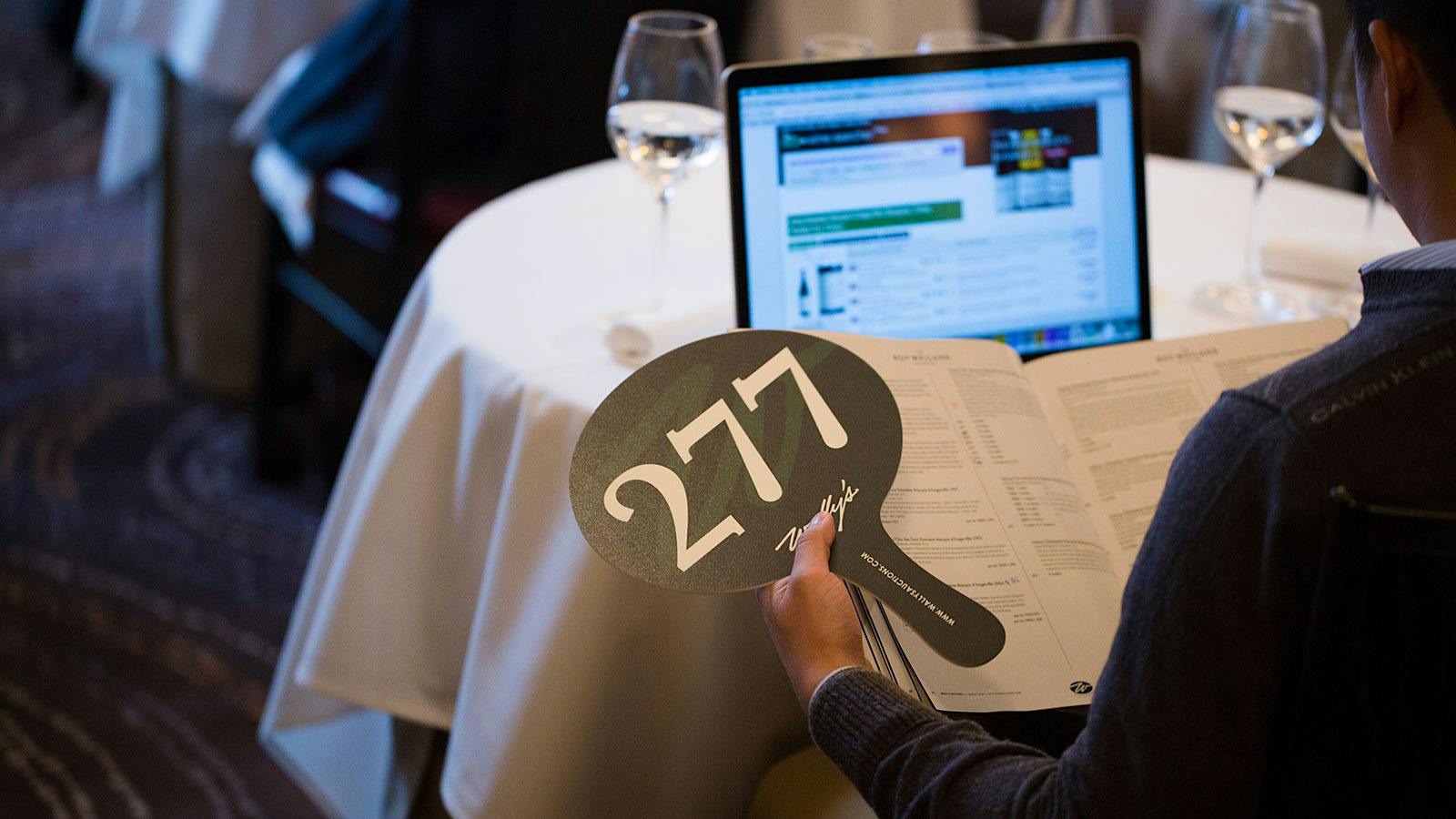
The sale room itself is smaller than most first-timers expect, a hundred seats, with telephone bidders ranged along one wall and the auctioneer polished at the front. The pace is fast: a specialist auctioneer moves through lots at roughly two to three minutes each during a busy session. If you are bidding in the room, make your paddle visible early and hold it steady. A small nod or a raised finger is enough once the auctioneer has your eye.
Hong Kong sale rooms at Sotheby's and Christie's follow the same format but with simultaneous Cantonese and English translation, and the room energy for a major Burgundy lot, a DRC vertical, a Leroy single-vineyard parcel, is more charged than equivalent London sales. The bidding increments move faster and the telephone banks are busier.
Online bidding replicates the lot sequence in real time but strips out the room atmosphere entirely. You watch the hammer price climb in a browser window, submit your bid with a click, and either win or don't. It is efficient and slightly anticlimactic. For your first auction purchase, attend a preview in person, even if you ultimately bid online, so you can calibrate condition and lot quality before you trust the catalogue alone.
Wine auction volume has concentrated around a small number of specialist houses. Sotheby's Wine operates dedicated sales in London and New York; Zachys runs sales in New York and, through its Hong Kong partnership, in Asia; Hart Davis Hart anchors Chicago. The Hong Kong rooms, Sotheby's Hong Kong and Christie's Hong Kong, draw mainland Chinese collectors and Southeast Asian buyers whose appetite for aged Burgundy and first-growth Bordeaux has pushed hammer prices on trophy lots well above London equivalents for the same wine.
The competitive pressure is sharpest at the summit of the market: a single-owner cellar sale at Sotheby's or a Zachys "Finest and Rarest" event will attract professional trade buyers, négociants restocking allocations, and private collectors all bidding on the same 12-bottle case of 2005 Romanée-Conti. Absentee and telephone bids from buyers who never enter the room account for a large share of hammer totals at every major house,1 so a quiet floor can still mean fierce competition for the lot you want.
The Hong Kong rooms add a time-zone dimension: if you are bidding live from Europe or North America, a 10:00 a.m. Hong Kong start means a 2:00 a.m. or 3:00 a.m. alarm. Most Western collectors use absentee bids or telephone lines for Hong Kong sales rather than attending in person.
Each house publishes its sale calendar several weeks in advance, and registration as a new bidder typically opens when the catalogue goes live, usually four to six weeks before the sale date. In practice, Sotheby's Wine and Zachys both allow online registration up to the day before a sale, though first-time bidders are advised to register earlier to allow credit verification. For certain Sotheby's auctions, additional financial verification is required at least 24 hours before the sale.1
If you are a first-time bidder at any of these houses, contact the client services team directly. Sotheby's Wine can be reached by phone at +1 212 894 1990 or by email at wine@sothebys.com,2 to confirm what identification and credit documentation is required before the sale. Do not assume same-day registration is possible for a first bid; Sotheby's may request a credit card, debit card, or bank account details as a preferred payment method before bidding.3
1. Online bidding platforms. All three major houses now run fully integrated online bidding alongside the live room. For Sotheby's online-only auctions, there is no separate registration process; placing a bid automatically registers you.1 Zachys uses a proprietary system accessible through its website. You can browse the catalogue, set maximum bids, and bid live in real time without entering the room, and it carries no additional fee beyond the standard buyer's premium.
2. Telephone bidding. For high-value lots where you want to respond to room momentum, telephone bidding assigns you a specialist who relays bids in real time. Request a telephone line when you register; availability is not guaranteed for every lot, and houses typically prioritize telephone lines for lots above a certain estimate threshold. Confirm with the wine department when you register.
3. In-room attendance. Walking into a Sotheby's or Zachys sale room requires nothing beyond your registered paddle. Preview days, typically the day before and the morning of the sale, allow you to inspect bottles, check fill levels, and examine labels in person. For a cellar of aged Burgundy where condition is everything, attending the preview is worth the trip even if you ultimately bid by phone.
The hammer price is not the final price. Every major auction house charges a buyer's premium on top of the hammer, a percentage of the hammer price that is the house's primary revenue. Sotheby's Global Wines & Spirits buyer's premium is 24% on all hammer prices, plus a 1% overhead premium on all hammer prices.4 Note that Sotheby's revised its general fee structure for other collecting categories, effective February 17, 2025, the standard rate was 27% on everything up to $1 million, 22% for between $1 million and $8 million, and 15% above that,5 but this tiered schedule does not apply to wine: the Wines & Spirits buyer's premium above is the rate that governs wine purchases. Confirm the current rate in the sale's conditions before bidding. Zachys and Christie's Hong Kong publish their own tiered schedules in each sale catalogue; confirm current rates directly.
Always calculate your maximum bid as a net-of-premium figure: decide what you are willing to pay all-in, then work backward to your maximum hammer bid. Additional costs to factor: VAT or sales tax depending on jurisdiction; storage and shipping, quoted separately, Sotheby's does not arrange shipping for wine purchases; buyers must arrange this separately.1 Import duties apply for cross-border purchases. Read the conditions of sale before you bid.
Bidding hammer price as your ceiling. The single most common error among first-time auction buyers. If you set a mental limit of £5,000 for a case of 1990 La Mission Haut-Brion, your actual ceiling is closer to £4,000 hammer once the premium is applied. Arrive at the sale with your all-in number already calculated.
Skipping the preview for condition-sensitive lots. Auction estimates assume good fill levels and clean labels. A case of 1982 Pomerol with two low-shoulder bottles and a damaged label may still carry a high estimate, but condition issues visible at preview are not grounds for post-sale dispute. If you cannot attend in person, ask the specialist for a detailed condition report before bidding.
Registering too late for telephone bidding. Telephone lines for sought-after lots fill up. Request a specialist on the phone for a specific lot when you register, not the morning of the sale.
Ignoring the Hong Kong premium differential. The same wine often achieves a higher hammer price in Hong Kong than in London or New York, driven by Asian collector demand for aged Burgundy and Bordeaux. Acker Merrall & Condit has held wine auctions at the Island Shangri-La hotel in Hong Kong,6 and the city's sale rooms draw serious Asian collectors whose bids regularly set the ceiling for trophy lots. For buyers in Europe or North America, London and New York sales frequently offer better value on identical provenance.
The major houses suit most buyers most of the time, but not every lot or every budget. The table below compares the main rooms on access, cost, and format, and the notes that follow flag the alternatives worth a second look.
| House | Primary Rooms | Online Bidding | Buyer's Premium (approx.) | Preview Access | How to Register |
|---|---|---|---|---|---|
| Sotheby's Wine | London, New York, Hong Kong | Yes, proprietary platform | 24% + 1% overhead (Wines & Spirits) | Day before + morning of sale | wine.sothebys.com |
| Zachys | New York, Hong Kong (partnership) | Yes, zachys.com | Tiered; confirm current schedule | Day before + morning of sale | zachys.com/auctions |
| Christie's Wine | London, Hong Kong | Yes, christies.com | Tiered; confirm current schedule | Day before + morning of sale | christies.com/wine |
| Hart Davis Hart | Chicago | Yes | Tiered; confirm current schedule | Day before sale | hdh.com |
| Acker Merrall & Condit | New York, Hong Kong | Yes | Tiered; confirm current schedule | Day before sale | ackerwines.com |
Hart Davis Hart in Chicago runs deep-catalogue sales with strong Burgundy and California content, and, because it draws a more regionally concentrated bidder pool, hammer prices on non-trophy lots can run below London equivalents for the same wine. Worth registering if you are targeting mid-tier Burgundy or aged California Cabernet.
Acker Merrall & Condit specializes in Burgundy and has historically been the house of choice for DRC and Rousseau consignors. John Kapon expanded the Acker retail operation to conduct independent, live auctions in New York City in 1998,7 and the house has since built a strong presence in Hong Kong for aged bottles with Asian provenance.
Merchant direct and en primeur remain one cost-efficient route for in-demand wines that haven't yet reached the secondary market. For 2023 Burgundy or 2022 Bordeaux, a merchant allocation will almost always undercut the auction premium on the same wine. Berry Bros. & Rudd recently appointed Jamie Ritchie, formerly of Sotheby's, as managing director of international and auctions to lead its US expansion,8 a concrete reminder that merchant and auction channels now overlap for serious collectors.
Auction buying rewards collectors who are patient, condition-literate, and willing to do the arithmetic on buyer's premium before the gavel falls. It is the right channel when you are hunting a specific back-vintage, a 1985 Chambolle-Musigny from Roumier, a 1996 Rayas, that no merchant currently holds. It is also the right channel when a single-owner cellar sale brings provenance-documented bottles to market at estimates that reflect the seller's urgency rather than the retail replacement cost.
It is the wrong channel when you are buying current-release wines still available through merchant allocation. Paying a buyer's premium on a 2020 Burgundy that a merchant still has in stock is a loss that compounds with every percentage point of premium.
The Hong Kong rooms specifically suit buyers who want aged Burgundy with Asian provenance, bottles stored in Hong Kong or Singapore since release and carrying documentation to prove it. For European buyers, the time-zone friction and premium differential make London or New York the better default.
For back-vintage hunting and single-owner cellar sales, auction is often the only route to bottles that haven't been on the open market for a decade. The access itself is open: register online, bid in-person, over the phone, or by absentee bid,1 read the conditions of sale, and calculate your all-in maximum before the session starts. The buyer's premium is the cost of admission, non-negotiable, so build it into every number before you raise your paddle.
The Hong Kong rooms are worth the effort for collectors specifically targeting aged Burgundy with Asian provenance or building relationships with the specialist teams there, but for most European and North American buyers, Sotheby's London and Zachys New York offer the same catalogue depth without the time-zone penalty. Hart Davis Hart in Chicago is the underrated alternative for mid-tier Burgundy and California, where the bidder pool is thinner and hammer prices reflect it.
The auction floor is not a shortcut to cheap wine. It is a market with its own friction costs, its own information asymmetries, and its own rewards for the buyer who arrives prepared, knowing the provenance, having attended the preview, and holding a number that already accounts for every fee between the hammer and the cellar door. Collectors who do that arithmetic consistently tend to leave with the bottles they wanted, at prices they can defend.
No. Both Sotheby's Wine and Zachys allow any adult to register as a bidder without a minimum spend commitment or membership fee. You will need to provide identification and, for first-time bidders, a credit card or bank reference for credit verification. Register well before the sale, ideally when the catalogue goes live, rather than the day before, to allow time for account approval.
The buyer's premium is a percentage added to the hammer price, the price at which the auctioneer's gavel falls. Sotheby's Global Wines & Spirits buyer's premium is 24% on all hammer prices, plus a 1% overhead premium; a revised general fee structure effective February 17, 2025 applies different tiers for non-wine sales, so confirm which schedule governs your specific auction before bidding. To calculate your real cost: decide the maximum all-in price you will pay, then divide by (1 + premium rate) to find your maximum hammer bid. Never use the hammer price as your ceiling.
Yes. Both houses hold preview days, typically the day before the sale and the morning of the sale, where registered bidders can inspect lots in person. Specialists are present and will assist with condition questions. For aged Bordeaux and Burgundy where fill levels and label condition materially affect value, attending the preview is strongly advisable. If you cannot attend in person, request a written condition report from the specialist team before placing your bid.
Yes. International buyers can register for Hong Kong sales and bid online or by telephone without attending in person. The time-zone difference, Hong Kong sales typically run during Asian business hours, means European and North American buyers usually use absentee or telephone bids rather than live online bidding. Hammer prices in Hong Kong for aged Burgundy and first-growth Bordeaux have historically run above London equivalents for the same wine, driven by strong Asian collector demand; factor this into your estimates when comparing sale venues.
The three most costly: (1) treating the hammer price as the final price rather than calculating the buyer's premium into your maximum bid before the session; (2) skipping the preview for condition-sensitive lots, fill levels and label condition visible at preview are not grounds for post-sale dispute; and (3) requesting telephone bidding too late, lines for sought-after lots fill up, so request a telephone specialist when you register, not the morning of the sale.
Get the App
Take the shortlist into the En Primeur Club app for concierge access, saved places, and the next step after discovery.
Get Exclusive AccessMore from the editors