← Guides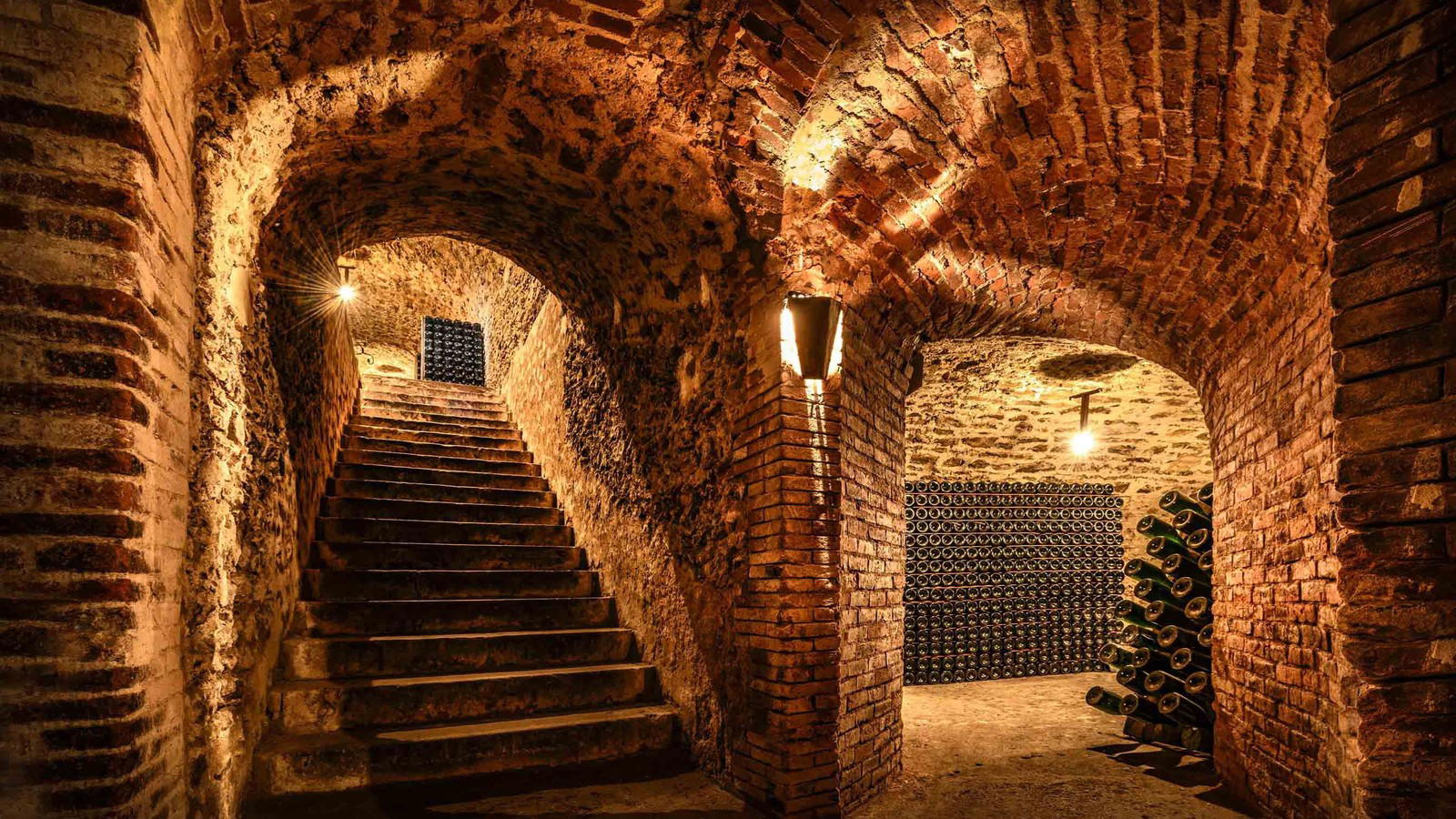
How to Access Salon Champagne in 2026: Allocations, Visits, and Alternatives You cannot visit Salon, not in any conventional sense.
How to Access Salon Champagne in 2026: Allocations, Visits, and Alternatives You cannot visit Salon, not in any conventional sense.
You cannot visit Salon, not in any conventional sense. The estate in Le Mesnil-sur-Oger does not operate a public cellar door, does not accept individual visit requests, and produces exactly one wine: a single-vineyard, single-vintage Blanc de Blancs from the Le Mesnil grand cru, released only in years the house deems worthy. No waitlist exists, the house president has refused to operate one despite tight production. The practical answer, the one that actually gets you into the room, the wine, and the story, runs through Delamotte next door.
Salon was never built for visitors. Eugène-Aimé Salon created the wine in the early twentieth century as a personal obsession, a single-parcel, single-varietal, single-vintage Champagne made purely for his own table and his friends'. That founding logic has never changed. The house produces only one cuvée, the Salon Le Mesnil Blanc de Blancs, sourced entirely from a small parcel of Chardonnay vines in Le Mesnil-sur-Oger. Releases happen at the rate of roughly four vintages per decade,1 and the wine typically spends ten to twelve years on lees before release.2
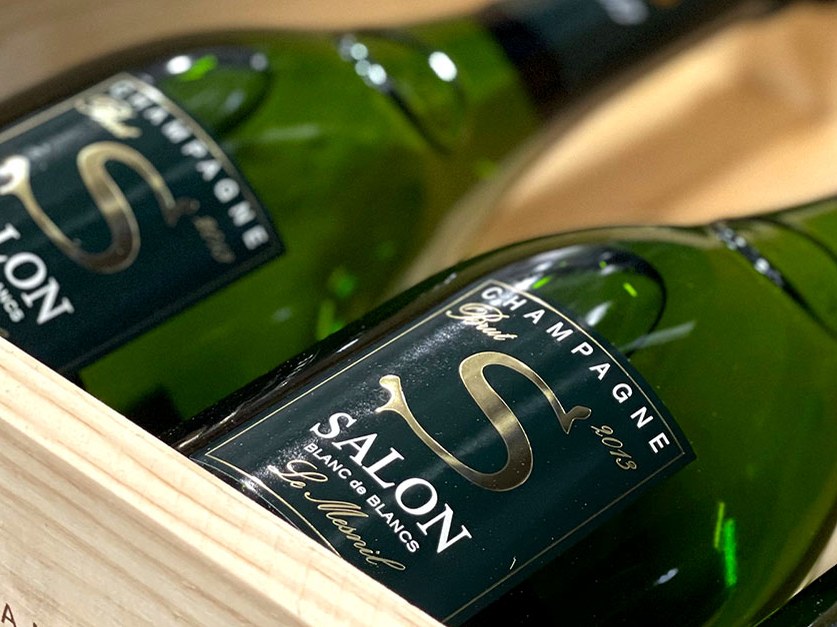
Scarcity is structural, not manufactured. No more than 60,000 bottles are made per vintage, and only in great years.3 The 2015 is the current release as of 2026, following the 2013, and the gap between declared vintages can span several years. Global allocation is divided among a small network of importers, top restaurants, and long-standing private clients. There is no public mailing list to join, no en primeur campaign to enter, and no allocation window published on the estate's website. The wine reaches collectors through négociants, specialist merchants, and the secondary market. The cellar itself remains closed.
The estate is owned by Laurent-Perrier, which acquired its sister house Delamotte in 1988 and Salon itself in 1989. That structure matters for access: Delamotte, which occupies the same address on the Rue de la Brèche d'Oger in Le Mesnil-sur-Oger, operates the public-facing hospitality that Salon does not. Undeclared vintages are used for Delamotte or sold off, Delamotte is the route to access Salon-sourced grapes in non-Salon years,1 and the two houses share the same underground chalk infrastructure, which means a Delamotte visit is, in practice, the closest most people will ever get to Salon's physical world.
When a new vintage is released, bottles move through the importer and merchant network without a public announcement window. Collectors who track Salon typically do so through their specialist merchants, who receive allocations and notify clients on a first-come, first-served basis within their own customer hierarchy.
The secondary market, Sotheby's Wine, Hart Davis Hart, Acker, iDealwine, is one reliable route for anyone without an established merchant relationship. Recent vintages trade around £1,000+/bottle (~£12,000/case).4 The release price through a merchant, when allocation is available, is steep, Salon vintages are released at no less than £1,000 a bottle,3 but the allocation itself is the constraint, not the price. For collectors seeking older vintages rather than the current release, auction is the primary open route.
Because no release window is published, the only practical advice is to establish a relationship with a specialist Champagne merchant now, before the next vintage is announced, and ask to be placed on their Salon notification list. Confirm directly with your merchant of choice before planning around any specific timeline.
Ranked by realistic probability of success:
Specialist Champagne merchants with importer relationships. Houses like Hedonism Wines in London, specialist fine-wine merchants in the US, and Champagne-focused négociants in France receive direct allocations. Building purchase history with these merchants, buying Delamotte, buying other prestige cuvées, being a consistent client, is the single most effective route to being offered Salon when it appears. There is no shortcut here; the allocation follows the relationship.
Fine wine auction houses. Sotheby's Wine, Christie's, Hart Davis Hart, and iDealwine regularly carry Salon across multiple vintages. The secondary market is open to anyone with a bidder's account. Prices are higher than release, but access is immediate and does not require a prior merchant relationship.
Upper-tier restaurant lists. A small number of three-Michelin-star restaurants, particularly in France, the UK, and Japan, carry Salon by the bottle or by the glass. Japan is Salon's top export market,5 which explains why Tokyo's leading wine lists are among the more reliable places to encounter it by the glass. The experience of drinking Salon at a grand cru Champagne dinner with a serious cellar is genuinely different from opening a bottle at home: service temperature, glassware, and pairing context all matter with a wine this precise.
The Delamotte cellar visit. Delamotte accepts visit requests and offers guided tastings in Le Mesnil-sur-Oger. The visit does not guarantee a pour of Salon, Delamotte's own Blanc de Blancs is the focus, but the cellars are shared, and guides occasionally include Salon in private or trade tastings. Contact Delamotte directly to inquire about availability; the route is by email or phone. Confirm current visit formats and any associated costs directly with the estate before planning travel.
Le Mesnil-sur-Oger sits at the southern end of the Côte des Blancs, a village whose grand cru Chardonnay has a chalk-driven tension that distinguishes it from the broader, rounder character of Cramant or Avize to the north. The Rue de la Brèche d'Oger address shared by Salon and Delamotte is quiet, a working winemaking property, not a hospitality campus. There is no tasting room in the tourist-destination sense.
A Delamotte cellar visit typically moves through the chalk cellars beneath the property, where both Delamotte and Salon wines rest in riddling racks and on lath. The depth and temperature of the cellars, consistent cool chalk, the same geology that defines the appellation's character, are part of what the visit communicates. Guides explain the shared infrastructure and the relationship between the two houses. Whether Salon appears in the tasting depends on the format and the relationship: trade visits and private group bookings arranged in advance are more likely to include a Salon pour than a standard public visit.
Delamotte produces around 800,000 bottles annually,6 a scale that makes it meaningfully more accessible than Salon, and its own Blanc de Blancs draws from the same Le Mesnil grand cru fruit, with some Avize and Oger in the blend. Tasting it in the cellar where it was made, against the backdrop of the chalk that defines it, is a legitimate wine experience in its own right. The vintage Delamotte Blanc de Blancs from a strong year is worth tracking on its own merits; Champagne specialists have praised its mineral precision and length.
The crowd at a Delamotte visit skews toward serious Champagne enthusiasts, trade buyers, and collectors who understand the Salon connection. This is not a coach-tour destination. Expect small groups, knowledgeable guides, and a pace that allows for questions.
The money-vs-time tradeoff is stark with Salon. The fast route, buying at auction, is available today, at a price. Back vintages have reached £30,000 or more per case at auction,4 and the 2015 trades at a significant premium to its release price. The patient route, building a merchant relationship over two or three years, buying Delamotte and other prestige cuvées, establishing yourself as a serious client, may eventually yield a release-price allocation when the next vintage appears. The gap between auction price and release price is wide enough that the patient route has a real financial argument, but it requires years of groundwork and no guarantee of success.
The Delamotte entry point is especially underused tactic. Delamotte is the route to access Salon-sourced grapes in non-Salon years,1 and buying it consistently, the Blanc de Blancs, the vintage Blanc de Blancs, the rosé, through a merchant who also handles Salon signals seriousness and builds the purchase history that allocation decisions are based on. Treating it as a gateway rather than a substitute is the right frame.
For the visit itself: contact Delamotte directly by email well in advance of any planned travel to Le Mesnil. Trade credentials or a letter of introduction from a merchant relationship may improve the format offered. Confirm all details, including any costs, directly with the estate.
| Route | Access Difficulty | Typical Cost | Lead Time | How to Access |
|---|---|---|---|---|
| Salon via specialist merchant (release) | high, relationship-dependent | No less than £1,500 per bottle at release3 | Years of purchase history | Build merchant relationship; ask for notification list |
| Salon via auction (secondary market) | Open to all with bidder account | ~£12,000/case recent vintages; £30,000+ back vintages4 | Immediate, next available lot | Sotheby's Wine, Hart Davis Hart, iDealwine, Acker |
| Salon by the glass/bottle at restaurant | Moderate, requires a list that carries it | Restaurant markup on bottle price | Reservation lead time for the restaurant | Research lists at three-star venues in France, UK, Japan |
| Delamotte cellar visit, Le Mesnil-sur-Oger | Low-moderate, contact estate directly | N/A (confirm with estate) | Advance notice recommended; no published booking platform | Email or phone Delamotte directly |
| Krug Clos du Mesnil (comparable single-parcel Blanc de Blancs) | High, allocation-dependent | N/A, confirm with specialist merchant | Merchant relationship required | Specialist merchants; Krug's own allocation network |
Delamotte Blanc de Blancs Vintage. The direct substitute, same village, same chalk, same cellar. Delamotte draws on Salon-sourced grapes in non-Salon years,1 giving the vintage Blanc de Blancs a genuine connection to the same raw material. Strong years are worth tracking, so confirm current vintage availability with your merchant. This is not a compromise, it is a different expression of the same terroir logic.
Krug Clos du Mesnil. A single-walled parcel of 1.84 hectares in Le Mesnil-sur-Oger, producing a Blanc de Blancs that is Salon's closest conceptual peer, single-parcel, single-vintage, long élevage. Allocation is similarly constrained, but Krug's merchant network is broader and the wine appears more regularly at auction. Benchmark vintages are well documented by specialist critics; confirm current availability and pricing with your merchant.
Pierre Péters Cuvée Spéciale Les Chétillons. The estate farms grand cru Le Mesnil parcels, and Les Chétillons, a single-vineyard Blanc de Blancs, is the grower's answer to the same question Salon asks. Allocation is tight but not impossible; the wine appears through specialist merchants and at auction with more frequency than Salon. Strong recent vintages are worth seeking; confirm current availability with a specialist merchant.
Salon is one of those wines where the access problem and the wine itself are inseparable, the scarcity is not incidental to the experience, it is part of what the wine means. The cellar door is closed, the house president refuses to operate a waitlist, and the next vintage will appear when the house decides it is ready, not when the market wants it. The house does not release its wines until ten years after bottling,7 a discipline that has never bent to commercial pressure. None of that is going to change.
For most collectors, the practical path is threefold: build a relationship with a specialist Champagne merchant now, buy Delamotte consistently as both a genuine pleasure and a signal of seriousness, and set a standing alert with one or two auction houses for secondary-market lots. The Delamotte visit in Le Mesnil is worth making on its own terms, the chalk cellars, the grand cru context, and the wine itself are a complete experience, not a consolation for missing Salon.
The allocation list is the only route that reliably yields release-price bottles, and that list is built over years, not months. For those who want Salon now, the secondary market is open; for those who want it at its best price, patience and merchant loyalty are the only currency that works. A wine that has declared roughly four vintages per decade across its entire history1 has always rewarded those willing to wait for it.
Salon does not operate a public cellar door or accept individual visit requests. The estate produces a single wine and has never offered public hospitality. The practical alternative is a visit to Delamotte, which shares the same address and cellars in Le Mesnil-sur-Oger and does accept visit requests, contact Delamotte directly by email or phone, as no online booking platform is published.
Bottles reach collectors through specialist Champagne merchants who hold importer relationships with the house. Building a consistent purchase history with such a merchant, including buying Delamotte and other prestige cuvées, is one reliable route to being offered an allocation when a new vintage is released. The secondary market (Sotheby's Wine, Hart Davis Hart, iDealwine) is the open-access alternative.
Salon declares a vintage only in years the house considers notable, the house has released vintages at the rate of roughly four per decade across its history. The 2015 is particularly recent release as of 2026, following the 2013. Gaps between releases can span several years. No release calendar is published; confirm current availability with your specialist merchant.
Delamotte Blanc de Blancs is made from Le Mesnil grand cru fruit and ages in the same chalk cellars as Salon. It is a different wine, broader in its sourcing, earlier in its release, but it draws on the same terroir logic, and in non-Salon years it incorporates Salon-sourced grapes. The vintage Delamotte Blanc de Blancs from a strong year is a serious Champagne in its own right. For tasting Le Mesnil's character without Salon's allocation constraints, it is one direct route available.
A small number of upper-tier restaurants, particularly three-Michelin-star venues in France, the UK, and Japan, carry Salon on their wine lists by the bottle or occasionally by the glass. Japan is Salon's leading export market, making Tokyo an especially productive city to search. Research the wine list before booking; availability changes with each vintage release and restaurant purchasing cycle.
Get the App
Take the shortlist into the En Primeur Club app for concierge access, saved places, and the next step after discovery.
Get Exclusive AccessMore from the editors