← Guides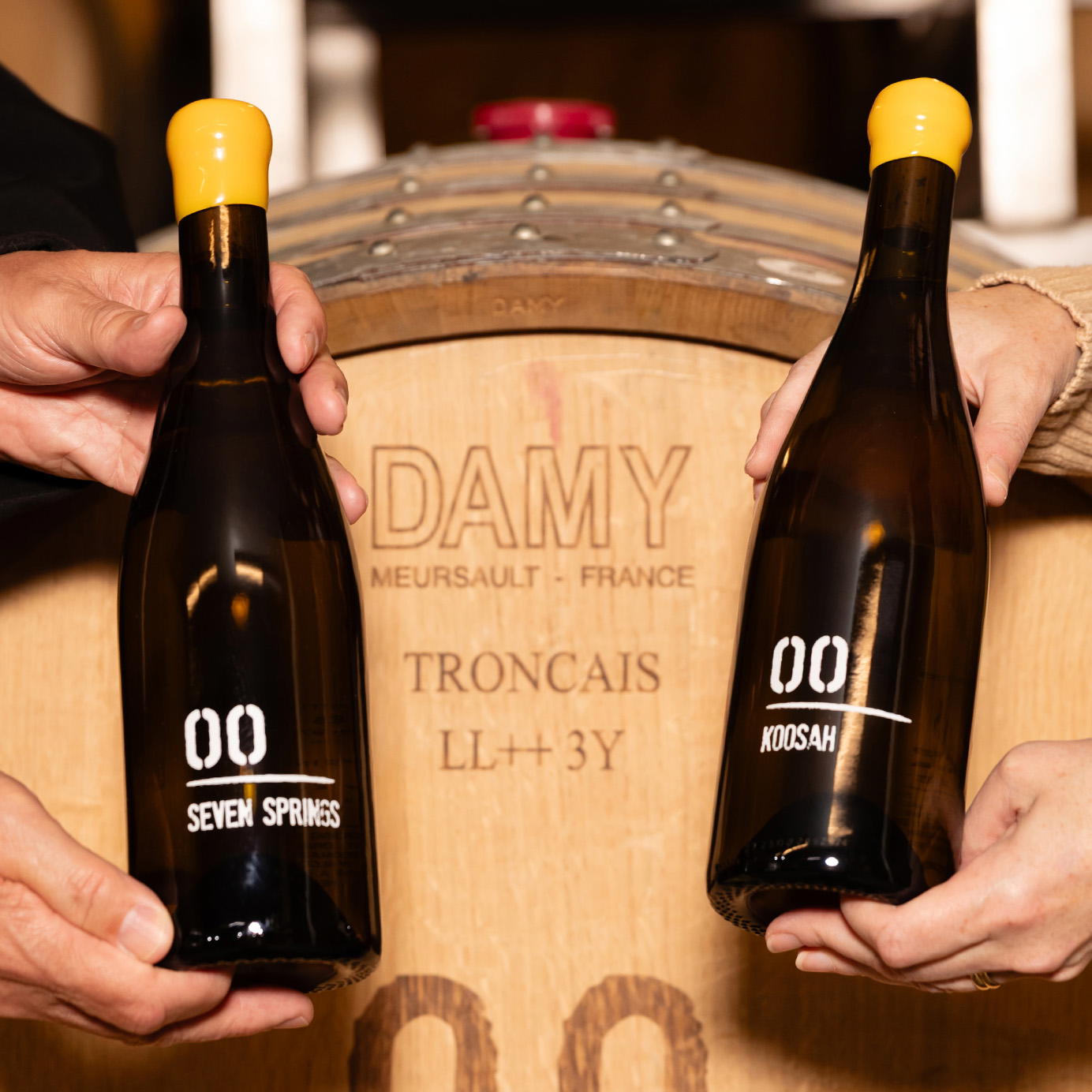
According to VinePair, Chris and Kathryn Hermann turned no winemaking résumé into 00 Wines Oregon Chardonnay, from 250 spray-painted cases to French Laundry demand.
According to VinePair, Chris and Kathryn Hermann turned no winemaking résumé into 00 Wines Oregon Chardonnay, from 250 spray-painted cases to French Laundry demand.
In 2020, the head sommelier at the French Laundry called Chris and Kathryn Hermann to buy a case of every SKU from 00 Wines after guests brought the bottles as corkage,1 and 00 Wines Oregon Chardonnay is now followed by collectors.
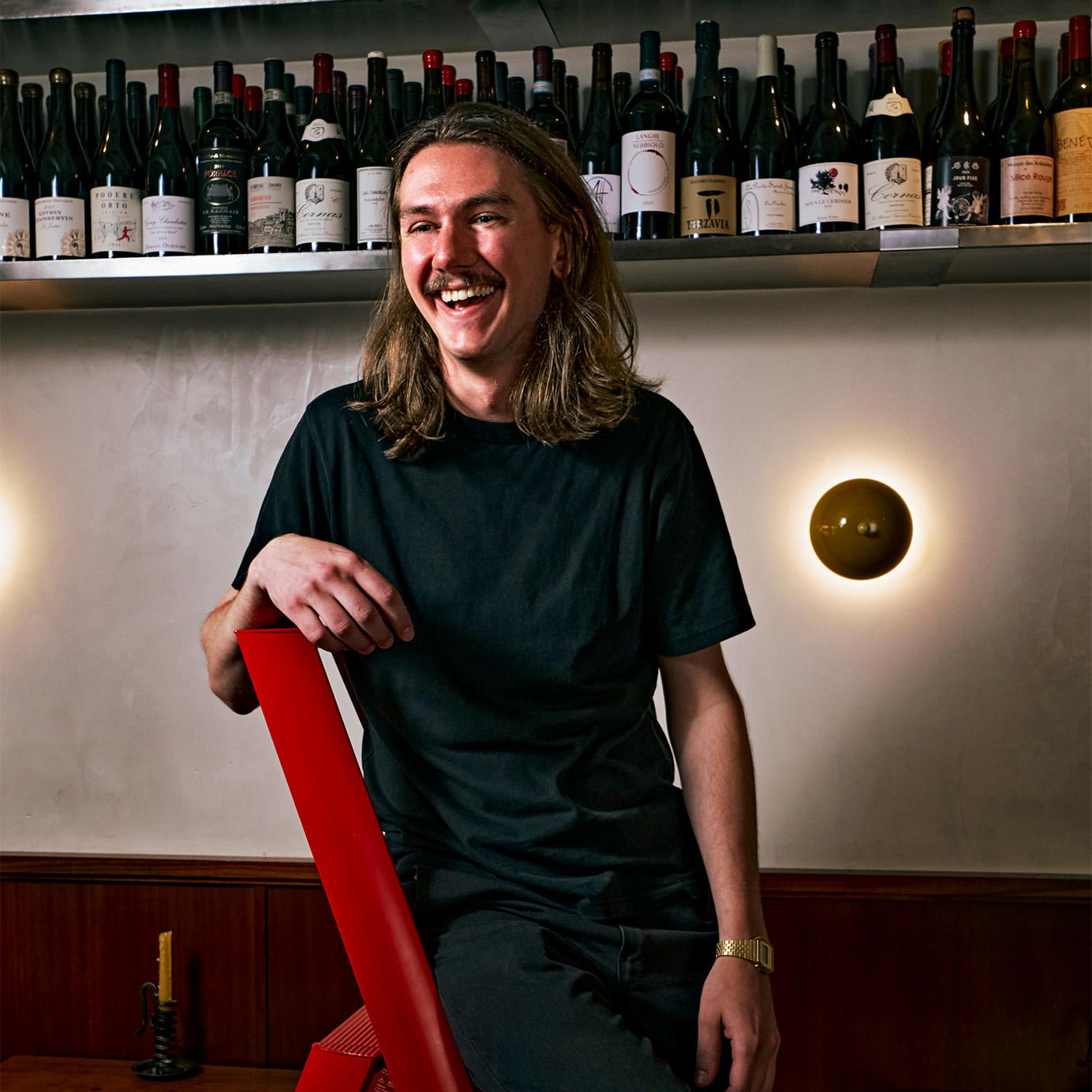
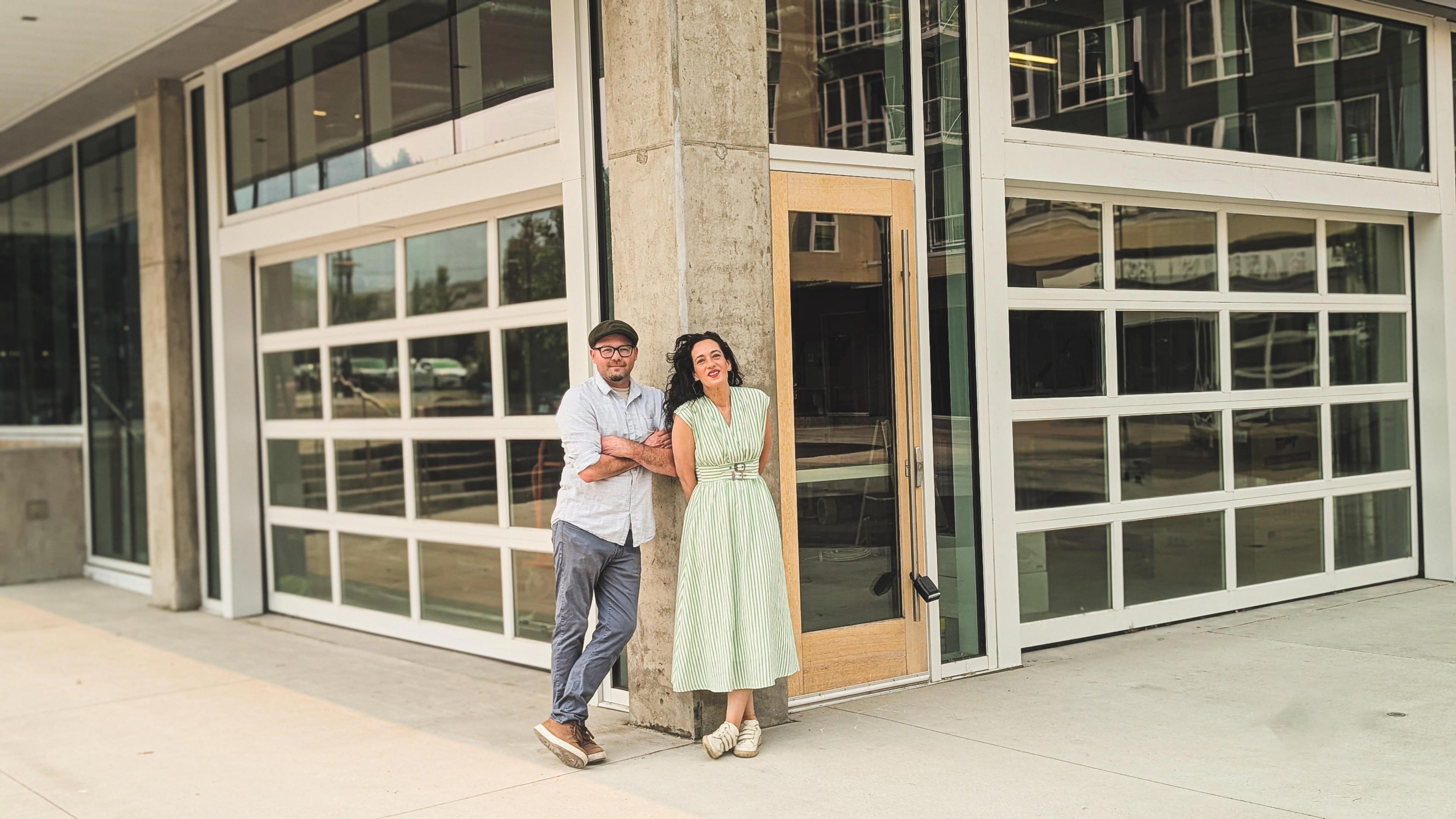
The Hermanns founded 00 Wines in Oregon in 20151 with no winemaking experience, no inherited cellar, and no old family parcel to introduce at dinner. Kathryn came from tech startups. Chris worked as a lawyer in the Willamette Valley, with local and international wineries among his clients. According to VinePair, their first vintage ran to 250 cases, with spray-painted labels. The Oregon operation now produces about 5,000 cases,1 while the project has expanded into Burgundy and Champagne.
00 Wines built its reputation around Chardonnay. The defining method, known as black Chardonnay, pushes oxygen exposure early in the process until the pressed juice turns dark brown, then returns to a golden color over the following months. For collectors used to tracing Chardonnay through Coche-Dury, Meursault, and the Willamette Valley's single-vineyard bottlings, the method gives 00 Wines a technical fingerprint before the cork is pulled.
The French Laundry call did not come through a conventional sales route. Guests had brought 00 Wines bottles as corkage, and the restaurant's head sommelier tried them there. In 2020, the sommelier contacted the Hermanns and asked to buy a case of every SKU.
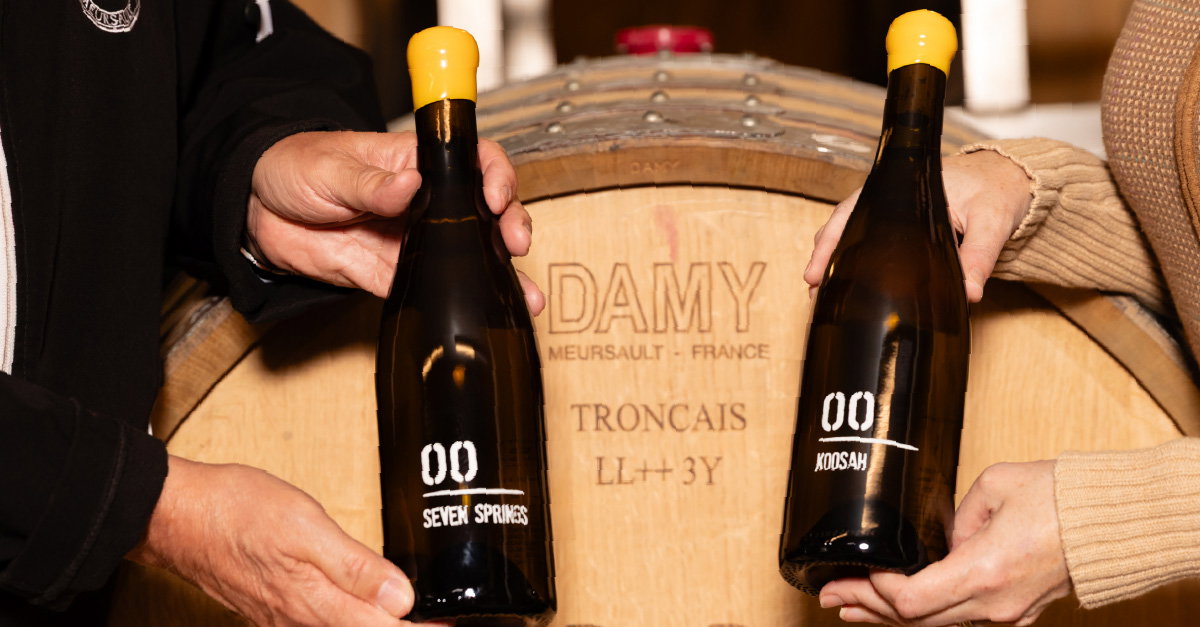
For a producer that began with 250 cases, a full-SKU order from the French Laundry carried a particular kind of signal. The restaurant's cellar culture depends on bottles that can sit comfortably beside Burgundy, California Chardonnay, mature Champagne, and the sort of allocations that serious collectors carry to dinner. 00 Wines reached that table through customers first, then through the sommelier.
Chris had already been putting the wines into blind tastings with sommeliers against bottles from Burgundy's Coche-Dury.1 The exercise was pointed. Coche-Dury carries enough recognition among Chardonnay collectors that a blind comparison can expose texture, reduction, oak integration, and finish without allowing the label to lead the room. Sometimes the sommeliers identified the wines correctly, and sometimes they did not.
00 Wines first found an audience among high-end Burgundy collectors who seek Chardonnay from small producers outside the usual addresses. High-end Burgundy collectors who seek Chardonnay from small producers outside the usual addresses are a narrow, unforgiving audience. A collector who brings a bottle as corkage to the French Laundry is telling the table that the wine can stand in a dining room where the list already has depth.
Chris brought winery experience, and Kathryn brought startup discipline. Chris brought exposure to winery deals, vineyard conversations, and the practical mechanics of Oregon wine without having made wine himself. Kathryn brought startup discipline, where an idea has to move through testing, iteration, and the management of constraints before it becomes a product. Their shared entry point was Chardonnay, particularly the bottles they drank together from Burgundy and the United States.
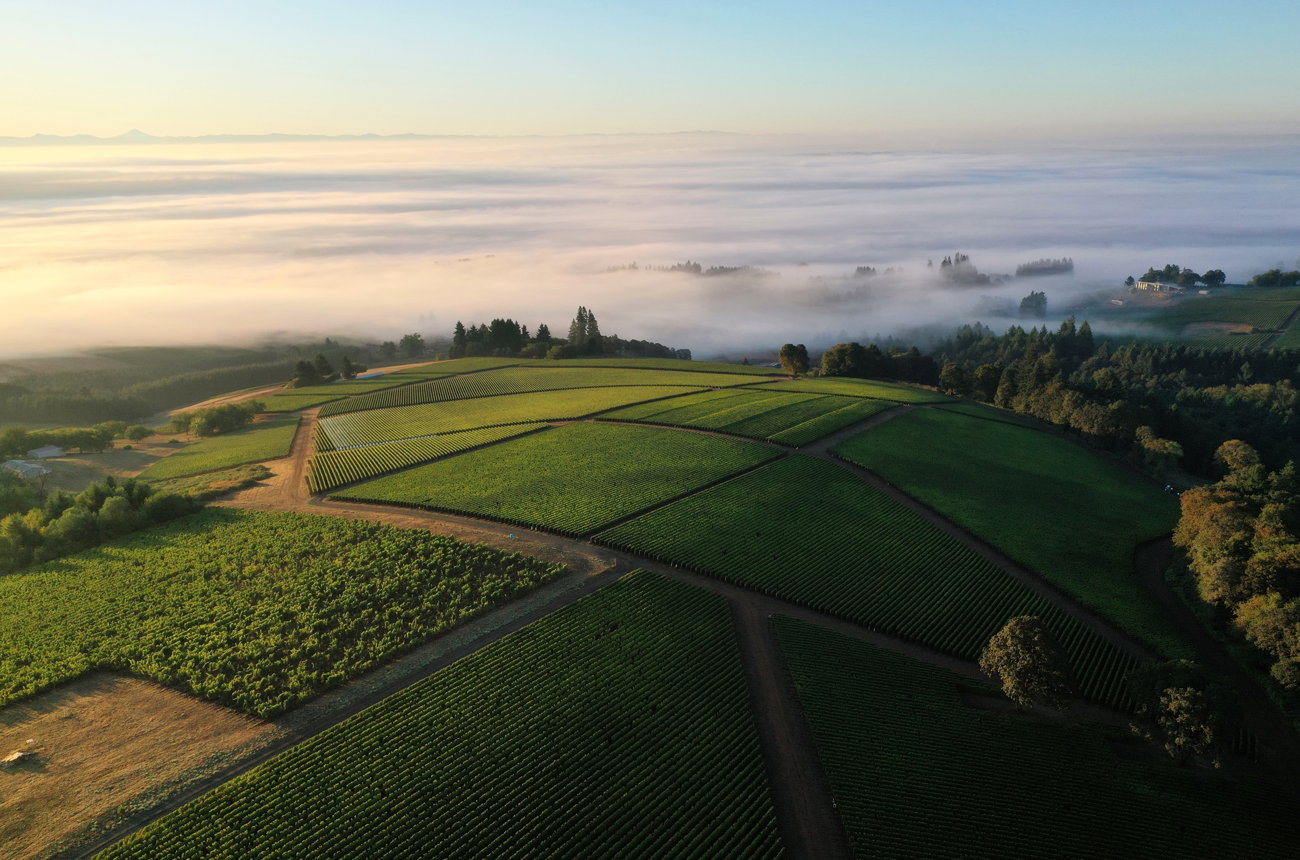
Chris approached the project as a sequence of variables: vineyard site, elevation, exposure, soil type, clones, grafting, barrel selection, and the many choices between grapes and bottle. Instead of buying a vineyard at the outset, he tested factors across sites and techniques, trying to move the finished Chardonnay closer to the wine he had in mind.
The Willamette Valley gave the Hermanns a place where those questions still had room. Oregon Pinot Noir had already trained collectors to read the region by producer and site, and the Hermanns focused their strongest energy on Chardonnay. 00 Wines also makes Pinot Noir, and the conversation around the winery begins with Chardonnay because the Hermanns have treated the variety as the central argument.
The discussed 00 Wines technique is black Chardonnay. The method maximizes oxygen exposure early in the process, turning the pressed grape juice a murky dark brown before it returns to a golden color over the next few months. Many producers spend their cellar work guarding white juice from oxygen; 00 Wines leans into the exposure at the beginning.
The color change shows that the Hermanns isolate decisions and test outcomes. Chris and Kathryn treated Chardonnay as a series of linked decisions. The method sits beside their work with vineyard variables, barrel choices, and blind tastings against Burgundy.
00 Wines also brought in outside expertise. Pierre Millemann serves as consulting winemaker. Léa Lafon, the winemaker at 00 Wines, brings family history in Burgundy's Meursault region.1 For a Chardonnay-focused Oregon producer that has also expanded to Burgundy and Champagne, those names connect the project to the places collectors already use as reference points for the grape.
The Hermanns' lack of formal winemaking background could have been a liability in a trade that often prizes lineage, harvest résumés, and family cellars. Chris has described the start of 00 Wines as a beginner's-mind project, which explains both the risk of black Chardonnay and the patience behind the blind tastings. A beginner can ask why a process exists. A lawyer trained around complex winery work and a tech founder trained around iteration can then test the answer.
The black Chardonnay method gives 00 Wines Oregon Chardonnay a point of difference before any discussion of vintage style. The black Chardonnay method provides a production signature that can be followed across releases, Oregon bottlings, and the Hermanns' later work in Burgundy and Champagne.
According to VinePair, the first 00 Wines vintage was 250 cases, finished with spray-painted labels. The winery now makes about 5,000 cases in Oregon, a scale that remains tight for collectors who discover the wines through restaurant lists, dinners, tastings, or friends' cellars.
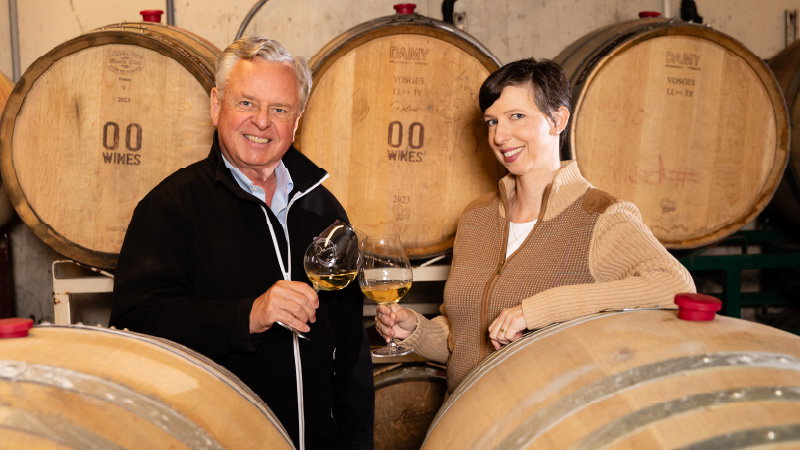
00 Wines now makes about 5,000 cases in Oregon. Chris and Kathryn remain closely involved in production and sales, while allocations have become harder for buyers to obtain as recognition has grown. The winery's audience has also moved beyond Oregon. The Hermanns host wine dinners and tastings globally, from Charleston, South Carolina, to Singapore, using those tables to show single-vineyard expressions from the Willamette Valley.
A wine dinner built around multiple bottlings suits 00 Wines better than a single pour in a crowded tasting. Chardonnay responds to sequence. A dinner lets collectors compare site expression, vintage feel, and the structural imprint of cellar choices over several glasses and dishes.
The Burgundy and Champagne expansion puts 00 Wines into the regions that define the collector conversation around Chardonnay and sparkling Chardonnay-based wines. The Hermanns have planted the 00 Wines idea in the regions that define the collector conversation around Chardonnay and sparkling Chardonnay-based wines. Burgundy and Champagne give the project new points of comparison, especially for drinkers who want to understand whether the 00 Wines signature travels across terroir.
Willamette Valley visits to 00 Wines depend on advance research. Allocations and tastings around producers of this scale rarely behave like walk-in tourism. The winery's releases, hosted dinners in cities such as Charleston or Singapore, and restaurant sightings provide access to tastings before deeper allocation conversations.
VinePair's Next Wave Awards named 00 Wines Winery of the Year,1 and the selection puts Chris and Kathryn Hermann's outsider story beside the region they keep bringing back to the table. The award recognizes a project that began in 2015 without winemaking experience.
"The monks found out the great terroirs of Burgundy, but the greatest vineyards of the Willamette Valley haven't been written in stone yet. It's an exciting time to be on the cutting edge with other people in the region."
, Kathryn Hermann, co-founder, VinePair1
Burgundy has centuries of accumulated vineyard hierarchy. The Willamette Valley is still deciding which Chardonnay sites will become fixtures in collectors' minds, and producers like 00 Wines are shaping that map bottle by bottle.
Chris and Kathryn Hermann have built a profile that collectors can parse through several concrete signals: a 2015 founding, a 250-case first vintage, the black Chardonnay method, blind tastings against Coche-Dury, a 2020 French Laundry order, and expansion into Burgundy and Champagne.
The Hermanns continue to test Willamette Valley sites while working in Burgundy and Champagne. Oregon Chardonnay remains the central 00 Wines bottle from Chris and Kathryn's work as a lawyer, a tech founder, and a dark-brown tank of oxidized juice tied to the French Laundry table.
Get the App
Take the shortlist into the En Primeur Club app for concierge access, saved places, and the next step after discovery.
Get Exclusive AccessMore from the editors