← Guides
VinePair’s Next Wave sommelier Matt Turner runs Lei’s 28-seat Chinatown list, from Burgundy and Champagne to Coco Farm.
VinePair’s Next Wave sommelier Matt Turner runs Lei’s 28-seat Chinatown list, from Burgundy and Champagne to Coco Farm.
VinePair named Matt Turner its Next Wave Awards Sommelier of the Year as he runs Lei, the 28-seat Chinatown wine bar and restaurant that opened in June 2025 with owner Annie Shi and chef Patty Lee.
Turner’s recognition lands at a useful moment for New York drinkers. At Lei, the person opening a bottle can discuss it, and the list includes Burgundy and skin-contact pours from Greece.
Turner’s route to Lei began far from a New York cellar. In college in Florida, he moved through genetics, trumpet performance, and ancient Greek literature before choosing finance as his major. In college in Florida, wine first appealed to him as a contrast between the artisanal image he knew and the mass-produced labels he saw on shelves.
A wine bar and shop near campus in Tampa became his practical classroom. Turner spent free time at the bar, talking with the staff and regulars, and those relationships led to work in distribution and shifts at the same venue. By graduation, he had a full-time job in wine and a habit of constant tasting across categories, which still shapes his program at Lei.
Turner’s early drinking map shaped the range he pours at Lei. He sought out Rheinhessen Riesling, Northern Rhône Syrah, Willamette Valley Chardonnay, and Czech skin-contact wines. At Lei, that instinct appears in a bottle book that can place Burgundy and Champagne near Portuguese blends, Chinese bottles, Japanese wine, and low-intervention oranges from Greece.
Turner moved to New York City in mid-2020, a difficult moment to enter restaurant wine. A dinner at Niche Niche changed the direction of his career. The restaurant, owned by Ariel Arce, hosted pop-ups with different wine personalities and changing menus, and Turner’s conversation with Arce led him to Air’s Champagne Parlor.
Turner then worked in several New York wine-focused rooms. He worked at Air’s Champagne Parlor, became head sommelier at Niche Niche, later opened Roscioli, Heroes, and Pearl Box, and became beverage director at Pearl Box. That progression gave him the range to handle collectors and guests who arrive with one preference and leave having tried a bottle from a place they had not considered.
Air’s Champagne Parlor gave Turner a house built around Champagne, a useful starting point for any sommelier who now fields questions about Salon and Delamotte in a 28-seat bar. Champagne service rewards precision, temperature, glassware, producer knowledge, and timing, and Air’s placed Turner in a room where the category itself carried the conversation.
Niche Niche added a different skill: the ability to host a room around changing voices. Because the restaurant worked with pop-ups and shifting wine personalities, Turner learned how to make a guest comfortable with an evening that did not revolve around a fixed script.
Pearl Box moved Turner into beverage direction. The role included cocktails and clarified that Turner wanted to return to hands-on wine service. Lei gave him that return, because 28 seats leave little distance between the wine director, the floor team, and the guest choosing between a classic region and a bottle from Japan or China.
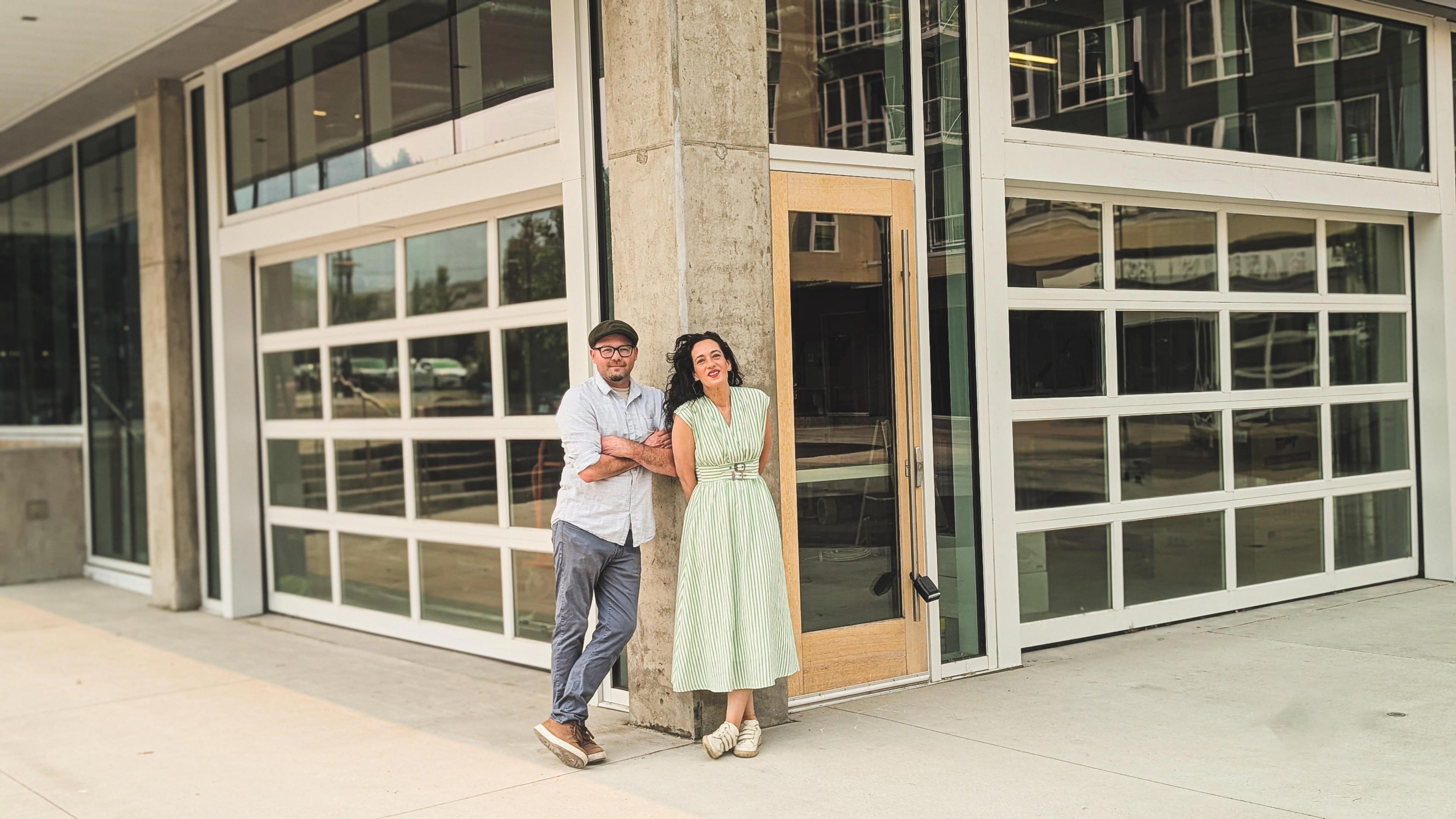
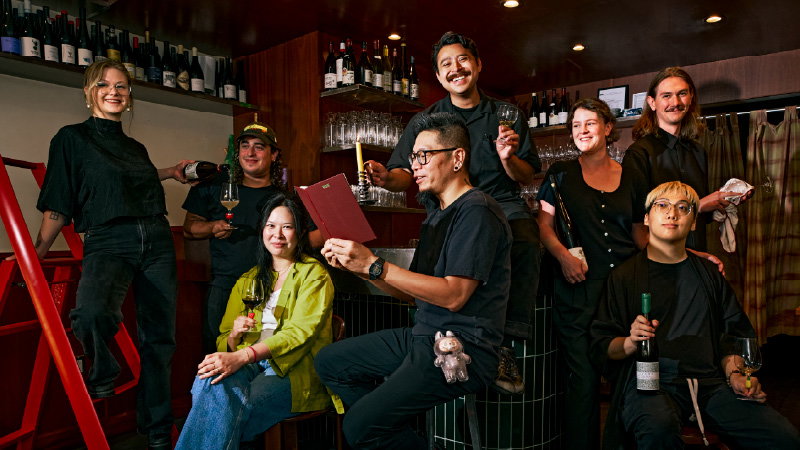
Turner joined owner Annie Shi and chef Patty Lee to open Lei in Chinatown. Shi grew up in Queens and Lei is her first solo project after her work in New York restaurants. Lee is an alumna of Mission Chinese.
Shi’s first solo project gives the room its point of view, Lee’s compact menu makes wine central to the pacing of the meal, and Turner’s bottle program turns a small Chinatown address into a destination for drinkers who might otherwise split their evening between a wine bar and dinner.
Twenty-eight seats mean the room cannot behave like a large dining room with a wine director visible only through the list. Turner’s job happens in conversation, at the table, and through a team structure where sommeliers are servers and servers are sommeliers.
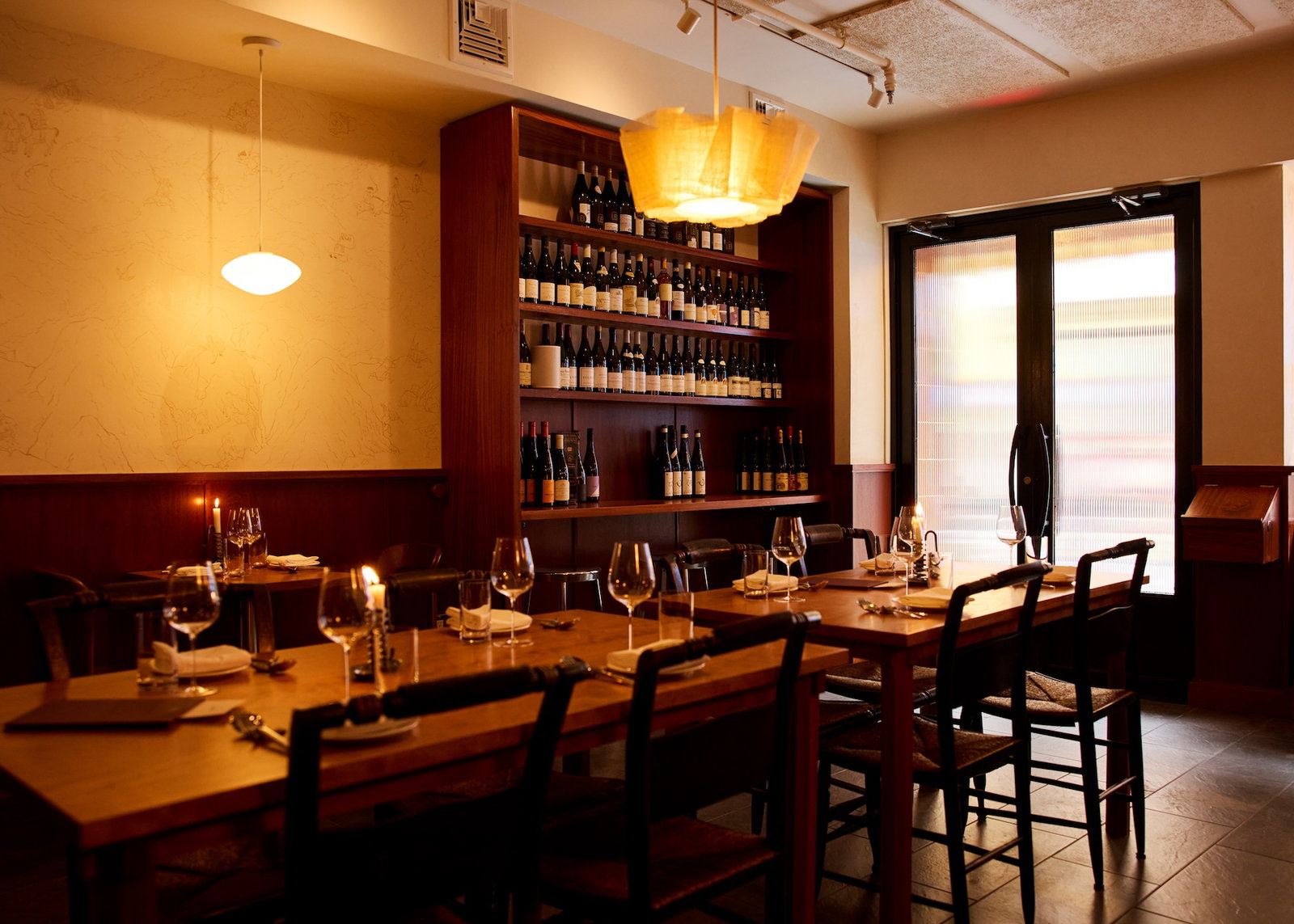
That structure changes how guests encounter the bottle book. A floor team member can explain an obscure Portuguese blend, talk through several cuvées from a Burgundy producer, or steer a curious table toward Coco Farm from Japan.
The bottle list gives both classic and less expected routes. Lei carries Austrian natural whites, multi-thousand-dollar Burgundies, low-intervention oranges from Greece, and bottles from the Japanese winery Coco Farm. It also draws attention from collectors for Burgundy and Champagne while giving newer drinkers a way into skin-contact wines by the glass (Newyorker1).
That spread can become messy in a larger room without staff alignment. At Lei, the small floor and cross-trained team keep the conversation coherent. A guest interested in Champagne can be led toward Salon or Delamotte when those producers appear through events, while another table can stay in Greece, Portugal, China, or Japan without feeling that the list has divided drinkers into separate ranks.
The 28-seat capacity also creates a natural scarcity for visiting collectors. Lei is the kind of room where a producer visit, a Riesling comparison, or a by-the-glass takeover can fill the night without needing a banquet room or a formal dinner format. In a city where large lists can feel remote from the floor, Lei’s small scale makes access the point: the person describing the wine may also be the person who tasted it with Turner before service.
Lei is pointedly a wine bar, and the food supports that identity. The menu is brief, with mostly snack-size dishes and two or three larger plates, and the format keeps attention on the wine. That format suits drinkers who want to compare two glasses before committing to a bottle, or who want to build a table around several small plates and one Burgundy.
Burgundy and Champagne give collectors familiar reference points, while Greek orange wines, Austrian natural whites, Portuguese blends, and bottles from China and Japan create routes for drinkers willing to trust the table conversation.
Turner’s answer is repeated tasting. Lei’s program depends on a team that keeps opening, evaluating, and replacing bottles. That approach matters in a small room where a single bottle can define a guest’s impression of an unfamiliar country or grape.
"One important part is the enthusiasm of the people in the program to taste new wine"
, Matt Turner, wine director, VinePair2
The program places blue-chip names alongside lesser-seen regions. A Burgundy request can open a conversation about producer, cuvée, and price point; a Greek orange wine can answer a different table’s interest in texture and skin contact; a Japanese bottle from Coco Farm can become the night’s detour without requiring the guest to study the list alone.
Lei has hosted a by-the-glass takeover from Spanish winemaker Jorge Olivera and a meet-and-greet with Chilean producer Roberto Henriquez. The room has also welcomed wine professionals connected to labels such as Champagne Salon and Champagne Delamotte.
Those names matter for different reasons. Jorge Olivera brings the energy of a younger Spanish producer into a New York by-the-glass format, where a guest can taste without committing to a full bottle. Roberto Henriquez brings Chile into direct conversation with a Chinatown audience that may have arrived expecting Burgundy, Champagne, or a familiar orange wine.
Salon and Delamotte bring another register entirely. Champagne Salon occupies a place in the collector imagination that can change the temperature of a room before the first cork comes out. Delamotte, linked in the same Champagne conversation, helps Turner connect serious sparkling wine drinkers with producer context.
The instructive event may be the Riesling experiment Turner organized with Kissinger-Bähr. He poured a Riesling opened that day beside the same bottle opened three, five, and seven days prior. That tasting gave guests a direct view of wine evolution after opening, a practical question that serious drinkers understand from both restaurant service and home cellaring.
Turner does not always heavily advertise these events. In a 28-seat room, unadvertised events give regulars a reason to return on ordinary evenings.
Lei’s pop-ups do not require a ballroom format, a distant stage, or a trade-only tasting badge. A small table in Chinatown can become the place where a guest meets Roberto Henriquez, tastes a Jorge Olivera pour by the glass, or hears why Salon and Delamotte occupy different places in a Champagne conversation.
Lei is a wine bar. The Chinatown address, Shi’s first solo project, Lee’s compact menu, and Turner’s bottle program all point toward an evening built around the glass. Lei is designed around snack-size dishes, a few larger plates, and sustained attention to what is being poured.
Burgundy and Champagne have already drawn attention from guests who follow classic regions. A request framed by producer preference, maturity, or intended pace of drinking will give the team more to work with than a broad request for something famous. Lei’s small scale rewards specificity.
The by-the-glass program and pop-up rhythm are the room’s strongest access points for curious drinkers. A Greek skin-contact pour, an Austrian natural white, a Portuguese blend, a bottle from China, or Coco Farm from Japan can make sense when a server-sommelier has tasted it recently and can place it beside the dishes on the table.
The food format helps. Mostly snack-size dishes keep the table flexible, and two or three larger plates give structure if the night moves from a glass to a bottle. Patty Lee’s Mission Chinese background adds a kitchen perspective that can handle intensity and control without pushing wine into the background.
Lei’s scarce format, 28 seats in Chinatown, means the experience depends on timing, conversation, and the team working that night.
The New York wine bar has become an important stage for sommeliers who want closer contact with guests than a large restaurant can provide. Turner’s path through Air’s Champagne Parlor, Niche Niche, Pearl Box, and now Lei shows how that stage can develop a professional voice. Air’s Champagne Parlor, Niche Niche, Pearl Box, and Lei gave Turner experience in Champagne service, pop-up culture, beverage direction, and a 28-seat room.
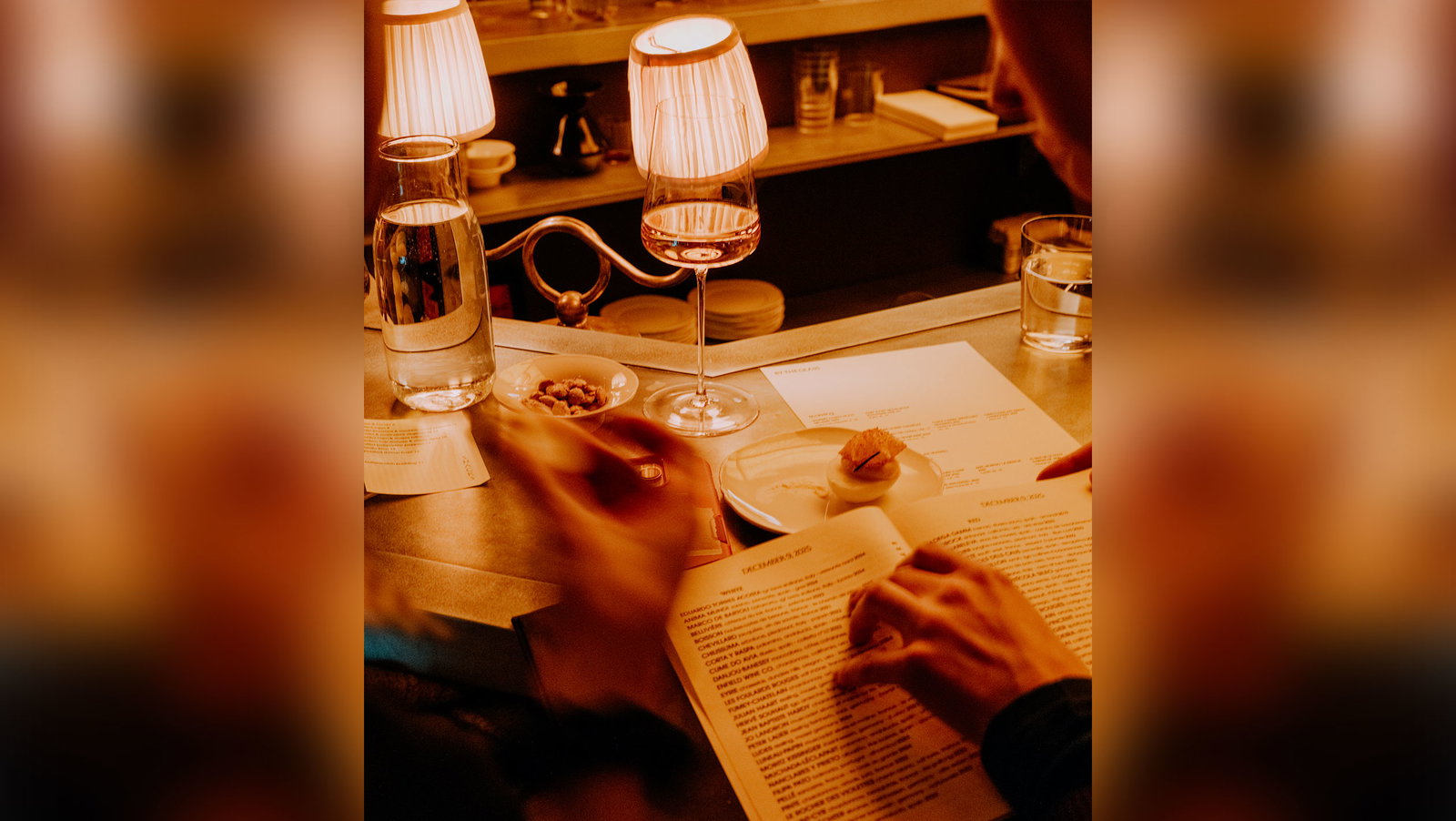
Lei gives that work a public home at a moment when drinkers divide their attention between blue-chip appellations and bottles from regions still earning space on New York lists. The same evening can move from Burgundy to Japan, from Champagne to Greece, or from a Portuguese blend to a comparison of Riesling opened across several days. That range asks for staff who taste constantly and guests willing to follow a recommendation beyond the first familiar name.
In New York, a 28-seat wine bar can make the distance between collector, sommelier, and winemaker unusually short.
Get the App
Take the shortlist into the En Primeur Club app for concierge access, saved places, and the next step after discovery.
Get Exclusive AccessMore from the editors