The Wiltern
The Wiltern is a storied Art Deco concert hall on Wilshire Boulevard in Los Angeles, a venue whose turquoise terra-cotta façade has anchored the Koreatown stretch of the Miracle Mile since 1931. It operates primarily as a mid-capacity live music venue, placing it in the tier between stadium spectacle and the city's smaller club circuit — close enough for real connection with performers, large enough to draw consequential bookings.
Pearl is the En Primeur Club membership app — saves, bookings, and concierge access live there. Same editors, same standards.
- Address
- 3790 Wilshire Blvd, Los Angeles, CA 90010
- Phone
- +1 213 388 1400
- Website
- wiltern.com
- Directions
- Get directions
 Saves & bookings on Pearl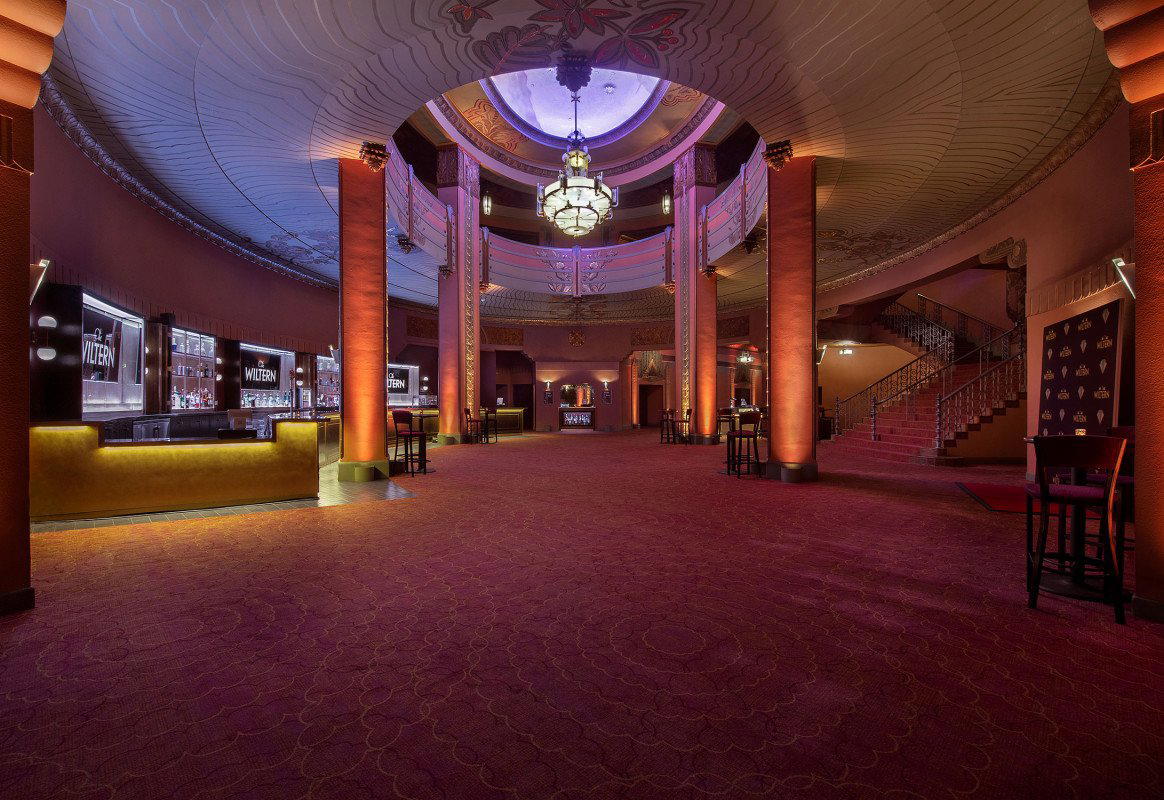
A Landmark That Works on Its Own Terms
Wilshire Boulevard at Western Avenue delivers one of Los Angeles's more arresting streetscapes, and the building at 3790 has anchored it since 1931. The Wiltern's turquoise-glazed terra-cotta exterior, a signature product of the Zigzag Moderne style, signals what awaits inside before you reach the door. The circular lobby, the gilded sunburst detailing, the stacked vertical signage — these are not renovated approximations of Art Deco. They are the original material, surviving from the Depression-era moment when the Pellissier Building and its ground-floor theatre were completed. Los Angeles has demolished much of what it built in that era, which makes a standing structure of this calibre worth treating seriously.
The auditorium inside follows the logic of the exterior: tiered balconies with clear sightlines, a general admission floor that compresses the distance between audience and stage, and acoustic geometry that serves amplified music better than many newer purpose-built rooms. In the American live music circuit, the mid-capacity theatre tier — roughly 1,500 to 3,500 seats, is where the relationship between performer and room tends to work leading. Large enough to generate real energy, small enough that position in the hall still matters. The Wiltern sits in that tier, and the room's proportions make the case for it.
Where the Wiltern Sits in the Los Angeles Live Music Ecosystem
Los Angeles organises its live music venues in a loose hierarchy: the arena tier at the leading, the amphitheatre circuit for summer outdoor programming, the mid-size theatres in the middle, and the club-and-bar floor below. The Wiltern operates in the mid-size bracket alongside venues like the Orpheum and the Greek Theatre, but it draws a slightly different programming profile, heavy on independent and alternative bookings, with the occasional crossover act that has outgrown the club circuit but not yet committed to larger rooms.
For audiences, the distinction matters. At this scale, general admission floor tickets place you within a distance of the stage that stadium venues cannot replicate, while the balcony seating offers the refined angle and structural comfort absent from the smaller club formats. The Koreatown location, set along Wilshire's Miracle Mile corridor, also places it within reach of a neighbourhood dining and bar scene that has grown substantially over the past decade, making pre- and post-show logistics more interesting than the venue's mid-city position might initially suggest.
Los Angeles's bar and cocktail infrastructure has expanded considerably around venues in this part of the city. Options like Bar Next Door, Death & Co (Los Angeles), Mirate, and Standard Bar represent the city's shift toward technically serious cocktail programming, a pattern visible in other major American cities as well. Audiences assembling around a Wiltern show now have pre-show options that reflect that broader shift rather than defaulting to the closest sports bar.
The Physical Experience Inside
The interior design at the Wiltern functions as its own curatorial statement. The theatre was originally designed by architect G. Albert Lansburgh, who brought considerable formal rigour to the Zigzag Moderne vocabulary, the sunburst motif in the ceiling, the stepped detailing in the balcony fascias, the controlled colour palette across the plasterwork. These elements remain legible in the current configuration, even as the room accommodates the production infrastructure of contemporary concert touring: lighting rigs, sound systems, stage monitoring equipment.
What the room achieves, and what newer venues in the same capacity tier often fail to replicate, is the sense that the architecture is doing active work rather than serving as a neutral backdrop. The visual density of the Art Deco interior gives the space a defined character before any performer takes the stage, which changes the baseline experience for audiences. You arrive into a room with existing presence, not a blank warehouse dressed with a PA system.
The general admission floor can accommodate standing crowds through a range of configurations depending on the booking, while the fixed balcony seating above offers a different register of the same show. The acoustic treatment across both levels has been maintained and adjusted over the venue's contemporary operating period, and the room's natural geometry, a relatively shallow depth relative to its width, keeps the stage visible from most positions in the hall.
Broader Context: Historic Theatres as Live Music Venues
The American practice of repurposing Depression-era and early-century theatres for live music programming is well-established, and it has produced some of the country's most interesting mid-capacity rooms. The format works because these buildings were designed for large-group assembly and performance in the first place, with acoustic considerations and sightline geometry baked into the original architecture. The Wiltern belongs to this cohort alongside rooms in Chicago, New Orleans, and New York, where historic theatre shells now house contemporary programming.
Comparable venues in other cities have attracted serious food and bar programming in their surrounding neighbourhoods as part of the same pattern. Kumiko in Chicago, Jewel of the South in New Orleans, Superbueno in New York City, and Julep in Houston each represent the kind of neighbourhood bar and hospitality programming that tends to develop around anchor cultural venues in urban cores. Los Angeles's Koreatown and Miracle Mile corridor has followed a similar trajectory, with the Wiltern functioning as one of the area's longer-standing draws.
Further afield, the mid-capacity theatre model holds its own against newer builds. Bar Leather Apron in Honolulu, ABV in San Francisco, and The Parlour in Frankfurt on the Main demonstrate how serious hospitality infrastructure develops in proximity to culturally significant anchor points, a dynamic the Wiltern has benefited from and contributed to across its decades of operation.
Planning a Visit
Tickets for shows at the Wiltern are sold through standard major ticketing platforms and vary by booking; checking the venue's published schedule in advance is the only reliable method for securing seats. The building is accessible via the Metro D Line at Wilshire/Western station, making it one of the more transit-accessible major venues on the west side of the city. For a broader view of what Los Angeles's food and drink scene offers around events of this kind, see our full Los Angeles restaurants guide.
Accolades, Compared
| Venue | Awards |
|---|---|
| The WilternThis venue — the venue you are viewing | This venue |
| Mirate | World's 50 Best |
| Bar Next Door | World's 50 Best |
| Death & Co (Los Angeles) | World's 50 Best |
| Standard Bar | World's 50 Best |
Continue exploring
More in Los Angeles
Bars in Los Angeles
Browse all →

Restaurants in Los Angeles
Browse all →
Hotels in Los Angeles
Browse all →
Wineries in Los Angeles
Browse all →
At a Glance
- Well Known
- Elegant
- Energetic
- Classic
- Group Outing
- Celebration
- Live Music
- Historic Building
- Standing Room
- Lounge Seating
- Classic Cocktails
Ornate Art Deco grandeur with gold accents, colorful murals, dramatic sunburst ceiling, and a warm, vintage rock 'n' roll atmosphere.
Know Before You Go
- Getting there
- 3790 Wilshire Blvd, Los Angeles, CA 90010