
SCMP 100 Top Tables Bars
Dead Poets belongs to Central’s after-work and late-night drinking circuit, where compact rooms, sharp service and bartender-led choices matter more than spectacle. Its Aberdeen Street position puts it close to Soho’s restaurant traffic, making it a stronger pick for a cocktail before or after dinner than for a long, itinerary-heavy night out.

Pearl is the En Primeur Club membership app, where members save venues, book tables and use the concierge.
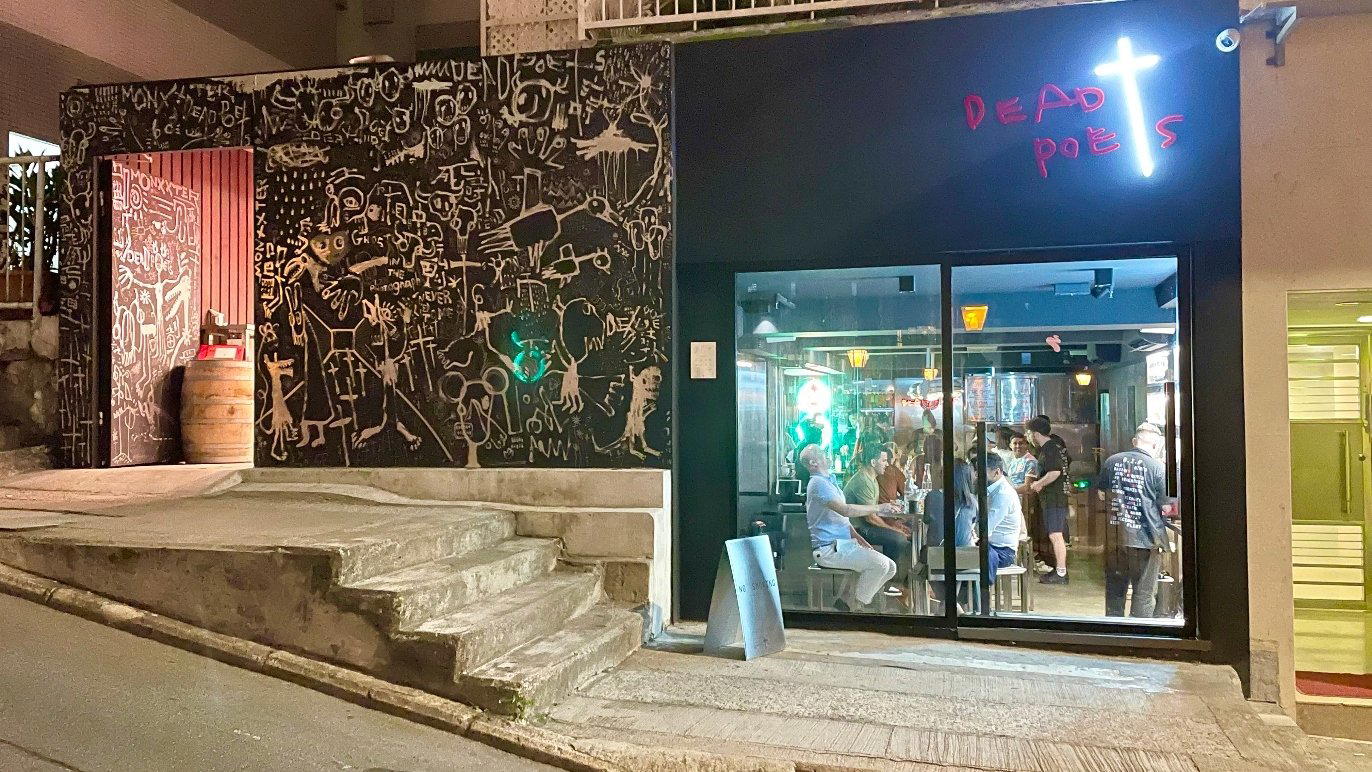
Aberdeen Street has the Central rhythm that suits a serious cocktail bar: office exits, uphill dinner traffic, taxis in narrow lanes, and small rooms that fill by momentum rather than ceremony. Here, a bar has to earn attention quickly. The strongest rooms do it through the person behind the counter, not theatrical concealment or an overextended theme.
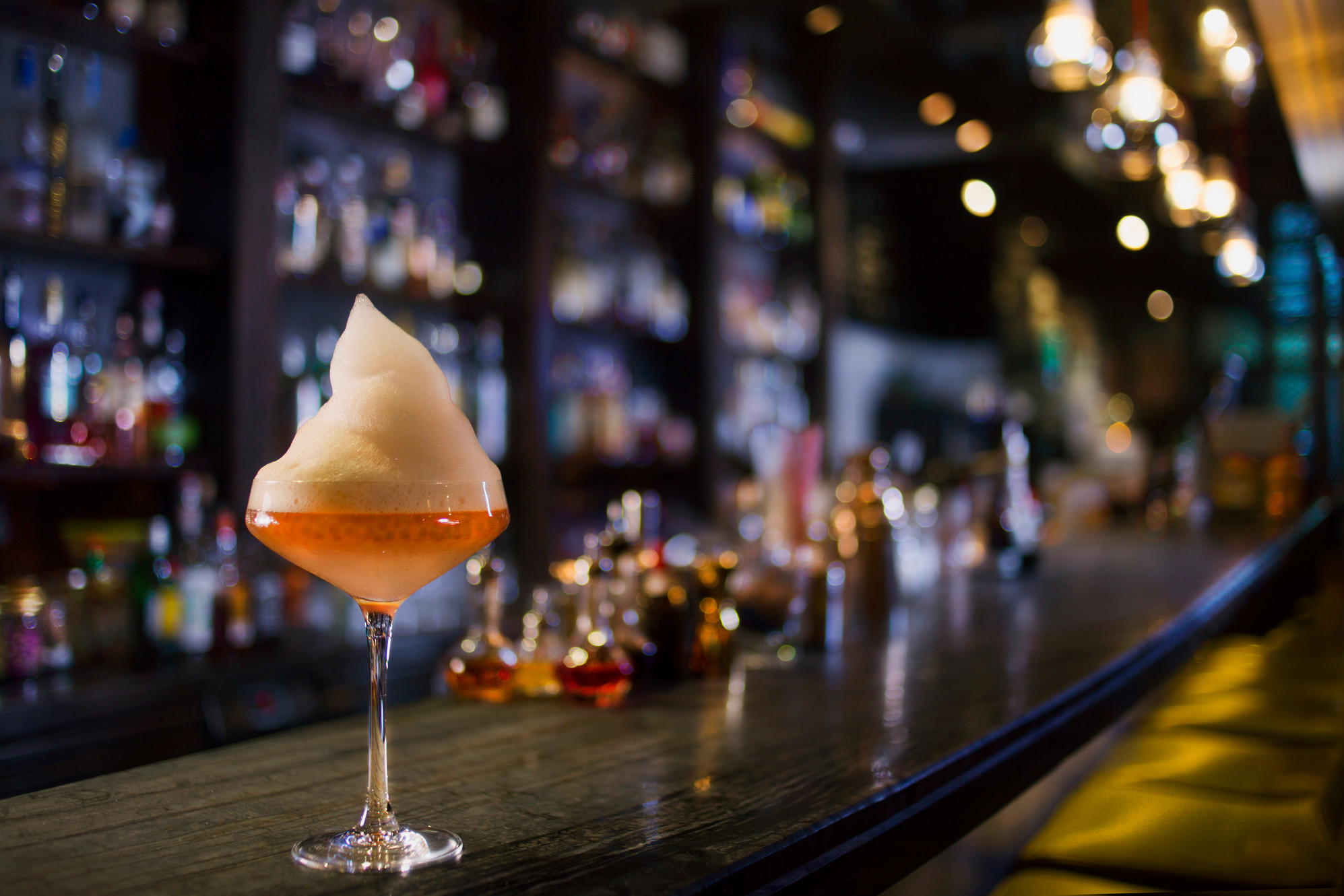
Dead Poets sits in that craft-led lane of Hong Kong drinking. The city has hotel bars with polished international programs, rooftop rooms built around skyline value, and neighbourhood bars where the point is another round. This address is better read as part of Central’s smaller-format cocktail culture, where bartender judgement, pace and guest calibration are the experience. Its value is not an encyclopaedic concept, but the confidence to move from early evening conversation to later-night drinking without becoming a performance.
Central's smaller cocktail rooms now compete on judgment, not spectacle
Hong Kong’s bar scene has moved beyond the old binary of hotel glamour and hidden-door novelty. The strongest contemporary programs are more transparent: visible technique, concise service, and menus that let the bartender steer without making the guest work. That matters in Central, where one hour can mix finance tables off work, restaurant diners extending the night, industry drinkers reading the back bar, and travellers testing the city through one room rather than a crawl.
Dead Poets makes sense because its appeal is tied to format discipline. Bartender craft is not just shaking, stirring or explaining; it is reading tempo. The better Central bars know when a guest wants detail and when a drink should land without a lecture. They keep the counter moving when the room tightens. They also know Hong Kong’s cocktail audience is fluent: generic classics executed neatly are no longer enough here, but neither is technique for its own sake.
The local comparison set helps. Kinsman and Bar Leone show Hong Kong’s appetite for bars with a clear cultural accent; Honi Honi speaks to the city’s affection for escapist tropical drinking; La Cabane and Montana sit closer to wine-led and neighbourhood instincts. Dead Poets belongs nearer the bartender-led side: a choice for guests who want the person making the drink to shape the evening without turning the exchange into a seminar.
For a wider Hong Kong night, separate categories. A polished restaurant bar such as 8 1/2 Otto e Mezzo Bombana serves a different purpose from a destination hotel program like Argo or ARGO at the Four Seasons. Rooftop and view-led drinking, represented in another register by Above by Komune, solves another problem. Dead Poets is for the narrower decision: a Central cocktail stop where the bar team’s control of the room matters more than the backdrop.
The better order here is a conversation, not a checklist
Craft bars can fail when they ask guests to admire the system before drinking the result. Hong Kong has little patience for that. The city rewards speed, precision and social intelligence, especially in Central, where a bar may handle a first date, a client debrief and a late solo drink in the same service. The bartender’s task is to compress technical knowledge into hospitality that feels easy.
That is where Dead Poets is most convincing. Rather than treating the menu as a trophy cabinet, let the counter set direction: spirit preference, length, bitterness, sweetness, citrus or stirred structure. In a bartender-led room, those choices make a better evening than chasing a named drink for its own sake. The point is not secrecy; it is calibration.
Hong Kong also differs from larger cocktail capitals that spread energy across neighbourhoods. Central concentrates expense, expertise and impatience into a small area. A bar must make its case quickly. Rooms that survive here understand confidence versus over-explanation, and that a late-night drink after dinner in Soho asks for something different from a planned tasting session at a hotel bar.
Use the broader city guides to build around that distinction. The full Hong Kong bars guide is the starting point for cocktail pacing, while the Hong Kong restaurants guide helps pair Central drinking with dinner rather than leaving the bar to do all the work. Hotel-led travellers can cross-check the Hong Kong hotels guide, and broader planning sits in the Hong Kong experiences guide. Wine-focused readers may also find context in the Hong Kong wineries guide, even where the city’s wine story is more merchant, cellar and restaurant driven than vineyard based.
When Dead Poets fits the night
The smart use case is precise: choose Dead Poets when Central is already part of the evening and the goal is a cocktail room with bartender control rather than panoramic view, hotel lobby polish or large-group party structure. Its Aberdeen Street setting places it naturally within the Soho and Central orbit, so it works before dinner, after dinner, or as a late stop when the night needs a smaller room with sharper attention.
It is less suited to travellers trying to turn one drink into a full sightseeing event. Hong Kong has other formats for that, from harbour experiences such as Aqualuna (Tsim Sha Tsui Pier No. 1) in Soho to high-design destination bars across the city. Dead Poets is a narrower pleasure: the craft of the counter, the speed of Central, and hospitality where a good bartender shortens the distance between preference and glass.
The distinction also helps across cities. A venue such as ¡BE! Club in San Sebastián belongs to a different late-night culture, while a ’70s-inspired bar in Sydney carries a clearer design-era premise. In Hong Kong, especially around Central, the stronger test is operational: can the bar read the room, maintain pace and deliver drinks with enough personality to justify another round? Dead Poets is worth considering when that is the question the night is asking.
The Quick Read
Nearby venues at a similar price tier for orientation.
| Venue | Cuisine | Price | Awards | Notes |
|---|---|---|---|---|
| Dead PoetsThis venue (the venue you are viewing) | Not listed | $20–30 | SCMP 100 Top Tables Bars | Not listed |
| LQV Wan Chai | Not listed | Not listed | Star Wine List | Wan Chai, wine_bar |
| Ping Pong 129 | Western, speakeasy | $20–30 | Not listed | Not listed |
| Missy Ho | Western, speakeasy | Not listed | Not listed | Not listed |
| VITIS: For Wine Lovers | Not listed | $30–50 | Not listed | Central, wine_bar |
| Avoca | Not listed | $30–50 | SCMP 100 Top Tables Bars | Tsim Sha Tsui, hotel_bar |
Recognition history
Dated appearances from independent guides and award organizations, with the underlying list record or original source where available.
SCMP 100 Top Tables Bars
SCMP 100 Top Tables
Continue exploring
More in Hong Kong
Bars in Hong Kong
All bars in Hong Kong →
Restaurants in Hong Kong
All restaurants in Hong Kong →
Hotels in Hong Kong
All hotels in Hong Kong →
Wineries in Hong Kong
All wineries in Hong Kong →
Details
- Trendy
- Industrial
- Modern
- Energetic
- Whimsical
- After Work
- Late Night
- Group Outing
- Casual Hangout
- Date Night
- Design Destination
- Standalone
- Seated Bar
- Lounge Seating
- Standing Room
- Craft Cocktails
- Classic Cocktails
Current opening hours
- Monday
- 4 PM–1 AM
- Tuesday
- 10 AM–1 AM
- Wednesday
- 10 AM–1 AM
- Thursday
- 10 AM–1 AM
- Friday
- 10 AM–1 AM
- Saturday
- 10 AM–1 AM
- Sunday
- 4 PM–1 AM
Hours can change for holidays and private events. Hours as of .