
Falstaff Winery - Listed
A small Thermenregion winery and traditional Heuriger in Modling, Wein und Heuriger Pferschy-Seper connects local dry wines with the social grammar of Austrian tavern culture. The estate works from 6 hectares, dates to 1718, and is led by Ing. Birgit Pferschy-Seper, with Rotgipfler, Grüner Veltliner, Traminer, Pinot Noir, and White Burgundy anchoring the regional story.

Pearl is the En Primeur Club membership app — saves, bookings, and concierge access live there. Same editors, same standards.

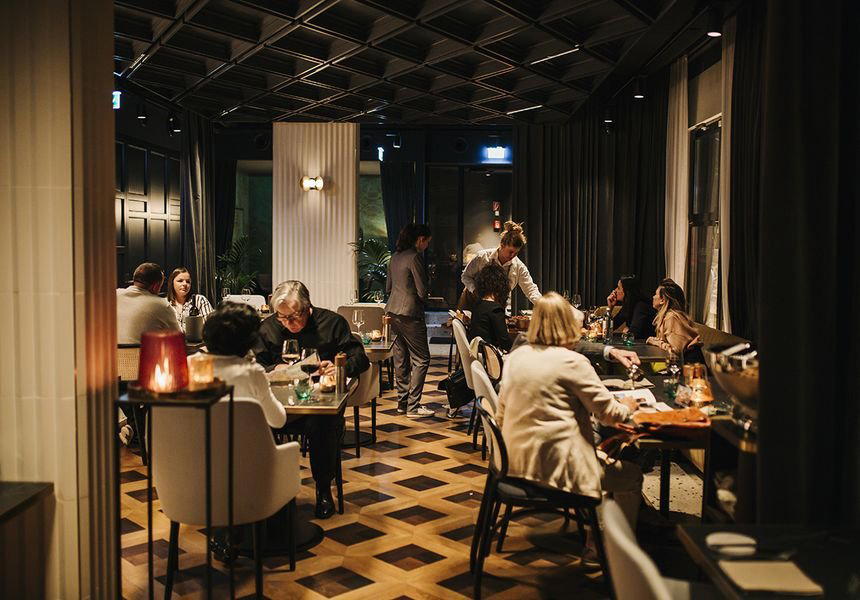
The Heuriger tradition is strongest when wine feels inseparable from place: low rooms, garden tables, local bottles, and easy conversation rooted in producer-led hospitality rather than formal tasting-room choreography. In Modling, Wein und Heuriger Pferschy-Seper fits that Austrian grammar. Its gemütliche Stüberln and large old-tree garden signal a rustic, social experience built around house wine and seasonal food, not ceremony.
Thermenregion wine rewards drinkers who look beyond Austria’s more familiar international labels. South of Vienna, the region has its own accent, especially through Rotgipfler and other dry white styles that carry local identity without luxury theatre. Here, the point is not a trophy cellar or scripted tasting performance, but a compact, owner-led estate whose varietal mix explains the place.
A Heuriger format that keeps the wine close to the grower
The word “Heuriger” matters. In Austria, it signals producer-linked wine tavern culture, where an estate’s own bottles meet food, informality, and local repetition. Wein und Heuriger Pferschy-Seper operates as both winery and tavern, production and hospitality, making it different from an appointment-only cellar door or a restaurant using wine as decoration.
The estate’s history gives that format weight. Founded in 1718, it belongs to the long continuity of Lower Austrian wine culture, where family scale and regional loyalty often matter more than international polish. Ing. Birgit Pferschy-Seper is named as winemaker and holds the core ownership and management roles, concentrating responsibility in a way that suits a small estate. The biographical point is not the story but the structure: one operator overseeing vineyard, cellar, and hospitality creates a direct line between farming decisions and the table.
Hospitality signals stay grounded: casual dress, conversational noise level, outdoor seating, group and family suitability, a self-service buffet element, and a traditional Heuriger setting. These details place the experience closer to Austrian social dining than to a sommelier-led salon. For travellers using Modling as a wine stop rather than a rural retreat, that distinction helps: regional context is absorbed through habit and repetition, not lecture.
Six hectares, local grapes, and the Thermenregion argument
Production is small, with 6 hectares under vine: enough for a meaningful estate range, compact enough to keep identity focused. The listed portfolio runs to 53 wines, broad for this scale and suggestive of a cellar built around varietal breadth rather than one prestige label.
The varietal map tells the story. Rotgipfler gives the estate its strongest Thermenregion marker; Grüner Veltliner connects it to the wider Austrian table; Traminer adds aromatic range; Pinot Noir and White Burgundy provide red and white reference points familiar to international drinkers. Documented bottlings include dry Thermenregion wines, Kabinett and Klassik cues, and a named Weißburgunder selection, In den Simmerln. The emphasis is dry, regional, and table-oriented.
That matters because Thermenregion’s identity is not built only on headline grapes. Its interest lies in how local varieties sit between freshness, herbal detail, orchard fruit, and structure. Listed tasting descriptions point that way: Rotgipfler and Grüner Veltliner show firmer, greener, more linear impressions; Traminer brings floral and citrus-yellow-fruit notes; Pinot Noir moves toward earthier, savoury territory. These are not cellar-technique claims, but they show a house range valuing regional expression over international sameness.
The estate’s organic production philosophy adds to that terroir reading. Organic viticulture is not a flavour guarantee, and should not be treated as one. In a compact Heuriger-winery model, though, it strengthens the idea of direct stewardship: land, cellar, and guest experience sit within the same small operating frame.
How to read the experience in Modling
For a premium traveller, the question is not whether every Heuriger meets restaurant standards; it should not be judged that way. The better test is whether the venue gives a clear, grounded expression of its region. Wein und Heuriger Pferschy-Seper does so through age, Thermenregion varietals, small production footprint, and tavern format. It suits travellers seeking local wine culture in working form more than those seeking a high-gloss tasting counter.
Modling’s value as a wine stop comes from proximity to Vienna and a distinct grape vocabulary. The venue’s practical character supports that: access by train, bus, bike, and car is part of the setting, and the Heuriger format suits groups, families, and casual wine-focused meals. Its structure is open rather than allocation-driven, so the experience reads as local hospitality, not scarcity theatre.
Recognition is modest but credible. The producer is listed by wein.plus as a Good producer, and the catalog scale gives the estate more substance than a purely seasonal tavern operation. There is no need to inflate that. The stronger point is that a centuries-old, owner-led Thermenregion winery uses a traditional Heuriger to keep regional grapes in regular circulation.
For broader planning in the city, EP Club’s local coverage can frame the stop around meals, lodging, drinking, and wine routes: Our full Modling restaurants guide, Our full Modling hotels guide, Our full Modling bars guide, Our full Modling wineries guide, and Our full Modling experiences guide. Readers mapping Austrian and wider wine travel may also find useful reference points in »der Steiner« Hans Steiner in Podersdorf am See, ®walzer in Gneixendorf Bei Krems, 1516 Brewing Company Distillery in Vienna, A-Nobis Sektkellerei in Zurndorf, Abfindungsbrennerei Franz in Leithaprodersdorf, Achs-Wendelin Weine in Gols, Aeijst Distillery in Sankt Nikolai im Sausal, Alexander Koppitsch in Neusiedl am See, & Handwein in Mannheim, and 00 Wines in Carlton.
Recognition history
Dated appearances from independent guides and award organizations, with the underlying list record or original source where available.
Falstaff Winery - Listed
Falstaff
Continue exploring
More in Modling
Wineries in Modling
All wineries in Modling →
Bars in Modling
Browse all →
Restaurants in Modling
All restaurants in Modling →![[aend] restaurant in Vienna](https://cdn.enprimeurclub.com/storage/v1/object/public/images/locations/recsVyRkMfzCxPmp0/hero2.jpg?width=3840&quality=75)
Details
- Cozy
- Rustic
- Classic
- Group Outing
- Family
- Special Occasion
- Historic Building
- Garden
- Organic
- Garden
- White Burgundy
- Pinot Noir
- Traminer
- Rotgipfler
- Grüner Veltliner
- Still Red
- Still White
- Wine Tasting
- Self Service Buffet
A traditional family-run Heuriger with a cozy, welcoming atmosphere; sources describe gemütliche Stüberln and a large old-tree garden, suggesting a rustic and convivial setting.