Port Ellen Distillery

Port Ellen Distillery, on the southern shore of Islay, earned a Pearl 3 Star Prestige rating in 2025, placing it among Scotland's most closely watched whisky destinations. Closed for decades before its recent revival, the distillery sits in a category of its own among Islay's coastal producers, drawing visitors who track the arc of its comeback as closely as its releases.
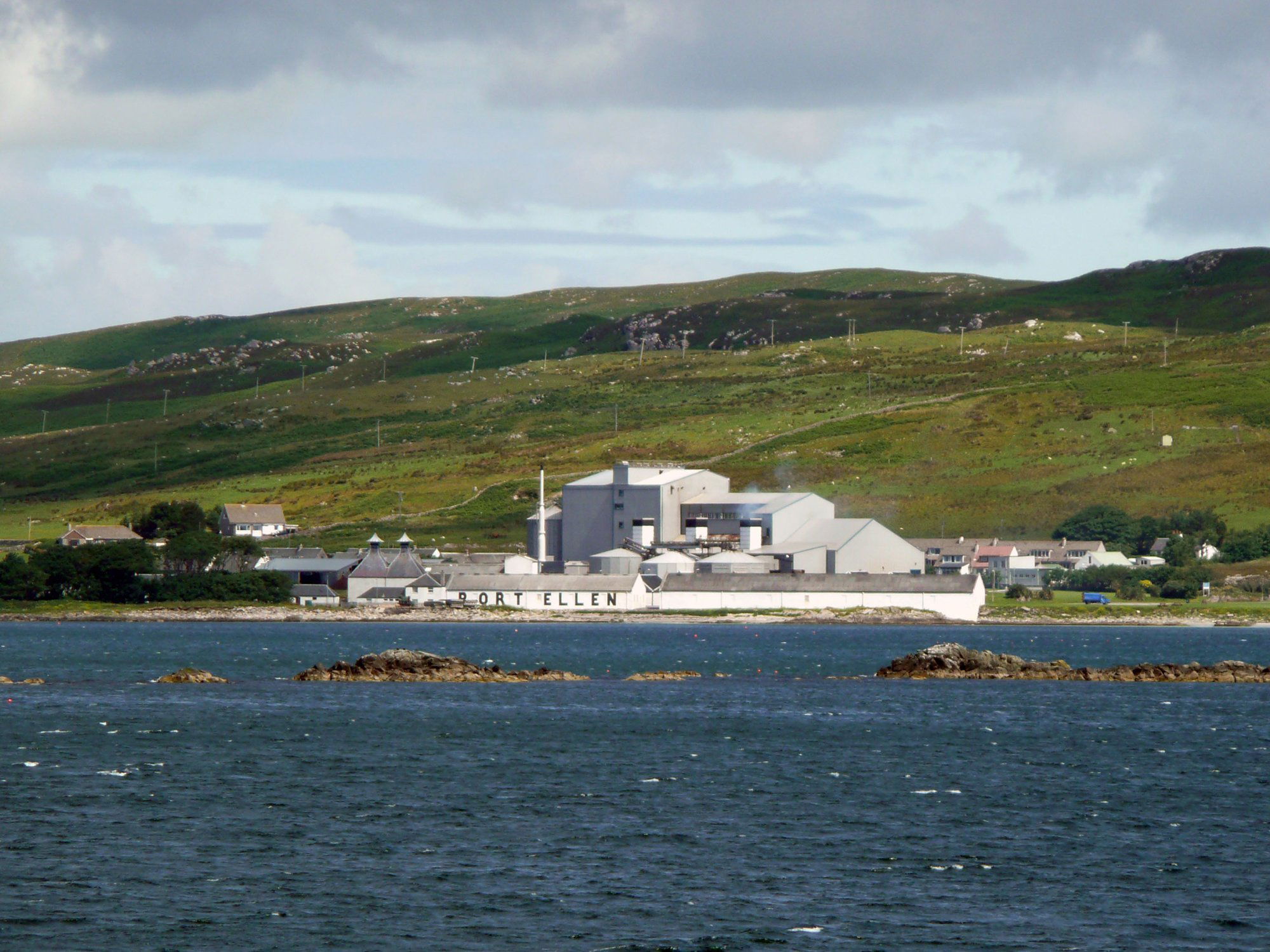
Where the Atlantic Shapes the Malt
The southern coast of Islay does something to whisky that no inland distillery can replicate. Salt air off the Atlantic, peat cut from bogs that have been accumulating carbon for thousands of years, and a geography that funnels coastal weather directly across the malting floors — these are the conditions that define the Port Ellen style. The distillery sits on Kiln Square in the village of Port Ellen, close enough to the water that the distinction between land and sea feels genuinely thin. [Ardbeg](/wineries/ardbeg-port-ellen-winery), [Lagavulin](/wineries/lagavulin-port-ellen-winery), and [Laphroaig](/wineries/laphroaig-port-ellen-winery) occupy the same coastal stretch to the east, forming a corridor of heavily peated whisky production that has made southern Islay one of the most specific whisky territories on the planet.
Among that peer group, Port Ellen occupies a singular position. The distillery ran from the early nineteenth century, closed in 1983, and spent four decades as a ghost: bottles from its final years trading at auction for sums that made Islay's other distilleries look affordable. That enforced absence transformed Port Ellen's reputation in ways that active production rarely can. When Diageo announced the revival and reconstruction, the whisky world paid attention in a way that new distillery openings almost never command. The 2025 Pearl 3 Star Prestige award reflects where the distillery stands now: not a curiosity, but a serious, recognised producer whose comeback has been tracked as closely as any release on the secondary market.
The Physical Reality of the Place
Approaching along the A846, the distillery's pagoda kiln vents read as the clearest signal that this is working production ground rather than heritage tourism. Islay's distilleries have always occupied the coastline practically, positioned for sea transport rather than scenic effect, and Port Ellen is no exception. The buildings at Kiln Square carry the functional density of a working site: warehouses, still houses, and malting floors arranged for process logic, not for visual drama. That said, the setting provides its own kind of confrontation with landscape. The view south is open water — on clear days, the Antrim coast of Northern Ireland is visible across the channel , and the wind off that water is rarely abstract. You feel it.
Islay's whisky districts are small enough that the landscape context is never far away. The peat bogs that supply much of the island's character lie inland, cut and dried by hand in some cases, and the coastal warehouses in which spirit matures are subject to the salt air that contributes to what distillers call the sea-influenced character of island single malts. Port Ellen's proximity to those warehouses and that coastline means the terroir argument , contested in whisky in a way it never is in wine , carries at least some physical grounding here.
Islay's Most Anticipated Revival
Scotland has seen a wave of distillery reopenings and new builds over the past fifteen years, from [Ardnahoe in Port Askaig](/wineries/ardnahoe-port-askaig-winery) on Islay's north shore to [Balblair Distillery in Edderton](/wineries/balblair-distillery-edderton-winery) in the Highlands and [Clynelish Distillery in Brora](/wineries/clynelish-distillery-brora-winery) on the north coast. Each revival carries its own weight of expectation, shaped by what the distillery represented in its previous life. Port Ellen's weight is heavier than most. The bottles produced in its final operational years command prices at auction that exceed many established luxury goods, and the mythology around the name has had forty years to solidify.
That context shapes how a visit registers differently here than at, say, [Auchentoshan Distillery in Clydebank](/wineries/auchentoshan-distillery-clydebank-winery) or [Bladnoch Distillery in Bladnoch](/wineries/bladnoch-distillery-bladnoch-winery), both of which have their own histories but operate without the decades-long gap in production that defines Port Ellen. Visitors here are not simply touring a distillery; they are observing a story mid-chapter, watching a production lineage attempt to reconnect with a reputation built on whisky that no longer exists in commercial quantities.
Distilleries that have undergone similar revivals , [Aberlour in Aberlour](/wineries/aberlour-aberlour-winery) in Speyside represents a different scale and tradition , tend to lean into heritage as a narrative anchor. Port Ellen's challenge is more specific: the heritage is defined by scarcity, and the revival must eventually produce spirit that earns its own standing rather than trading on the name of what was made before 1983. The 2025 Pearl 3 Star Prestige rating suggests the early signs are credible.
The Islay Coastal Peer Set
For visitors building an Islay itinerary, Port Ellen sits at the southern end of a natural circuit. [Ardbeg](/wineries/ardbeg-port-ellen-winery), [Lagavulin](/wineries/lagavulin-port-ellen-winery), and [Laphroaig](/wineries/laphroaig-port-ellen-winery) are all within a few kilometres along the same coastal road, making a half-day walk or a short drive sufficient to visit all four sites. Each occupies a different position in terms of visitor infrastructure: Laphroaig and Ardbeg have long-established tour programmes and shop facilities; Lagavulin operates with a slightly more restrained visitor experience; Port Ellen, as a recently revived distillery, is developing its visitor proposition at a different pace from its longer-established neighbours.
That difference in maturity matters practically. Visitors accustomed to the polished tour experience of a major Scotch operation should approach Port Ellen with some flexibility, understanding that the visitor experience is likely to evolve as the distillery finds its rhythm. The reward for that flexibility is access to a site in the process of writing its next chapter, which carries a different quality of engagement than a fully established operation.
Planning a Visit to Port Ellen
Port Ellen village is accessible by ferry from Kennacraig on the Scottish mainland, with Caledonian MacBrayne running regular services to the island. The crossing takes approximately two hours, and Port Ellen is the primary ferry terminal for the southern part of the island, placing the distillery in direct proximity to the main arrival point. For visitors combining Port Ellen with Islay's broader whisky geography, accommodation options in the village and across the island range from small guesthouses to self-catering properties , see our [full Port Ellen hotels guide](/cities/port-ellen) for the current range. Given the distillery's revived status and the particular attention it is drawing, confirming visit availability directly before travel is advisable; the visitor experience is still being established, and booking conditions may differ from those at the island's longer-running operations.
For further context on eating, drinking, and exploring in the area, our [full Port Ellen restaurants guide](/cities/port-ellen), [bars guide](/cities/port-ellen), [wineries guide](/cities/port-ellen), and [experiences guide](/cities/port-ellen) cover the full picture. Distilleries elsewhere in Scotland , from [Abadía Retuerta in Sardón de Duero](/wineries/abada-retuerta-sardn-de-duero-winery) representing a completely different tradition, to the Highland operations at [Balblair](/wineries/balblair-distillery-edderton-winery) and [Clynelish](/wineries/clynelish-distillery-brora-winery) , operate with established visitor infrastructures that offer a useful point of comparison for understanding where Port Ellen sits in its current phase of development.
Frequently Asked Questions
- What kind of setting is Port Ellen Distillery?
- Port Ellen Distillery sits on Kiln Square in the village of Port Ellen on the southern coast of Islay, Scotland. The site faces open water toward the North Channel, with the pagoda kiln vents and production buildings arranged along the shoreline in the functional style typical of Islay's coastal distilleries. It holds a Pearl 3 Star Prestige rating from 2025, which positions it among Scotland's most closely watched whisky sites.
- What do visitors recommend trying at Port Ellen Distillery?
- Port Ellen's reputation was built on heavily peated, coastal-influenced single malt whisky produced before the distillery closed in 1983. The current revival is in its early stages, and releases from the reopened distillery are the primary draw for visitors tracking the production lineage. The distillery's Pearl 3 Star Prestige award in 2025 reflects early recognition of the revival's quality signals.
- What makes Port Ellen Distillery worth visiting?
- Port Ellen occupies a position no other Islay distillery holds: it combines a coastal location in one of Scotland's most specific whisky territories with the weight of a four-decade closure and a high-profile revival. The 2025 Pearl 3 Star Prestige rating confirms it as a serious operation, not simply a heritage exercise. Visitors who tracked Port Ellen's auction prices during its closed years will find a distillery mid-story, which carries a different quality of engagement than any fully established operation on the island.
- Should I book Port Ellen Distillery in advance?
- Given the distillery's revived status and the significant attention it has attracted since reopening, confirming availability before travel is strongly advisable. Port Ellen is still establishing its visitor infrastructure , it differs in that respect from its longer-established neighbours on the coastal road , and booking conditions may shift as the operation matures. The village is accessible via Caledonian MacBrayne ferry from Kennacraig, so coordinating distillery access with ferry schedules makes advance planning practical regardless of the distillery's current booking requirements.
- How does Port Ellen Distillery differ from other Islay distilleries?
- Port Ellen is the only distillery on Islay that operated for decades, closed for an extended period (1983 to its recent revival), and is now producing spirit again under active reconstruction. That makes it categorically different from neighbours like Ardbeg, Lagavulin, and Laphroaig, which maintained continuous production. The distillery's 2025 Pearl 3 Star Prestige award signals credible early-stage quality, but the visitor experience is still developing in ways that distinguish it from the island's more mature operations. Bottles from the pre-closure era remain among the most sought-after Scotch whiskies on the secondary market, a context that no other active Islay distillery carries in quite the same way.
A Tight Comparison
A quick look at comparable venues, using the data we have on file.
| Venue | Classification | Awards | First Vintage | Notes |
|---|---|---|---|---|
| Port Ellen Distillery | 1 awards | This venue | ||
| Ardbeg | 1 awards | |||
| Lagavulin | 1 awards | |||
| Laphroaig | 1 awards |
Access the Cellar?
Our members enjoy exclusive access to private tastings and priority allocations from the world's most sought-after producers.
Access the Concierge