CasalFarneto

Falstaff Winery - 3 Stars
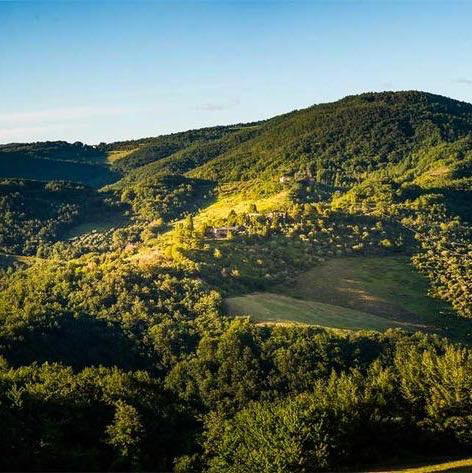
CasalFarneto brings a modern winery lens to the Verdicchio country around Serra De Conti, with organic farming, a technology-forward estate setting, and hillside views across vines, valleys, and mountains. The appeal is less about rustic cellar romance than about seeing how Le Marche’s white-wine tradition is presented in a polished, contemporary format.

Pearl is the En Primeur Club membership app — saves, bookings, and concierge access live there. Same editors, same standards.
- Address
- Serra De Conti, Marche, Italien
- Directions
- Get directions
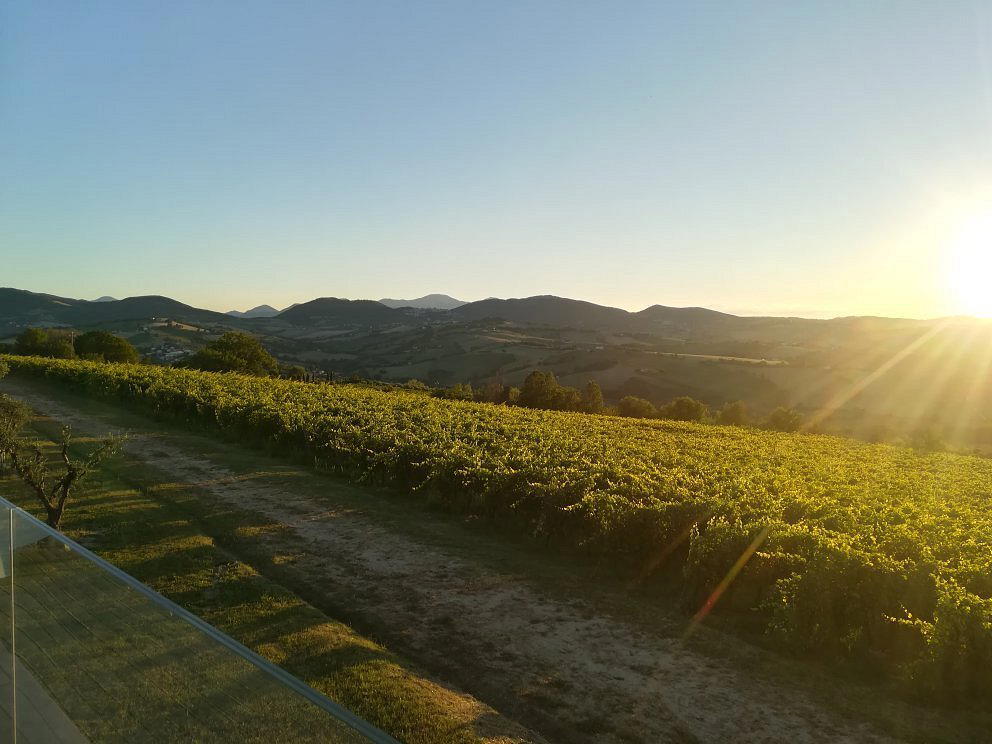
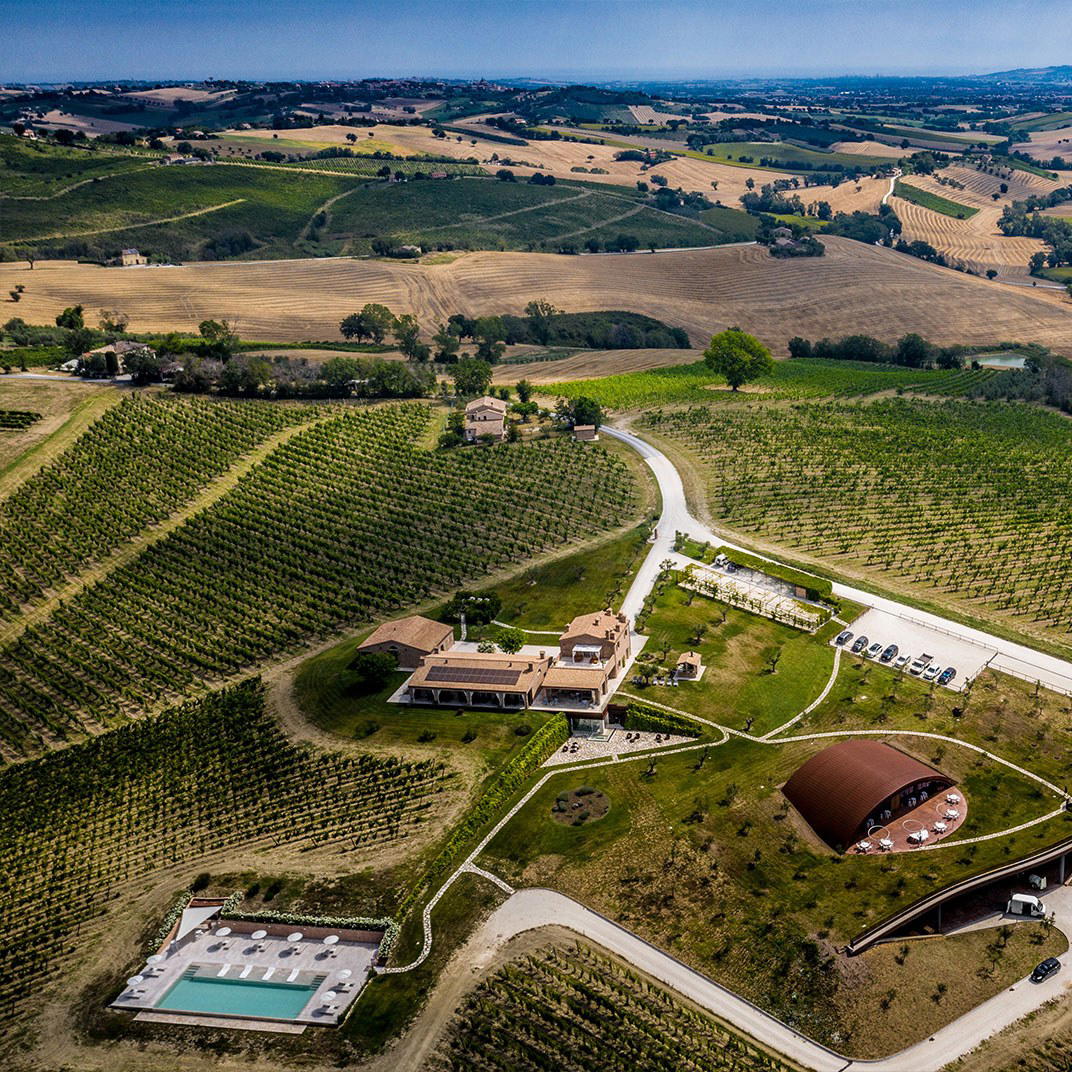
Approaching the hillside estate, the first read is architectural rather than pastoral: renovated farm buildings, vineyard lines, and wide valley views arranged with clear modern intent. In the Serra De Conti area, where Le Marche wine culture is often understood through Verdicchio and agricultural continuity, CasalFarneto frames that tradition through design, technology, and a polished tasting-room rhythm.
Verdicchio country seen through a modern estate lens
Le Marche sits between the Apennines and the Adriatic, and its wine identity is not built on a single postcard image. Around the Jesi area, Verdicchio carries the serious white-wine argument: structured, mineral, capable of dry still wines, sparkling styles, riserva bottlings, and sweeter formats. CasalFarneto works inside that tradition rather than around it, with Verdicchio dei Castelli di Jesi DOC Classico Superiore as the central reference point.
The estate dates to 1995, a useful marker in a region where many cellars trade on older rural inheritance. Here, the story is contemporary consolidation: three historic farmhouses remade into a working winery complex, with the estate name tied to the Farneto oaks associated with the property. That origin matters because it explains the tone of the visit. The place is not staged as an antique cellar; it reads as a production-minded winery that wants agriculture, hospitality, and technical winemaking to sit in the same frame.
The vineyard picture is substantial for a visitor-facing estate: 35 hectares, with 28 hectares dedicated to Castelli di Jesi Verdicchio and 7 hectares planted to red varieties including Montepulciano, Sangiovese, Merlot, Cabernet Sauvignon, and Petit Verdot. That split tells the reader where the emphasis lies. Red wines are part of the portfolio, but the gravitational pull is white, specifically the local grape that gives this corner of Le Marche its clearest export identity.
Organic farming, multiple styles, and a quieter kind of spectacle
Production language is broad but coherent. Organic farming, sustainable practice, and renewable-energy use place the estate in the modern Italian winery category where environmental claims are expected to show up in operations, not only in labels. In the glass, the range stretches across still white, still red, and sparkling wine, with Verdicchio handled in several modes, including charmat, champenois, stainless steel, cryomacerated, riserva, botrytis, and passito styles.
That breadth is editorially important because Verdicchio is sometimes misread abroad as a simple fresh white. A tasting here makes the counterargument through format rather than rhetoric. The same grape can move from direct stainless-steel expressions into more structured reserves, sparkling production, and sweet-wine territory. The estate’s use of Troncais and Allier oak for aging certain wines adds another technical register, particularly for the red side of the cellar.
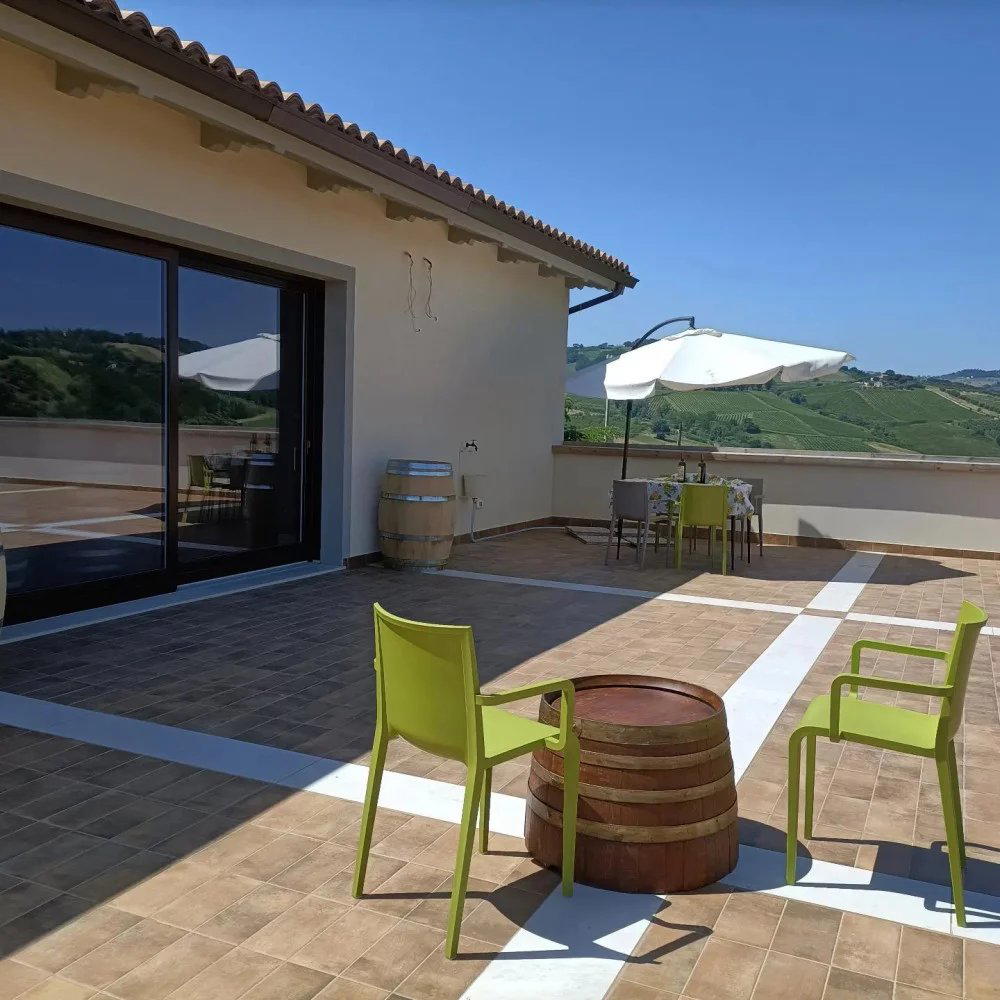
The setting provides its own theatre, but it is not the loud kind. Guest-facing descriptions point to a quiet, scenic, modern atmosphere with vineyard and mountain views, outdoor seating, and a terrace element. The experience is suited to visitors who want a guided, educational format rather than a casual drop-in bar mood. It is also practical for groups, families, and celebrations, with on-site parking, wheelchair-accessible facilities, child-friendly access, and dog-friendly policy all pointing to a more accommodating rural winery model.
Paolo Togni is listed as winemaker, and the estate’s hospitality format includes guided, private, and reserve tastings. The stronger editorial point is not personality-driven winemaking; it is the way a contemporary Marche estate packages regional specificity for visitors who may arrive knowing Tuscany better than Verdicchio country. The teaching function matters here. For travelers building a wine-led itinerary, CasalFarneto gives structure to a region that does not always explain itself as loudly as Italy’s more heavily trafficked wine zones.
How to place it in a Serra De Conti itinerary
This is a reservation-led visit, and the format rewards visitors who want a vineyard tour and tasting rather than a quick glass. The listed tour duration runs 60 to 90 minutes, long enough to understand the estate’s emphasis on organic farming, technical production, and Verdicchio’s range without turning the stop into a half-day commitment. The absence of a food-pairing program keeps the focus on wine education and the site itself.
Within Serra De Conti, the useful way to think about the visit is as a design-forward winery stop with a strong white-wine center of gravity. It pairs naturally with a broader local itinerary rather than functioning as a standalone destination for dining or nightlife. For nearby wine context, see Poderi Mattioli and our full Serra De Conti wineries guide. For the rest of the city plan, use our full Serra De Conti restaurants guide, our full Serra De Conti hotels guide, our full Serra De Conti bars guide, and our full Serra De Conti experiences guide.
For a wider Italian and European winery reading list, EP Club also covers 3GP SRL in Treviso, 47 Anno Domini in Trebaseleghe, A Mano Wine in Noci, a6mani in Fragagnano, Abbadia Ardenga in Torrenieri, Abbazia di Crapolla in Neapel, Abbazia Monte Oliveto in Asciano, »der Steiner« Hans Steiner in Podersdorf am See, and & Handwein in Mannheim.
Recognition history
Dated appearances from independent guides and award organizations, with the underlying list record or original source where available.
Falstaff Winery - 3 Stars
Falstaff
Continue exploring
More in Serra De Conti
Wineries in Serra De Conti
Browse all →
Restaurants in Serra De Conti
Browse all →
Details
- Scenic
- Modern
- Sophisticated
- Wine Education
- Group Outing
- Celebration
- Special Occasion
- Family
- Vineyard Tour
- Terrace
- Panoramic View
- Design Destination
- Private Tasting
- Organic
- Sustainable
- Mountain
- Vineyard
- Verdicchio
- Montepulciano
- Sangiovese
- Merlot
- Cabernet Sauvignon
- Petit Verdot
- Still White
- Still Red
- Sparkling
- Guided Tasting
- Private Tasting
- Reserve Tasting
Modern, technology-forward winery setting with a scenic hilltop atmosphere and panoramic valley views; guest reviews describe it as beautiful, functional, and a blend of tradition and sustainability.