Our verdict
Syrah sits at Cotton Tree Plaza on East Bay Street, placing it in Nassau's informal but serious dining corridor rather than the resort strip. The name signals an ambition toward wine-forward hospitality that remains relatively rare in the Bahamian capital. For visitors working through Nassau's restaurant options, it represents a locally rooted alternative to the larger hotel dining rooms that dominate the city's upper tier.

Pearl is the En Primeur Club membership app, where members save venues, book tables and use the concierge.
East Bay Street and the Case for Neighbourhood Dining in Nassau
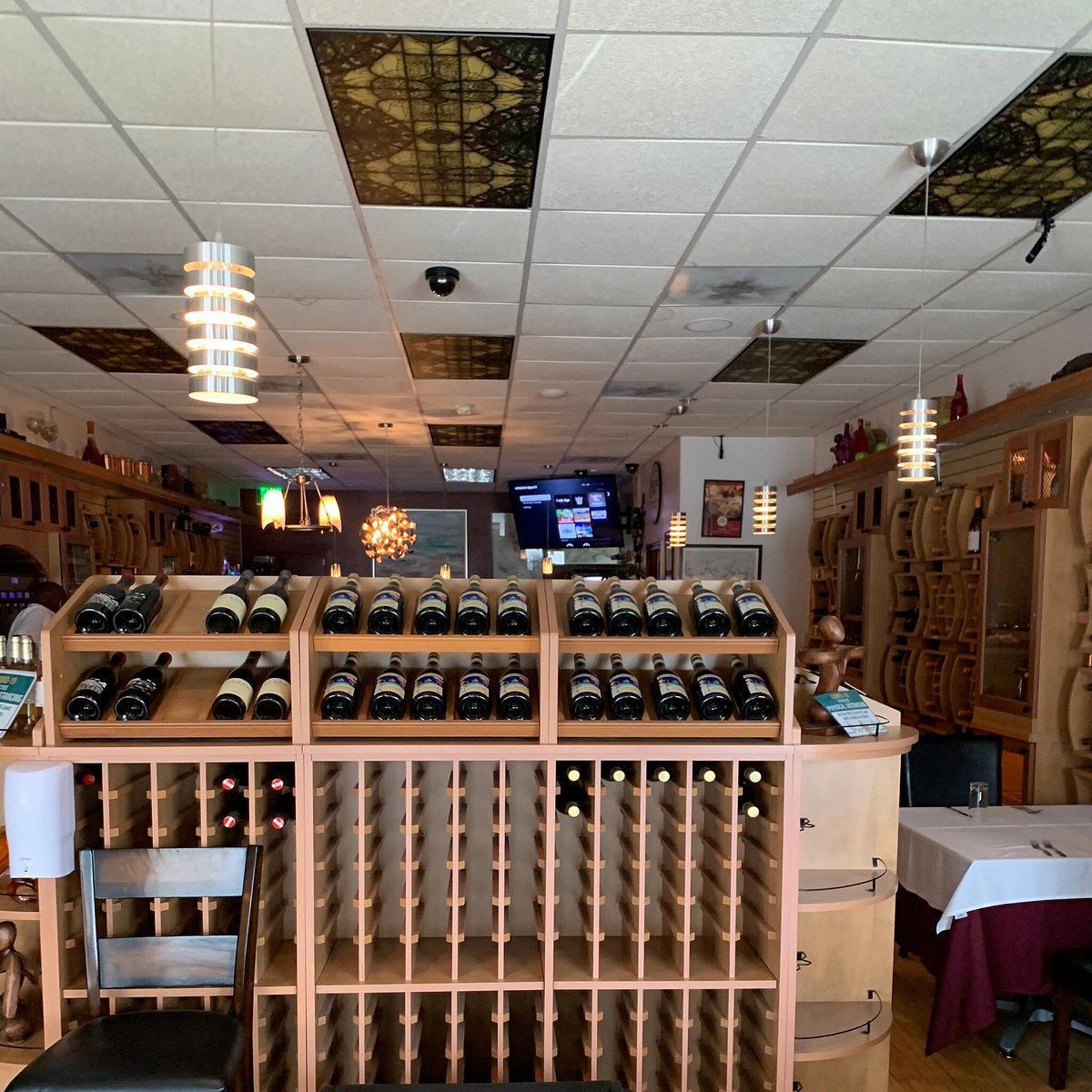
Nassau's dining conversation tends to collapse into two poles: the resort restaurants at Atlantis and the high-end hotel rooms attached to international brands, and the casual conch shacks that define the waterfront's other register. The middle ground, where a wine-named restaurant on East Bay Street operates without a hotel lobby behind it, is where things get more interesting. Syrah occupies that space at Cotton Tree Plaza, positioned along a stretch of the city that draws a local clientele alongside the visitor traffic that gravitates toward the cable beach corridor.
East Bay Street runs parallel to Nassau Harbour, and the restaurants along it tend to have a more grounded character than the resort dining rooms to the west. The plaza setting is commercial rather than theatrical, which is precisely the point: the venue's name references a grape variety with deep roots in the Northern Rhône and Australasia, signalling an orientation toward the table rather than toward spectacle. In a city where Café Martinique and Cafe Boulud Bahamas represent the resort-anchored upper bracket, and where Cafe Bombay and Café Coco anchor the more neighbourhood-facing tier, Syrah's positioning on East Bay places it closer to the latter without abandoning the former's aspirations.
Sourcing in an Island Economy: The Central Challenge
The question of where ingredients come from sits at the heart of any honest assessment of Bahamian restaurant dining. The Bahamas consists of more than 700 islands spread across roughly 100,000 square miles of ocean, and Nassau, as the commercial capital on New Providence, is the primary import hub. The majority of produce arriving in the country comes through Arawak Cay and the port facilities near downtown, with mainland United States supplying most of the proteins, dairy, and dry goods that fill restaurant kitchens. This is not a flaw unique to Nassau; it is the structural reality of island cooking at scale.
What distinguishes restaurants in this environment is how they handle that reality. The most thoughtful kitchens in the Bahamian archipelago work the local supply chain where it genuinely exists: conch, pulled directly from the surrounding waters, remains one of the few ingredients that arrives without a cold chain crossing from Florida. Grouper, snapper, and mahi-mahi are seasonally available from Bahamian fishermen who supply direct. Restaurants in the outer islands, such as Staniel Cay Yacht Club and Pete's Pub and Gallery in Little Harbour, operate within smaller, more direct supply loops simply by geography. Nassau kitchens face the opposite pressure: proximity to the port makes importing easy, which can reduce the incentive to seek out local sourcing.
A restaurant named for a grape variety suggests that the wine program forms part of the dining proposition, which places ingredient sourcing and provenance thinking at the centre of how the experience is constructed. Wine-forward establishments in cities with comparable import constraints, whether in the Caribbean or elsewhere in the island world, tend to develop more deliberate relationships with what arrives on the plate alongside the glass. The name Syrah is a statement of intent about the table as a whole, not simply about what is poured into it.
Nassau's restaurant tier that operates outside the major resort complexes has grown in depth over the past decade. Café Matisse occupies the historic colonial-building register on Bank Lane, drawing on its setting as much as its menu. Graycliff brings the weight of a decades-long reputation and a wine cellar that functions as a tourist attraction in its own right. Cafe Boulud Bahamas, operating under the Daniel Boulud brand inside the British Colonial Hilton, represents the international-name-attached-to-a-hotel model. Syrah's location at Cotton Tree Plaza on East Bay Street places it outside all of those frameworks, which is both a constraint and an opportunity.
For comparison, restaurants in other archipelago markets, such as Haynes Ave in Governor's Harbour on Eleuthera or Freedom Restaurant and Sushi Bar in Gregory Town, operate in smaller communities where the local identity of the offering is built into the context. Nassau requires more deliberate signalling, because the city's dining scene is large enough that a restaurant without a resort address or a branded chef name needs to establish its position through the quality of the experience itself. The Syrah name does some of that work before a guest sits down.
At the international end of the reference spectrum, wine-named or wine-oriented fine dining rooms at venues such as Alain Ducasse at Louis XV in Monte Carlo or Alléno Paris au Pavillon Ledoyen have used the beverage program as an organising principle for the food. That is not a direct comparison to what Syrah is doing in Nassau, but the logic, that naming a venue after a grape signals a particular relationship between food and wine, applies across price tiers and geographies.
Planning Your Visit
Cotton Tree Plaza on East Bay Street is accessible from both the downtown Nassau core and the Paradise Island bridge approach, making it a reasonable choice for visitors staying across a range of accommodation types. East Bay Street runs along the southern side of Nassau Harbour, and the plaza is within the commercial corridor rather than the tourist zone, which tends to mean a more local room composition on most evenings. The Bahamian summer, running from May through October, brings fewer visitors and often more flexibility at tables that would otherwise require advance planning.
For a broader view of where Syrah fits within the Nassau dining picture, our full Nassau restaurants guide maps the city's options across price points and neighbourhoods. Those building a longer Bahamian itinerary beyond New Providence might also cross-reference the outer island options listed above, where the sourcing dynamics and dining character shift considerably from what Nassau offers.
Frequently asked questions
Where do I go for Syrah?
Syrah is located at Cotton Tree Plaza, E Bay St, Nassau, Bahamas, Nassau.
Is Syrah a good option for Nassau dining away from the Atlantis resort complex?
Syrah sits on East Bay Street at Cotton Tree Plaza, placing it outside the Atlantis and Cable Beach resort corridors that dominate Nassau's dining conversation. For visitors based downtown or crossing from Paradise Island, the location is a practical entry point into Nassau's independent restaurant tier.
What do regulars order at Syrah?
Specific menu details for Syrah are not published, which is common for independent Nassau restaurants that shift their offering based on what local and regional suppliers can deliver. Given the sourcing realities of island dining in the Bahamas, regulars at East Bay Street spots like Syrah tend to track what's fresh rather than returning to fixed signatures. Asking staff directly about that day's supply is the more reliable approach than arriving with a dish in mind.
Can I walk in to Syrah?
Cotton Tree Plaza on East Bay Street is accessible from both the downtown Nassau core and the Paradise Island bridge approach, so the location works for unplanned visits. Reservation availability at Nassau's independent restaurants outside the resort circuit varies considerably by season, and no booking policy for Syrah is currently documented. Calling ahead or checking in person is the practical course, particularly during peak Bahamas winter travel months.
Peers You’d Cross-Shop
Comparable venues nearby, for context on price, style, and recognition.
| Venue | Cuisine | Price | Awards | Notes |
|---|---|---|---|---|
| SyrahThis venue (the venue you are viewing) | Mediterranean Small Plates & Global Wine Bar | $30–50 | Not listed | Not listed |
| Twin Brothers | Authentic Bahamian Seafood | $20–30 | Not listed | Arawak Cay Fish Fry |
| Mi & B's Deli & Bistro | Mediterranean Bistro | $20–30 | Not listed | Sandyport |
| The Poop Deck at Sandyport | Authentic Bahamian Seafood | $30–50 | Not listed | Sandyport |
| Cafe Bombay | Authentic Indian | Not listed | Not listed | Tropical Gardens |
| Shuang Ba | Fine Chinese Cuisine | Not listed | Wine Spectator Award of Excellence | Nassau |