
Tabelog 100 #2
Our verdict
Asahikawa ramen has its own grammar inside Hokkaido dining: curly noodles, pork-based heat retention, and a bowl built for cold weather rather than spectacle. Ramenya Tenkin Shijou ten belongs to that tradition, with Tabelog Ramen HOKKAIDO 100 selections in 2024 and 2025, a compact 26-seat room, and a format that reads as local ramen culture rather than destination theatrics.

Pearl is the En Primeur Club membership app, where members save venues, book tables and use the concierge.
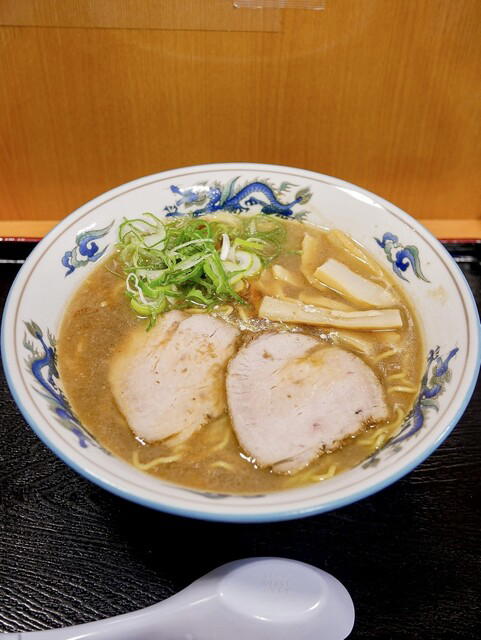
A Sapporo ramen shop rarely feels ceremonial. The room announces itself through pace: orders placed, bowls moving out quickly, and the soundtrack closer to lunch-service efficiency than tasting-menu hush. In Hokkaido, that tempo matters. Ramen is a tightly edited sequence: order, steam, noodles, broth, finish. Ramenya Tenkin Shijou ten sits inside that rhythm, showing how a focused ramen counter can compress a regional argument into one bowl.
Travellers using Sapporo as their Hokkaido base often build days around weather, shopping, transit, and compact food stops. Ramenya Tenkin Shijou ten belongs in that practical rhythm. The meal moves less like a chef’s menu than a study in timing: first heat and aroma, then noodle texture and concentration, then whether the bowl keeps structure after the initial rush fades.
Hokkaido's bowl is built around heat, timing, and restraint
Read this style through sequencing. The course begins when the bowl lands and the broth is at peak temperature. Noodles are not garnish; their shape and texture determine how the bowl eats from first lift to final sip. The best ramen engineering is not decoration. It is heat, seasoning, texture, and pace working together in a format that leaves little room for distraction.
Ramenya Tenkin Shijou ten’s recognition on Tabelog’s Hyakumeiten list in 2025 places it where consistency matters more than novelty. The list is not a Michelin-style star system, but in Japan’s ramen culture Tabelog’s Hyakumeiten selections carry weight because they reward shops with public credibility in a crowded field. Its Tabelog score of 3.66 reinforces the point: not a luxury-room rating, but a signal within a high-volume everyday genre where repeat local use and specialist attention overlap.
The comparison set clarifies that distinction. Asahikawa Ramen Aoba Honten, Hachiya Gojou sougyou ten, and Aji Toku Honten help frame Hokkaido’s ramen conversation as ordinary dining rather than occasion spending. Ramenya Tenkin Shijou ten remains casual, with the listed lunch and dinner budget at JPY 1,000 - JPY 1,999. The price is not the story; small differences in broth concentration, noodle handling, and room tempo become meaningful when the format is this narrow.
The meal's arc is short, but the style rewards attention
Premium travel dining often overvalues length. Ramen works the other way. Its structure is unforgiving: one bowl, a short window, and few variables. The progression is immediate, not theatrical. Heat comes first, then broth concentration, noodle texture, and whether the final third remains compelling after seasoning, fat, and starch begin to settle. A strong bowl should not need a parade of side dishes.
That is why the dumpling category listed alongside ramen is only a supporting note. Sides can round out the table, but should not pull focus from the bowl’s logic. The question is whether the ramen holds its line from first sip to last noodles. The format asks for discipline: broth with weight, noodles with presence, and heat retention that makes sense as practical eating rather than abstract culinary theory.
The room supports that reading without needing to be treated as a curated chef-counter performance. The experience is closer to a working local shop than a long-form dining room. That matters for travellers because ramen rewards attention but does not require ceremony. The appeal sits in the precision of a short meal: arrive ready to eat, focus on the bowl, and let the format do its work.
The practical recommendation follows from that. Fold Ramenya Tenkin Shijou ten into a Sapporo itinerary rather than plan it as a formal anchor meal. It suits travellers who want Hokkaido ramen as regional study, not just a comfort stop between other plans. The style is strongest when eaten immediately, while heat, noodle texture, and broth integration are aligned. That is not romance; it is ramen timing.
How it fits a Hokkaido food itinerary
Sapporo’s dining identity absorbs ramen and other casual formats, but Ramenya Tenkin Shijou ten gives the trip a focused noodle stop rather than a broad survey. Treat this as regional contrast within Sapporo, not a substitute for every other meal in the city. Other Sapporo dining rooms can point toward different ingredients, formats, and moods, but ramen remains one of the clearest ways to read local habits quickly.
Ramenya Tenkin Shijou ten is strongest as a calibration point for what a focused Hokkaido ramen stop adds to the wider table. It is not for a long drinking session or high-spend dinner narrative. For that, a Sapporo itinerary might place Dokushaku Sanshiro in a different evening category, while ramen remains the daytime or early-evening study in regional form. Hokkaido rewards travellers who separate formats instead of ranking every meal on one scale.
Readers comparing Japanese casual formats beyond Hokkaido can also look at other focused dining rooms in Japan and abroad. The through-line is not cuisine similarity; focused formats reveal local habits more clearly than grand rooms often do.
Frequently asked questions
What's Ramenya Tenkin Shijou ten's location?
Sapporo.
What's the price range at Ramenya Tenkin Shijou ten?
Pricing at Ramenya Tenkin Shijou ten is listed as JPY 1,000 - JPY 1,999 JPY 1,000 - JPY 1,999.
When can I go to Ramenya Tenkin Shijou ten?
Check the venue's official channels for current opening hours before visiting Ramenya Tenkin Shijou ten.
What do critics highlight about Ramenya Tenkin Shijou ten?
The strongest credential is its selection for Tabelog’s Hyakumeiten list in 2025. The public listing also gives it a Tabelog score of 3.66 and a JPY 1,000 - JPY 1,999 lunch and dinner budget, keeping it in an everyday ramen range rather than the luxury tier.
How does Ramenya Tenkin Shijou ten handle allergies?
The most practical approach is to confirm ingredients before ordering, especially for ramen and dumplings. Ask the shop directly for the latest ingredient and allergy information.
Is Ramenya Tenkin Shijou ten okay with children?
Confirm current arrangements directly with the venue before visiting with children. The listed categories are ramen and dumplings, and the Sapporo setting makes it a straightforward lunch or early dinner candidate if the latest details work for your group.
At-a-Glance Comparison
Comparable venues by category and price.
| Venue | Cuisine | Price | Awards | Notes |
|---|---|---|---|---|
| Ramenya Tenkin Shijou tenThis venue (the venue you are viewing) | Japanese Ramen | $1–10 | Tabelog 100 #2 | Not listed |
| Ka~ru Ma~ru | Sapporo soup curry | Not listed | Tabelog 100 #76 | Shiroishi |
| Hige Danshaku | Hokkaido Soup Curry | $10–20 | Tabelog 100 #32 | Chūō |
| Isono Kazuo | Late‑night Sapporo Black Ramen | $10–20 | Tabelog 100 #95 | Chūō |
| Menya hide | Sapporo ramen shop | $10–20 | Tabelog 100 #31 | Kita |
| Asahikawa Ramen Nanashi | Traditional Asahikawa-style Ramen | $10–20 | Tabelog 100 #46 | Nishi |
Recognition history
Dated appearances from independent guides and award organizations, with the underlying list record or original source where available.
Tabelog 100 #2 · No. 2
Tabelog · Tabelog 100 - Ramen - HOKKAIDO - 2025
Continue exploring
More in Asahikawa
Details
- Classic
- Cozy
- Solo
- Family
- Casual Hangout
- Standalone
- Beer Program
- A La Carte
- Counter Dining
- Beer
Current opening hours
- Monday
- 11 AM–8 PM
- Tuesday
- 11 AM–8 PM
- Wednesday
- 11 AM–8 PM
- Thursday
- 11 AM–8 PM
- Friday
- 11 AM–8 PM
- Saturday
- 11 AM–8 PM
- Sunday
- 11 AM–8 PM
Hours can change for holidays and private events. Last verified .
Casual, traditional ramen-shop atmosphere with a compact dining room and counter/table seating.