
Tabelog 100 #57
Our verdict
Dokushaku Sanshiro belongs to Hokkaido’s serious izakaya tier rather than Sapporo’s quick ramen-and-curry circuit. Its Asahikawa setting, seafood-and-Japanese-cooking category, sake and shochu focus, and selection for Tabelog 100 Izakaya EAST 2025 make it a sharper choice for travelers treating northern Japan as a regional food trip, not a single-city checklist.

Pearl is the En Primeur Club membership app, where members save venues, book tables and use the concierge.
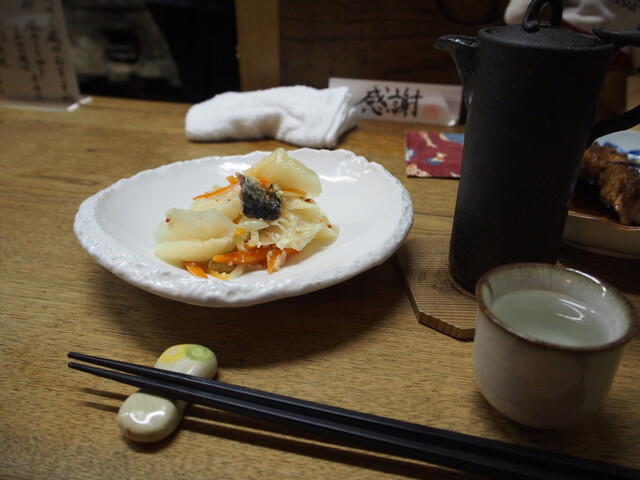
Sapporo changes the rhythm of a Hokkaido dinner. Colder-season appetite, compact dining rooms, and a culture of purposeful drinking can matter as much as spectacle. Dokushaku Sanshiro fits older izakaya grammar: seafood, Japanese cooking, and a room where format matters as much as any plate.
That distinction helps Sapporo-bound travelers. Hokkaido dining is often reduced to miso ramen, soup curry, crab, lamb, and seafood markets. All are valid, but they can flatten the region. A serious Sapporo izakaya shows another north, where drinking culture, local produce, and small-plate pacing carry the evening. Dokushaku Sanshiro’s selection for Tabelog 100 Izakaya EAST 2025 places it in a recognized Japanese tavern category, not the tourist-facing seafood-restaurant lane.
Sapporo izakaya culture gives the room its edge
Japan’s izakaya tradition spans chain beer halls, neighborhood counters, seafood taverns, and kitchens closer to kappo than pub food. Hokkaido adds cold-weather appetite, strong seafood identity, dairy and agricultural depth, and drinking rooms that feel local rather than theatrical. The stronger addresses are judged less by decoration than by balance: how the kitchen supports the evening, whether the room encourages lingering, and how naturally the meal moves from first order to final dish.
Dokushaku Sanshiro sits in izakaya, seafood, and Japanese cuisine categories, a telling combination. The meal is unlikely to follow a tasting-menu line. The point is sequence: ordering in rounds, letting the table set tempo, and treating seafood as part of a broader tavern meal rather than a single luxury event. For travelers used to Tokyo counter dining, the contract differs. Precision matters, but so does the room’s social function.
The comparison with casual Hokkaido staples is useful. Aji Toku Honten, Hachiya Gojou sougyou ten, Asahikawa Ramen Aoba Honten, and Ramenya Tenkin Shijou ten point to a more focused noodle-shop logic: fast, direct, and easy to fold into a day. Dokushaku Sanshiro occupies a different evening slot, with a JPY 5,000 to JPY 5,999 dinner range and an izakaya structure. The choice is not ramen versus izakaya; it is whether the night should be built around a bowl or a table.
Recognition matters because izakaya awards are hard to read from abroad
For international diners, izakaya evaluation can be slippery. Michelin-style cues do not always apply, chef biographies are not always central, and English-language coverage skews toward sushi, ramen, and hotel dining. Tabelog’s Hyakumeiten lists help separate serious local rooms from generic taverns. Dokushaku Sanshiro was selected for Tabelog Izakaya recognition in 2025, with the listing under Izakaya EAST. That recognition is more useful than a loose impression of popularity.
The 3.55 Tabelog score should be read in Japanese context. On that platform, a mid-3 rating can signal meaningful local credibility, especially outside the highest-volume metropolitan dining zones. The 2025 Izakaya EAST selection gives the number more weight by placing the restaurant inside a curated category rather than leaving it as a loose user-rating snapshot. For a Hokkaido itinerary, the address becomes more than a convenient dinner stop; it shows how northern izakaya culture is ranked within Japan.
The available facts have useful restraint. No chef-led mythology is needed. The stronger story is place and format: a Sapporo tavern recognized in an eastern Japan izakaya field, serving Japanese cooking and seafood. That says more than a personality sketch would. The room belongs to a category where consistency, pacing, and drinking compatibility carry reputation.
How to fit it into a Hokkaido food trip
For readers based in Sapporo, this is not like adding another generic city restaurant. It belongs to a wider Hokkaido itinerary, especially one giving the city its own evening rather than treating it as transit. The available location information places the restaurant in Sapporo rather than a resort setting. The meal makes more sense as part of a night in town than as a detour squeezed between other plans.
The house format shapes who should go. This is best approached as an izakaya for diners who want seafood and Japanese cooking in a tavern framework rather than a formal tasting-menu setting. Details such as seating configuration, private-room availability, children’s policies, payment methods, take-out, and language support should be confirmed directly before planning around them.
The wider Sapporo field gives context. For noodle intensity, other Sapporo dining rooms belong to a different appetite; for curry, unnamed local comfort-food specialists map another side of the city’s identity. Other Hokkaido food stops can speak to bakery culture, casual meals, or day-trip planning. Together, they show why Dokushaku Sanshiro is a regional counterpoint, not a substitute for Sapporo’s core meals.
Use the broader guides to build the trip around that distinction: Our full Sapporo restaurants guide for dining, Our full Sapporo hotels guide for where to stay, Our full Sapporo bars guide for drinking rooms, Our full Sapporo wineries guide for regional wine context, and Our full Sapporo experiences guide for planning beyond the table. Readers comparing Japanese dining formats further afield can also look generically at other dining rooms in Japan and abroad. The useful thread is format: how a room tells diners what kind of evening they are entering before the first order.
Frequently asked questions
What are Dokushaku Sanshiro's hours?
Current hours for Dokushaku Sanshiro should be confirmed directly before visiting.
What price level is Dokushaku Sanshiro?
Pricing at Dokushaku Sanshiro is listed as JPY 5,000 - JPY 5,999.
Where is Dokushaku Sanshiro in Sapporo?
Sapporo.
What's the standout thing about Dokushaku Sanshiro?
Its clearest credential is selection for Tabelog 100 Izakaya EAST 2025, which places it in a screenable group rather than the general tavern field. The listed dinner price band is JPY 5,000–JPY 5,999.
What if I have allergies at Dokushaku Sanshiro?
The practical move is to call +81-166-22-6751 before booking and state the allergy clearly. Ingredient checks should be confirmed directly with the venue.
The Minimal Set
Comparable venues by cuisine and category.
| Venue | Cuisine | Price | Awards | Notes |
|---|---|---|---|---|
| Dokushaku SanshiroThis venue (the venue you are viewing) | Traditional Hokkaido Izakaya & Seafood | $30–50 | Tabelog 100 #57 | Not listed |
| Aji Toku Honten | Not listed | Not listed | Not listed | JPY 999 |
| Hachiya Gojou sougyou ten | Traditional Asahikawa Ramen Shop | $1–10 | Tabelog 100 #92 | JPY 999 - JPY 999 |
| Asahikawa Ramen Aoba Honten | Not listed | Not listed | Not listed | JPY 999 - JPY 999 |
| Ramenya Tenkin Shijou ten | Not listed | Not listed | Not listed | JPY 1,000 - JPY 1,999 JPY 1,000 - JPY 1,999 |
Recognition history
Dated appearances from independent guides and award organizations, with the underlying list record or original source where available.
Tabelog 100 #57 · No. 57
Tabelog · Tabelog 100 - Izakaya - EAST - 2025
Details
- Cozy
- Classic
- Lively
- Intimate
- After Work
- Casual Hangout
- Solo
- Group Dining
- Date Night
- Standalone
- Chefs Counter
- Sake Program
- Beer Program
- Local Sourcing
- A La Carte
- Small Plates
- Counter Dining
- Sake
- Beer
- Shochu
- Pescatarian Friendly
Current opening hours
- Monday
- Closed
- Tuesday
- 5–10 PM
- Wednesday
- 5–10 PM
- Thursday
- 5–10 PM
- Friday
- 5–10 PM
- Saturday
- 5–10 PM
- Sunday
- Closed
Hours can change for holidays and private events. Last verified .
Warm, traditional izakaya with counter and tatami seating, close quarters, and a lively but relaxed atmosphere focused on solo drinkers and small groups enjoying carefully prepared Japanese seafood and classic dishes with sake.