
Michelin Plate
Our verdict
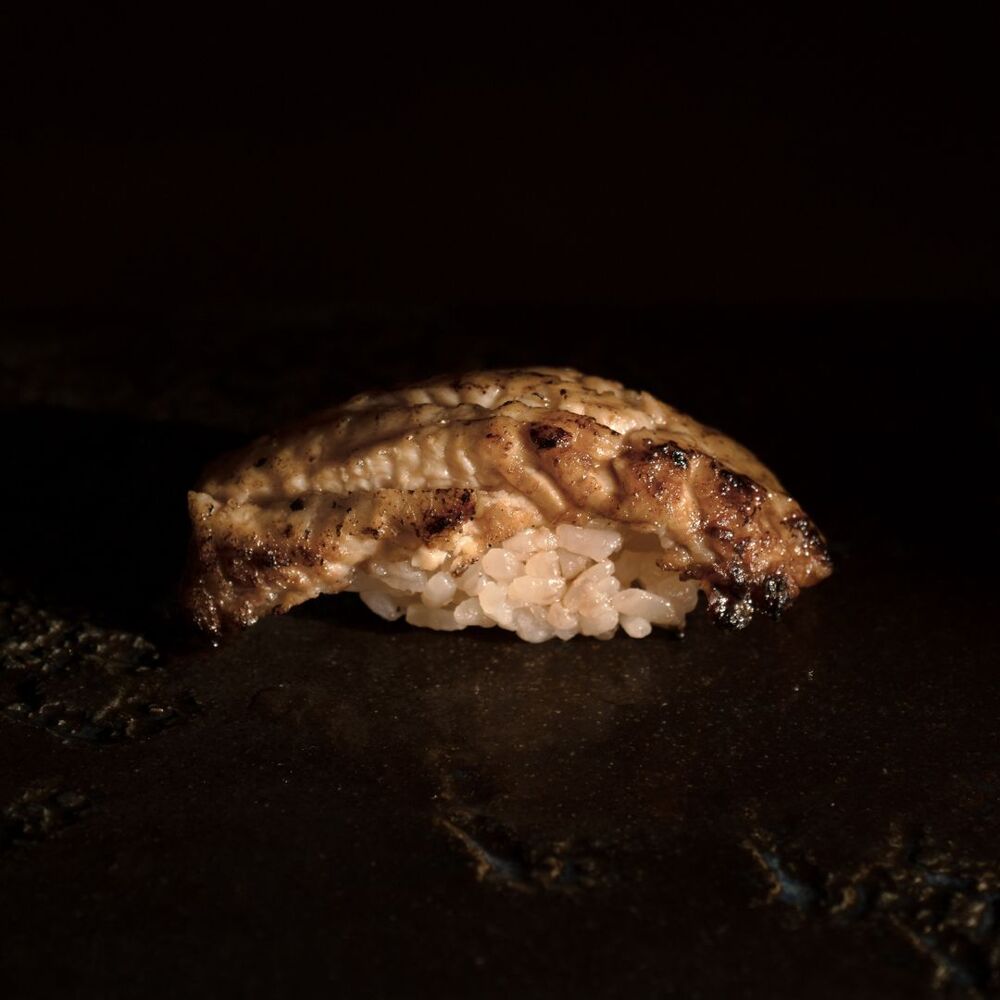
Pearl brings omakase discipline to Faro's old town through a ten-seat counter, three rotating chefs, and daily procurement from the Algarve's lotas. The format centres on bluefin tuna, oysters, langoustine, and turbot from regional waters, prepared in classic Japanese forms without sauce-heavy improvisation.

Pearl is the En Primeur Club membership app, where members save venues, book tables and use the concierge.
sits on Avenida da República near the Igreja de São Pedro, inside a space built around a ten-seat counter where three chefs share responsibility for the evening's progression. The restaurant runs an omakase format shaped by the day's catch, so the sequence changes according to what the Algarve's lotas deliver. There are no fixed menus, no à la carte options, and no wine list beyond a selection chosen to accompany raw and lightly cooked fish. The format demands proximity: diners face the chefs directly, and preparation happens within arm's reach. Faro's dining scene has historically leaned toward grilled fish and traditional Portuguese seafood, with chef-driven formats appearing more slowly than in Lisbon or Porto. operates in a different register, closer in structure to small-counter Japanese venues in Tokyo or Kyoto than to the region's established restaurants. Alameda represents the city's contemporary cuisine tier at €€€, while CHECKin by Leonel Pereira works within a more accessible contemporary bracket. sits between them in price and formality, distinguished by its exclusive reliance on counter service and day-to-day ingredient variance.
Daily procurement and the Algarve lota network
The restaurant sources oysters, shrimp, eel, squid, turbot, and bluefin tuna from the Algarve's auction houses, with selections made each morning. This model introduces variability: a dish built around sardine one week may shift to mackerel or horse mackerel the next, depending on seasonal abundance and quality at the docks. The chefs work without freezers for fish, relying instead on same-day delivery and rapid turnover. Bluefin tuna, a recurring centrepiece, arrives whole and is broken down on-site, with lean akami, medium-fat chūtoro, and fatty ōtoro portioned according to the evening's progression. Oysters come from regional beds rather than imported French or Irish stock, and the kitchen treats them as a vehicle for showcasing the Algarve's colder Atlantic currents. Langoustine appears frequently, served either as sashimi with minimal garnish or lightly torched to develop caramelisation without cooking the interior. Eel, a less common protein in Portuguese coastal cuisine, is prepared using Japanese grilling techniques that balance fat rendering with skin crispness. Turbot, prized for its firm texture and clean flavour, is filleted and served as nigiri or sashimi, often with a light brush of soy or a grating of fresh wasabi. The reliance on local procurement means functions as a conduit for the Algarve's fish economy, translating regional abundance into a format more familiar to omakase veterans than to traditional Portuguese diners. For visitors accustomed to Japan's fish auctions or coastal kaiseki, the sourcing model will feel coherent. For those arriving from Forno Nero or Hábito, the format represents a sharper pivot toward technique-driven minimalism.
Format, pacing, and the counter dynamic
Each seating follows a chef-dictated sequence, typically running between twelve and sixteen courses depending on ingredient availability and the evening's rhythm. The three chefs rotate preparation duties, with one leading sushi and sashimi work, another managing cooked dishes, and the third overseeing plating and service coordination. The counter arrangement means diners observe filleting, knife work, and plating in real time, and the chefs often explain cuts, aging periods, or preparation methods between courses. Pacing is slower than high-volume sushi bars but faster than kaiseki tasting menus, with most evenings concluding within two hours. Nigiri forms the structural backbone, interspersed with sashimi presentations, small cooked dishes, and a closing tamago or miso soup. The kitchen does not serve rice bowls, donburi, or robata-grilled proteins; the focus remains on raw and lightly treated fish. Wine pairing is available but not mandatory, and the selection tilts toward Portuguese whites and lighter reds that defer to the fish rather than competing with it. The ten-seat capacity means the restaurant books quickly, and walk-ins are rarely accommodated. Reservations open several weeks in advance, and weekend slots fill within days. The counter format also means parties larger than four are difficult to seat together, and solo diners occupy the same seats as couples or pairs. For those comparing to other Japanese-influenced venues in Portugal, 100 Maneiras in Lisbon offers a broader contemporary menu with Japanese elements woven into a multicultural framework, while maintains stricter format discipline. The closest parallels may be smaller omakase counters in Porto or coastal towns, though few operate with the same daily procurement constraints.
The restaurant's positioning within Faro's old town means it draws both local repeat diners and visitors exploring the Algarve's capital beyond beach resorts. The neighbourhood around Igreja de São Pedro has seen incremental dining development over the past five years, with contributing to a small but growing cluster of technique-focused venues. For visitors planning a broader culinary tour of Faro, our full Faro restaurants guide maps the city's evolving dining landscape. Those exploring the wider Algarve coast may also reference 2 Passos in Almancil, which operates at a higher price tier with Michelin recognition. fits cleanly into a day spent exploring Faro's historical core, with the counter seating and omakase pacing offering a structured counterpoint to the city's more casual waterfront seafood houses.
Frequently asked questions
Is suitable for children?
The ten-seat counter format and chef-paced omakase structure, typically twelve to sixteen courses, make better suited to older diners comfortable with extended, sequential tastings. There is no separate menu, and the evening unfolds at the chefs' discretion.
What should I expect atmosphere-wise at?
seats ten diners around a single counter facing three chefs who share prep and service duties. The format is omakase: no menu, chef-determined pacing, and direct interaction throughout. Located on Avenida da República near Igreja de São Pedro in central Faro, the room focuses attention on knife work and plating rather than décor.
Has won any awards?
has received recognition including: Quer viajar ao Japão sem sair da Costa Algarvia? Este restaurante, situado no coração de Faro e próximo da Igreja de São Pedro, combina técnicas da culinária japonesa com os melhores ingredientes locais! Nascido do desejo dos seus idealizad….
Where exactly is?
is located at Av. da República, 50, Faro, Faro, 8000-079, PRT, Faro.
Fast Comparison
Comparable venues by cuisine and price in the same metro.
| Venue | Cuisine | Price | Awards |
|---|---|---|---|
| PearlThis venue (the venue you are viewing) | Japanese Omakase Sushi | Not listed | Michelin Plate |
| Forno Nero | Contemporary Italian-Mediterranean with Algarve influences | $30–50 | Not listed |
| Hábito | Modern Algarve and Mediterranean Fine Dining | $100–150 | Not listed |
| CHECKin by Leonel Pereira | Contemporary | Not listed | Not listed |
| CHECKin Faro By Leonel Pereira | Modern Contemporary Mediterranean | $50–100 | Michelin Plate · Star Wine List |
| Alameda | Modern Portuguese Seafood | $150–200 | 1 Michelin Star |
Recognition history
Dated appearances from independent guides and award organizations, with the underlying list record or original source where available.
Michelin Plate
Michelin
Pearl
Featured Guides

Continue exploring
More in Faro
Restaurants in Faro
All restaurants in Faro →

Bars in Faro
All bars in Faro →
Hotels in Faro
All hotels in Faro →

Wineries in Faro
Browse all →
Details
- Intimate
- Sophisticated
- Modern
- Elegant
- Date Night
- Special Occasion
- Solo
- Chefs Counter
- Standalone
- Sake Program
- Local Sourcing
- Sustainable Seafood
- Omakase
- Counter Dining
- Tasting Menu
- Sake
- Pescatarian Friendly
A small, intimate sushi bar with a refined, contemporary Japanese feel and a focus on chef-led dining.