


Oka, on Rue Duban in Paris's 16th arrondissement, is one of the city's most discussed gastronomic addresses of recent years, pairing Brazilian culinary identity with French technique under chef Raphaël Régo. The format splits across a Michelin-targeting gastronomic room and a high-end bistro. Ranked #537 in Opinionated About Dining's Europe list in 2024 and climbing to #640 in 2025, it draws a reservation-chasing crowd on Tuesday through Friday evenings only.
Pearl is the En Primeur Club membership app — saves, bookings, and concierge access live there. Same editors, same standards.
- Address
- 8 Rue Duban, 75016 Paris, France
- Phone
- +33 1 46 47 50 66
- Website
- okasushi75016.fr
- Directions
- Get directions
 Saves & bookings on Pearl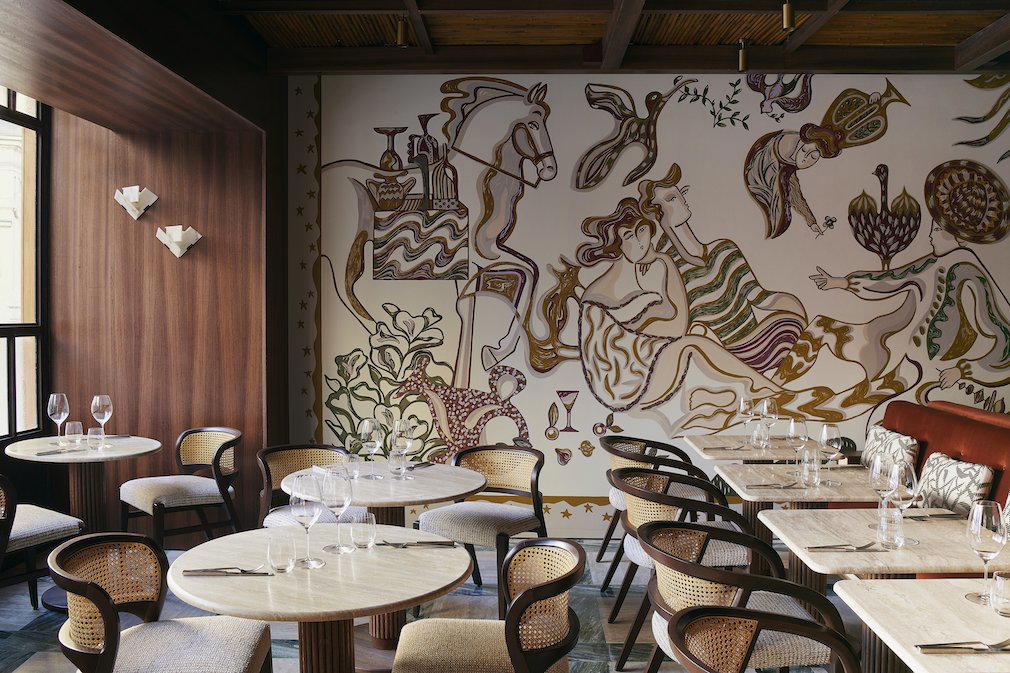
The Occasion That Demands a Table
Oka is a Franco-Brazilian fine dining restaurant in Paris, with a price point around $100 per person. Anniversaries, promotions, the kind of dinner that retrospectively defines a trip: these meals require a specific type of address, one where the cooking carries enough intellectual weight to hold attention across two hours, and where the room signals that the occasion was taken seriously. The gastronomic tier of Paris's 16th arrondissement has historically supplied that category through its older grandes tables, but a newer cohort has entered the conversation. Oka, on Rue Duban, is among the more discussed of that cohort.
The restaurant operates on a deliberately compressed schedule: Tuesday through Friday, with a single service window of 8 to 9 pm each evening. Saturday, Sunday, and Monday are closed. That structure is not unusual among Paris's high-ambition gastronomic rooms, where controlling volume is part of controlling the experience. What distinguishes Oka within the current Paris scene is the culinary origin it brings to a city that remains, at the leading end, heavily self-referential. Chef Raphaël Régo is Brazilian by background, and the restaurant positions itself explicitly around Brazilian gastronomic identity expressed through French technique. That pairing is rare at this price and ambition tier in Paris.
Brazilian Identity Inside a French Gastronomic Framework
The broader pattern in Paris's leading dining tier is well established: French technique dominates, with international influence arriving primarily through chefs trained in the French classical tradition who then fold in secondary references. Kei, for instance, brought Japanese precision into a recognisably French idiom. The approach at Oka is different in degree, if not entirely in kind. Here, Brazilian culinary culture is treated as a primary identity rather than an accent. That positioning matters when choosing the right occasion restaurant. For a milestone dinner where the guest of honour has a particular interest in South American food culture, or where novelty is part of the point, Oka offers something that no Rue du Faubourg Saint-Honoré address can replicate.
Paris's gastronomic scene rewards comparison shopping at this level. Addresses like Le Taillevent and Epicure operate as benchmarks of French classical tradition: deep wine lists, long institutional histories, rooms that feel freighted with decades of serious meals. L'Atelier de Joël Robuchon Étoile occupies a different position, built around a counter format and a more contemporary sensibility. Oka sits outside those existing categories. Its comparison set is not classical Paris but rather the international-influence rooms that have been reshaping the top tier: La Table d'AkiHiro, for instance, represents the Japanese-French intersection at a serious level, just as Oka represents the Brazilian-French one.
The Two-Format Structure
The restaurant is divided into two distinct spaces: the gastronomic room and a high-end bistro running alongside it. This dual-format model has become increasingly common among Paris restaurants aiming at the summit tier. It allows the kitchen to operate at different price and complexity levels simultaneously, while keeping the gastronomic room at a scale and pace that serious cooking requires. The bistro side is not an afterthought; it functions as a point of entry for guests who want the Oka sensibility without the full commitment of the tasting menu format.
For occasion dining specifically, the gastronomic room is the relevant choice. It is the room where the restaurant's Michelin aspirations are expressed most fully, and where the cooking is designed to hold the table's attention across a longer meal. The bistro is better suited to a celebratory dinner among friends who want quality without ceremony, or a pre-event meal before a performance in the neighbourhood.
Recognition and Standing in 2025
Oka holds an EP Club classification of Notable. In Opinionated About Dining's ranked list of European restaurants, it appeared at #537 in 2024 and at #640 in 2025. Movement between those two positions is worth contextualising: the OAD list is crowd-sourced from a community of serious diners, and position changes reflect shifts in the collective assessment of a restaurant relative to its peers, not necessarily any change in quality. A restaurant climbing on OAD is typically gaining visibility and diners; one moving down in rank may simply be facing a more competitive cohort. Oka's continued presence in the top 650 of a Europe-wide ranking, in only its early years of operation, signals that it has established a real reputation rather than a novelty premium.
At a restaurant of this type and price, a score below 4.5 sometimes reflects the polarising effect of ambitious, identity-driven cooking on a general dining audience. It is not a red flag; it is a calibration point.
France's gastronomic tradition extends well beyond Paris. Mirazur in Menton, Flocons de Sel in Megève, Troisgros in Ouches, Paul Bocuse in Collonges-au-Mont-d'Or, Bras in Laguiole, and Auberge de l'Ill in Illhaeusern all represent the depth of that provincial tradition. Oka's position in Paris puts it in conversation with that national canon while offering something formally distinct from it. For international visitors using Paris as a base, the contrast between Oka and a classical French pilgrimage address makes for a more considered programme than booking two meals of the same type.
Cross-border comparisons are also worth making. Hotel de Ville Crissier in Crissier and Sézanne in Tokyo each represent French technique expressed through a distinct geographic lens. Oka's Brazilian lens is rarer in formal dining at this level, which is part of what gives it its current momentum.
Planning the Occasion
Oka is at 8 Rue Duban, in the 16th arrondissement. The restaurant is best booked in advance, particularly if you want the gastronomic room rather than the bistro. The dual-format structure means it is worth specifying which room you are booking, particularly if the occasion calls for the full gastronomic experience rather than the bistro. For those building a broader Paris programme, Frenchie Bar au Vins provides a counterpoint at a more casual register.
A Tight Comparison
Comparable venues nearby, for context on price, style, and recognition.
| Venue | Cuisine | Price | Notes |
|---|---|---|---|
| OkaThis venue — the venue you are viewing | French | $$$$ | Not listed |
| Guefen | Not listed | $$$$ | 3rd arrondissement, Modern Levantine Seafood |
| Le Rigmarole | Not listed | $$$$ | 11th Arr. - Popincourt, Modern French-Japanese Fusion Grill |
| TO | Not listed | $$$ | 10th Arr., Modern French-Japanese Fusion |
| Geoélia | Not listed | $$$$ | 16th arrondissement (Passy), Modern French Seafood |
| Monsieur Dior by Yannick Alléno | Not listed | $$$$ | 8th Arr., Modern French Fine Dining |
Recognition history
Dated appearances from independent guides and award organizations, with the underlying list record or original source where available.
Opinionated About Dining Top Restaurants in Europe Recommended
Opinionated About Dining
Star Wine List
Star Wine List
Gault & Millau Remarkable Restaurant
Gault & Millau
Opinionated About Dining Top Restaurants in Europe Ranked #640
Opinionated About Dining
Opinionated About Dining Top Restaurants in Europe Ranked #537
Opinionated About Dining
Continue exploring
More in Paris
Restaurants in Paris
Browse all →
Bars in Paris
Browse all →
Hotels in Paris
Browse all →



At a Glance
- Intimate
- Elegant
- Modern
- Sophisticated
- Date Night
- Special Occasion
- Chefs Counter
- Extensive Wine List
Current opening hours
- Monday
- 11:30 AM–3 PM, 6–10:20 PM
- Tuesday
- 11:30 AM–3 PM, 6–10:20 PM
- Wednesday
- 11:30 AM–3 PM, 6–10:20 PM
- Thursday
- 11:30 AM–3 PM, 6–10:20 PM
- Friday
- 11:30 AM–3 PM, 5:30–10:20 PM
- Saturday
- 11:30 AM–3 PM, 5:30–10:20 PM
- Sunday
- 5:30–10:20 PM
Hours can change for holidays and private events. Last verified .
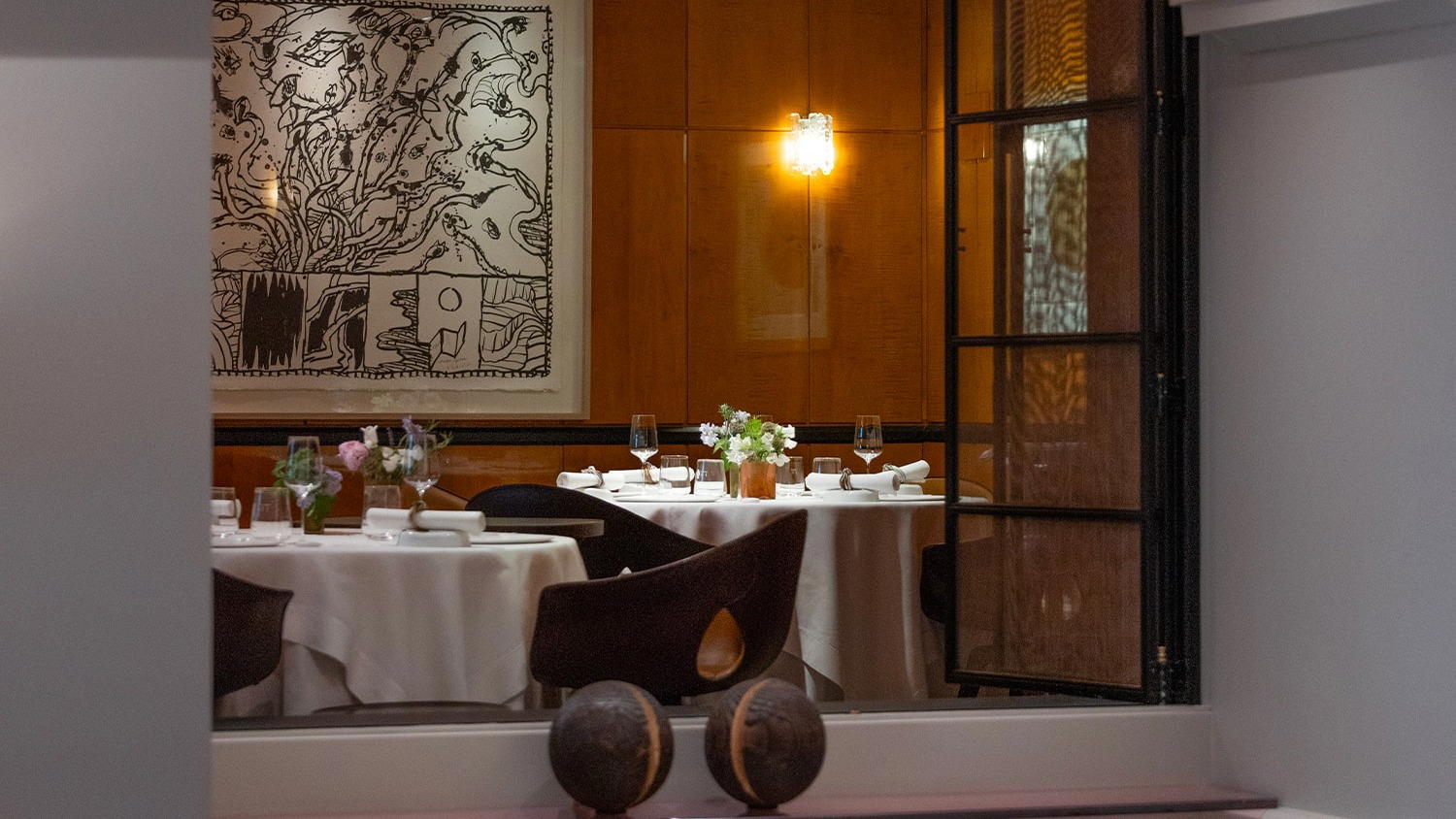
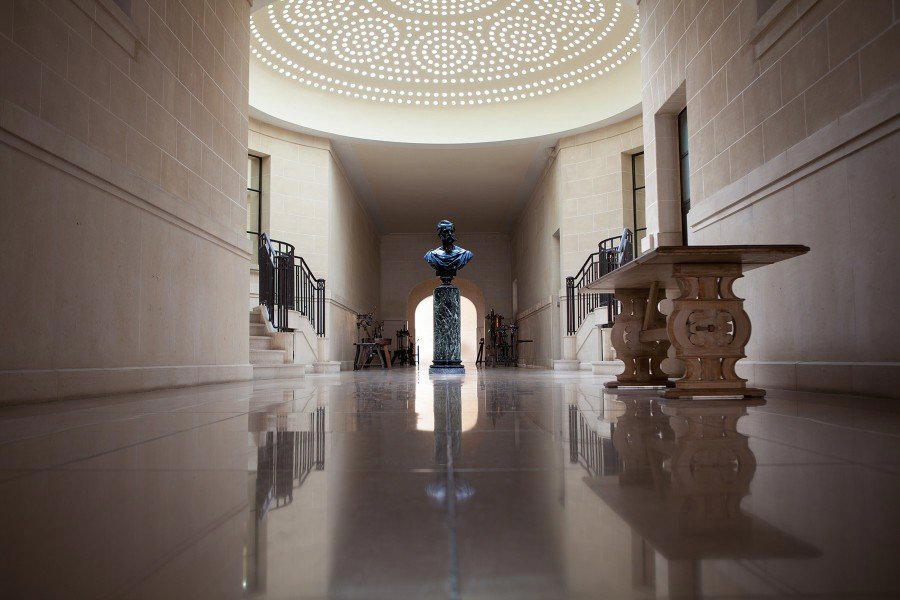
Hushed and elegant atmosphere with warm woods, textured marbles, and artistic murals evoking Brazilian heritage.