Marcel DW
Our verdict
Marcel DW occupies a Main Street address in downtown Sarasota, positioning itself within a dining corridor that has grown steadily more ambitious over the past decade. The restaurant operates at the intersection where classical European technique meets the agricultural output of Southwest Florida, a framing that places it in a small but expanding tier of Gulf Coast kitchens doing serious work with local product.

Pearl is the En Primeur Club membership app, where members save venues, book tables and use the concierge.
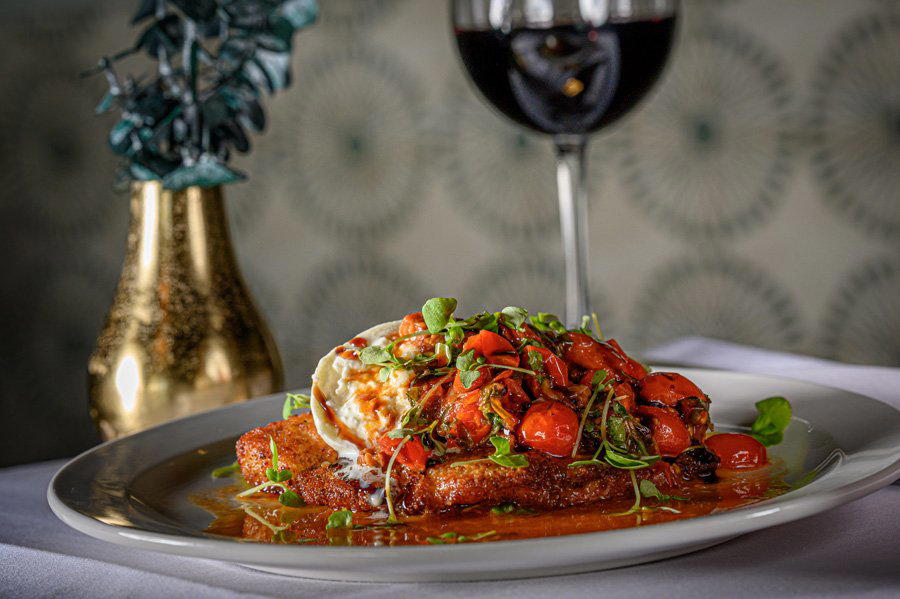
The menu
What to order
- Snapper ceviche
- Cacio e Pepe
- Mortadella toast
- Sweetbread gratin
- Beef Bourgignon
Main Street, After the Season Rush
Downtown Sarasota's Main Street reads differently depending on when you arrive. In the depths of snowbird season, from January through March, the sidewalks fill early and the dining room noise levels climb fast. By late spring, the same corridor thins out, and the restaurants that remain consistently occupied are the ones that have earned a local following rather than relying on seasonal foot traffic. Marcel DW sits at 1568 Main St, a block that anchors the middle of this commercial strip, and its position on that block says something about how the restaurant thinks about its audience.
The broader story of Sarasota dining over the past decade is one of gradual sophistication. The city has long had a reputation as a cultural outlier on the Gulf Coast, home to the Ringling Museum, a serious opera company, and an arts patronage class with international exposure and high expectations. That demographic has driven a restaurant scene more refined than the city's size would suggest. Marcel DW enters that context as part of a newer wave of kitchens that treat technique as infrastructure rather than spectacle.
Technique Imported, Product Local
The editorial frame that applies most usefully to Marcel DW is the one governing a growing number of ambitious American restaurants: classical European method applied to ingredients sourced close to home. This is the operating logic behind operations like Blue Hill at Stone Barns in Tarrytown and Single Thread Farm in Healdsburg, where the tension between imported discipline and indigenous product generates the actual cooking. The approach has credibility precisely because it requires mastery in both directions: you need to understand the technique well enough to know when local material demands that you adapt it.
Southwest Florida offers a particular set of raw materials. The Gulf waters around Sarasota produce grouper, snook, stone crab, and a rotating cast of seasonal species that any serious kitchen should be building around. The region's climate also supports year-round growing of produce that northern kitchens access only briefly. Stone crabs, for instance, follow a strict seasonal window: the harvest runs from mid-October through May, and a kitchen working seriously with local product will treat that calendar as a structural constraint, not a marketing footnote. The same applies to the mullet roe that gets processed into bottarga across Florida's Gulf Coast, a product with deep Mediterranean precedent that has found a second home in this geography.
Restaurants operating in this register face a comparative challenge. Diners who have eaten at Le Bernardin in New York City or Providence in Los Angeles arrive with calibrated expectations around seafood-forward fine dining. The question for a Gulf Coast kitchen is whether it can hold its own against those reference points, not by replicating them, but by doing something the geography makes possible that those urban addresses cannot. That means the local catch, prepared with the same precision those kitchens bring to imported product, becomes the argument.
The Sarasota dining scene has stratified in ways that make placement meaningful. At the casual-Italian end, 15 South by Napule and Amore Restaurant occupy a well-established lane. Spanish-inflected cooking gets representation through Alma de España. Neighborhood anchors like Arts & Central and 1592 hold a reliable middle tier. What the scene has had less of, historically, is the kind of restaurant that positions itself against national fine-dining benchmarks rather than local ones.
That positioning matters because it determines how a kitchen prices, how it sources, and how rigorously it maintains consistency. Operations at places like Alinea in Chicago or The French Laundry in Napa treat every service as a controlled event. Gulf Coast kitchens that aspire to that tier have to manage the additional variable of highly seasonal product without the buffer of the national supply chains those urban operations can fall back on. It is a harder problem, and the kitchens that solve it credibly tend to develop a loyal following that extends beyond the seasonal visitor base.
For broader context on what Sarasota's dining scene offers across categories and price points, the full Sarasota restaurants guide covers the range more completely.
The Technique Question
European classical training remains the dominant framework in American fine dining, even as the reference points have diversified. The brigade system, the sauce-building vocabulary, the emphasis on mise en place as a measure of kitchen discipline: these persist because they work. What has changed is the expectation that trained technique be applied to non-European product without forcing that product into European templates.
The most compelling version of this approach treats local ingredients as the constraint that generates creativity. A kitchen that has to work around the stone crab's shell-to-meat ratio, or the fat content of Gulf mullet in different seasons, or the texture of locally harvested hearts of palm, is doing something different from a kitchen that sources the same product week to week from a standardized supplier. That discipline shows up in menu structure, in the granularity of preparation, and in whether dishes read as coherent or as technically proficient but geographically rootless.
Restaurants like Emeril's in New Orleans built their reputations partly on this argument: that Southern American ingredients, handled with classical rigor, produce cooking that outperforms European imports prepared the same way. The Gulf Coast has its own version of that argument to make, and the kitchens that make it persuasively are the ones worth tracking.
For comparison against other technically ambitious American formats, Lazy Bear in San Francisco, Addison in San Diego, The Inn at Little Washington, and Atomix in New York City each represent different answers to how imported culinary frameworks can be applied to local or regional product with serious results. 8 1/2 Otto e Mezzo Bombana in Hong Kong offers an international version of the same conversation, Italian classical technique operating far from its origin point.
Planning a Visit
Marcel DW is located at 1568 Main St in downtown Sarasota, walkable from the major hotels in the Rosemary District and within a short drive of the barrier island beaches. Sarasota's peak dining season runs November through April, when reservation pressure across the better downtown restaurants is highest and walk-in availability drops accordingly. Visiting between May and October means less competition for tables and, at kitchens working seriously with Gulf product, the chance to eat into the off-season fishing calendar, which yields different species and preparations than the stone-crab-forward winter menus.
Frequently asked questions
Is Marcel DW child-friendly?
Marcel DW sits on downtown Sarasota's Main Street, a block-by-block stretch that skews toward adult dining, particularly during the January-to-March snowbird season when the room tends to run at full pace. The format, grounded in classical European technique applied to local product, signals a kitchen oriented toward a composed dining experience rather than a casual family outing. Families with older, food-curious children will find it more comfortable than those with younger ones.
What's the overall feel of Marcel DW?
Marcel DW reads as a focused, technique-forward room on one of Sarasota's most active dining corridors. The context is downtown Main Street at 1568, which means foot traffic and energy outside, but the kitchen's European classical orientation pulls the room toward deliberate, course-driven dining rather than a brasserie buzz. The feel is closer to ambitious American fine dining than to a neighborhood bistro.
How does Marcel DW compare to other fine dining options in downtown Sarasota?
Sarasota's Main Street dining scene spans a range from casual Italian at venues like 15 South by Napule up through more composed, technique-led rooms. Marcel DW positions itself in the latter category, applying a European classical framework to local Florida product in a way that distinguishes it from the broader downtown offering. For Sarasota diners tracking the city's shift toward more ambitious cooking, it sits at the more deliberate end of that spectrum.
What's the best thing to order at Marcel DW?
The editorial case for Marcel DW rests on its application of classical European training to Gulf Coast and Florida-sourced product, so dishes that bridge those two registers are where the kitchen's point of view comes through most clearly. Specific menu details are subject to seasonal change and are best confirmed directly with the restaurant at 1568 Main St, Sarasota, before your visit.
Nearby-ish Comparables
Comparable venues nearby, for context on price, style, and recognition.
| Venue | Cuisine | Price | Awards | Notes |
|---|---|---|---|---|
| Marcel DWThis venue (the venue you are viewing) | Elevated French Bistro | $50–100 | Not listed | Not listed |
| Selva Grill University Town Center | Peruvian Latin Fusion | $30–50 | Wine Spectator Award of Excellence | Lakewood Ranch |
| 1592 | Modern Wood-Fired Mediterranean | $30–50 | Not listed | downtown |
| Tzeva | Modern Mediterranean with Israeli Influences | $30–50 | Not listed | Downtown |
| Mediterraneo | Contemporary Northern Italian | Not listed | Not listed | Downtown |
| Alma de España | Authentic Spanish Tapas & Wood Grill | Not listed | Not listed | Southside Village |
Continue exploring
More in Sarasota
Restaurants in Sarasota
All restaurants in Sarasota →
Bars in Sarasota
All bars in Sarasota →

Details
- Lively
- Modern
- Elegant
- Intimate
- Sophisticated
- Date Night
- Group Dining
- Special Occasion
- Open Kitchen
- Craft Cocktails
- A La Carte
- Small Plates
- Cocktails
Current opening hours
- Monday
- 4:30–9:30 PM
- Tuesday
- 4:30–9:30 PM
- Wednesday
- 4:30–9:30 PM
- Thursday
- 4:30–9:30 PM
- Friday
- 4:30–9:30 PM
- Saturday
- 4:30–9:30 PM
- Sunday
- 4:30–9:30 PM
Hours can change for holidays and private events. Hours as of .
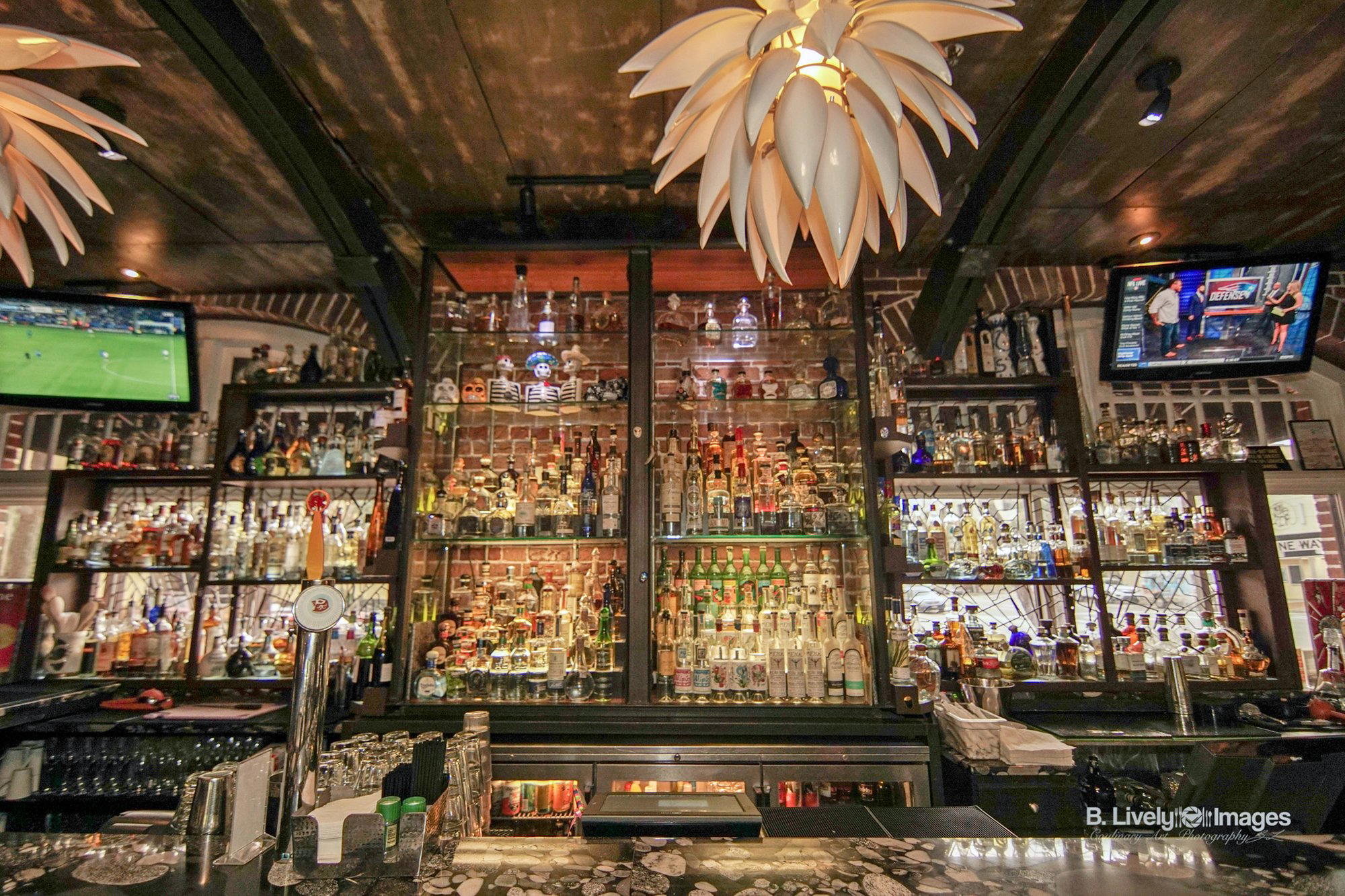
Lively and welcoming with a modern, intimate setting.