Le Coucou






1 Michelin Star · Star Wine List · Wine Spectator Best of Award of Excellence
Our verdict
Le Coucou brings classical French cooking into SoHo with the kind of precision and confidence that earned it a Michelin star and a place among Opinionated About Dining's top restaurants in North America. Chef Daniel Rose, an American who cooked in Paris's Second Arrondissement, applies Gallic technique to a room that reads as much downtown New York as it does brasserie. The wine program runs to 3,500 bottles with particular depth in Burgundy, Bordeaux, and Loire.

Pearl is the En Primeur Club membership app — saves, bookings, and concierge access live there. Same editors, same standards.
- Address
- 138 Lafayette St, New York, NY 10013
- Phone
- (212) 271-4252
- Hours
- Mon–Thu 11:30 AM–2 PM, 5–10 PMFri 11:30 AM–2 PM, 5–11 PMSat 11:30 AM–2:30 PM, 5–11 PMSun 11:30 AM–2:30 PM, 5–10 PM
- Website
- lecoucou.com
- Directions
- Get directions
- Booking
- Book on Resy
The menu
What to order
- Quenelles
- Foie Gras Crepinette
- Fraîcheur de Homard
Where SoHo Meets the Second Arrondissement
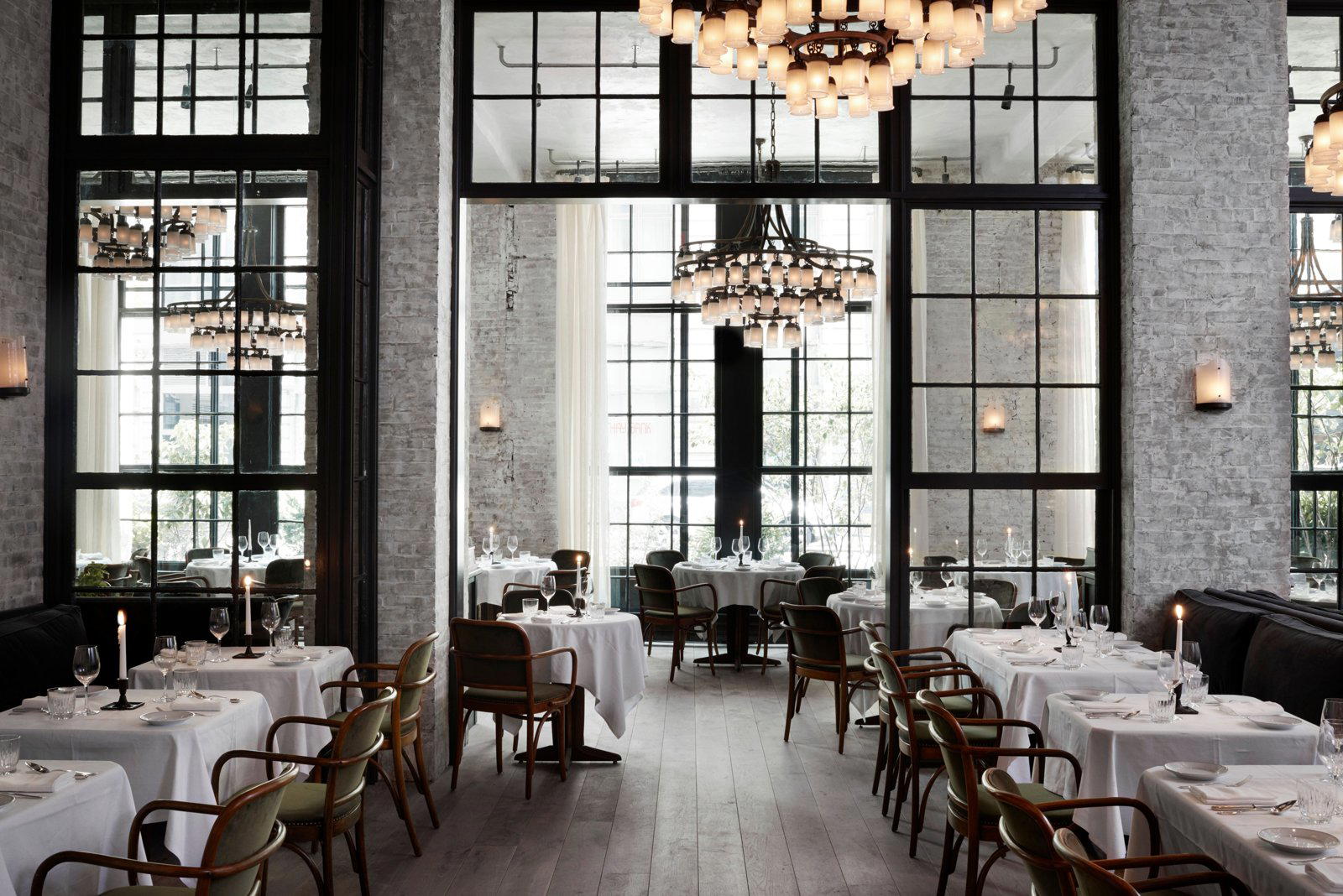
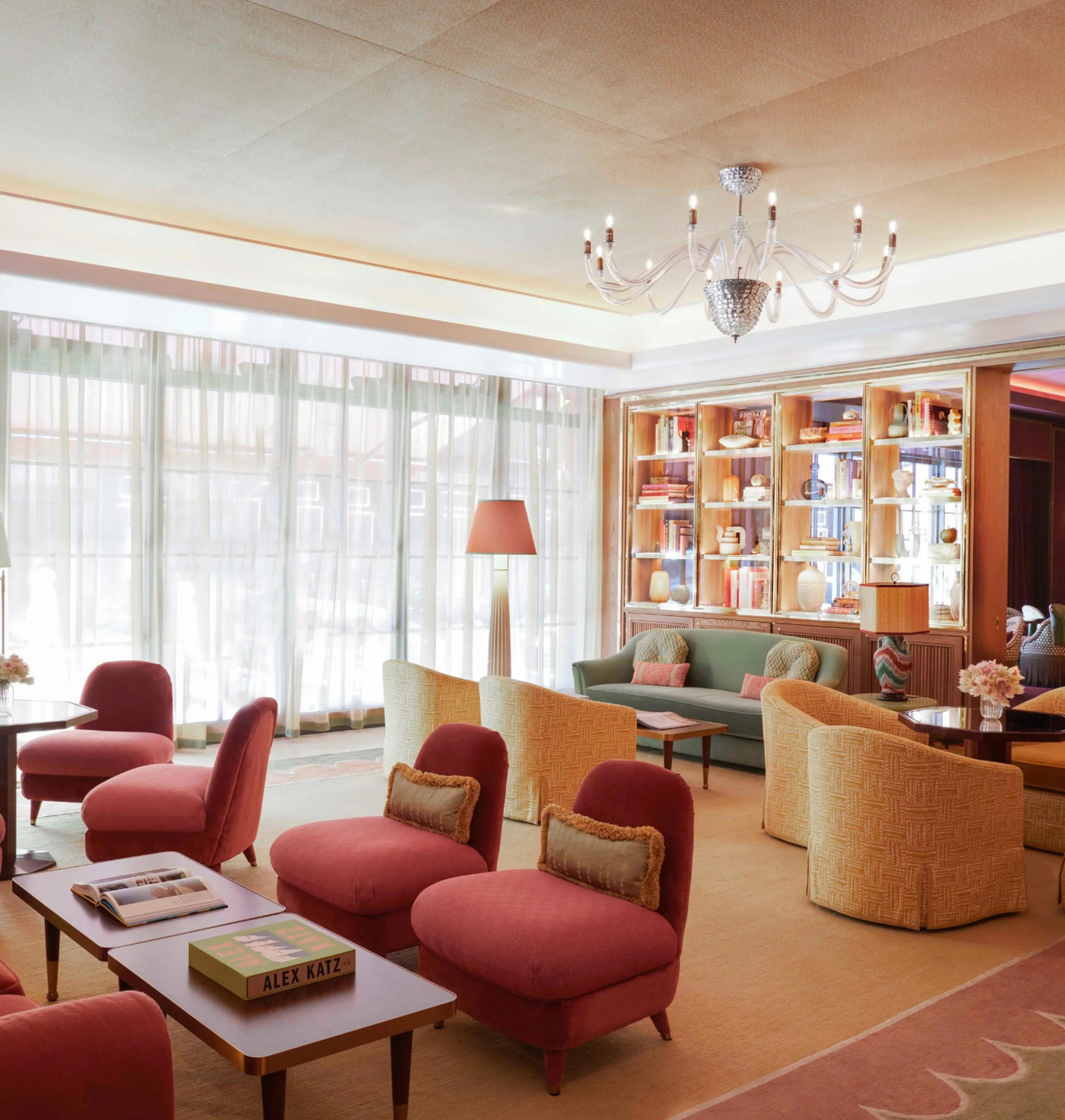
The ground floor of 138 Lafayette Street does not announce itself the way many high-profile New York restaurants do. The building is relatively quiet from the street, the signage restrained. Inside, the room opens into something more considered: high ceilings, warm light, an open kitchen positioned so that it draws the eye without dominating the room. This is a dining room that communicates seriousness without performing it, and that calibration tells you something about what the cooking will be.
SoHo has moved through several restaurant identities over the decades — trendy bistros in the 1990s, the chef-driven casualisation of the 2010s — and the neighbourhood's $$$$ tier today is a small and contested space. Le Coucou sits inside that bracket alongside Manhattan peers like Daniel, Café Boulud, and Benoit, but the comparison set is worth examining carefully. Where some French restaurants at this price point signal authority through formality alone, Le Coucou competes on the more difficult ground of culinary conviction, classical French cooking from a chef who trained in Paris rather than approximated it from New York.
The Chef as Interpreter, Not Nostalgist
The editorial angle of chef as auteur is overused in restaurant writing, applied loosely to anyone with a point of view. In Daniel Rose's case the framing is more defensible than usual, and for a specific reason: the gap between a French chef cooking French food in France and an American chef achieving the same result in New York is not a matter of technique alone. It is a matter of culinary grammar, knowing which rules to follow, which to bend, and which to treat as inviolable.
Rose's position as an American who cooked in Paris's Second Arrondissement gives his menu an unusual internal logic. The classics on his menu, pike mousse quenelles with lobster sauce, sautéed sweetbreads with cream and tarragon, are not revival pieces performed for nostalgic effect. They are dishes that read as natural rather than deliberate, which is considerably harder to achieve. The description of his approach as blending Gallic traditions with downtown swagger is apt precisely because the swagger doesn't undermine the traditions; it makes them feel alive rather than preserved.
This matters for understanding what separates Le Coucou from the broader category of New York French restaurants. At Café Boulud or Benoit, the French identity is anchored in a specific regional or biographical tradition. At Per Se or Eleven Madison Park, French technique is the foundation beneath a more conceptual architecture. Rose's kitchen occupies a different register: the food is unapologetically French, and the chef's own transatlantic biography is the lens through which the classics are refracted. Other SoHo options with a more casual French leaning, like Chez Fifi, operate at a different price and formality tier entirely.
The Menu: Classics Under Pressure
The menu at Le Coucou organises itself around a section of gourmandises, small plates that showcase classical French technique at its most concentrated. Pike mousse quenelles dressed with lobster sauce and sautéed sweetbreads with cream and tarragon are the kind of dishes that test a kitchen's fundamental competence: they offer nowhere to hide and no clever plating to compensate for execution gaps. That Le Coucou has sustained a Michelin star through 2024 while keeping these preparations on the menu is a meaningful signal about the kitchen's consistency.
Further into the menu, the rabbit, served three ways as roasted with mustard sauce, submerged in stock, and coiled in a roulade, has attracted enough critical attention to function as a reference point for the restaurant's ambition. Multiple preparations of a single ingredient within one dish is a French classical technique that requires confidence in both the sourcing and the execution. The lamb, described as pink chop accompanied by braised neck and roasted young carrots, follows a similar logic: primary cut plus a secondary preparation that rewards the diner who pays attention.
Desserts include occasional specials like a Chartreuse-spiked crème brûlée, which suggests a pastry program willing to work with potent flavour without defaulting to safe finish. The spine of the menu runs firmly French and seasonal, with spring preparations featuring spring lamb and young vegetables as markers of a kitchen tracking the season rather than running a static card.
The Wine Program: Depth Without Theatre
A wine list of 3,500 bottles is a significant commitment for a restaurant of this format, and the program's architecture reflects the kitchen's French classical emphasis. Burgundy, Bordeaux, and Loire are identified as the key strengths, which aligns the cellar directly with the regions most relevant to classical French cooking; this is not a Franco-centric wine program tacked onto a menu as an afterthought. The Burgundy depth in particular tracks well with a kitchen that works with cream, tarragon, pike, and sweetbreads: these are dishes that ask for Pinot Noir or white Burgundy rather than Rhône or Alsace.
Corkage is set at $95 and the list carries approximately 690 selections. Wine pricing runs into the $100-plus range with frequency, placing it in the higher markup tier common to Michelin-starred New York rooms. Wine Director Irene Miller and a sommelier team of six, Gregory Schwab, Nicole Cheong, Quincy Clay, Mitchell Dessaure, Roberto Hernandez, and Kyle Hohensee, represent an unusually deep front-of-house wine staff for a single-restaurant operation, which has practical implications for table service: this is not a room where wine guidance will be thin or perfunctory.
The Star Wine List recognition, published August 2022, provides an independent data point for the program's standing. For comparison, the French wine programs at Daniel operate at a similar depth tier on the Upper East Side, while the more precise classical French programs at venues like Hotel de Ville Crissier in Switzerland or Sézanne in Tokyo illustrate how French classical wine programs function globally at the highest level.
The OAD methodology relies on votes from experienced diners and professionals, making the ranking a useful signal of sustained reputation among those eating at this level regularly.
At the $$$$ tier in New York French dining, the relevant comparisons are Le Bernardin and Per Se at the more formal end, and Eleven Madison Park at the more conceptual end. Le Coucou sits in a different lane: less seafood-focused than Le Bernardin, less technique-conceptual than Per Se or Eleven Madison Park, and more rooted in classical French traditions than any of them. Internationally, the comparison set extends to restaurants like The French Laundry in Napa, which shares the classical French foundation but diverges in its Californian terroir orientation.
The Room and the Crowd
The open kitchen at Le Coucou functions as more than a transparency gesture. In a room where the cooking is demonstrably classical, quenelles, sweetbreads, roasted rabbit, watching the kitchen execute is itself part of the experience. The crowd draws well from both the SoHo design and media world and from visiting diners specifically targeting the restaurant, which creates a room with social energy that many formal French restaurants find difficult to generate without sacrificing atmosphere. Corner Bar in the same neighbourhood represents the more casual end of the SoHo dining spectrum for those planning an evening with multiple stops.
Planning Your Visit
Le Coucou serves lunch and dinner Tuesday through Saturday, with Sunday dinner closing at 10 PM rather than 11 PM. The address is 138 Lafayette Street in SoHo. Cuisine pricing for a two-course meal without beverages or tip runs $66 and above, with wine additions pushing significantly higher given the $100-plus bottle pricing common on the list. Reservations are advisable given the restaurant's critical profile and consistently high demand.
For broader New York planning, see our full New York City experiences guide.
Quick reference: 138 Lafayette St, SoHo | Lunch and dinner daily | Wine list 3,500 bottles | Michelin 1 Star (2024) | OAD Top 100 North America (2025)
What Should I Order at Le Coucou?
The menu anchors on classical French preparations that function as tests of kitchen competence rather than showcase pieces. The rabbit served three ways, mustard-roasted, stock-submerged, and roulade, has accumulated enough critical attention across multiple reviews to be treated as a reference dish for the restaurant. Among the gourmandises, the pike mousse quenelles with lobster sauce and sautéed sweetbreads with cream and tarragon represent the classical French repertoire at its most direct. Both reward diners who know the tradition and those encountering it for the first time. Seasonal specials, spring lamb, young carrots, Chartreuse-spiked crème brûlée, track the kitchen's responsiveness to season and are worth asking the sommelier team about when booking or on arrival. The Michelin star (2024) and OAD ranking progression to 81st in North America for 2025 provide external validation that the kitchen's consistency across these preparations is not circumstantial.
What It’s Closest To
| Venue | Cuisine | Price | Awards | Notes |
|---|---|---|---|---|
| Le CoucouThis venue — the venue you are viewing | Modern Classic French | $150–200 | 1 Michelin Star · Star Wine List | Not listed |
| Le Bernardin | French Seafood Fine Dining | $300–500 | 3 Michelin Stars · World's 50 Best #13 | French, Seafood |
| Atomix | Modern Korean Tasting Menu | $300–500 | 2 Michelin Stars · World's 50 Best #7 | Modern Korean, Korean |
| Masa | Seasonal Hokkaido Tempura Omakase | $150–200 | Tabelog 100 #34 | Sushi, Japanese |
| Per Se | French Fine Dining Tasting Menu | $300–500 | 3 Michelin Stars · World's 50 Best #40 | French, Contemporary |
| Eleven Madison Park | Contemporary Plant-Based Fine Dining | $300–500 | 3 Michelin Stars · World's 50 Best #4 | French, Vegan |
Recognition history
Dated appearances from independent guides and award organizations, with the underlying list record or original source where available.
Michelin 1 Star
Michelin
Star Wine List
Star Wine List
Opinionated About Dining Top Restaurants in North America Ranked #88
Opinionated About Dining
Wine Spectator Best of Award of Excellence
Wine Spectator
New York Times Best Restaurants in New York City
New York Times
Full recognition history (11 entries)
Opinionated About Dining Top Restaurants in North America Ranked #81
Opinionated About Dining
Wine Spectator Best of Award of Excellence
Wine Spectator
Michelin 1 Star
Michelin
Opinionated About Dining Top Restaurants in North America Ranked #85
Opinionated About Dining
Opinionated About Dining Top Restaurants in North America Ranked #96
Opinionated About Dining
Esquire Best New Restaurants #36
Esquire
Continue exploring
More in New York City
Restaurants in New York City
Browse all →
Bars in New York City
Browse all →
Hotels in New York City
Browse all →




Details
- Elegant
- Classic
- Sophisticated
- Intimate
- Date Night
- Special Occasion
- Business Dinner
- Open Kitchen
- Extensive Wine List
- A La Carte
- Wine
- Vegetarian Friendly
- Gluten Free Options
Current opening hours
- Monday
- 11:30 AM–2 PM, 5–10 PM
- Tuesday
- 11:30 AM–2 PM, 5–10 PM
- Wednesday
- 11:30 AM–2 PM, 5–10 PM
- Thursday
- 11:30 AM–2 PM, 5–10 PM
- Friday
- 11:30 AM–2 PM, 5–11 PM
- Saturday
- 11:30 AM–2:30 PM, 5–11 PM
- Sunday
- 11:30 AM–2:30 PM, 5–10 PM
Hours can change for holidays and private events. Last verified .
Elegant with chandeliers, candlelit tables, and an open kitchen; charming, romantic, and not stuffy.