La Marinière
Our verdict
On the seafront boulevard of Saint-Cast-le-Guildo, La Marinière occupies a position that says everything about what the Breton coast does well: proximity to the water, simplicity of intent, and access to some of the most reliable shellfish and finfish sourcing in northern France. For visitors working through the Côtes-d'Armor coastline, it functions as an honest read on the local catch.

Pearl is the En Primeur Club membership app, where members save venues, book tables and use the concierge.
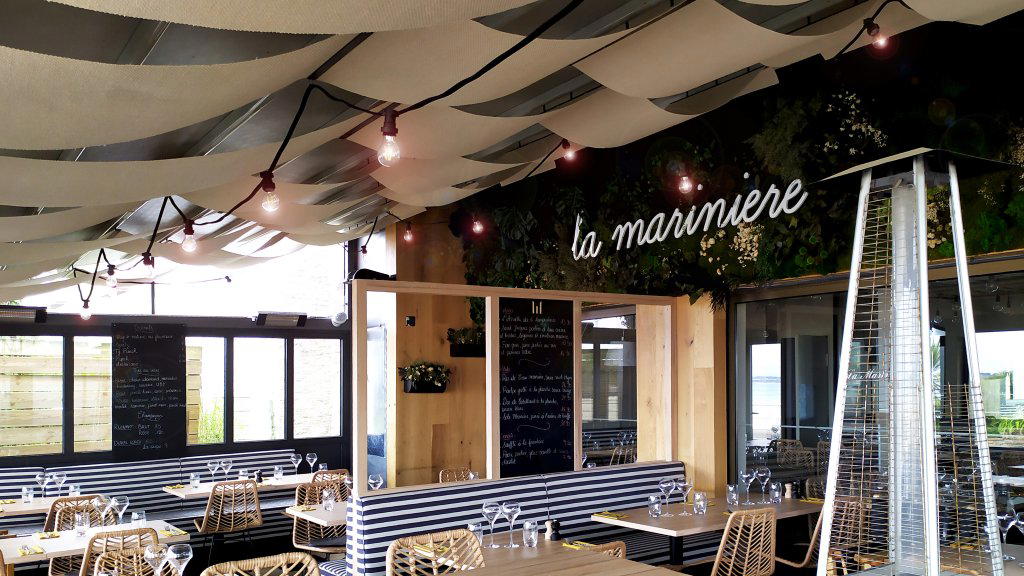
Where the Atlantic Sets the Menu
Stand on the Boulevard de la Mer in Saint-Cast-le-Guildo on a grey morning, the kind the Breton coast produces most weeks between October and April, and the logic of a restaurant like La Marinière becomes obvious. The address at number 5 puts it directly on the seafront, with the bay opening westward toward the Île des Ébihens and the tidal rhythms that shape what arrives in local kitchens each day. In a village of this scale, the distance between the water and the plate is not a selling point but a structural fact. That proximity is what makes the Côtes-d'Armor an interesting part of the broader French coastal dining picture, and La Marinière sits squarely within it.
Saint-Cast-le-Guildo is not a town that appears on lists dominated by Mirazur in Menton or Alléno Paris au Pavillon Ledoyen. It is a quiet Atlantic resort commune in the Côtes-d'Armor department of Brittany, known to French families for its beaches and to serious eaters for the quality of shellfish coming out of the bay. The restaurant scene here operates at a register that is local in the leading sense: calibrated to the catch, the season, and the preferences of the clientele that returns year after year. See our full Saint Cast Le Guildo restaurants guide for broader context on what the town offers.
Ingredient Sourcing on the Breton Coast
The argument for dining along this stretch of the Breton coastline begins with geography. Brittany produces roughly half of France's shellfish, with the bays and estuaries between Saint-Malo and the Cap Fréhel functioning as productive grounds for oysters, mussels, scallops (coquilles Saint-Jacques), and crustaceans including spider crab and lobster. Saint-Cast-le-Guildo sits within that productive corridor. For a seafront address like La Marinière, this means access to a supply chain that is short by almost any standard in European coastal dining.
The importance of that supply chain is easier to appreciate when you compare it against the sourcing constraints that restaurants further inland, or in dense urban markets, routinely manage. Operations like Christopher Coutanceau in La Rochelle have built serious reputations around Atlantic seafood by making provenance the foundation of the menu, and La Marine in Noirmoutier-en-l'Île has taken the island-catch model further still, becoming one of France's most discussed seafood addresses. La Marinière operates without those institutional profiles, but the underlying resource, Breton Atlantic seafood at its source, is the same category of raw material.
Coquille Saint-Jacques season runs from October through April along this coast, with the scallop fishery in the Bay of Saint-Brieuc (directly south of Saint-Cast) representing one of the most tightly regulated and volume-significant shellfish operations in France. Any kitchen working in this area during winter months has access to that catch. Oyster beds in Cancale, roughly 40 kilometres northeast, supply much of northern Brittany's restaurant trade with product that reaches tables within hours of harvest. For a small seafront address, these are the sourcing conditions that define the menu more than any individual kitchen decision.
The Coastal Restaurant Format in Northern France
Small resort towns on the French Atlantic coast have developed a dining format over decades that differs from its Mediterranean equivalent. Where the southern coast trends toward the theatrical and the international, the northern Breton and Norman coastlines produce restaurants that are largely functional, seasonally minded, and oriented around local families and returning visitors rather than destination tourism. The price register tends toward the accessible, the format is often à la carte with daily specials built around the catch, and the wine list typically prioritises Muscadet, Gros Plant, and Breton ciders as natural matches for shellfish.
This format sits at a considerable distance from the tasting-menu architecture of Bras in Laguiole or the classical grandeur of Auberge de l'Ill in Illhaeusern, but it operates on its own logic. Comparable formats on other French coastlines, see also Auberge du Vieux Puits in Fontjoncouse for a very different regional version of the terroir-anchored small restaurant, demonstrate that France's most interesting eating is not always concentrated in its starred addresses. The coastal seafood bistro is its own genre, with its own standards and its own clientele.
Internationally, the format rhymes with what Le Bernardin in New York City demonstrated: that seafood, treated with restraint and sourced rigorously, can anchor a restaurant's entire identity. The ambition at Le Bernardin operates at a different scale and price tier entirely, but the underlying argument about proximity to the water and quality of the catch is the same one that a seafront address in Saint-Cast-le-Guildo makes implicitly by its location alone.
Planning a Visit
Saint-Cast-le-Guildo is accessible by car from Saint-Malo in approximately 40 minutes via the D786, making it a practical half-day excursion from one of Brittany's main transport hubs. The town is primarily a summer resort, and the restaurant trade here follows that pattern: peak activity runs from June through August, with shoulder season activity in May, September, and October driven partly by the scallop season. Visitors planning around the Breton seafood calendar, particularly those interested in coquilles Saint-Jacques, are better served by autumn and winter visits when the fishery is active, though off-season restaurant hours along this coast require confirmation in advance. La Marinière's address at 5 Boulevard de la Mer places it within easy walking distance of the main beach and the town centre.
Frequently asked questions
Does La Marinière work for a family meal?
Saint-Cast-le-Guildo is a resort town with a strong seasonal family trade, and restaurants along the Boulevard de la Mer have historically accommodated mixed-age groups. La Marinière's seafront address suits a post-beach lunch format. Confirm specific seating arrangements and children's options directly with the venue before visiting.
How would you describe the vibe at La Marinière?
The setting on Boulevard de la Mer in Saint-Cast-le-Guildo is defined by the Breton coast itself, grey Atlantic light, salt air, and the low-key rhythm of a small resort town rather than a city dining scene. This stretch of coastline produces a format that is relaxed but ingredient-focused, distinct from the louder tourist restaurants found further south along the French Atlantic.
Is La Marinière a good option for lunch after arriving by car from Saint-Malo?
Saint-Cast-le-Guildo sits approximately 40 minutes from Saint-Malo via the D786, making it a practical half-day drive along the Breton coast. La Marinière's position on Boulevard de la Mer, directly facing the Atlantic, places it at the natural endpoint of that route. The coastal restaurant format here is built around midday meals tied to the day's catch, which aligns well with a lunchtime arrival.
What do people recommend at La Marinière?
Brittany supplies roughly half of France's shellfish, and restaurants on this coastline are shaped by that proximity. Dishes tied to local sourcing, shellfish, line-caught fish from the Bay of Arguenon, represent the clearest argument for eating here. For current menu specifics, check directly with the restaurant.
Where is La Marinière located?
La Marinière is located at 5 Bd de la Mer, 22380 Saint-Cast-le-Guildo, France, Saint Cast Le Guildo.
Do they take walk-ins at La Marinière?
Walk-in availability at La Marinière depends heavily on season. Saint-Cast-le-Guildo draws peak summer visitors between July and August, when tables along the Boulevard de la Mer fill quickly. Outside high season, the town quiets considerably and walk-in chances improve. A call ahead remains advisable.
Fast Comparison
Comparable venues nearby, for context on price, style, and recognition.
| Venue | Cuisine | Price | Awards | Notes |
|---|---|---|---|---|
| La MarinièreThis venue (the venue you are viewing) | French Seafood | $20–30 | Not listed | Not listed |
| Le Jardin Délice | Modern French Breton Fine Dining | $50–100 | Michelin Plate | Saint-Cast-le-Guildo |
| Crêperie Ahna | Breton Crêperie | $10–20 | Not listed | centre-ville |
| Crêperie Pourlette | Breton Crêperie | $10–20 | Not listed | centre ville |
| La Touline | Breton Crêperie | $20–30 | Not listed | Intra-Muros |
| BEVAN | Modern French Bistro | $30–50 | Not listed | Dahouët |
Continue exploring
More in Saint-Cast-le-Guildo
Restaurants in Saint-Cast-le-Guildo
All restaurants in Saint-Cast-le-Guildo →
Bars in Saint-Cast-le-Guildo
Browse all →
Details
- Scenic
- Rustic
- Cozy
- Family
- Casual Hangout
- Waterfront
- Terrace
- Local Sourcing
- Waterfront
- A La Carte
- Vegetarian Friendly
Current opening hours
- Monday
- 12–3 PM, 7–10 PM
- Tuesday
- 12–3 PM, 7–10 PM
- Wednesday
- 12–3 PM, 7–10 PM
- Thursday
- 12–3 PM, 7–10 PM
- Friday
- 12–3 PM, 7–10 PM
- Saturday
- 12–3 PM, 7–10 PM
- Sunday
- 12–3 PM, 7–10 PM
Hours can change for holidays and private events. Hours as of .
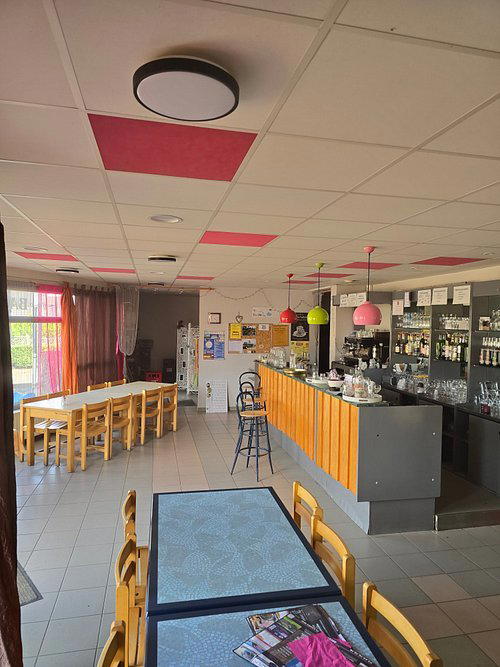
Maritime-themed with modern decor, large windows offering sea views, and a welcoming, professional atmosphere.