Jones Bar-B-Q Diner

James Beard Award America's Classics
Our verdict
Jones Bar-B-Q Diner on West Louisiana Street sits at the center of Marianna's barbecue tradition, drawing on the slow-smoke methods that have defined Delta-adjacent pork cookery for generations. The diner format keeps things direct: no reservations, no ceremony, just the kind of wood-smoked meat that takes hours to produce and minutes to understand. For anyone moving through the Arkansas Delta, it is a concrete reference point for the region's pit culture.

Pearl is the En Primeur Club membership app, where members save venues, book tables and use the concierge.
The menu
What to order
- Pork sandwich with slaw
- Chopped pork by the pound
Wood, Smoke, and the Arkansas Delta
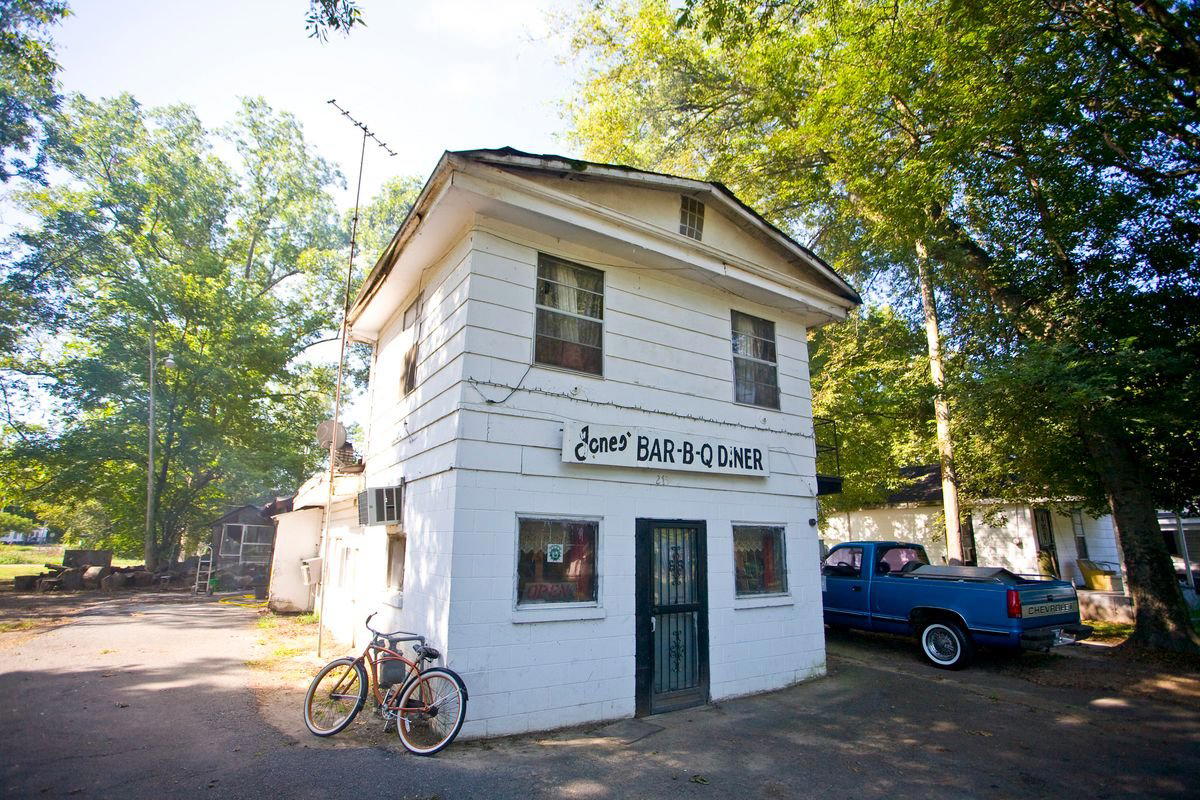
Pull up to 219 West Louisiana Street in Marianna and the building tells you something before you open the door. This is not a restaurant that has been designed to look like a barbecue joint. It is one. The Delta-area diner format that Jones Bar-B-Q Diner represents is among the oldest surviving food traditions in the American South, rooted in a specific geography: the flat, pork-producing counties of Arkansas, Mississippi, and Tennessee where hog farming, hardwood availability, and a particular patience with fire all converged. The structure of the meal here has less in common with the elaborate tasting menus you find at places like The French Laundry in Napa or Atomix in New York City than it does with the roadside pit tradition that predates both by a century.
Marianna sits in Lee County, in the heart of the Arkansas Delta, a region where the food culture was never built around imported techniques or fine-dining codes. The sourcing tradition here is local by default, not by marketing strategy. Pork has been the dominant protein across this part of Arkansas for generations, raised on small operations throughout Lee and Phillips counties and processed close to where it is sold. That proximity shapes what ends up on the plate in ways that high-volume urban barbecue chains cannot replicate: shorter supply chains mean fresher raw material going into the pit, and the cook times at a place like Jones are calibrated to local product rather than to a standardized commodity cut shipped from a distant processing facility.
The Sourcing Logic Behind Delta Pit Barbecue
The ingredient sourcing argument for Delta-style barbecue is worth stating plainly. In the broader American barbecue conversation, much of the recent critical attention has moved toward Texas brisket or competition-circuit ribs, formats that are now served at urban addresses from Denver to Miami. What gets less attention is the older Delta pork tradition, where the cut selection and preparation method were shaped by the animals available locally and the fuel available nearby. Hardwood from the bottomland forests of eastern Arkansas, particularly hickory and oak, produces a smoke character that is different from the post-oak-dominant Texas smoke or the fruit-wood-accented styles you encounter further west.
The farm-to-pit chain in Marianna is short in the way that farm-to-table programs at places like Blue Hill at Stone Barns in Tarrytown or Single Thread Farm in Healdsburg aspire to be, except here it is a function of economic geography rather than a programmatic choice. The region's food system was never globalized in the way coastal markets were, and the result is that local sourcing is structural, not aspirational. That distinction matters for understanding why the product at a Delta diner can diverge sharply from barbecue served at higher-volume operations in Little Rock or Memphis that draw on the same tradition but from a greater sourcing distance.
It is also worth noting how this regional specificity sits relative to the broader American fine-dining conversation. Operations like Smyth in Chicago, Oyster Oyster in Washington, D.C., and Bacchanalia in Atlanta have built serious reputations on sourcing specificity and regional ingredient identity. The Delta barbecue diner achieves the same ingredient rootedness through a different mechanism entirely: not through chef-driven menu planning but through the constraints of a rural food economy that never had the option of sourcing broadly.
Marianna and the Lee County Context
Marianna is a small city, the county seat of Lee County, with a population that has declined significantly since the mid-twentieth century as agriculture mechanized and light industry moved out. What remains is a community with deep food traditions and limited restaurant infrastructure, which means that places like Jones Bar-B-Q Diner carry a cultural weight that would be distributed across dozens of venues in a larger city. The diner is at 219 West Louisiana Street, on one of Marianna's main commercial corridors, accessible by car from highway routes connecting Memphis to the north and Little Rock to the west. There is no formal booking system for a place operating in this format and at this price tier, which is consistent with the walk-in culture of Southern diner barbecue broadly. For travelers coming from outside the region, Marianna is roughly an hour's drive from Memphis, making it a viable stop on a Delta road itinerary rather than a standalone destination trip. Our full Marianna restaurants guide covers what else is worth stopping for in Lee County.
Where Jones Sits in the American Barbecue Conversation
American barbecue has never been a single tradition. The regional lines, while sometimes overstated, reflect genuine differences in fuel, cut selection, sauce philosophy, and the cultural communities that developed each style. The Arkansas Delta falls into a zone where styles blur and the pit operator's personal method carries more weight than any regional rulebook. This is not the brisket-dominant, dry-rub-forward Texas approach that has attracted so much critical attention over the past decade, nor is it the vinegar-forward whole-hog tradition of the Carolinas. It is something with its own logic, shaped by what grows here, what is raised here, and what the local customer base has expected for generations.
The wider American dining landscape now includes barbecue at every price point and format, from fast-casual chains to table-service operations with wine programs. What the Delta diner represents is the format that sits closest to the origin point of the tradition: low overhead, direct service, no-reservation entry, and product quality that lives or dies with the pit work rather than with the dining room experience. Compared to the elaborate sourcing programs at Lazy Bear in San Francisco, Providence in Los Angeles, or Addison in San Diego, the Jones approach to ingredient provenance is structurally simpler but no less grounded in place. The same argument applies when you set it against farm-focused operations like Frasca Food and Wine in Boulder or sourcing-forward kitchens like The Wolf's Tailor in Denver. Different format, same underlying principle: food that comes from a specific place tastes like that place.
For readers who follow the ingredient-provenance conversation that places like Emeril's in New Orleans, Le Bernardin in New York City, ITAMAE in Miami, or The Inn at Little Washington have helped define at the top of the market, the Delta diner is not an anomaly. It is the same conversation conducted in a different register, at a different price point, in a community where the supply chain was always local because nothing else was available. That is not a lesser version of the sourcing story. It is an older one. And at venues like Atelier Moessmer Norbert Niederkofler in Brunico, the fine-dining world has come to understand that regional ingredient rootedness at any format level carries its own authority.
Planning Your Visit
Hours and current operating status should be confirmed locally before making a dedicated trip; the diner format in small Southern cities often operates on community knowledge rather than published schedules. Marianna is accessible by car from Memphis via US-79, placing it within a feasible lunch stop for Delta road travelers. Pricing sits in the range consistent with Southern counter-service barbecue, making it approachable across a wide range of budgets.
Frequently asked questions
Is Jones Bar-B-Q Diner okay with children?
Yes. The counter-service format at 219 West Louisiana Street in Marianna keeps the experience low-key and accessible, and the price point in Lee County makes it a practical stop for families on longer road trips through the Arkansas Delta.
What kind of setting is Jones Bar-B-Q Diner?
Jones operates as a counter-service diner in Marianna, Arkansas, walk in, order, and eat. There is no published reservation system, and the room reflects the working character of the Delta town around it rather than any kind of staged dining concept.
Is Jones Bar-B-Q Diner part of any documented barbecue recognition or awards circuit?
What positions it within the broader American barbecue conversation is its documented presence in Marianna as a carrier of the Arkansas Delta pit tradition, a regional style that rarely surfaces in national awards circuits despite its historical depth.
Where is Jones Bar-B-Q Diner in Marianna?
Jones Bar-B-Q Diner is located at 219 W Louisiana St, Marianna, AR 72360, USA, Marianna.
At-a-Glance Comparison
Comparable venues nearby, for context on price, style, and recognition.
| Venue | Cuisine | Price | Awards | Notes |
|---|---|---|---|---|
| Jones Bar-B-Q DinerThis venue (the venue you are viewing) | Classic Arkansas Pork Barbecue | $1–10 | James Beard Award America's Classics | Not listed |
| Whole Hog Cafe | World Champion BBQ | $20–30 | Not listed | Little Rock |
| Doe’s Eat Place | Classic American Steakhouse | Not listed | Not listed | Little Rock |
| The OAK room & bar | Elevated American with Southern and French-Cajun influences | $50–100 | Wine Spectator Award of Excellence · Forbes Recommended | Hot Springs |
| KPOT Korean BBQ & Hot Pot | Korean BBQ & Hot Pot | $30–50 | Not listed | Phoenix Ave area |
| The Bugler | American Steakhouse & Seafood | $50–100 | Wine Spectator Award of Excellence · Forbes Recommended | Hot Springs |
Recognition history
Dated appearances from independent guides and award organizations, with the underlying list record or original source where available.
James Beard Award America's Classics
James Beard Award
Details
- Rustic
- Well Known
- Cozy
- Casual Hangout
- Historic Building
- A La Carte
Current opening hours
- Monday
- Closed
- Tuesday
- 11 AM–1 PM
- Wednesday
- 11 AM–1 PM
- Thursday
- 11 AM–1 PM
- Friday
- 11 AM–1 PM
- Saturday
- 11 AM–1 PM
- Sunday
- Closed
Hours can change for holidays and private events. Hours as of .
Casual, no-frills diner atmosphere under a carport awning with picnic table seating in a residential neighborhood, emphasizing simplicity and tradition.