Grand Leone Chinese Restaurant
Our verdict
Chinese restaurants operating in West African port cities occupy a niche that reveals as much about trade history as it does about cuisine. Grand Leone Chinese Restaurant in Freetown sits in that context, drawing a clientele that ranges from the Lebanese-Sierra Leonean business community to visiting Chinese nationals and curious locals seeking something outside the city's dominant rice-and-sauce tradition.

Pearl is the En Primeur Club membership app — saves, bookings, and concierge access live there. Same editors, same standards.
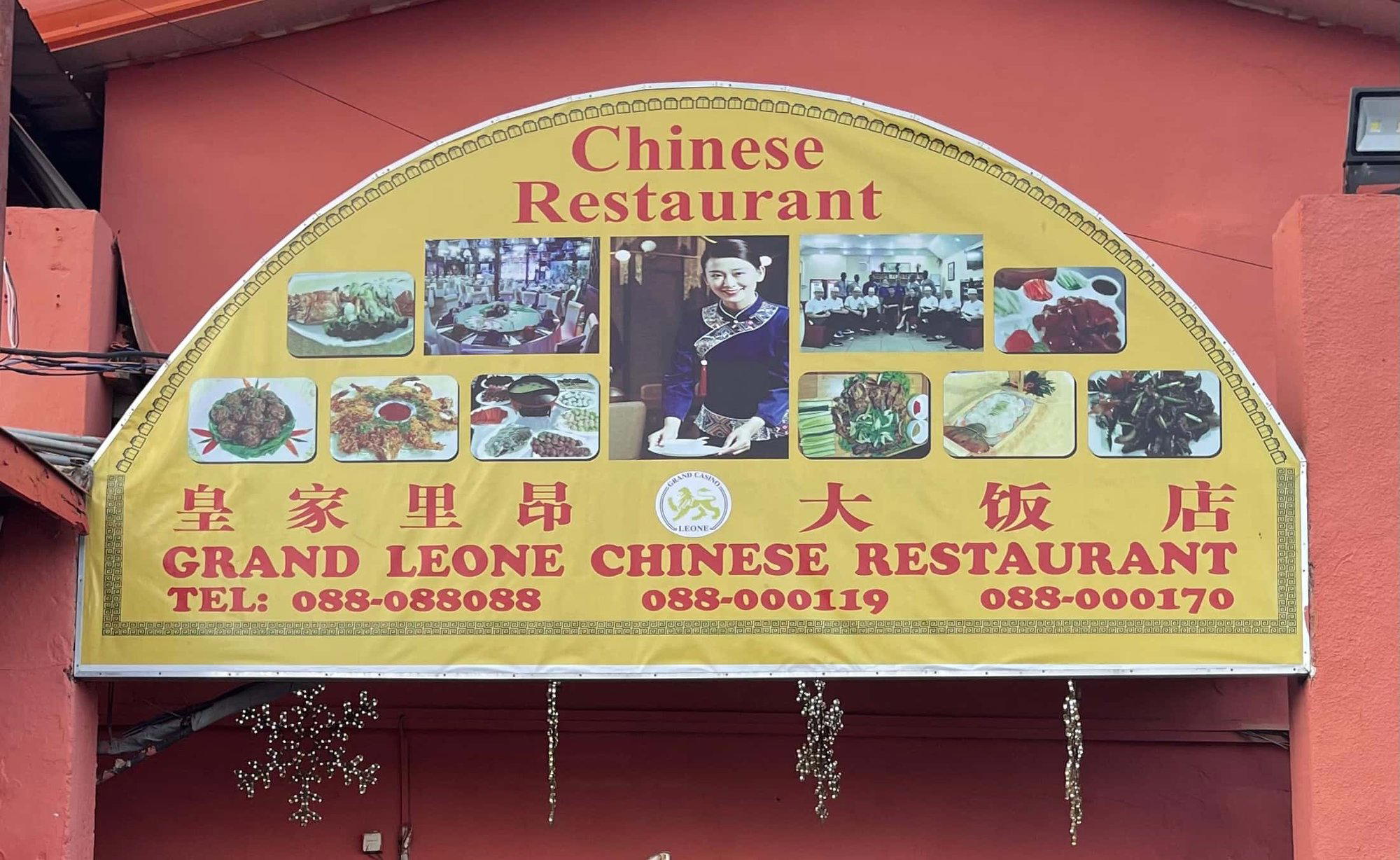
The menu
What to order
- Steamed fish
Where the South Atlantic Trade Routes Land on a Plate
Freetown's dining scene is shaped by its position as a historic Atlantic port: Lebanese merchants, British colonial infrastructure, Krio culture, and more recent Chinese investment have all left marks on what the city eats and where. Chinese restaurants in this context are not curiosities. They are part of a recognisable pattern across West African capitals, from Dakar to Lagos, where Chinese-owned or Chinese-oriented restaurants have followed construction and trade flows over the past two decades. Grand Leone Chinese Restaurant sits inside that pattern, serving a city where the demand for non-local cuisines is real but the infrastructure to satisfy it remains thin. That combination, demand without saturation, makes it worth understanding where a place like this fits and what it actually offers.
The restaurant operates in a city where dining out beyond street food and hotel buffets requires a degree of planning. Freetown's geography, with its steep hills, erratic traffic, and limited formal restaurant stock, means that venues with a fixed address and consistent kitchen output draw regulars quickly. For our full picture of where Grand Leone sits among the city's options, see our full Freetown restaurants guide. The closest peer for atmosphere and positioning among the city's hotel-adjacent dining is The Deck at Radisson Blu, which operates at a similar level of formality for Freetown's standards, though with a different culinary register.
Ingredient Sourcing in a City Where Supply Chains Are the Story
The sourcing question is more revealing here than it would be in, say, Guangzhou or Singapore. Chinese restaurants in sub-Saharan West Africa face a genuine logistical tension: the flavour profile their core clientele expects depends on imported sauces, aromatics, and proteins, while the practical reality of Freetown's supply chain means that substitution and adaptation are not optional, they are operational. Fermented black bean paste, Shaoxing wine, dried shiitake, and the particular grades of soy used in Cantonese and Sichuan cooking are not reliably available locally. What is available, and in genuine abundance, is some of the Atlantic's most underrated seafood. Freetown sits on a stretch of coast where barracuda, grouper, snapper, and various crustaceans arrive with the kind of freshness that restaurants in Hong Kong would pay considerable premiums to approximate.
Leading Chinese restaurants operating in West African port cities learn to read that local abundance rather than fight it. At the high end of the global Chinese dining spectrum, places like 8 1/2 Otto e Mezzo Bombana in Hong Kong or Amber in Hong Kong demonstrate what happens when European or Asian technique engages seriously with the leading available local product. The principle translates, even if the execution and resources differ enormously. A Chinese kitchen in Freetown that chooses to work with local Atlantic fish rather than importing frozen protein is making a sourcing decision that matters to the dish's integrity, not just its cost.
Sierra Leone's produce calendar also intersects interestingly with Chinese culinary logic. Cassava leaves, palm oil, and the country's various leafy vegetables are not typically found on a Chinese menu, but the broader Chinese tradition of regional adaptation, Yunnan kitchens look nothing like Shanghainese ones, and overseas Chinese communities have always hybridised with what surrounds them, means that the better operators in this context find points of productive overlap. How far Grand Leone has pursued that direction, or whether it sticks closer to a standardised overseas Chinese menu, is not something we can confirm from the available record, but the question itself is the right one to ask when evaluating any restaurant in this position.
The Scene in Freetown's Dining Room
Chinese restaurants in African capital cities tend to occupy a specific social register. They attract Chinese expatriates and contractors who form their initial core customer base, then expand to local elites and the international NGO and development sector, who appreciate consistent flavour and a kitchen that understands portion structure. This clientele composition shapes everything from portion size to service tempo and the degree to which a menu is offered bilingually. It is a different dynamic from the Chinese restaurant traditions of London's Chinatown or San Francisco's Richmond District, which built over generations of immigration, or the high-end contemporary Chinese format found at places like Atomix in New York, which occupies an entirely different conceptual space.
For reference on what rigorous sourcing and ingredient philosophy looks like at the top of the global dining tier, the contrast is sharp: Arpège in Paris built its identity around a kitchen garden; Aponiente in El Puerto de Santa María has made the Atlantic's lesser-used marine species the central editorial statement of its menu; Azurmendi in Larrabetzu integrates its rooftop garden directly into tasting menu construction. The logic of sourcing close, sourcing seasonally, and letting supply dictate the menu applies universally even when the resources and format differ by several orders of magnitude. The principle is what connects them.
Other reference points in global dining that share the ingredient-led editorial approach include Atelier Crenn in San Francisco, Lazy Bear in San Francisco, Le Bernardin in New York City, and Alinea in Chicago, all of which treat the sourcing decision as a public-facing part of the restaurant's identity. Further afield, Alain Ducasse at Louis XV in Monte Carlo, Alléno Paris at Pavillon Ledoyen, Atelier Moessmer Norbert Niederkofler in Brunico, Aqua in Wolfsburg, Arzak in San Sebastián, and Emeril's in New Orleans all illustrate how sourcing philosophy can be the defining statement of a restaurant at any tier.
Planning a Visit
Freetown's infrastructure for visitors remains uneven, and confirming hours, reservations, and current menu availability before arrival is advisable for any restaurant in the city. Hotel concierges at properties in the Aberdeen and Lumley Beach corridors typically have current intelligence on operating status for the city's established restaurants. The dry season months between November and April are generally the more stable period for dining out in Freetown, when road conditions are easier and supply chains for perishable imports run more reliably.
Frequently asked questions
Is Grand Leone Chinese Restaurant child-friendly?
No specific family policy is documented for Grand Leone, but Chinese restaurants in Freetown's social register typically draw mixed groups including families, particularly at weekend lunches when the pace is slower. Confirming current seating arrangements directly before visiting is advisable given Freetown's variable reservation practices.
What's the overall feel of Grand Leone Chinese Restaurant?
Chinese restaurants in Freetown occupy a particular social position: they attract both Chinese contractors and expatriates alongside local professionals, creating a functional, unfussy atmosphere oriented around shared plates rather than ceremony. Grand Leone fits within that context, operating in a city shaped by Atlantic trade history and Krio cultural mix rather than a purpose-built dining district.
How does being in Freetown affect what Chinese restaurants like Grand Leone actually serve?
Freetown's position as a historic Atlantic port means supply chains for Chinese cooking staples are longer and less predictable than in Guangzhou or Singapore. Restaurants here work with what West African import networks and local markets can deliver, which shifts the menu away from any fixed regional Chinese style toward what is practically achievable. That reality makes Grand Leone a more interesting case study in adaptation than a straightforward read of its cuisine type would suggest.
What's the signature dish at Grand Leone Chinese Restaurant?
Chinese restaurants operating in sub-Saharan West Africa frequently adapt their menus to local ingredient availability, which in Freetown means sourcing decisions shape the kitchen as much as any fixed repertoire. What is served on any given visit is worth confirming ahead of arrival.
Continue exploring
More in Freetown
Restaurants in Freetown
All restaurants in Freetown →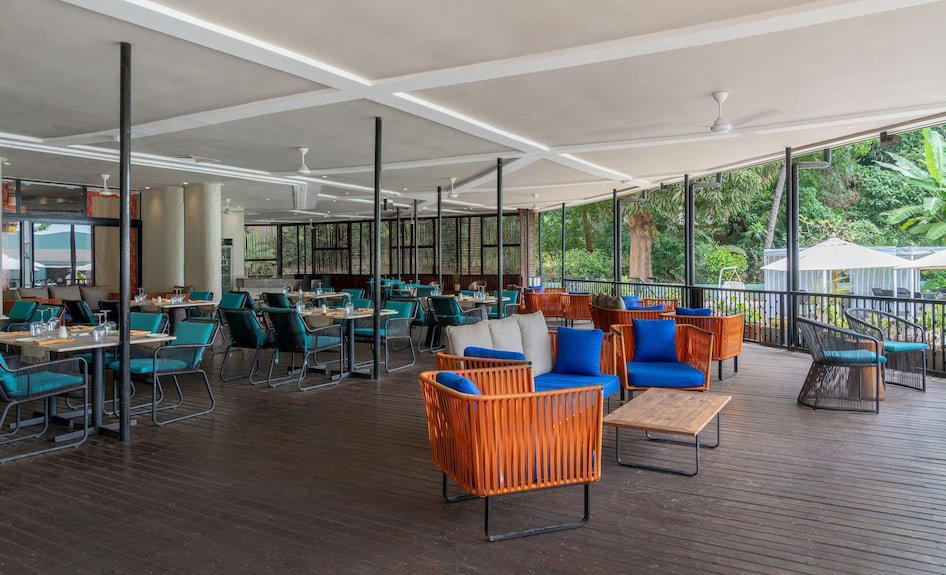
Details
- Lively
- Family
- Group Dining
- Casual Hangout
- Waterfront
- A La Carte
- Family Style
Lively atmosphere with dramatic views, family-friendly with kids' playground, blending traditional and modern elements.