
Tabelog 100 #8
Our verdict
A compact Himeji station-area dumpling counter with Tabelog 100 Dumplings selections in 2019, 2021, and 2024. The appeal is format as much as food: a small standing-bar setup, Chinese-leaning dumplings, sake and shochu, and a casual price band that makes it a sharp stop in a city better known to visitors for its castle than its gyoza culture.

Pearl is the En Primeur Club membership app, where members save venues, book tables and use the concierge.
The menu
What to order
- Handmade gyoza
- Roast pork
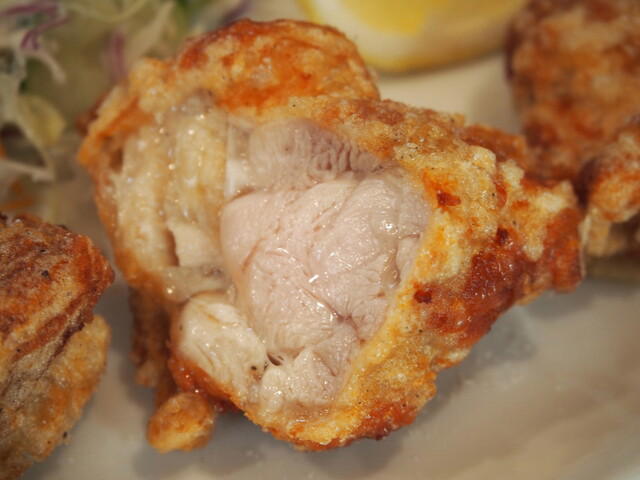
- Kara-age fried chicken
Himeji has a different rhythm around quick city meals: faster, narrower, and built around short stops before trains, after work, or between rounds of drinking. In that context, a compact standing-bar dumpling room carries more weight than its footprint suggests. The stand-up bar format keeps the meal close to the griddle, the till, and the next order, which is exactly where Japanese gyoza culture often makes the strongest case for itself.
Himeji is not usually framed as a dumpling city in the way Japan’s best-known gyoza destinations are, but that makes the category more revealing here. In busy city settings, dumplings often sit between Chinese cooking, beer-hall pacing, and izakaya pragmatism. The sourcing question is less about a named farm than about turnover and proportion: wrapper, filling, heat, and speed have to line up in a room with little margin for delay. Eiyo Ken Himeji ekimae ten belongs to that practical school, where the format rewards compact menus, quick service, and repeat local use rather than ceremony.
Station-side gyoza culture, stripped to a compact standing-bar format
Japanese gyoza has always been a working food as much as a specialist craft. The dish came through Chinese influence, then became domesticated through ramen shops, drinking counters, department-store basements, and neighbourhood kitchens. At the stronger end of the genre, quality is visible in restraint: a wrapper that holds, a filling that does not turn heavy, and cooking that gives contrast without turning the dumpling into a stunt. Those details matter more in a standing-bar room because there is little theatre to distract from repetition.
The venue’s category mix, dumpling, Chinese, and stand-up bar, is telling. It places the cooking closer to everyday urban Japan than to destination tasting-menu dining. The format reinforces that reading: this is the kind of place where dumplings are not a starter before a larger Chinese banquet, but the reason to stop. The practical test is consistency, speed, and focus, not a broad dining-room narrative.
Tabelog’s Hyakumeiten recognition in 2024 gives the venue a category marker without changing its scale. That matters in Himeji, where visitors often plan meals around convenience in the city. Recognition connected to a dumpling listing puts the shop into a tighter competitive frame than general local popularity would. It says the point is not simply that the place is busy or approachable; it has been noticed within a defined Japanese gyoza category.
Why the ingredient question matters more in a small dumpling room
Gyoza is unforgiving because the ingredient work is hidden until the bite. Minced filling, chopped aromatics, wrapper thickness, moisture control, and pan heat all register as texture before they register as flavour. A compact shop cannot lean on a long menu to cover inconsistency. The sourcing and prep logic has to serve speed: fillings must be ready, wrappers must be reliable, and the cooking surface must turn orders quickly enough for a city crowd.
That is why this kind of Himeji counter is a useful corrective to the way premium travel dining is often discussed. Not every serious food stop announces itself through long-form menus or chef biography. Some of Japan’s sharper eating happens in narrow formats where one category carries the business. The discipline is commercial as much as culinary: a compact room, a stand-up bar register, and a dumpling focus create pressure on the product. If the balance is off, there is nowhere for the meal to hide.
Within Himeji, the contrast with nearby casual options is useful. Bakery Lamp and Cafe Domusshu Himeji ten suggest different daytime possibilities, while Kushiyaki Kobe beef points toward a meat-and-grill register. Eiyo Ken Himeji ekimae ten occupies another lane: quick, savoury, and drink-compatible, with dumpling-list recognition giving it more authority than a routine city snack stop.
How to place it in a Himeji food day
The smart way to use this venue is not to build an entire Himeji itinerary around it, but to understand what it solves. Sightseeing and transfers can make meals awkwardly timed; a compact dumpling counter fits the gaps. The format is casual, and the cooking category is narrow enough to work as a focused stop rather than a long sit-down plan. For travellers who read cities through everyday food, that is precisely the appeal.
The atmosphere is closer to a standing bar than a formal dining room. The better match is a small party, especially diners who want gyoza in a casual, quick-service setting and do not need a polished dining-room arc. In a city where many visitors default to convenience, this is a more precise form of convenience: Himeji eating with a category credential behind it.
For broader planning, use Our full Himeji restaurants guide alongside Our full Himeji hotels guide, Our full Himeji bars guide, Our full Himeji wineries guide, and Our full Himeji experiences guide. For a wider Japan comparison file, see other dining rooms across Japan and beyond, from specialist counters to casual city restaurants and bar-led food stops.
Frequently asked questions
Does Eiyo Ken Himeji ekimae ten work for a family meal?
It can suit a family meal if the group is small and comfortable with a compact, casual room. The venue is listed in the dumpling, Chinese, and stand-up bar categories in Himeji.
What should I expect atmosphere-wise at Eiyo Ken Himeji ekimae ten?
Expect a compact, casual spot rather than a formal dining room. The listed categories are dumpling, Chinese, and stand-up bar.
Is Eiyo Ken Himeji ekimae ten more mid-range or high-end?
Pricing at Eiyo Ken Himeji ekimae ten is listed as JPY 2,000 - JPY 2,999 JPY 1,000 - JPY 1,999 View spending breakdown.
How do I find Eiyo Ken Himeji ekimae ten?
Eiyo Ken Himeji ekimae ten is located in Himeji.
Should I book Eiyo Ken Himeji ekimae ten in advance?
The practical constraint is the compact room and casual format, so timing matters, especially around lunch and dinner.
Side-by-Side Snapshot
Comparable venues by cuisine and price in the same metro.
| Venue | Cuisine | Price | Awards | Notes |
|---|---|---|---|---|
| Eiyo Ken Himeji ekimae tenThis venue (the venue you are viewing) | Standing Chinese dumpling bar | $20–30 | Tabelog 100 #8 | Not listed |
| Kushiyaki Kobe beef | Kobe Beef Kushiyaki | $20–30 | Not listed | Honmachi |
| Bakery Lamp | Bakery café and burger shop | $10–20 | Tabelog 100 #77 | Honmachi (near Himeji Castle) |
| Cafe Domusshu Himeji ten | Japanese Cafe / Yoshoku | $1–10 | Tabelog 100 #11 | Himeji |
| Gyōzanomise Okei | Traditional Japanese Gyoza | $10–20 | Tabelog 100 #16 | Iidabashi |
| 餃子飯店 | 町中華 餃子専門 | Not listed | Not listed | 大和町 |
Recognition history
Dated appearances from independent guides and award organizations, with the underlying list record or original source where available.
Tabelog 100 #8 · No. 8
Tabelog · Tabelog 100 - Dumplings - 2024
Continue exploring
More in Himeji
Restaurants in Himeji
All restaurants in Himeji →
Wineries in Himeji
Browse all →
Details
- Lively
- Energetic
- Classic
- Cozy
- Casual Hangout
- After Work
- Solo
- Group Dining
- Late Night
- Standalone
- Beer Program
- Sake Program
- Street Scene
- A La Carte
- Counter Dining
- Small Plates
- Beer
- Sake
- Shochu