Cielo

Cielo occupies the 27th floor of a Cabazon address that places it well above the desert floor, both literally and in terms of ambition. Located at 49500 Seminole Drive, it operates in a dining tier where the Coachella Valley's resort corridor meets something more considered. For travelers passing through or stopping intentionally, it represents one of the area's more serious dining propositions.
Pearl is the En Primeur Club membership app — saves, bookings, and concierge access live there. Same editors, same standards.
- Address
- 49500 Seminole Dr Fl 27, Cabazon, CA 92230
- Phone
- +19517555527
- Website
- morongocasinoresort.com
- Directions
- Get directions
 Saves & bookings on Pearl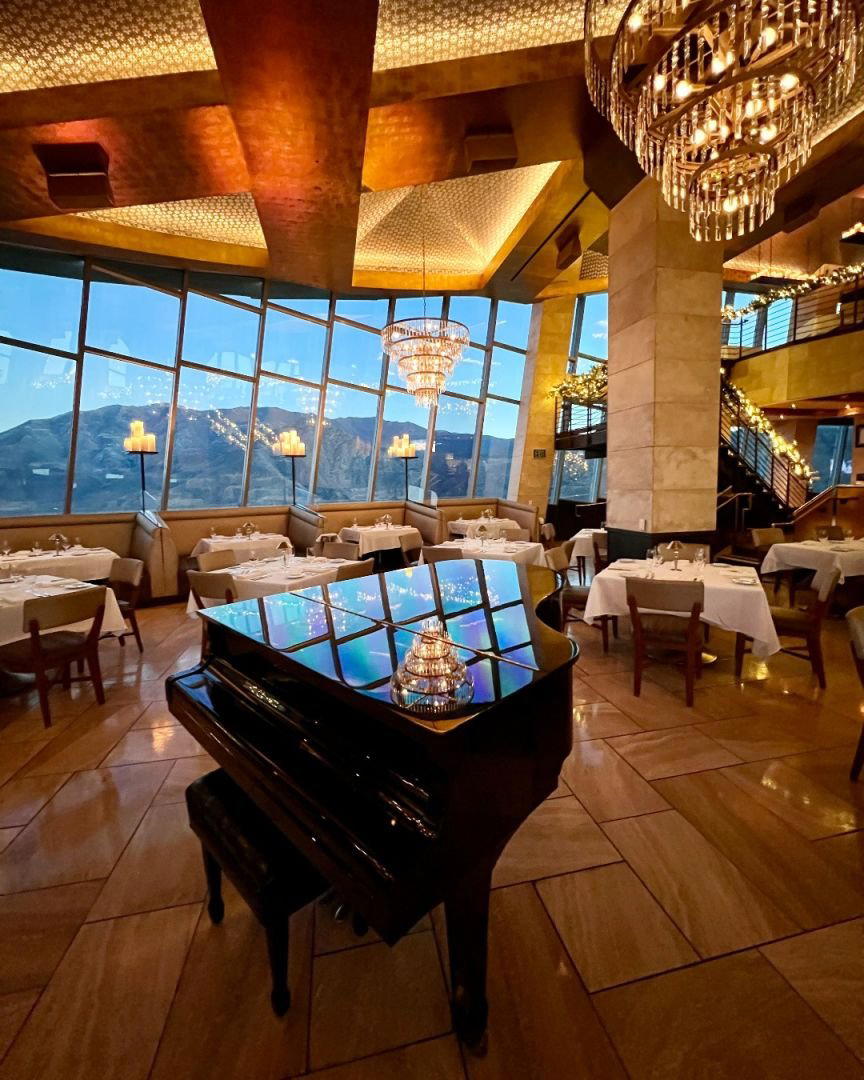
Above the Desert Floor: Dining at Elevation in Cabazon
There is a particular kind of restaurant that earns its setting. The Coachella Valley corridor running through Cabazon has long been treated as a throughway: a stretch of outlet malls, casino complexes, and freeway-adjacent stops that travelers regard as transition rather than destination. Cielo is a restaurant in Cabazon, California, serving modern Californian steakhouse cuisine at a price tier of about $75 per person. Positioned on the 27th floor at 49500 Seminole Drive, it resists that categorization by geography alone. A dining room at that elevation, in this region, makes a statement before the first course arrives. The Inland Empire and San Jacinto Mountains frame the sightlines on three sides, and the quality of light over the desert changes hour by hour in ways that few inland California dining rooms can match.
That physical context matters for understanding where Cielo sits relative to its peers in the region. Cabazon's dining scene is anchored primarily by casino resort properties, where volume and spectacle tend to dominate the brief. The serious food traveler passing through Southern California tends to look west toward Providence in Los Angeles or south toward Addison in San Diego. Cielo occupies a different niche: a destination embedded within a resort context, reaching for something more considered than its immediate surroundings would suggest.
The Cultural Current Running Through Desert Dining
Dining at altitude has its own set of traditions. In Alpine Europe, the elevation restaurant has long been understood as a format where the view functions as a structural element of the experience, not a backdrop to it. Places like Atelier Moessmer Norbert Niederkofler in Brunico have built serious culinary reputations while leaning into precisely that relationship between kitchen and landscape. In the American West, the tradition is less developed but growing: kitchens that take their regional geography seriously as both context and larder.
Cabazon sits at the intersection of several distinct California food cultures. The region draws from desert Southwest produce traditions, from the citrus and stone fruit agriculture of the Inland Empire, and from the coastal California idiom that has shaped how fine dining is understood across the state. A kitchen operating at this address has access to ingredients and influences that do not map neatly onto coastal urbanism. That tension, between a resort corridor address and the culinary possibilities of the high desert interior, is what makes Cielo worth examining alongside places operating in more obviously prestigious ZIP codes.
The broader movement in American fine dining has trended toward exactly this kind of regionalism. Single Thread Farm in Healdsburg built its reputation around a hyper-local sourcing philosophy that made place central to the dining proposition. Blue Hill at Stone Barns in Tarrytown did something similar in the Hudson Valley. The question for any desert kitchen is whether the surrounding terrain can generate the same kind of culinary identity that wine country or agricultural lowlands have historically produced. There is a reasonable argument that it can, and that the Coachella Valley, with its date palm groves, its citrus, its proximity to Mexican borderland food traditions, and its distinct seasonal extremes, offers a more interesting culinary brief than it has historically received credit for.
Where Cielo Sits in the Southern California Tier
Southern California's premium dining tier is distributed unevenly. Los Angeles concentrates particularly recognized addresses, with properties like Providence holding long-standing critical reputations. San Diego's fine dining scene, led by places like Addison, has matured considerably. The inland corridor, from the Inland Empire through the Coachella Valley, remains underdocumented relative to its population and resort visitation numbers.
Cielo addresses that gap from a specific position: a resort-affiliated property with a view-forward physical design and an address that signals ambition within a market that has not historically rewarded ambition. That positioning places it in a comparable set that is better understood by comparison to resort destination restaurants nationally than by comparison to urban fine dining. The format that works in this context tends to favor experience architecture over pure technical precision: the room, the view, the occasion-framing, and the quality of service carry as much weight as the kitchen alone.
For those building itineraries through the region, Cielo fits alongside Birba Cabazon and Mozen Asian Kitchen as part of a more complete picture of what serious dining looks like in this stretch of the valley. The three represent distinct approaches: Birba leaning into California-Italian casualness, Mozen working within the Asian kitchen tradition, and Cielo pitching at a more formal elevation, both literally and in terms of price point expectation and occasion type.
The American Fine Dining Context
To understand what Cielo is reaching for, it helps to place it inside the broader American fine dining conversation. Kitchens like Lazy Bear in San Francisco and Smyth in Chicago have pushed progressive American cooking toward fermentation, hyper-seasonality, and tasting-menu formalism. The French Laundry in Napa remains the reference point for classical precision at the summit of the California tier. Le Bernardin in New York City sets the benchmark for technique-driven seafood. Atomix in New York City has redefined what a Korean fine dining proposition looks like for a non-Korean audience.
These references are useful not because Cielo operates at their documented tier, but because they map the range of approaches available to any serious kitchen in the current American moment. A desert resort restaurant is making choices within that context, whether consciously or not: how much to lean on the view, how much on the kitchen, how much on the occasion-experience format that resort guests expect versus the culinary precision that traveling food critics reward. Those are genuine tensions, and how a kitchen resolves them defines its character more than any single dish.
For the broader American Southwest dining scene, Frasca Food and Wine in Boulder and The Wolf's Tailor in Denver show what is possible when kitchens take their regional geography seriously while maintaining technical rigor. ITAMAE in Miami demonstrates what a culturally specific culinary proposition looks like when it operates with confidence in a resort-adjacent market. Emeril's in New Orleans built its identity around a specific regional food culture over decades. The Inn at Little Washington turned a rural Virginia address into one of the country's most discussed dining destinations. The pattern across all of these is clear: location becomes an asset, not a liability, when the kitchen makes a coherent argument for why it belongs where it is.
Planning a Visit
Cielo is located at 49500 Seminole Drive, 27th floor, Cabazon, CA 92230, within the Morongo Casino Resort complex. Visitors arriving from Los Angeles will find Cabazon approximately 90 miles east via the I-10, a drive that runs under two hours outside peak traffic. For current hours, reservation availability, pricing, and menu information, consult the resort directly. Given the resort context, booking ahead is recommended for weekend evenings and holiday periods.
Budget Reality Check
Comparable venues nearby, for context on price, style, and recognition.
| Venue | Cuisine | Price | Notes |
|---|---|---|---|
| CieloThis venue — the venue you are viewing | Cabazon, Modern Californian Steakhouse | $$$$ | Not listed |
| Mozen Asian Kitchen | Not listed | $$$ | Morongo Casino Resort, Pan-Asian (Chinese, Vietnamese, Korean, Japanese, Thai) |
| Birba Cabazon | Not listed | $$ | Cabazon Outlets, Farm-to-Table Italian with Housemade Pasta and Wood-Fired Pizza |
| BOA Steakhouse | Not listed | $$$$ | Downtown Napa, Modern American Steakhouse |
| 5A5 Steak Lounge | Not listed | $$$$ | Financial District, Modern Japanese Wagyu Steakhouse |
| Leatherby's Cafe Rouge | Not listed | $$$$ | Segerstrom Center for the Arts, Modern California Steakhouse |
Recognition history
Dated appearances from independent guides and award organizations, with the underlying list record or original source where available.
Wine Spectator Award of Excellence
Wine Spectator
Continue exploring
More in Cabazon
Restaurants in Cabazon
Browse all →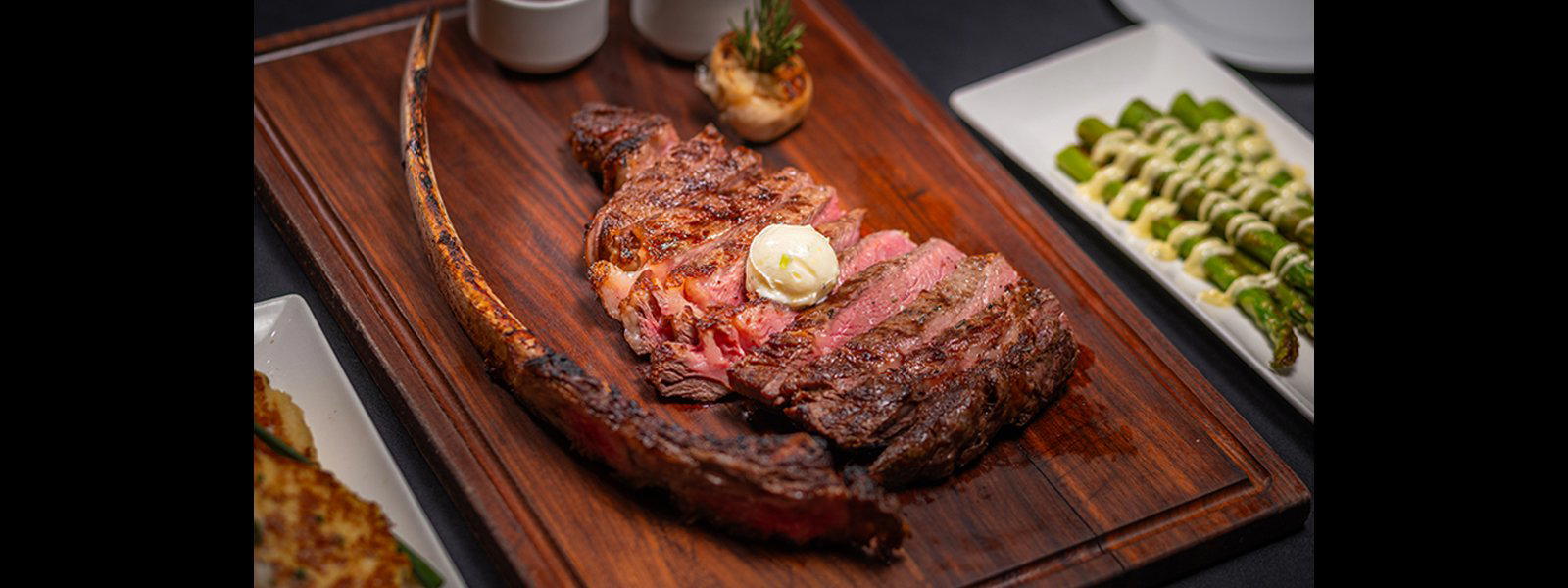
Bars in Cabazon
Browse all →
Hotels in Cabazon
Browse all →
Wineries in Cabazon
Browse all →
At a Glance
- Elegant
- Sophisticated
- Scenic
- Romantic
- Date Night
- Special Occasion
- Celebration
- Panoramic View
- Live Music
- Extensive Wine List
- Farm To Table
- Local Sourcing
- Mountain
Current opening hours
- Monday
- Closed
- Tuesday
- Closed
- Wednesday
- 5–10 PM
- Thursday
- 5–10 PM
- Friday
- 5–11 PM
- Saturday
- 5–11 PM
- Sunday
- 5–10 PM
Hours can change for holidays and private events. Last verified .
Upscale and elegant with swanky contemporary decor, dramatic chandeliers, and panoramic desert and mountain views by day, transitioning to a glamorous lit atmosphere by night.