Blackbird Pizza Shop
Our verdict
Blackbird Pizza Shop on Orange Avenue brings a New York-style approach to Long Beach, operating under the influence of chef Joshua Skenes and. The format is straightforward: serious pizza, no ceremony.

Pearl is the En Primeur Club membership app, where members save venues, book tables and use the concierge.
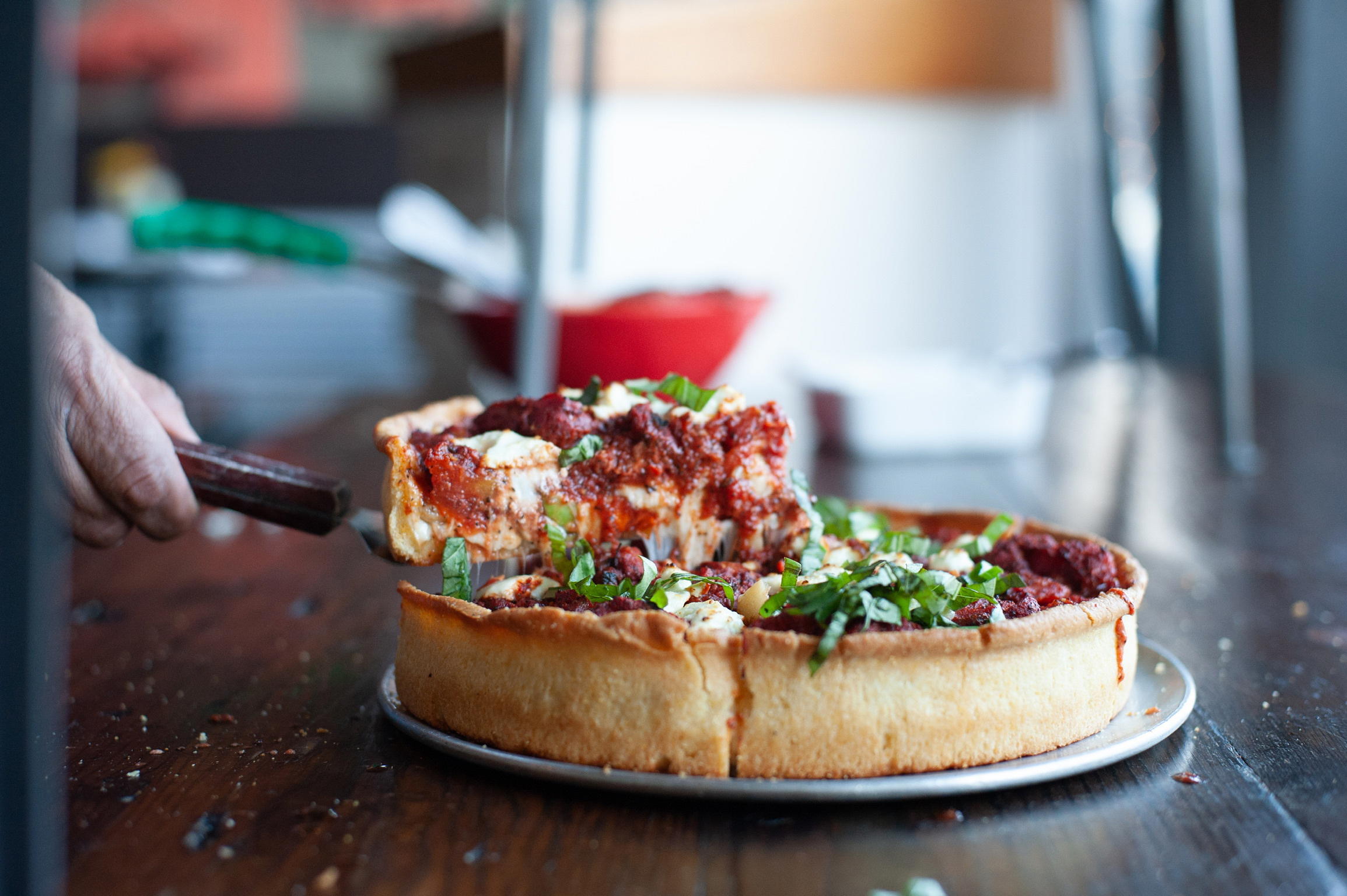
Where Long Beach Meets the New York Slice Tradition
Orange Avenue in Long Beach occupies a stretch of the city that has quietly accumulated a serious food identity over the past decade, built less on fine-dining spectacle and more on operators who treat a narrow format with genuine discipline. Blackbird Pizza Shop sits on that street, and the first thing to register about it is what it is not: there is no elaborate interior concept, no cocktail program engineered for Instagram, no tasting-menu ambition. What there is, instead, is a focused commitment to New York-style pizza executed with the kind of ingredient attention that tends to separate the serious operations from the convenient ones.
The New York pizza tradition is among the most imitated and most misread in American food culture. Its defining tension is between accessibility and craft: the format is democratic by design, priced for daily eating, yet the leading examples depend on flour hydration, fermentation time, source ingredients, and oven behaviour that demand real technical knowledge. Across Los Angeles, that tradition has produced a range of results, from casual neighbourhood shops to the kind of operation drawing lines before opening. Blackbird sits inside the serious end of that spectrum.
The Case for Sourcing in a Format Built on Simplicity
Pizza is one of the few formats where ingredient provenance is simultaneously more important and easier to obscure than almost anywhere else in cooking. A sauce that looks correct can be made from commodity tomatoes or from hand-selected San Marzanos; a crust that passes visual inspection may be built on flour milled without care. In both cases, the difference shows up in flavour and texture, but only if the kitchen is paying attention from the start.
Joshua Skenes is attached to Blackbird Pizza Shop, and his presence is the primary signal of how this operation approaches that sourcing question. Skenes built his reputation at Saison in San Francisco, a restaurant where the sourcing and treatment of raw ingredients was not a marketing point but the organising principle of every dish. That background does not translate directly from live-fire tasting-menu cooking to a pizza shop, but it does suggest a baseline level of ingredient scrutiny that most pizza operations never approach. The logic applies to the category, not just the kitchen: when the chef involved has spent years thinking about where food comes from and why it matters, that thinking tends to show up even in the simplest formats.
For context on how rare that crossover is in Los Angeles, consider that the city's most decorated restaurants, places like Providence, Kato, and Somni, all operate in formats where sourcing is visible and expected. The same standard applied to a pizza shop is genuinely rare. Osteria Mozza is perhaps the clearest LA precedent for fine-dining pedigree applied to Italian-adjacent casual formats, and even there the category is different enough that direct comparison is imprecise. Blackbird is operating in less charted territory.
Long Beach as Context, Not Just Location
Long Beach is often read as peripheral to the Los Angeles food conversation, positioned in shorthand as the city's port neighbour rather than a dining destination in its own right. That framing has been eroding. The concentration of quality operators along and around Orange Avenue represents a genuine shift, driven partly by the economics of doing serious food outside the premium neighbourhoods of central LA, and partly by a generation of cooks who prioritised the work over the address.
Within the broader Southern California pizza conversation, Blackbird occupies a position distinct from the Westside operators and different again from the chain-adjacent options that dominate volume in the Long Beach market. Apollonia's Pizzeria represents another serious entry in the LA New York-style category, and the comparison is useful: both operations suggest that the format rewards disciplined execution over concept inflation. The difference is geography and the specific chef-background signal each brings to the room.
New York itself offers the clearest reference points for what this category can achieve. Roberta's Pizza in New York City showed more than a decade ago that ingredient seriousness and a neighbourhood location could produce a pizza operation with a national reputation. The standard it set, and the conversation it opened, has shaped how the category is now read in cities across the country.
Recognition and What It Signals
For comparison, the Michelin-starred tier of Los Angeles dining, which includes properties like those tracked in our full Los Angeles restaurants guide, operates on a different axis entirely: tasting menus, refined service, and price points that place them in a separate competitive set. Blackbird is not competing in that tier. It is making a case that the pizza format, taken seriously, earns its own kind of recognition, and the 2025 Pearl nod suggests that case has been made.
The Broader LA Food Context
Los Angeles continues to produce a dining scene that defies easy categorisation. The city's strength has never been a single dominant cuisine or a defined fine-dining corridor; it has been diversity of format, a willingness to take casual food seriously, and a supply chain for ingredients, driven by California agriculture, that most American cities cannot replicate. That last point matters directly for a pizza operation built on sourcing values: the access to quality tomatoes, dairy, and produce in Southern California is structurally better than almost anywhere else in the country.
That context is part of why the Skenes connection to Blackbird reads as more than a celebrity-chef novelty. The ingredients available in this region, combined with a kitchen philosophy that takes sourcing as a starting point rather than an afterthought, is exactly the kind of alignment that produces pizza worth travelling to Long Beach for. Readers planning broader LA itineraries can also reference our full Los Angeles hotels guide, our full Los Angeles bars guide, our full Los Angeles wineries guide, and our full Los Angeles experiences guide to build a full visit around the city's range.
For those who want to set Blackbird against the wider national pizza conversation, the evolution of the New York slice format across American cities, from the Roberta's model in Brooklyn to operations in San Francisco and Chicago tracked at venues like Lazy Bear and Alinea for fine-dining contrast, shows how a format once considered purely regional has become a vehicle for serious craft. Blackbird sits inside that broader shift, on a street in Long Beach that is building its own chapter in the story.
Know Before You Go
- Address: 3405 Orange Ave, Long Beach, CA 90807
- Chef: Joshua Skenes
What Regulars Order
Regulars at operations built on this sourcing-first philosophy tend to default to the plainest options on the menu, because that is where the quality of the base ingredients is most exposed. A margherita or a simple cheese slice, in a kitchen paying attention to flour, fermentation, and tomato quality, tells you more about the operation than any loaded combination. That pattern, common to the serious end of the New York-style format nationally, is a reasonable guide to what is worth ordering here.
Frequently asked questions
Who is the chef or culinary lead at Blackbird Pizza Shop?
The chef associated with Blackbird Pizza Shop is Joshua Skenes.
Credentials Lens
| Venue | Cuisine | Price | Awards | Notes |
|---|---|---|---|---|
| Blackbird Pizza ShopThis venue (the venue you are viewing) | Chicago-Style Deep Dish Pizza | $20–30 | Not listed | Not listed |
| Kato | Modern Taiwanese Fine Dining | $300–500 | 2 Michelin Stars · World's 50 Best #49 | New Taiwanese, Asian |
| Hayato | Traditional Japanese Kaiseki | $300–500 | 2 Michelin Stars · La Liste Top Restaurants | Japanese |
| Vespertine | Avant-Garde Tasting Menu | $200–300 | 2 Michelin Stars · La Liste Top Restaurants | Progressive, Contemporary |
| Camphor | Modern French with Southeast Asian influences | $150–200 | Michelin Plate · World Best Burgers World's 101 Best Burgers #15 | French-Asian, French |
| Gwen | Contemporary American Steakhouse | $50–100 | Michelin Plate · Wine Spectator Best of Award of Excellence | New American, Steakhouse |
Continue exploring
More in Los Angeles
Restaurants in Los Angeles
All restaurants in Los Angeles →
Bars in Los Angeles
All bars in Los Angeles →

Hotels in Los Angeles
All hotels in Los Angeles →

Wineries in Los Angeles
All wineries in Los Angeles →
Details
- Casual
- Cozy
- Casual Hangout
- Natural Wine
- A La Carte
- Natural Wine
- Local Beers
- Vegetarian Friendly
Current opening hours
- Monday
- 7 AM–2 PM
- Tuesday
- 7 AM–2 PM
- Wednesday
- 7 AM–2 PM
- Thursday
- 7 AM–2 PM
- Friday
- 7 AM–2 PM
- Saturday
- 7 AM–2 PM
- Sunday
- 7 AM–2 PM
Hours can change for holidays and private events. Hours as of .
Casual and chill pizza shop atmosphere on Melrose Avenue.