Our verdict
Olive Groves and Open Sky: Eating in the Mani There is a particular quality to arriving at a restaurant set inside an olive grove in the Mani peninsula. The landscape does the first work before any plate arrives: silver-green canopy, dry Peloponnesian air carrying thyme and earth, the silence of a working grove that has produced food for centuries. 100 Rizes Restaurant sits at an address listed simply as an unnamed road in the Anatoliki Mani, outside Gytheio, and that geographic informality is part of its character. You are not navigating a town center or a harbourfront strip. You are going somewhere intentional, off the main road, to eat in a place that has made its context part of the offer. Gytheio itself sits at the base of the Mani, the middle finger of the Peloponnese, a port town with a modest scale that resists the resort development pattern of much of southern Greece. Dining here does not follow the Athenian restaurant grammar of late modernist menus and urban tasting formats. The frame of reference is closer to what grows, what is caught, and what has been preserved in this specific corner of the southern Peloponnese for a very long time. For readers tracking Greece's regional dining scene alongside Athenian restaurants like Delta in Athens or Botrini's Santorini in Oia, this is a different register entirely: quieter, less mediated, more directly tied to local supply. Where the Food Comes From The Mani has one of the most legible food-sourcing stories in Greece. The peninsula's harsh, rocky terrain has historically constrained what can grow there, and that constraint shaped a precise agricultural identity: dense-fruited olives pressed into oil of unusual intensity, wild greens gathered from hillsides, legumes cultivated on terraced plots, honey from bees working aromatic scrubland. This is not a region where ingredients arrive from distant distribution centers. Proximity and seasonality are structural facts of cooking in the Mani, not marketing choices. The name 100 Rizes translates from Greek as "100 Roots," a reference that situates the restaurant directly inside this sourcing logic. Roots, in this context, are both literal and relational: the plant life of the region, the depth of agricultural tradition, the connections between a specific kitchen and the land immediately surrounding it. Across Greece's regional dining scene, this kind of naming signals a kitchen committed to working with what is near and established rather than what is fashionable. It is the same orientation you find, at different price points and levels of formality, in restaurants across the Greek provinces that have chosen depth of local identity over the reach of a cosmopolitan menu. Compare the approach with coastal destination venues like Alibertos in Crete or Zarkadoulas in Piraeus, where proximity to water defines the sourcing axis. In the Mani, it is the land that sets the terms. An olive grove setting carries its own sourcing implication. When a restaurant is physically located within the production environment of one of its key ingredients, the relationship between kitchen and raw material collapses to its shortest possible form. Mani olive oil is distributed and sold across Greece and into export markets, and it carries a recognized regional identity. A kitchen operating inside a grove is working with that ingredient at its origin point, before transport, before blending decisions, before any commercial intermediary shapes the final product. That proximity matters to how food tastes, and it matters to the coherence of what a restaurant is claiming to do. The Setting as Dining Architecture Rural Greek restaurants set in agricultural environments occupy a distinct category from urban and resort dining. The physical setting functions as a kind of ambient architecture that shapes the meal before the food arrives. An olive grove in the Mani provides shade, scale, and a textural context that a designed dining room cannot replicate. Tables set under old trees, surrounded by the low scrub and pale stone of the southern Peloponnese, create an eating environment in which the food arriving from the kitchen is already framed by its origins. This format has found growing traction in Greece's food culture, where travelers and food-focused visitors are increasingly seeking experiences that are tethered to place rather than to category performance. The shift is visible across the country, from Crete's agrotourism kitchens to the farm-table formats emerging in the northern Peloponnese. In that context, 100 Rizes is not an outlier but a representative of a broader turn toward situated, origin-anchored dining. Readers comparing Greece's regional dining to internationally recognized farm-to-table formats at venues like Lazy Bear in San Francisco will find a less theatricalized version of the same underlying commitment: food that makes its sourcing geography legible. Gytheio as a Dining Destination Gytheio draws a particular traveler: people passing through on the way to the deep Mani, or those who have specifically sought out the southern Peloponnese for its historical density and relative quiet. The town's restaurant scene is small and weighted toward tavernas and fish restaurants along the waterfront. Against that backdrop, a restaurant positioned in an olive grove with a name that foregrounds regional rootedness occupies a specific niche: it is the option for the visitor who wants to eat within the agricultural story of the Mani rather than simply near it. For those building an itinerary across Greek dining regions, the Peloponnese remains one of the less covered areas in travel editorial despite the quality and specificity of its food culture. You are more likely to find detailed coverage of Santorini or Mykonos venues like Myconian Korali in Mykonos or Cacio e Pepe in Thira Municipality than of the Mani. That coverage gap does not reflect the quality of what is available here; it reflects the region's resistance to the kind of tourism infrastructure that generates press attention. Our full Gytheio restaurants guide maps the broader dining options in the area for those planning time in the southern Peloponnese. Planning Your Visit 100 Rizes Restaurant is located on an unnamed road in the Anatoliki Mani outside Gytheio, described as within an olive grove. A car is the practical requirement for reaching it; Gytheio is approximately three hours by road from Athens, making this a destination meal rather than a spontaneous stop. The Mani's high season runs from late spring through early September, when the Mediterranean heat and long evenings suit outdoor olive grove dining. Visiting outside peak season means quieter conditions and more direct engagement with the local agricultural calendar. For context on how independent regional restaurants across Greece handle reservations and seasonal operation, venues like Beauvoir in Katakolo and Dionisos Restaurant in Pella illustrate the range of formats operating outside Greece's major urban centers. Frequently Asked Questions Is 100 Rizes Restaurant child-friendly? In Gytheio's informal dining culture, an outdoor olive grove setting is generally accommodating for families with children, and no dress code or formal dining structure is recorded for 100 Rizes. What is the atmosphere like at 100 Rizes Restaurant? If you are arriving from an urban Greek dining context, the shift is significant: no awards-driven formality, no tasting menu architecture, no urban price tier. The atmosphere here is defined by the agricultural environment of the Mani rather than by interior design or service theater. For those oriented toward recognized dining establishments with documented accolades, the appeal here is different in kind; the setting and sourcing logic carry the weight that awards carry elsewhere. What is the signature dish at 100 Rizes Restaurant? Given the restaurant's name and olive grove location, the kitchen's orientation toward Mani regional ingredients is the working frame. For formally documented signature dishes from recognized Greek kitchens, venues such as Delta in Athens or the Michelin-recognized Le Bernardin in New York City offer a reference point for what documented dish programs look like at the awarded end of the spectrum. What kind of dining experience does the olive grove location at 100 Rizes actually provide compared to a standard taverna in Gytheio? The olive grove setting places 100 Rizes in a different category from Gytheio's waterfront tavernas, which are primarily seafood-oriented and positioned for passing harbor traffic. A restaurant operating within a working grove frames the meal around land-based Mani ingredients rather than the sea, giving visitors access to a distinct agricultural tradition of the southern Peloponnese. The physical environment, the sourcing logic, and the name's explicit reference to roots and regional depth all signal a kitchen with a different priority than direct tourist-facing service. For those specifically interested in Greece's agricultural food culture, this distinction is the relevant one when choosing between Gytheio's dining options.

Pearl is the En Primeur Club membership app, where members save venues, book tables and use the concierge.
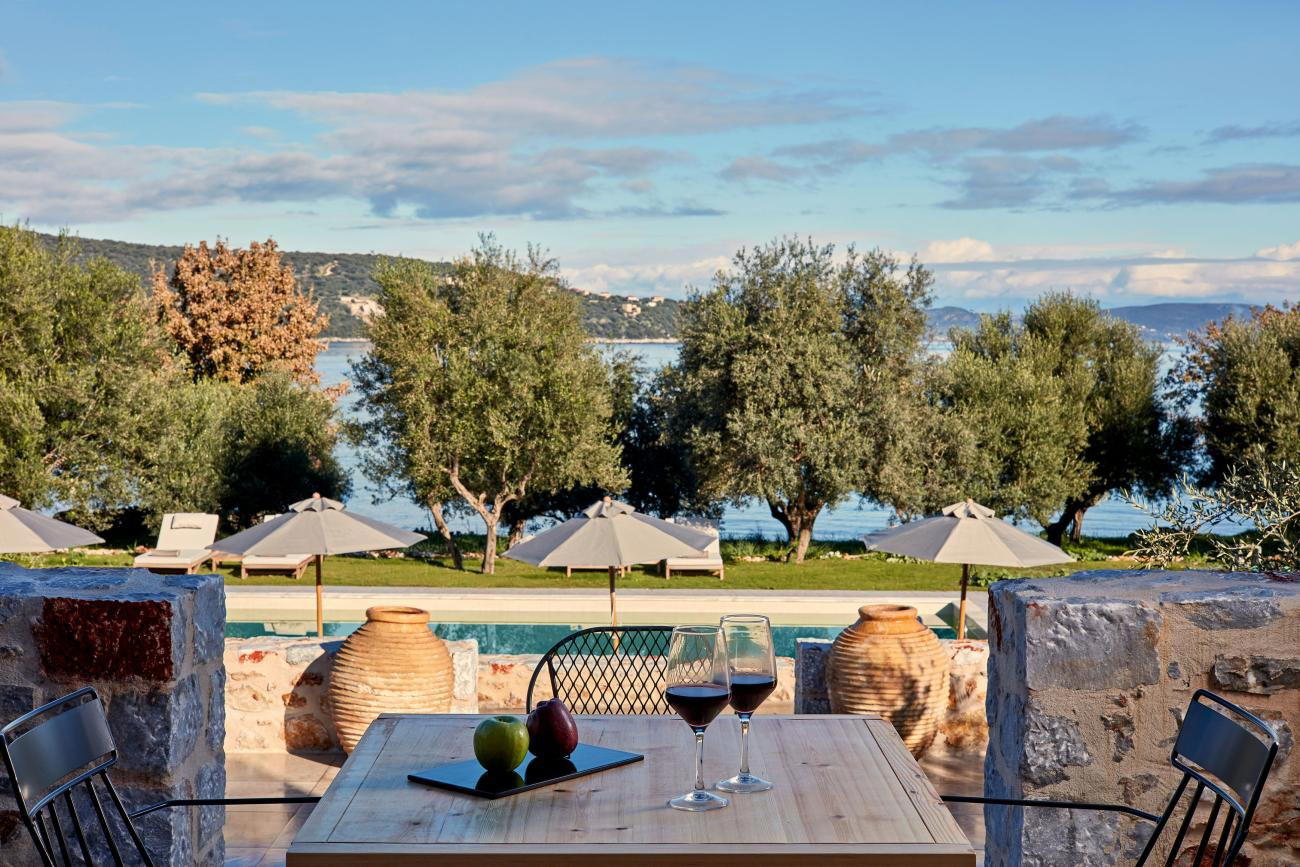
Olive Groves and Open Sky: Eating in the Mani
There is a particular quality to arriving at a restaurant set inside an olive grove in the Mani peninsula. The landscape does the first work before any plate arrives: silver-green canopy, dry Peloponnesian air carrying thyme and earth, the silence of a working grove that has produced food for centuries. 100 Rizes Restaurant sits at an address listed simply as an unnamed road in the Anatoliki Mani, outside Gytheio, and that geographic informality is part of its character. You are not navigating a town center or a harbourfront strip. You are going somewhere intentional, off the main road, to eat in a place that has made its context part of the offer.
Gytheio itself sits at the base of the Mani, the middle finger of the Peloponnese, a port town with a modest scale that resists the resort development pattern of much of southern Greece. Dining here does not follow the Athenian restaurant grammar of late modernist menus and urban tasting formats. The frame of reference is closer to what grows, what is caught, and what has been preserved in this specific corner of the southern Peloponnese for a very long time. For readers tracking Greece's regional dining scene alongside Athenian restaurants like Delta in Athens or Botrini's Santorini in Oia, this is a different register entirely: quieter, less mediated, more directly tied to local supply.
Where the Food Comes From
The Mani has one of the most legible food-sourcing stories in Greece. The peninsula's harsh, rocky terrain has historically constrained what can grow there, and that constraint shaped a precise agricultural identity: dense-fruited olives pressed into oil of unusual intensity, wild greens gathered from hillsides, legumes cultivated on terraced plots, honey from bees working aromatic scrubland. This is not a region where ingredients arrive from distant distribution centers. Proximity and seasonality are structural facts of cooking in the Mani, not marketing choices.
The name 100 Rizes translates from Greek as "100 Roots," a reference that situates the restaurant directly inside this sourcing logic. Roots, in this context, are both literal and relational: the plant life of the region, the depth of agricultural tradition, the connections between a specific kitchen and the land immediately surrounding it. Across Greece's regional dining scene, this kind of naming signals a kitchen committed to working with what is near and established rather than what is fashionable. It is the same orientation you find, at different price points and levels of formality, in restaurants across the Greek provinces that have chosen depth of local identity over the reach of a cosmopolitan menu. Compare the approach with coastal destination venues like Alibertos in Crete or Zarkadoulas in Piraeus, where proximity to water defines the sourcing axis. In the Mani, it is the land that sets the terms.
An olive grove setting carries its own sourcing implication. When a restaurant is physically located within the production environment of one of its key ingredients, the relationship between kitchen and raw material collapses to its shortest possible form. Mani olive oil is distributed and sold across Greece and into export markets, and it carries a recognized regional identity. A kitchen operating inside a grove is working with that ingredient at its origin point, before transport, before blending decisions, before any commercial intermediary shapes the final product. That proximity matters to how food tastes, and it matters to the coherence of what a restaurant is claiming to do.
The Setting as Dining Architecture
Rural Greek restaurants set in agricultural environments occupy a distinct category from urban and resort dining. The physical setting functions as a kind of ambient architecture that shapes the meal before the food arrives. An olive grove in the Mani provides shade, scale, and a textural context that a designed dining room cannot replicate. Tables set under old trees, surrounded by the low scrub and pale stone of the southern Peloponnese, create an eating environment in which the food arriving from the kitchen is already framed by its origins.
This format has found growing traction in Greece's food culture, where travelers and food-focused visitors are increasingly seeking experiences that are tethered to place rather than to category performance. The shift is visible across the country, from Crete's agrotourism kitchens to the farm-table formats emerging in the northern Peloponnese. In that context, 100 Rizes is not an outlier but a representative of a broader turn toward situated, origin-anchored dining. Readers comparing Greece's regional dining to internationally recognized farm-to-table formats at venues like Lazy Bear in San Francisco will find a less theatricalized version of the same underlying commitment: food that makes its sourcing geography legible.
Gytheio as a Dining Destination
Gytheio draws a particular traveler: people passing through on the way to the deep Mani, or those who have specifically sought out the southern Peloponnese for its historical density and relative quiet. The town's restaurant scene is small and weighted toward tavernas and fish restaurants along the waterfront. Against that backdrop, a restaurant positioned in an olive grove with a name that foregrounds regional rootedness occupies a specific niche: it is the option for the visitor who wants to eat within the agricultural story of the Mani rather than simply near it.
For those building an itinerary across Greek dining regions, the Peloponnese remains one of the less covered areas in travel editorial despite the quality and specificity of its food culture. You are more likely to find detailed coverage of Santorini or Mykonos venues like Myconian Korali in Mykonos or Cacio e Pepe in Thira Municipality than of the Mani. That coverage gap does not reflect the quality of what is available here; it reflects the region's resistance to the kind of tourism infrastructure that generates press attention. Our full Gytheio restaurants guide maps the broader dining options in the area for those planning time in the southern Peloponnese.
Planning Your Visit
100 Rizes Restaurant is located on an unnamed road in the Anatoliki Mani outside Gytheio, described as within an olive grove. A car is the practical requirement for reaching it; Gytheio is approximately three hours by road from Athens, making this a destination meal rather than a spontaneous stop. The Mani's high season runs from late spring through early September, when the Mediterranean heat and long evenings suit outdoor olive grove dining. Visiting outside peak season means quieter conditions and more direct engagement with the local agricultural calendar. For context on how independent regional restaurants across Greece handle reservations and seasonal operation, venues like Beauvoir in Katakolo and Dionisos Restaurant in Pella illustrate the range of formats operating outside Greece's major urban centers.
Frequently asked questions
Is 100 Rizes Restaurant child-friendly?
In Gytheio's informal dining culture, an outdoor olive grove setting is generally accommodating for families with children, and no dress code or formal dining structure is recorded for 100 Rizes.
What is the atmosphere like at 100 Rizes Restaurant?
If you are arriving from an urban Greek dining context, the shift is significant: no awards-driven formality, no tasting menu architecture, no urban price tier. The atmosphere here is defined by the agricultural environment of the Mani rather than by interior design or service theater. For those oriented toward recognized dining establishments with documented accolades, the appeal here is different in kind; the setting and sourcing logic carry the weight that awards carry elsewhere.
What is the signature dish at 100 Rizes Restaurant?
Given the restaurant's name and olive grove location, the kitchen's orientation toward Mani regional ingredients is the working frame. For formally documented signature dishes from recognized Greek kitchens, venues such as Delta in Athens or the Michelin-recognized Le Bernardin in New York City offer a reference point for what documented dish programs look like at the awarded end of the spectrum.
What kind of dining experience does the olive grove location at 100 Rizes actually provide compared to a standard taverna in Gytheio?
The olive grove setting places 100 Rizes in a different category from Gytheio's waterfront tavernas, which are primarily seafood-oriented and positioned for passing harbor traffic. A restaurant operating within a working grove frames the meal around land-based Mani ingredients rather than the sea, giving visitors access to a distinct agricultural tradition of the southern Peloponnese. The physical environment, the sourcing logic, and the name's explicit reference to roots and regional depth all signal a kitchen with a different priority than direct tourist-facing service. For those specifically interested in Greece's agricultural food culture, this distinction is the relevant one when choosing between Gytheio's dining options.
Continue exploring
More in Gytheio
Restaurants in Gytheio
All restaurants in Gytheio →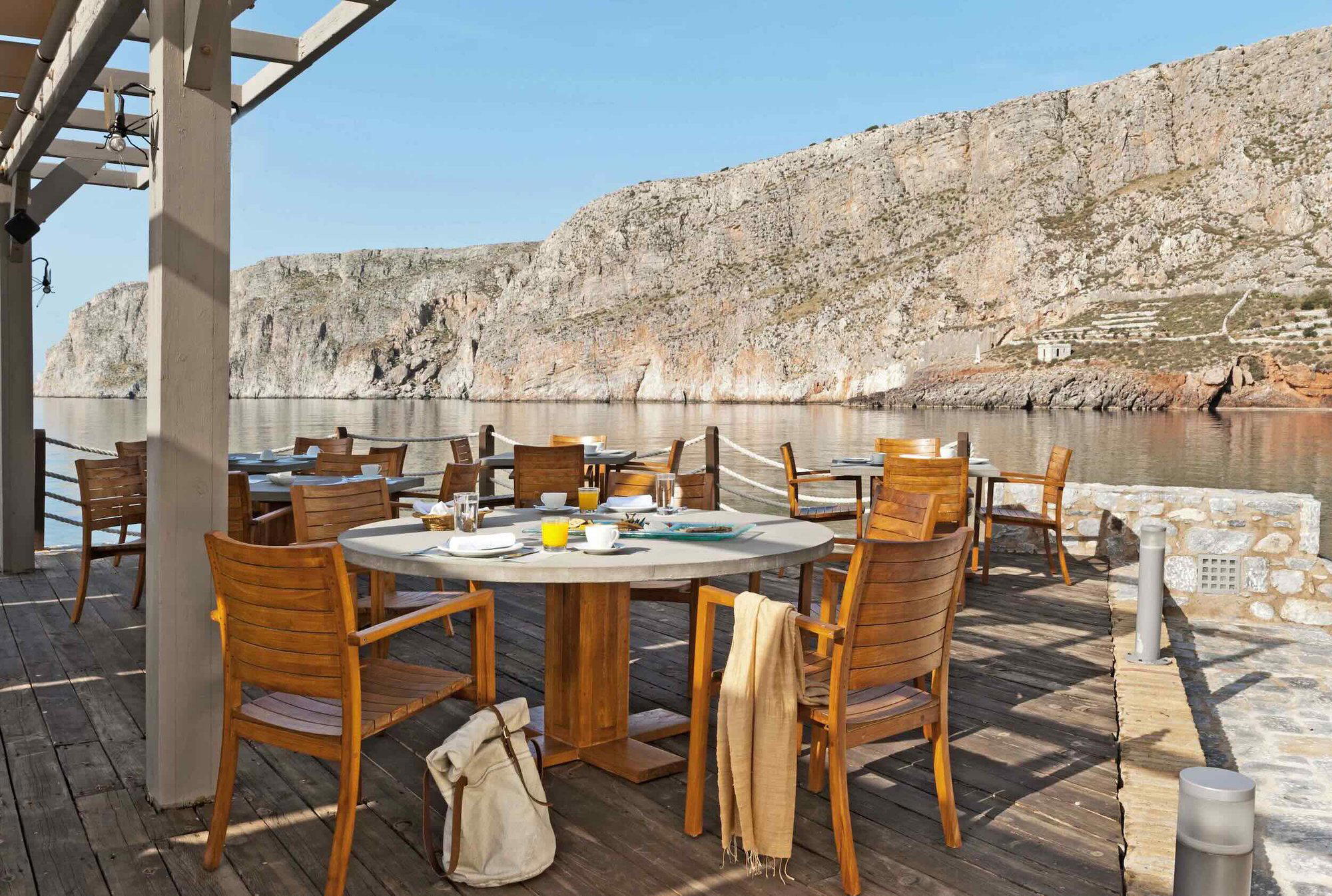
Details
- Romantic
- Scenic
- Elegant
- Rustic
- Sophisticated
- Quiet
- Date Night
- Special Occasion
- Waterfront
- Hotel Restaurant
- Terrace
- Extensive Wine List
- Local Sourcing
- Waterfront
- A La Carte
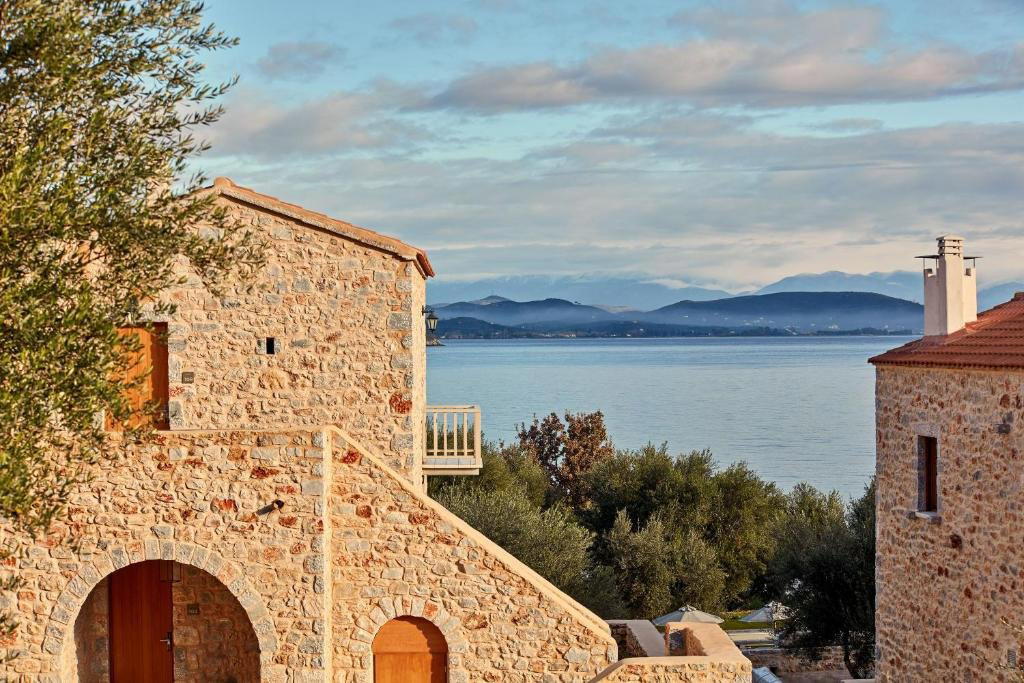
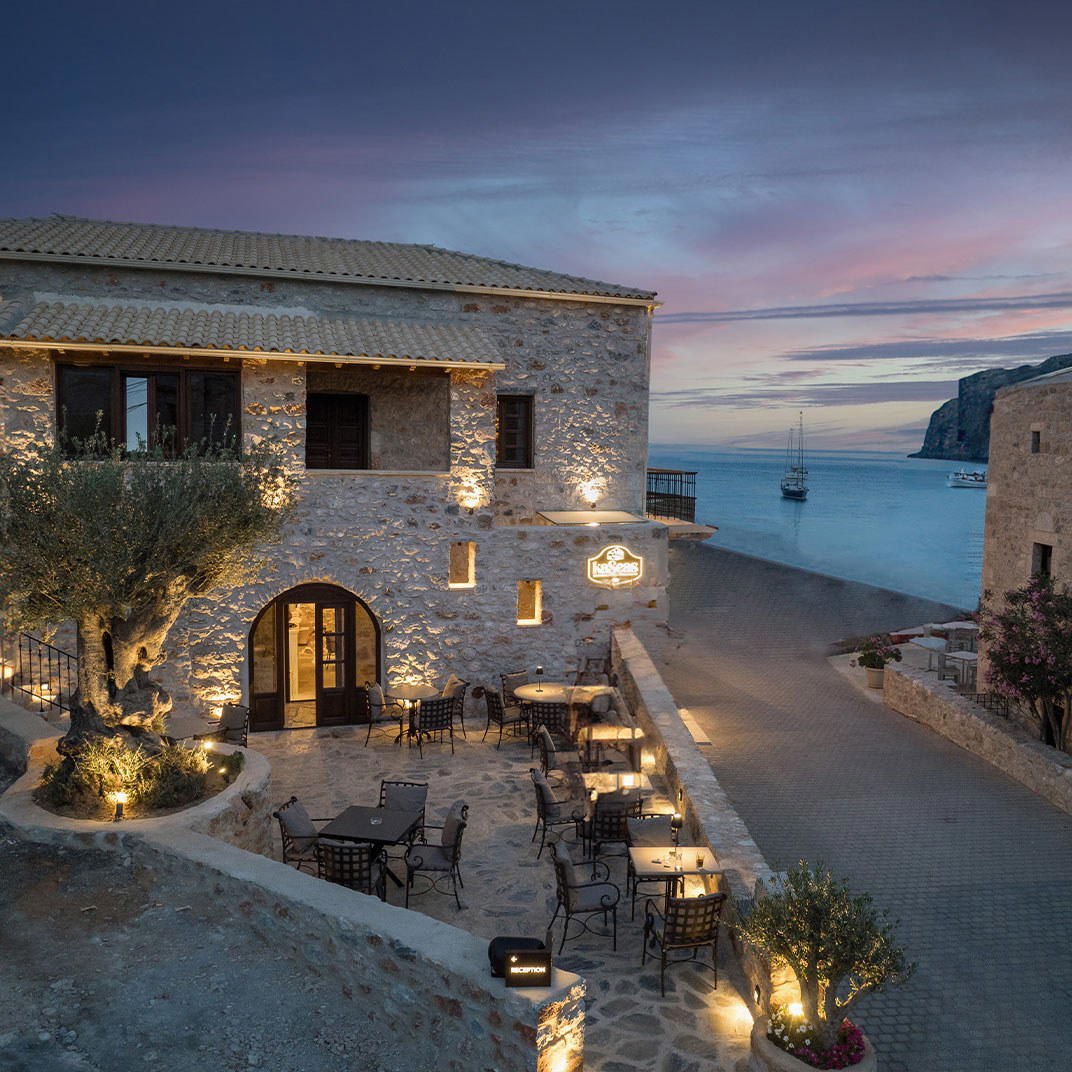
Rustic-chic with exposed brick walls, serene and relaxing atmosphere overlooking the Laconic Gulf.