Nobu Ryokan Malibu




La Liste Top Hotels · Star Wine List · Forbes Recommended
The first Nobu Ryokan in the world sits directly on Pacific Coast Highway in Malibu, with 16 individually named rooms, a three-to-one staff-to-guest ratio, and 24-hour room service supplied by Nobu Malibu. Recognised on La Liste's Top Hotels list in 2026 with 91 points, it operates as a deliberate inversion of the Nobu brand's usual see-and-be-seen energy, prioritising privacy and quiet over spectacle.

Pearl is the En Primeur Club membership app, where members save venues, book tables and use the concierge.
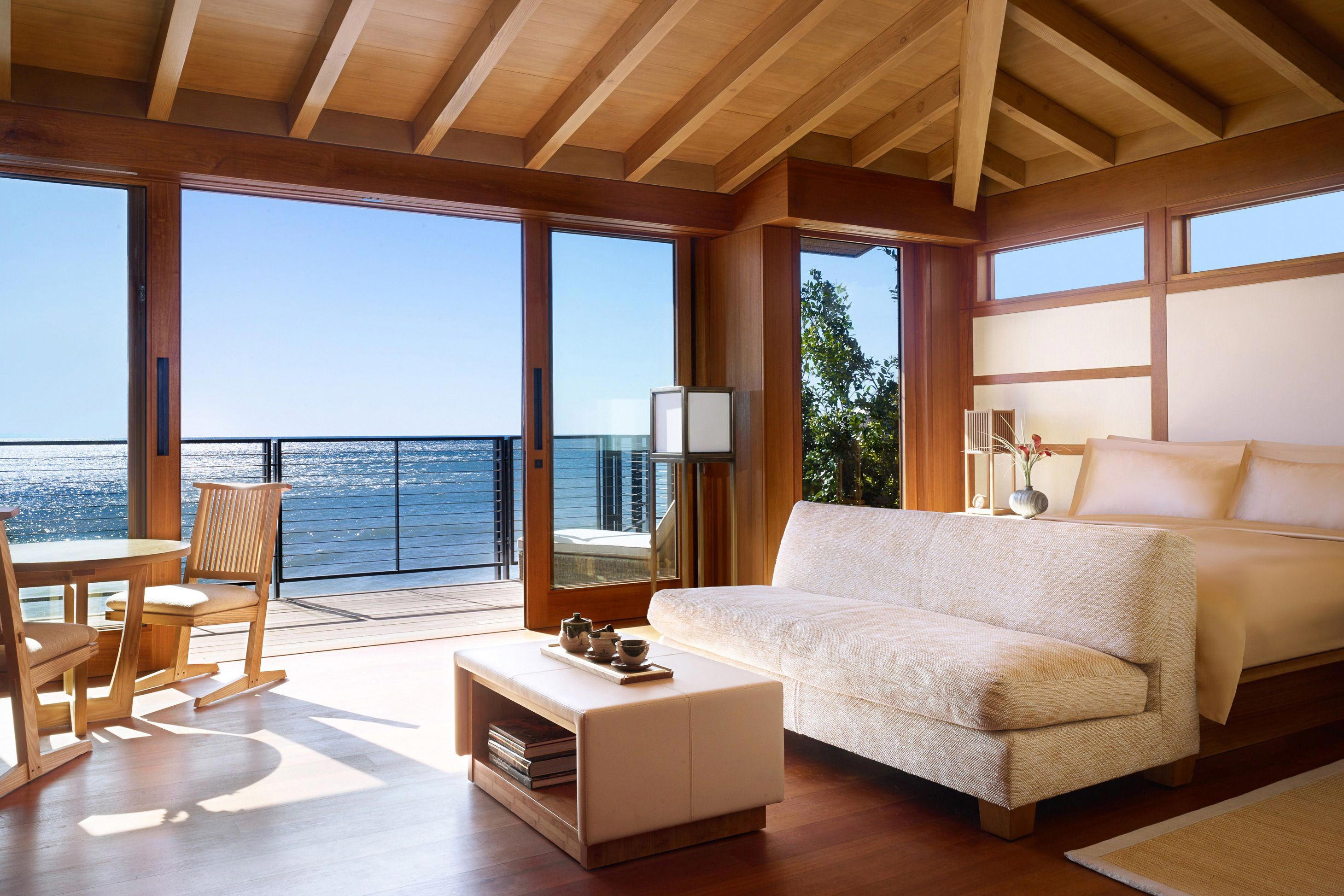
Where Pacific Coast Highway Meets Japanese Restraint
Drive north along Pacific Coast Highway past the surf shops and taco stands and, somewhere around the 22700 block, the architecture shifts. The teak cladding and low horizontal roofline of Nobu Ryokan Malibu read as understated to the point of invisibility against the bluff, which is precisely the intent. Inside a guests-only parking lot and a lobby closed to anyone without a reservation, the property operates as a deliberate counterpoint to the Nobu brand's global identity. The restaurants and hotels that carry the Nobu name across Manhattan, Las Vegas, and London are, by design, high-visibility social venues. The Ryokan is the opposite register: 16 rooms, direct Pacific frontage, and a service culture built around anticipation rather than performance.
The broader category this sits in, small-footprint, design-led coastal retreats, has grown significantly in Southern California over the past decade, as travellers who might otherwise book a full-service resort at The Beverly Hills Hotel or The Peninsula Beverly Hills seek something with fewer public spaces and more deliberate privacy. The Ryokan occupies a specific niche within that shift: oceanfront, adults-only, and designed around the Japanese inn tradition rather than the California resort template. La Liste's 2026 Leading Hotels list placed it at 91 points, which positions it alongside properties where intimacy and operational precision carry more weight than amenity count.
The Architecture of Quietude
The ryokan format has specific structural requirements that translate awkwardly to California building codes and Western guest expectations. TAL Studio, the hospitality design firm responsible for the interiors, worked with those constraints rather than against them. The result is 16 rooms finished in floor-to-ceiling teak, with neutral-toned furnishings, 800-count linen sheets by Anichini, and Japanese art alongside fresh ikebana floral arrangements. The design language owes more to Kyoto than to Malibu, but the private patios opening directly toward the Pacific make the geography impossible to ignore.
Grounds reinforce this register. A sundeck faces the ocean. Stone pathways move through plantings of local flora, black sea grass prominent among them, alongside a Zen rock fountain. The landscaping works as a transition zone between the architecture and the shoreline, calibrated to reduce visual and acoustic stimulation rather than provide it. For travellers accustomed to properties like Post Ranch Inn in Big Sur or Amangiri in Canyon Point, where the design philosophy deliberately courts the surrounding landscape, the Ryokan's approach will feel familiar in intention if distinct in execution.
Service as the Central Proposition
Staffing ratio at Nobu Ryokan is three employees per guest. That figure matters less as a marketing statistic than as an operational reality: at 16 rooms and full occupancy, it translates into a staff presence that allows for the kind of anticipatory service that larger properties cannot sustain structurally. Requests come through a room-mounted iPad system, but the more significant dynamic is what happens before guests articulate a request at all. The property's reputation among CEOs, celebrities, and what observers have called the coastal tastemaker circuit rests substantially on this gap between stated and anticipated need.
There are no restaurants or bars on the premises. All food and drink arrives through 24-hour room service, supplied entirely by Nobu Malibu. For guests arriving from properties with expansive dining programs, Hotel Bel-Air, The Maybourne Beverly Hills, or L'Ermitage Beverly Hills, this is an adjustment. But it is also a deliberate containment: the absence of a public dining room removes the primary social-visibility function of a hotel lobby, reinforcing the property's identity as a place to withdraw from rather than participate in the city's performance culture. The mini-bar is stocked with complimentary non-alcoholic drinks and Dean & DeLuca provisions, which takes the edge off waiting for room service when you arrive late.
The Japanese bathing ritual setup available in most rooms reflects the same logic applied to physical experience. The sequence, open shower before the bath, teak soaking tub, natural toiletries from The Detox Market, followed by a choice between a Loro Piana cashmere robe and a linen yukata kimono, is structured, not improvised. It asks guests to follow a specific arc rather than assemble their own experience from available components. Properties at this price point that prioritise guest autonomy over curated ritual represent a different philosophy; the Ryokan has chosen the latter.
The Rooms and the One That Gets Requested
None of the 16 rooms carry numbers. Each was named personally by Robert De Niro and Nobu Matsuhisa, the property's co-founders, and specific room details are withheld from the booking page, staff help guests select based on their stated preferences. This creates a consultation dynamic at the point of reservation that sets a service tone before arrival.
The most requested accommodation is called Horizon, or Suiheisen in Japanese. It occupies the sole corner position and holds the only outdoor teak soaking tub on the property. That combination of corner exposure and exterior bathing access has given it an informal designation among repeat guests: the rockstar room. For guests comparing intimate oceanfront properties across the US, the outdoor soaking tub distinction puts it in a category closer to Kona Village, A Rosewood Resort in Kailua Kona or Little Palm Island Resort & Spa in Little Torch Key than to a standard luxury coastal room.
Planning a Stay
The adults-only policy applies to all guests, who must be 18 or older. The property's combination of ocean frontage, private patios, and contained atmosphere has made it a destination for engagements, anniversaries, honeymoons, and full property buyouts for weddings. Booking two months in advance is the reliable minimum, with longer lead times warranted if a specific room, particularly Horizon, is required for a date-specific occasion. The Star Wine List recognition in 2026 signals that the beverage program available through room service carries its own considered depth, which is relevant context for guests planning extended stays.
For travellers building an extended California itinerary, the Ryokan pairs logically with a Napa stop at Auberge du Soleil or a design-led inland alternative at SingleThread Farm Inn in Healdsburg. Those planning a US West Coast circuit alongside other small-footprint luxury properties should note the formal comparison set also includes 1 Hotel San Francisco for urban contrast. For wider context on where Nobu Ryokan sits within Los Angeles accommodation generally, our full Los Angeles restaurants and hotels guide maps the city's premium tier across neighbourhoods.
Reputation First
Comparable venues nearby, for context on price, style, and recognition.
| Venue | Cuisine | Price | Awards | Notes |
|---|---|---|---|---|
| Nobu Ryokan MalibuThis venue (the venue you are viewing) | Exclusive Japanese ryokan-inspired beachfront retreat | Not listed | La Liste Top Hotels · Star Wine List | Not listed |
| Four Seasons Hotel Westlake Village | Luxury resort with serene gardens and wellness focus | Not listed | La Liste Top Hotels · Star Wine List | Westlake Village |
| The Langham Huntington, Pasadena | Timeless historic resort with Old Hollywood glamour and lush 23-acre gardens | $300–500 | La Liste Top Hotels · Star Wine List | Oak Knoll |
| Beverly Wilshire, A Four Seasons Hotel | Well-known luxury landmark on Rodeo Drive | $500–750 | 2 Michelin Keys · Star Wine List | Beverly Hills |
| Conrad Los Angeles | Contemporary urban oasis in Frank Gehry-designed tower | Not listed | Michelin Selected · La Liste Top Hotels | Bunker Hill |
| Oceana Santa Monica, LXR Hotels & Resorts | Contemporary luxury beachfront resort designed as a private residential retreat with custom furnishings and high-end finishes. | $300–500 | Michelin Selected · Star Wine List | Wilshire |
Recognition history
Dated appearances from independent guides and award organizations, with the underlying list record or original source where available.
La Liste Top Hotels
La Liste
Star Wine List
Star Wine List
Forbes Recommended
Forbes
Virtuoso Luxury Hotel Partner
Virtuoso
Full recognition history (5 entries)
Forbes Recommended
Forbes
Continue exploring
More in Los Angeles
Hotels in Los Angeles
All hotels in Los Angeles →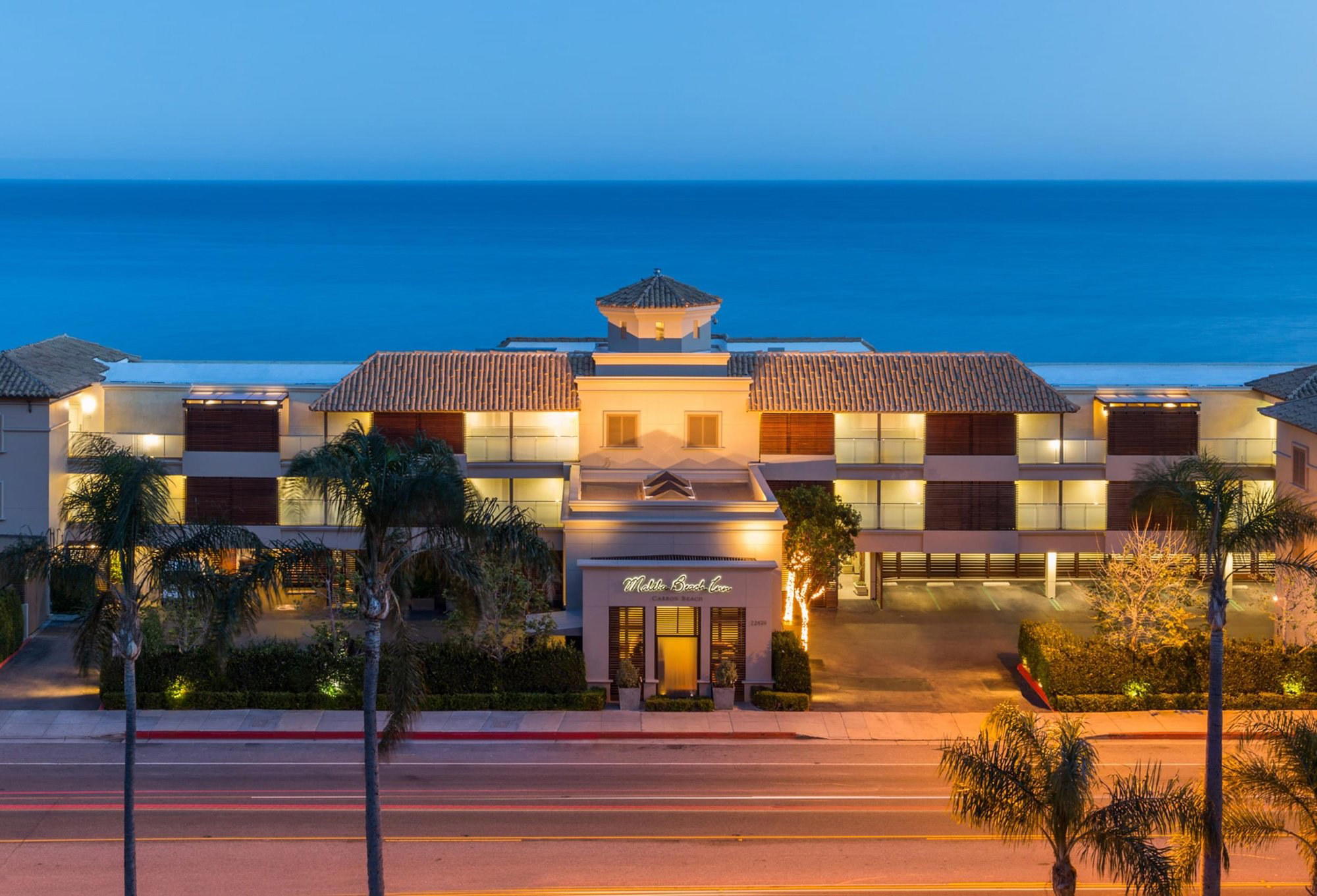
Bars in Los Angeles
All bars in Los Angeles →
Restaurants in Los Angeles
All restaurants in Los Angeles →
Wineries in Los Angeles
All wineries in Los Angeles →
Details
- Quiet
- Elegant
- Intimate
- Minimalist
- Sophisticated
- Romantic Getaway
- Honeymoon
- Anniversary
- Weekend Escape
- Beachfront
- Pool
- Beach Access
- Wi Fi
- Fitness Center
- Room Service
- Concierge
- Valet Parking
- Spa
- Garden
Serene and calming with natural materials like teak, limestone, and linen; soft natural light from skylights and sliding doors, gentle ocean sounds, and tranquil Japanese gardens fostering deep relaxation.