Le Richemond
Le Richemond belongs to Geneva’s old-lakefront hotel tradition, a category shaped by diplomatic traffic, private banking, watch clients, and guests who judge luxury by discretion rather than spectacle. With venue-specific details currently limited, the useful reading is comparative: place it beside the city’s established grand hotels and decide whether its appeal lies in heritage address, quieter formality, or proximity to the lakefront circuit.

Pearl is the En Primeur Club membership app — saves, bookings, and concierge access live there. Same editors, same standards.
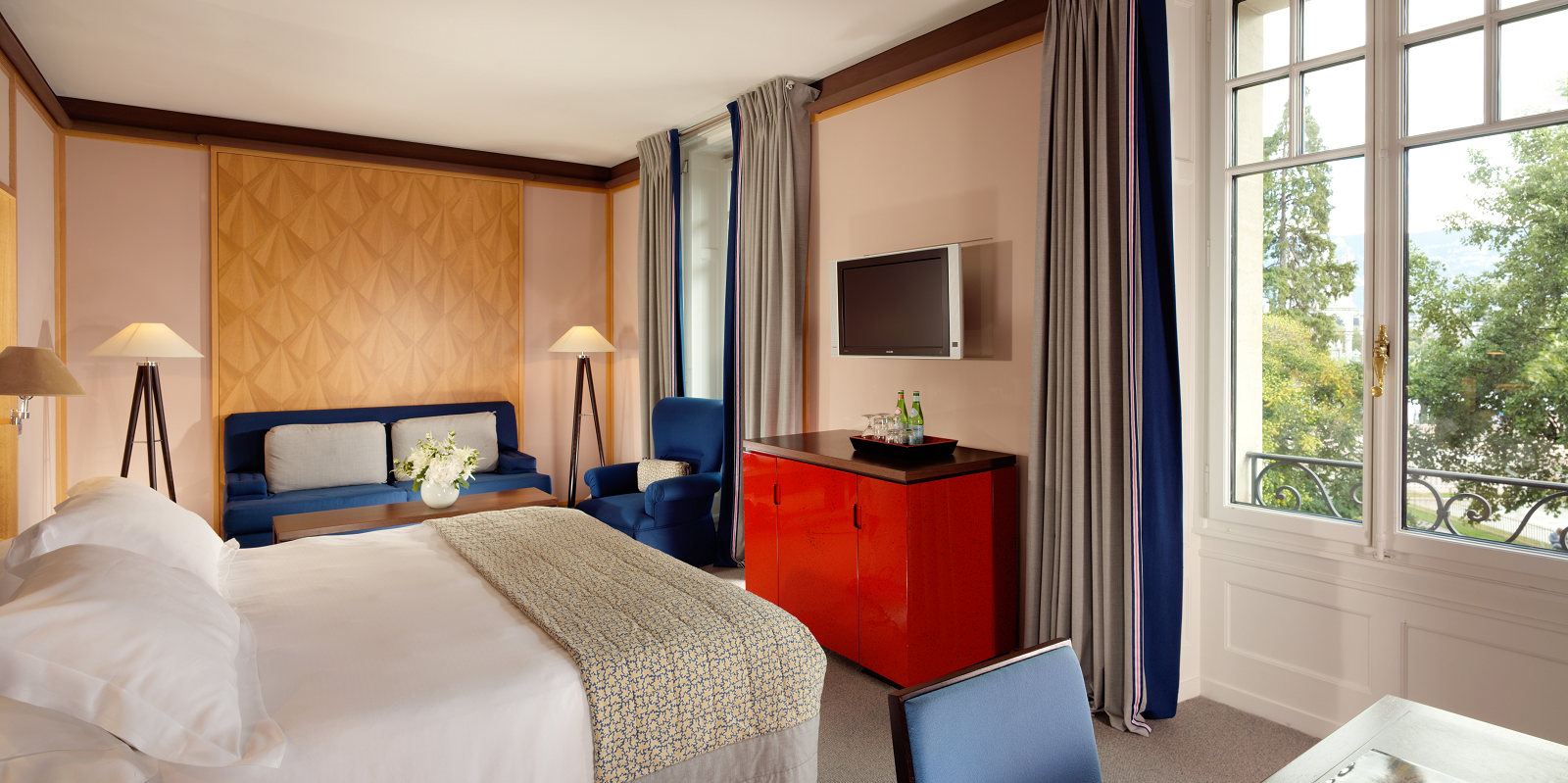
Geneva's lakefront hotel language is built on restraint
Approaching Geneva’s luxury hotels, the first impression is rarely theatrical. The city does not announce wealth through volume. It does it through stone façades, clipped service rituals, watch-boutique precision, and the social choreography of guests moving between the lake, the banking quarter, diplomatic appointments, and the old-town slope. Le Richemond belongs to that Geneva grammar: formal enough to sit within the city’s grand-hotel tradition, but better understood as part of a wider Swiss habit of controlled luxury than as an isolated address.
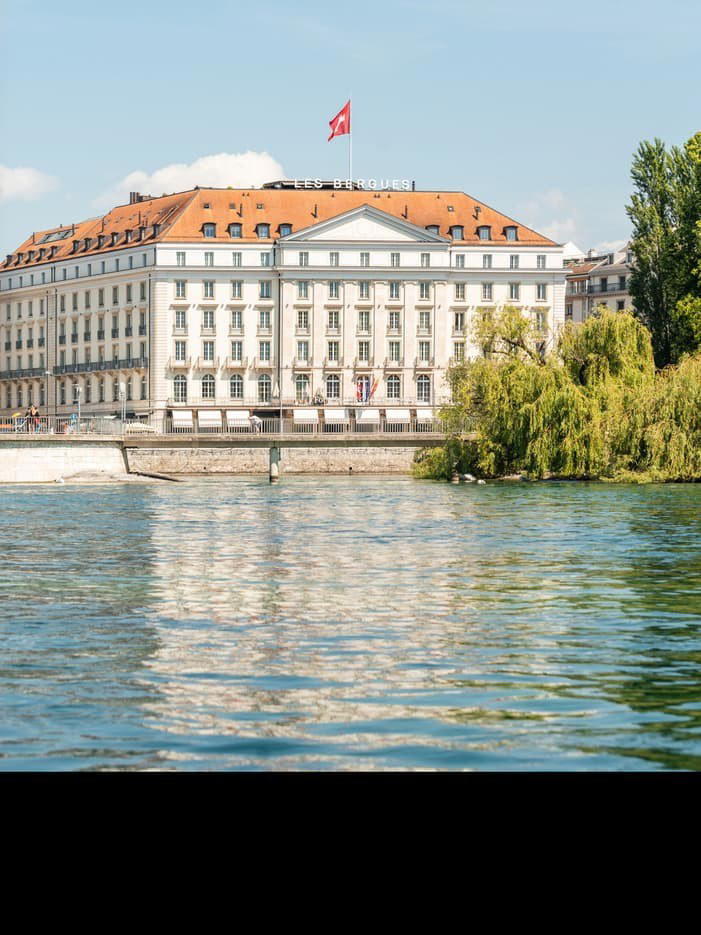
That matters because Geneva is a small city with an unusually dense luxury-hotel set. The lakefront and nearby streets compress several competing versions of high-end hospitality into a few walkable minutes: Belle Époque palace hotels, international-group properties, discreet boutique stays, and business-oriented grand hotels built for people whose schedules are measured in meetings rather than leisure hours. A reader comparing Le Richemond with Beau-Rivage Geneva, The Woodward, Four Seasons Hotel des Bergues, or The Ritz-Carlton Hotel de la Paix, Geneva is not choosing between generic luxury labels. The real question is which version of Geneva feels right: heritage ceremony, contemporary privacy, international polish, or smaller-scale discretion.
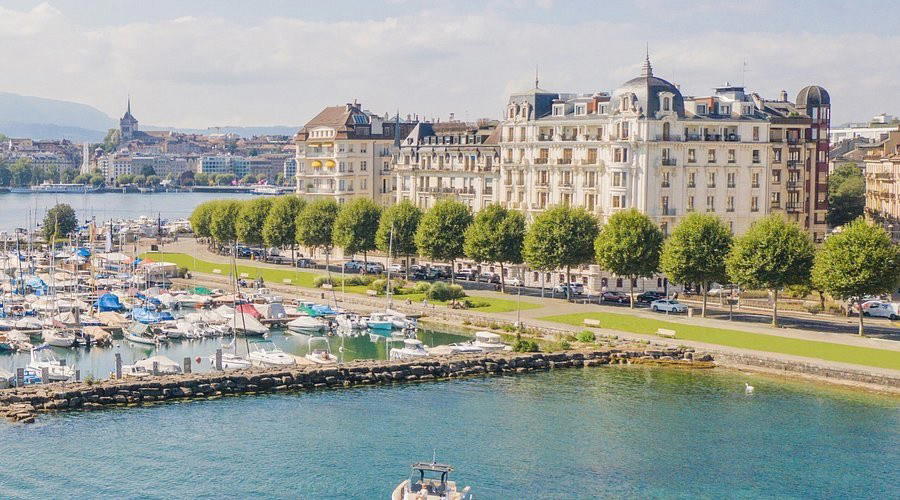
The design story in this part of the city is inseparable from geography. Lake Geneva creates the public stage, the Rhône gives the center its hard line, and the Alps become a distant weather report rather than a resort backdrop. Hotels near the water tend to trade on orientation, procession, and the promise of calm after a day spent in a city that operates with unusual seriousness. A lobby, lounge, or room category is not merely decoration here; it signals whether the property is built for diplomatic anonymity, weekend leisure, long-stay business, or grand-tour nostalgia. Without verified venue-level design data, the safe assessment is to read Le Richemond through that urban code rather than inventing decorative specifics.
In St. Moritz, a property such as Badrutt's Palace Hotel in St. Moritz can lean into winter social theatre; in the mountains, The Chedi Andermatt in Andermatt works through alpine scale and destination dining; at Bürgenstock Resort in Bürgenstock, the setting dominates the experience. Geneva is different. The city asks hotels to perform privacy, efficiency, and civic composure. The lobby is less a catwalk than a sorting room for international schedules.
How Le Richemond fits the city's grand-hotel set
Le Richemond should be judged against Geneva’s established luxury addresses rather than against lifestyle hotels in larger capitals. The city does not have London’s vast hotel spectrum or Paris’s neighborhood-by-neighborhood palace culture. Its luxury cluster is narrower, more formal, and more exposed to repeat business from finance, diplomacy, watch fairs, private medical visits, and families who use Geneva as a clean, secure European base. In that context, a hotel’s identity depends on how it balances old-world confidence with present-day expectations around space, privacy, and ease.
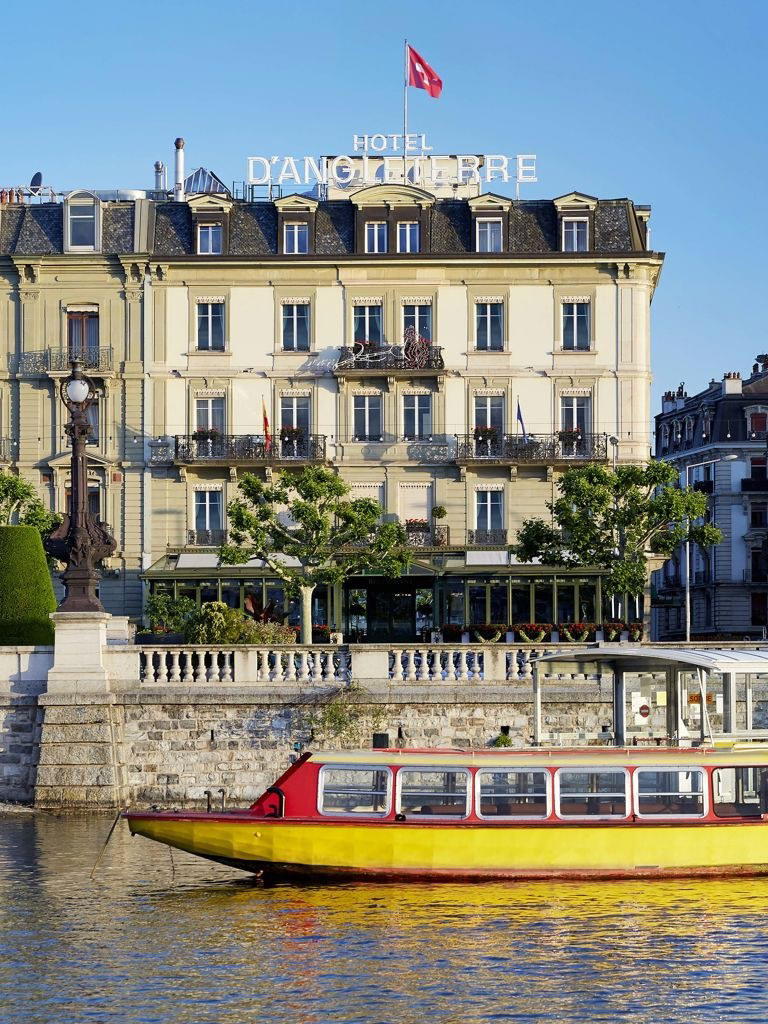
The closest comparison is not a single rival but a corridor of choices. Hotel d'Angleterre represents the intimate, English-inflected end of Geneva hospitality. Fairmont Grand Hotel Geneva speaks to scale and international convention traffic. Hotel Metropole Geneve is tied to the shopping and old-town side of the city. Eastwest Hotel offers a smaller urban-hotel alternative for travellers who care less about palace codes. Le Richemond sits inside this decision field, where location, service register, and architectural mood carry more weight than novelty.
Architecture and design in Geneva luxury hotels tend to be read by omission as much as by display. Guests expect quiet corridors, polished public rooms, well-managed arrivals, and materials that feel permanent rather than fashionable. This is a city where an overly loud design scheme can date quickly because the core audience often returns for consistency. The conservative impulse can frustrate travellers looking for visual drama, but it suits Geneva’s rhythm. Hotels here are often judged by how little friction they create: a car handled without conversation, a meeting arranged without theatre, a breakfast room that works for both private clients and diplomatic entourages.
Across Switzerland, that same discipline takes different forms. Hotel Les Trois Rois in Basel draws power from riverfront history and art-world traffic; Baur au Lac in Zürich belongs to a banking-city tradition where gardens and lake proximity soften corporate polish; Hotel Bellevue Palace Bern in Bern carries the political weight of the capital. Geneva’s equivalent pressure comes from international neutrality and private capital. The city’s luxury hotels are not only places to sleep; they are extensions of the city’s culture of controlled access.
The design question: heritage, renovation, or restraint?
For a hotel such as Le Richemond, the useful design question is not whether the interiors are ornate or modern. It is how the property manages the tension between heritage expectation and contemporary comfort. Geneva’s luxury guests usually want older-building gravitas without old-building inconvenience. They expect sound insulation, climate control, calm bathrooms, reliable room layouts, and public spaces that allow conversation without being overheard. Those expectations are less glamorous than a lobby photograph, but they define the stay.
What can be said with confidence is that Geneva’s hotel architecture rewards a close reading of proportion and use. A grand staircase, a measured entrance sequence, a lake-facing salon, or a compact urban lobby all change the kind of guest a property suits. Travellers choosing among Geneva’s luxury hotels should pay attention to those cues before chasing brand familiarity alone.
This is where comparison becomes useful. Grand Resort Bad Ragaz in Bad Ragaz is built around wellness infrastructure and a resort rhythm; The Alpina Gstaad in Gstaad belongs to a chalet-luxury conversation; Mandarin Oriental Palace, Luzern in Lucerne turns lake leisure into a polished city-resort proposition. Geneva’s city hotels have less room for escapist fantasy. Their design has to support short stays, discreet arrivals, polished meetings, and rapid movement through the center.
What the surrounding city adds to the stay
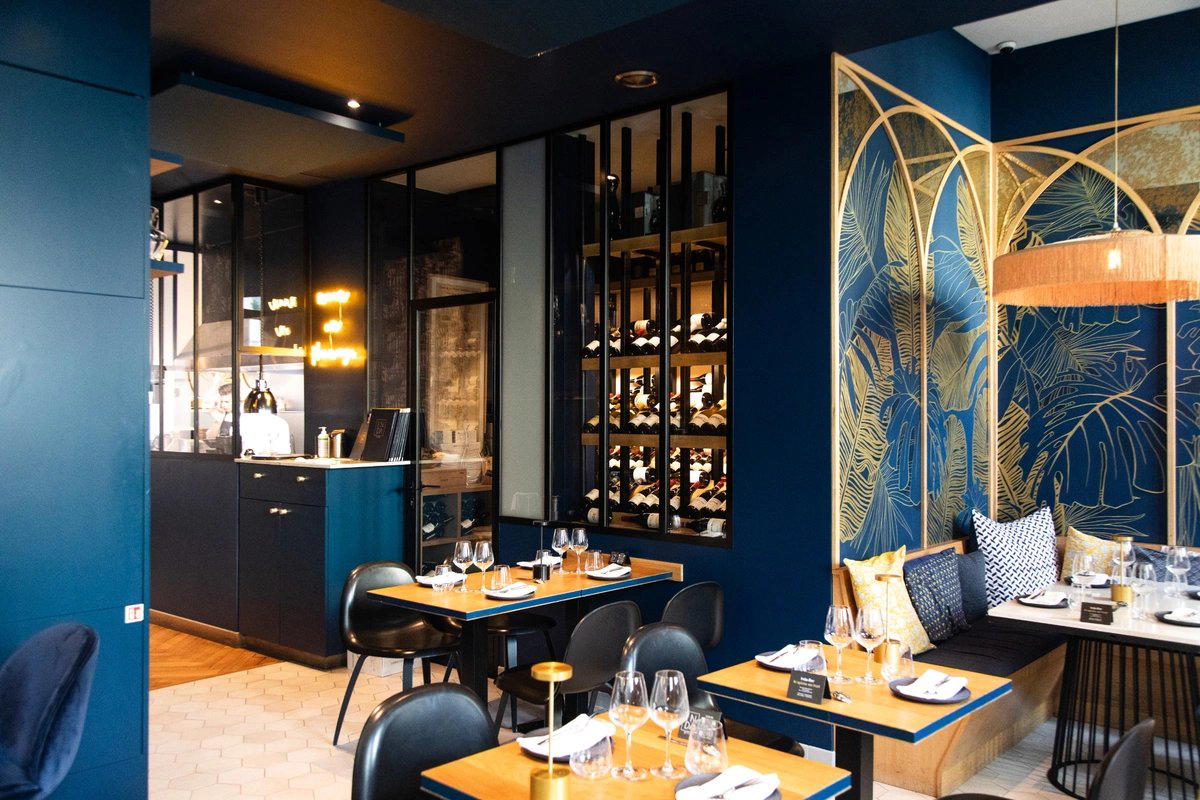
Geneva is often misread as austere because it does not perform pleasure in the obvious way. The city’s food, wine, and hotel culture are quieter than those of Paris, Milan, or Barcelona, but the compactness is a strength for travellers who plan well. A stay near the central hotel corridor can connect lake walks, old-town addresses, watch shopping, private appointments, and serious dining without the transport burden of a larger capital. For restaurants, Our full Geneva restaurants guide is the better tool than assuming the hotel restaurant will define the trip. Geneva rewards targeted reservations and neighborhood-level planning.
The bar scene also requires a different lens. This is not a city of late-night excess as its primary identity. Hotel bars, wine rooms, and polished cocktail addresses often function as meeting spaces for an international crowd that values quiet conversation and punctual service. Our full Geneva bars guide is useful for separating serious drinking rooms from generic hotel-lounge comfort. The same applies to wine. Geneva sits in a country with substantial domestic wine consumption and limited export visibility, so Our full Geneva wineries guide helps frame the local wine culture beyond the usual Swiss clichés.
Experiences in Geneva tend to be appointment-driven rather than spectacle-driven. Watchmaking, private collections, lake transport, diplomatic history, and old-town walks all work better when scheduled with intent. Our full Geneva experiences guide gives the city more texture than a simple lake-and-shopping itinerary. The practical advantage of a central luxury hotel is that Geneva’s core is compact.
For travellers extending a Swiss itinerary, Geneva also plays a specific role. It is a polished arrival or departure city rather than a single-note leisure destination. A trip might pair it with Zürich for finance and galleries, Basel for art, Lucerne for lake scenery, Gstaad or St. Moritz for alpine social life, or Bad Ragaz for medical wellness. The comparison set can even stretch beyond Switzerland. Hôtel de Paris Monte-Carlo in Monte Carlo represents a public, Riviera version of grand-hotel glamour; Aman Venice in Venice turns historic architecture into a canal-side private-house fantasy; The Fifth Avenue Hotel in New York City uses maximal interiors in a far louder urban context. Geneva is more controlled. Its luxury hotels are judged by precision, not theatre.
Planning notes for a Geneva stay
With no verified phone number, website, room categories, price range, or booking method in the available record, planning should remain practical and cautious. Confirm current operating status, room types, dining availability, and reservation channels directly through official sources before committing to dates. In Geneva, demand can shift with international conferences, diplomatic meetings, watch-industry periods, and major trade events, so rates and availability may move sharply even when the city feels calm on the surface.
The formality level is another point to assess before arrival. Geneva luxury hotels generally lean polished rather than casual, especially in public rooms during weekday business periods. That does not mean evening dress codes are always strict, and no venue-specific dress code is confirmed here. It does mean the city rewards neat, understated clothing. The safest assumption is tailored travel wear by day and a sharper register for hotel dining rooms, lounges, and private meetings.
Reader questions
Is Le Richemond more formal or casual?
In Geneva’s luxury-hotel context, Le Richemond should be approached as formal-leaning rather than casual.
What is the editorial view on Le Richemond?
Le Richemond is leading read through Geneva’s grand-hotel tradition rather than through restaurant, chef, or award data, none of which is available in the current record. Its relevance comes from the city category it occupies: luxury hospitality shaped by lakefront geography, privacy, and a restrained design culture. Compare it directly with the established Geneva set before deciding whether its version of formality suits the trip.
Why do people go to Le Richemond?
Travellers choose this category of Geneva hotel for location logic, discretion, and access to the city’s business, diplomatic, shopping, and lakefront circuits.
How hard is it to get in to Le Richemond?
If Geneva is hosting a major conference, diplomatic event, or watch-sector gathering, luxury hotel availability can tighten quickly; outside those periods, access depends on current inventory and reopening or operating status confirmed through official channels.
What room category do guests prefer at Le Richemond?
No verified room-category data is available, so a specific preferred category should not be claimed. In Geneva luxury hotels, guests often compare rooms by view, quietness, bathroom quality, and working space rather than decorative language alone. For Le Richemond, confirm current categories directly and judge them against the purpose of the stay: business efficiency, lake-oriented leisure, or a longer private visit.
In Context
Comparable venues nearby, for context on price, style, and recognition.
| Venue | Price | Awards | Notes |
|---|---|---|---|
| Le RichemondThis venue — the venue you are viewing | $$$$ | 5-Star | Not listed |
| Hotel Metropole Geneve | $$$$ | 5-Star | Cite, Historic luxury boutique hotel blending timeless elegance with contemporary refinement, positioned as Geneva's premier lakefront destination. |
| Hôtel Longemalle | $$$ | 4-Star | Cite, Chic boutique hotel with designer decor in a historic building. |
| Hôtel de la Cigogne | $$$$ | 5-Star | Cite, luxury boutique with family heritage |
| Eastwest Hotel | $$$$ | 4-Star | Le Prieuré, Contemporary luxury boutique with Asian-influenced design elements, dark wood floors, and refined finishes emphasizing discreet elegance. |
| Fairmont Grand Hotel Geneva | $$$$ | 5-Star | Le Prieuré, Well-known luxury lakeside hotel with historic charm and modern facilities. |
Continue exploring
More in Geneva
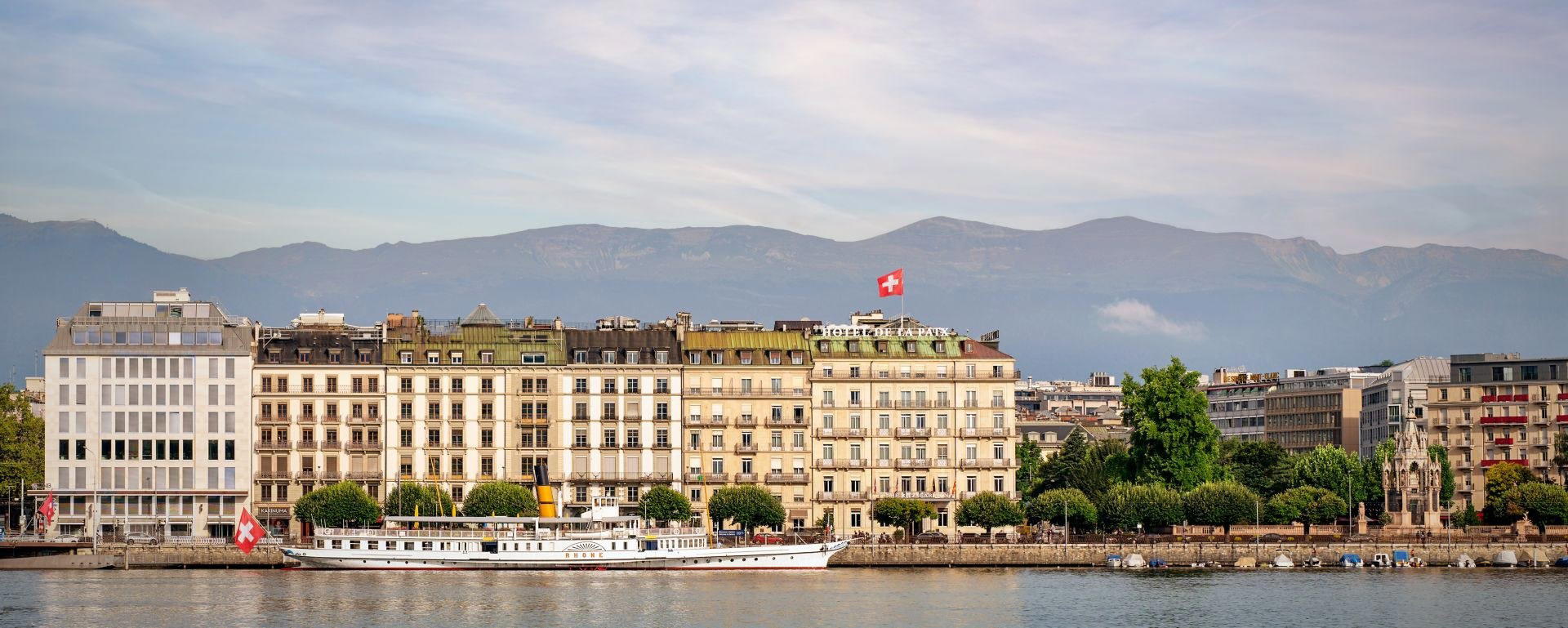
Hotels in Geneva
Browse all →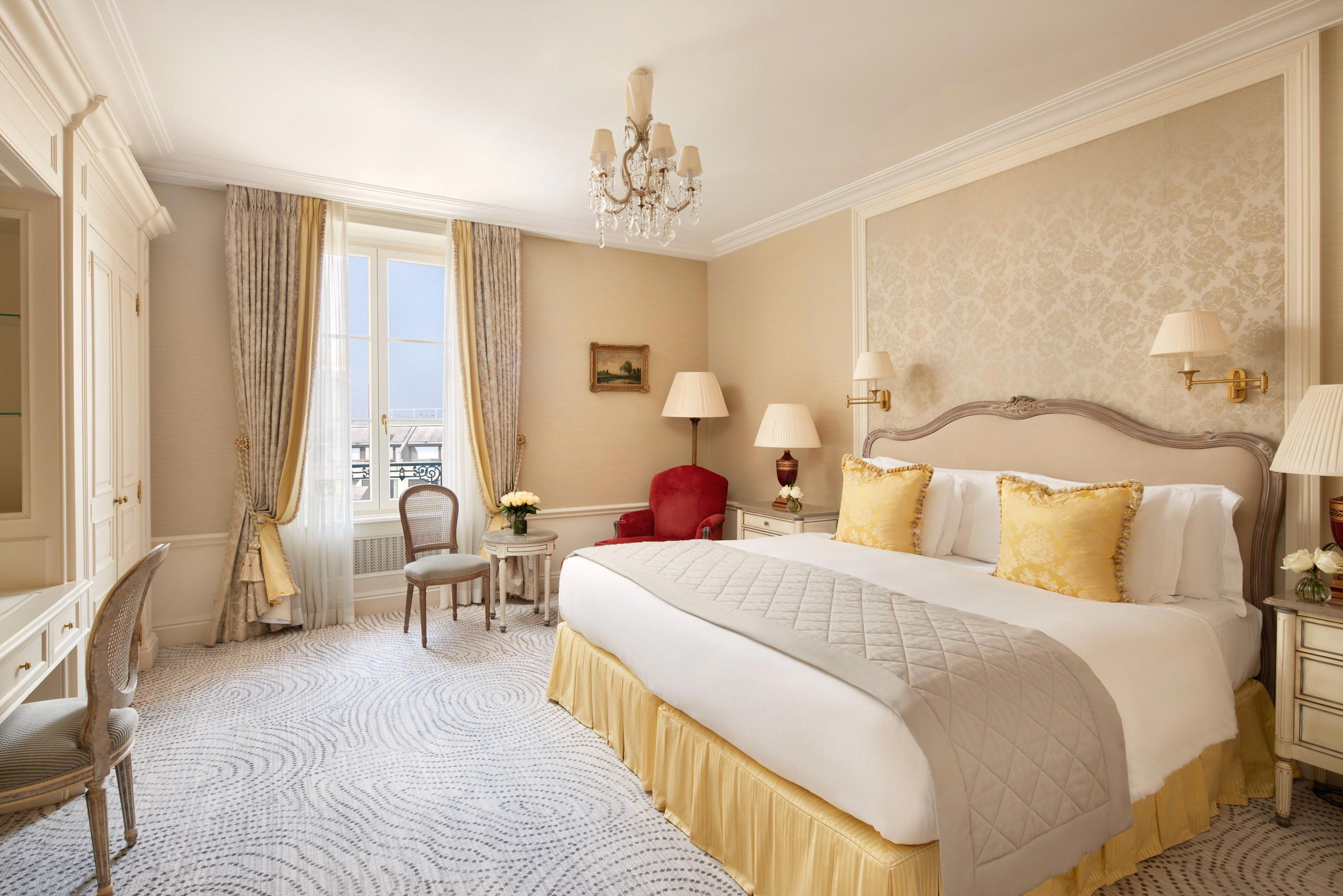
Bars in Geneva
Browse all →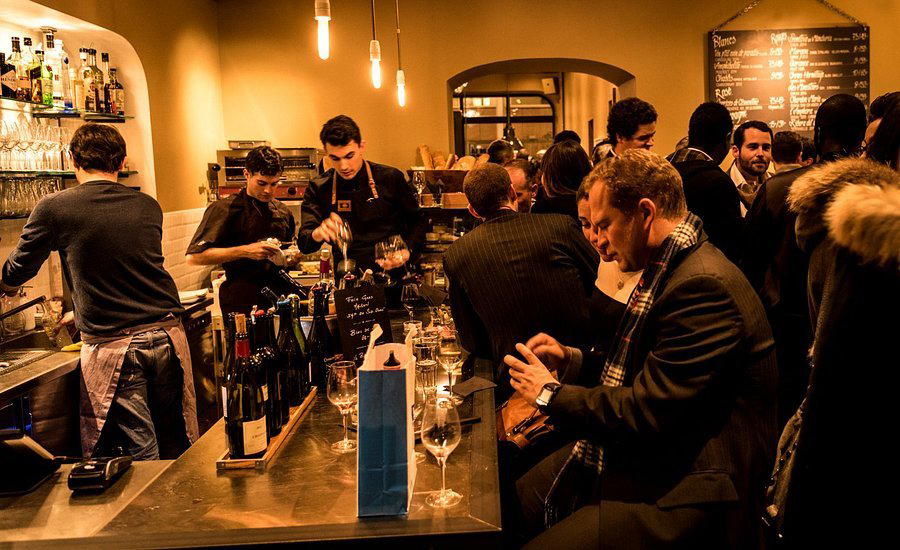
Restaurants in Geneva
Browse all →
Wineries in Geneva
Browse all →
At a Glance
- Elegant
- Classic
- Scenic
- Romantic
- Sophisticated
- Well Known
- Romantic Getaway
- Business Trip
- Family Vacation
- Honeymoon
- Weekend Escape
- Celebration
- Waterfront
- Historic Building
- Destination Spa
- Panoramic View
- Garden
- Terrace
- Wi Fi
- Spa
- Fitness Center
- Business Center
- Concierge
- Room Service
- Valet Parking
- Waterfront
- Mountain
- Garden
- Skyline
- Wi Fi
- Spa
- Fitness Center
- Business Center
- Concierge
- Room Service
- Valet Parking
A luxurious, old‑world yet refreshed atmosphere that combines Art Deco elegance and classic grand‑hotel charm with quiet, refined public spaces and a scenic lakeside setting.