← Guides
Inside the Mosel: Booking the Visit That's Worth It in 2026 Two estates. Zero public tasting rooms. J.J.
Inside the Mosel: Booking the Visit That's Worth It in 2026 Two estates. Zero public tasting rooms. J.J.
Two estates. Zero public tasting rooms. J.J. Prüm and Egon Müller Scharzhof,1 the names that anchor any serious conversation about German Riesling, do not operate visitor programs in any conventional sense. If you arrive in Wehlen or Wiltingen without a prior arrangement, you will admire the slate terraces from the road and nothing more. Getting in requires either a trade relationship, a patient merchant connection, or the kind of timing that rewards collectors who plan a harvest trip six months out. Confirm directly before building a trip around either name.
That said, the Mosel is not a closed circuit. The region around Bernkastel-Kues, Wehlen, and the Saar valley offers enough producer access, from the Prüm family's second estate to the Egon Müller négociant tier, that a well-constructed itinerary can get you within one degree of the wines that matter most.
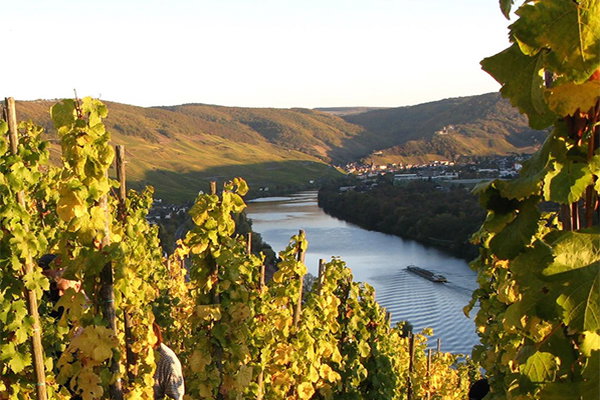
J.J. Prüm, based in Wehlen on the Mittelmosel, produces Rieslings from the Wehlener Sonnenuhr, a south-facing slate amphitheater that generates some of the longest-lived whites in Germany. Egon Müller farms the Scharzhofberg in Wiltingen on the Saar, producing only 80,000 bottles per year across the range, with some cuvées selling out before they reach the open market.2 Neither estate has the production volume, the staff, or the inclination to run a public cellar door.
Demand is the structural problem. Egon Müller releases wines only when they taste ready to him, not after a fixed number of months, so a vintage may remain in the cellar while a successor year is already bottled.2 The TBA and Eiswein are effectively auction wines: the 2003 Scharzhofberger TBA offered just 18 full bottles at the VDP auction, with bidding opening at €2,000 per bottle.3 J.J. Prüm's Kabinett and Spätlese tiers reach the market in larger volumes, but the estate's allocation list is built around trade relationships and a small number of private clients who have bought consistently for years.
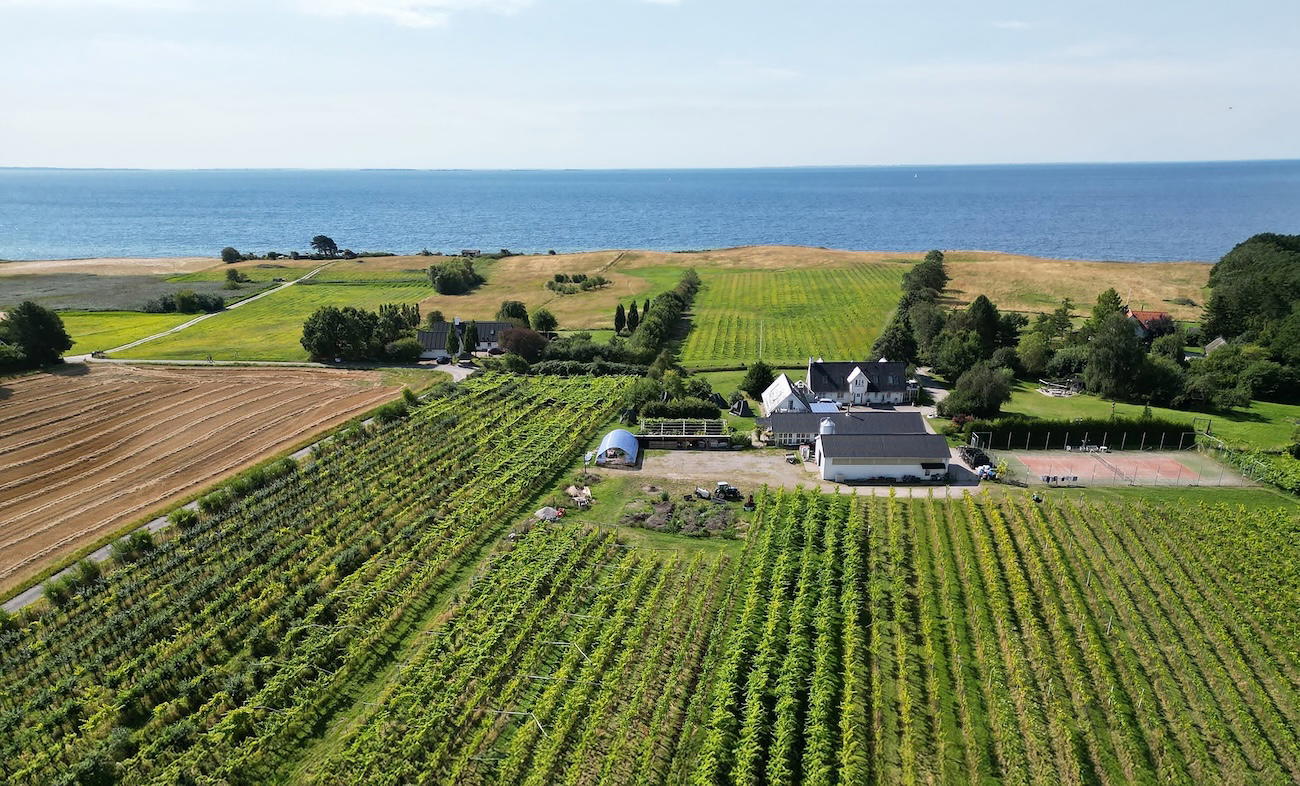
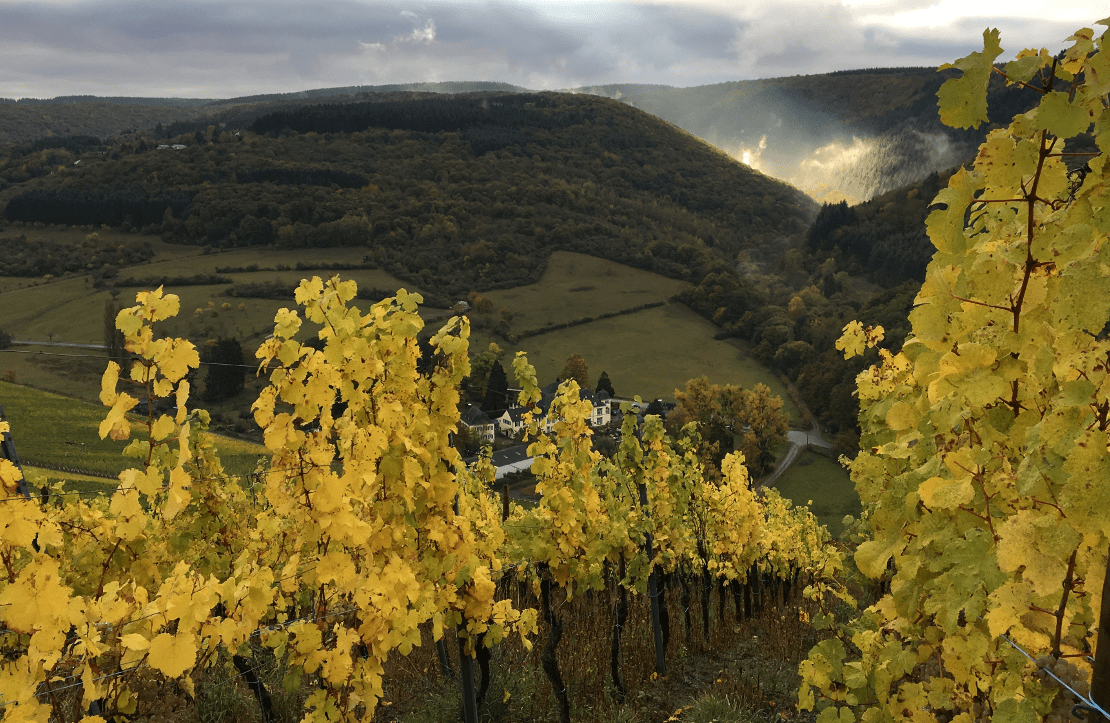
The Mosel's geography compounds this. The steep slate vineyards between Bernkastel and Traben-Trarbach are not designed for tourism infrastructure. Cellars are cut into hillsides, access roads are narrow, and harvest, when the estates are most alive, is also when they are least available to visitors.
Neither J.J. Prüm nor Egon Müller publishes a public visit calendar or a booking page. The estates do not list tasting appointments on their websites, and no third-party platform carries their availability. If you want to visit, the route is a direct written inquiry to the estate, in German, addressed formally, with a clear statement of who you are and why you are coming. Response rates for cold inquiries from private individuals are low.
What does open on a more predictable schedule: the annual Mosel Wine Week (Moselweinwoche) in Cochem, and the VDP Mosel open days, which bring together a broader group of growers including some Prüm-adjacent estates. Egon Müller's auction wines appear year after year at the GROSSER Ring auction of the VDP Mosel,1 a public event that gives collectors a chance to encounter the wines in a structured setting, even if the estate itself remains closed.
For J.J. Prüm and Egon Müller specifically, the realistic channels rank as follows:
1. Your wine merchant, working their importer relationship. This is one reliable route. Both estates work through a small number of importers per market, in the UK, Justerini & Brooks and Berry Bros. & Rudd have historically carried Egon Müller; in the US, Terry Theise Selections (now part of Michael Skurnik Wines) has been the primary importer for both estates for decades. A merchant with a direct importer relationship can sometimes arrange a cellar visit for a serious client. For J.J. Prüm current inventory in some markets, Field Blend Selections is a direct contact point.4 This channel produces results most consistently.
2. Direct written inquiry to the estate. Write to J.J. Prüm at their Wehlen address or to Egon Müller at Scharzhof, Scharzhofberg, 54459 Wiltingen.1 Be specific: name the wines you have bought, the vintages you have cellared, and the dates you are available. A cold inquiry with no purchase history is unlikely to succeed.
3. Harvest-week timing. Late September through mid-October, when selective picking is underway on the Scharzhofberg and Sonnenuhr, is when the estates are most animated, and also most pressed for time. Some collectors report that arriving in the village during harvest and making themselves known through a local restaurant or hotel connection has occasionally opened a door. This is not a strategy to rely on; it is an observation about how informal access sometimes happens in small wine communities.
4. Auction and secondary market for the wines themselves. If the goal is the wine rather than the visit, Sotheby's, Christie's, and Hart Davis Hart regularly carry Egon Müller TBA and J.J. Prüm Auslese Goldkapsel from mature vintages. Specific vintages appear with regularity, so confirm current availability directly with the auction house. The 2003 Scharzhofberger TBA sold at the VDP auction for €12,000 per bottle plus fees, totalling €14,994 per bottle,2 a benchmark that illustrates why secondary-market access to these wines is itself a collector's exercise.
Collectors who have built relationships with both estates over time share a few consistent behaviors. First, they buy every year, not just the celebrated vintages. Purchasing the Scharzhof Riesling QbA in a quieter year signals commitment in a way that buying only a single celebrated Auslese does not.
Second, they communicate through the importer rather than approaching the estate directly; the importer is the relationship node, and respecting that structure matters.
Third, they visit the region regularly and build relationships with the local trade, the wine merchants in Bernkastel-Kues, the sommeliers at the Mittelmosel's top restaurants, who exist within the same small network as the estates themselves.
For Egon Müller specifically, insiders note that the négociant tier, the Le Gallais estate in Wiltingen, which Egon Müller also manages, is more accessible than Scharzhof itself. Le Gallais produces Riesling from the Wiltinger Braune Kupp, a site adjacent to the Scharzhofberg, and the wines are distributed more widely. Buying Le Gallais consistently is a way of being in the Müller orbit without requiring the same level of access as the grand vin allocation. Egon Müller received the Winemakers' Winemaker Award in 2015,5 a credential that underscores why the importer channel is competitive and why building toward it through the négociant tier is the patient collector's move.
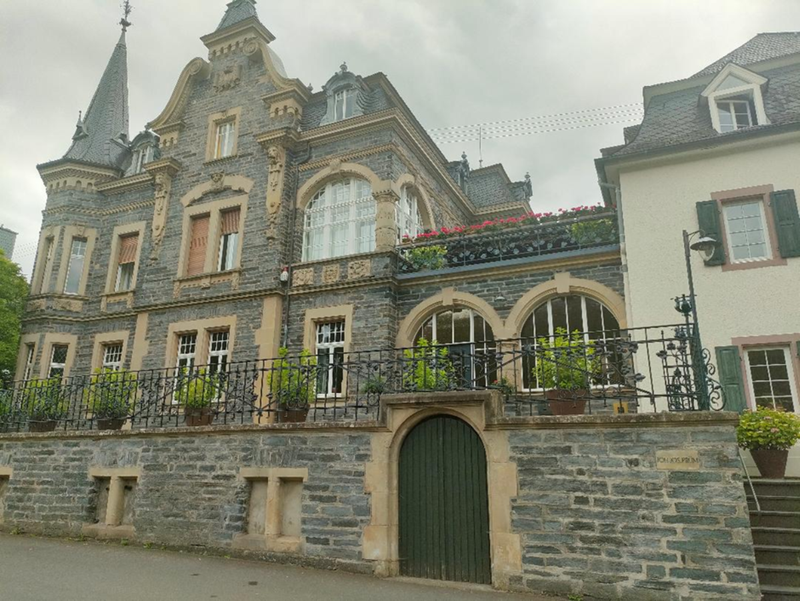
Arriving without an appointment. Both estates are private properties. Showing up at the Prüm gate in Wehlen or at Scharzhof in Wiltingen without a confirmed arrangement will not result in a tasting. It may result in a polite but firm refusal that makes a future inquiry harder.
Writing in English without context. Both estates are accustomed to international correspondence, but a cold email in English with no purchase history and no specific reason for the visit reads as a tourist inquiry. Write in German if you can; if not, be precise about your connection to the wines.
Conflating the Prüm family estates. There are multiple Prüm estates on the Mosel, J.J. Prüm, S.A. Prüm, and Joh. Jos. Christoffel Erben among them. J.J. Prüm is managed by Katharina Prüm; S.A. Prüm, now led by Saskia A. Prüm, is a separate domaine with a more accessible visitor policy. Confusing them in correspondence signals that you haven't done the work.
Treating the visit as a tasting-room experience. If you do secure time at either estate, it is not a flight of wines with a printed menu. It is a conversation, likely in the cellar, with someone who has agreed to give you their time. Come prepared to discuss vintages, to ask specific questions about the Sonnenuhr or Scharzhofberg, and to listen more than you talk.
The Mosel does not have a cover charge for its top estates, neither J.J. Prüm nor Egon Müller publishes a tasting fee, because there is no public tasting program to price. What access costs is relational capital and purchase history, not a booking fee.
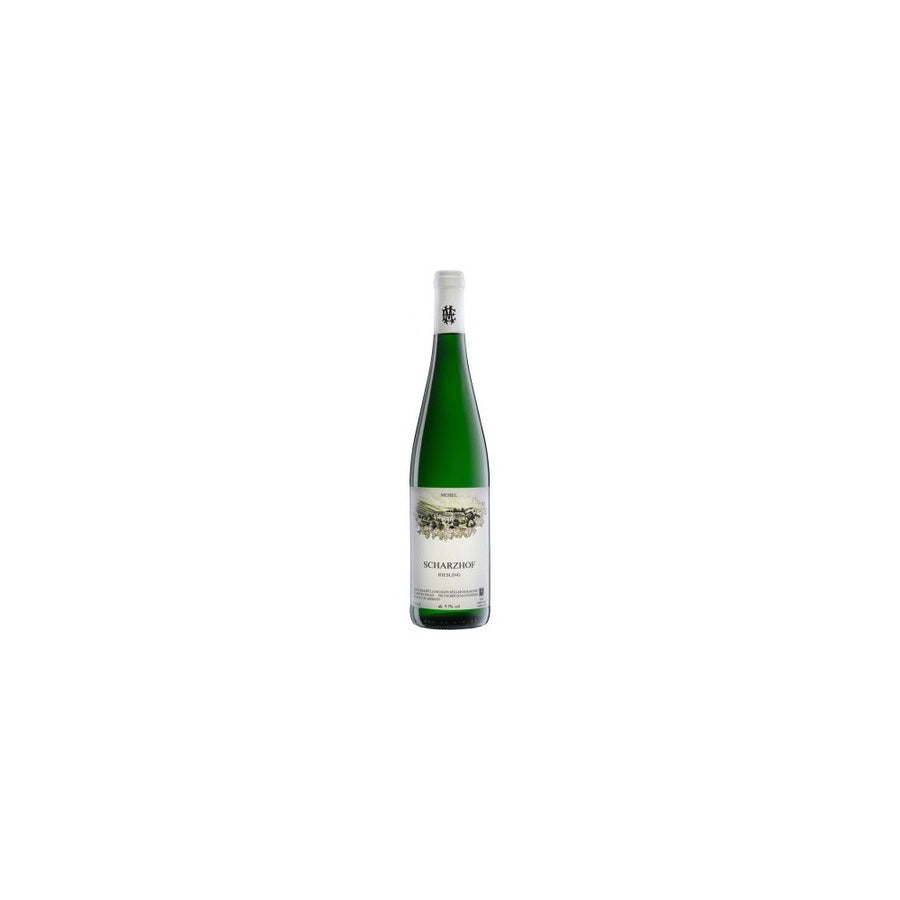
For the wines themselves: Egon Müller's Scharzhofberger Riesling Spätlese trades on the secondary market at prices that vary significantly by vintage and format. The Scharzhofberger TBA is produced only rarely, between 100 and 400 bottles per vintage, and the last vintage before 2017 was 2011.6 The Le Gallais Wiltinger Braune Kupp Spätlese is more widely available through merchants and represents one accessible price point in the Müller portfolio. J.J. Prüm's Wehlener Sonnenuhr Kabinett and Spätlese are available through specialist merchants in most major markets; the Auslese Goldkapsel tiers move into collector territory.
A Mosel trip built around harvest timing, late September, staying in Bernkastel-Kues or Traben-Trarbach, will cost what any rural German wine-region trip costs: modest by the standards of Burgundy or Napa, with excellent local restaurants and guesthouses. The investment is time and planning, not a premium access fee.
| Producer | Access Difficulty | Visitor Policy | How to Approach | Entry-Point Wine |
|---|---|---|---|---|
| J.J. Prüm (Wehlen) | high, no public program | By prior arrangement only; unpublished | Via importer or direct written inquiry | Wehlener Sonnenuhr Kabinett |
| Egon Müller / Scharzhof (Wiltingen) | high, effectively closed to cold inquiries | No public tasting room | Via importer relationship | Le Gallais Wiltinger Braune Kupp Spätlese |
| S.A. Prüm (Wehlen) | Moderate, more accessible than J.J. Prüm | Visits possible; contact estate directly | Direct inquiry or through merchant | Wehlener Sonnenuhr Riesling Spätlese |
| Markus Molitor (Wehlen) | Low-moderate, active visitor program | Tasting room open; appointments available | Book directly via estate website | Zeltinger Sonnenuhr Spätlese |
| Weingut Willi Schaefer (Graach) | High, small family estate, limited visits | By appointment; contact directly | Direct written inquiry | Graacher Domprobst Kabinett |
S.A. Prüm is particularly practical substitute for collectors who want to stand in a Wehlener cellar and taste from the Sonnenuhr. Saskia A. Prüm's estate is a separate entity from J.J. Prüm but farms overlapping parcels on the same slate slope. Visits are more accessible; contact the estate directly.
Markus Molitor in Wehlen operates one of the Mosel's most visitor-friendly programs among serious producers. His range spans from dry Spätlese to botrytized Auslese across multiple Mittelmosel sites, and the cellar visits are substantive. This is one practical entry point for a first Mosel trip.
Willi Schaefer in Graach, a tiny family estate farming the Graacher Domprobst and Himmelreich, is worth a written inquiry. Production is small, visits are not guaranteed, but the estate is less insulated than Prüm or Müller and has historically been reachable for serious collectors.
The cellars cut into the slate hillsides of the Mittelmosel are cold in every season, the kind of damp, mineral cold that makes you understand why these wines age for decades. At the estates that do receive visitors, the format is almost always the same: you follow someone through a low door into a space that smells of old wood and fermentation, and you taste from barrel or from bottle at a table that was not designed for the purpose.
The J.J. Prüm cellars are barred to visitors7 in the conventional sense, but the Wehlener Sonnenuhr itself, the steep, sun-facing slate bowl above the village, is visible from the river road and tells you everything about why the wines taste the way they do. The selective harvest passes through that vineyard yield must that will eventually be separated into Kabinett, Spätlese, Auslese, and the gold-capsule tiers that collectors track across decades. The wines ferment slowly in large old oak Fuder, traditional Mosel casks, and are bottled late, often well into the following year.
At Scharzhof, the Scharzhofberg itself is visible from the estate, a single unbroken slope of Devonian slate rising above the Saar valley, planted almost entirely to Riesling. The TBA emerges only in rare vintages, with between 100 and 400 bottles produced per vintage,6 a quantity so small that the wine functions less as a commercial release than as a document of what the site can do when botrytis and frost cooperate perfectly.
For most visitors, the experience will be at one of the more accessible estates, Markus Molitor, S.A. Prüm, or Willi Schaefer, but the physical context is the same: steep vineyards, cold cellars, wines that taste like the place they came from.
The Mosel rewards collectors who already know the wines and want to deepen that knowledge, not first-time visitors looking for a tasting-room introduction to German Riesling. If you have been buying J.J. Prüm Spätlese for several years and want to understand the Sonnenuhr from the inside, the effort of building toward a visit is worth it. If you are new to Mosel Riesling, start with Markus Molitor or a VDP open day, build your palate and your purchase history, and approach the closed doors later.
Harvest timing, late September through mid-October, is when the region is most alive and most instructive. The vineyards are in motion, the cellars are active, and the conversations you have with producers are grounded in the specific year unfolding around you. Off-season visits in spring, when the vines are just breaking dormancy, offer a quieter version of the same landscape and are sometimes easier to arrange.
This is not a trip for a long weekend. The Mosel is a slow region, the wines are slow, the vineyards are slow, and the relationships that open the stronger doors are slow. Allow at least four or five days, build in time to eat well, and treat the visit as the beginning of a longer engagement with the region rather than a box to check.
For J.J. Prüm and Egon Müller specifically, a visit is not something you book, it is something you earn, over years of buying the wines and building a relationship through the importer channel. Cold inquiries rarely succeed. Arriving without an appointment succeeds never. The estates are not being precious; they are small family operations with no infrastructure for tourism, and their time during harvest is genuinely finite.
What the Mosel does offer, reliably and without a waiting list, is a landscape and a cluster of producers that can fill a serious itinerary. Markus Molitor's cellar, a morning at S.A. Prüm, an afternoon tasting through the VDP Mosel portfolio, these are not consolation prizes. They are substantive encounters with one of the world's most distinctive wine regions, and they are available to anyone who plans ahead and writes a polite email.
The allocation list and the importer relationship remain the only routes that reliably produce access to a leading cuvées of both estates, whether as bottles or as visits. For most collectors, the négociant tier and the adjacent producer are the smarter near-term pursuit; the grand vin and the cellar door belong to those who have spent years earning the right to ask. That patience, in the Mosel more than almost anywhere else, is what the wines themselves have always asked of you.
No. J.J. Prüm does not operate a public tasting room or walk-in visitor program. The estate is a private property in Wehlen on the Mittelmosel, and arriving without a confirmed arrangement will not result in a tasting. All visits require prior contact with the estate, ideally facilitated through an importer or merchant relationship.
Egon Müller's wines are distributed through a small number of importers per market, in the US, Michael Skurnik Wines (formerly Terry Theise Selections) has been the primary importer. Access to the Auslese and above tiers is through merchant accounts with importer relationships. The TBA and Eiswein are effectively auction wines. Building a purchase history with a specialist merchant who carries the estate is one reliable route to allocation.
No. They are separate family estates that share a surname and farm overlapping parcels on the Wehlener Sonnenuhr, but they are distinct operations. S.A. Prüm is led by Saskia A. Prüm and has a more accessible visitor policy than J.J. Prüm, which is managed by Katharina Prüm. Confusing the two in correspondence with either estate is a common mistake that signals insufficient preparation.
Late September through mid-October, harvest season, is when the region is most active and the conversations with producers are most grounded in the current vintage. Spring visits, when the vines are breaking dormancy, are quieter and sometimes easier to arrange. Neither J.J. Prüm nor Egon Müller publishes a preferred visit window; confirm timing directly with any estate you are approaching.
Markus Molitor in Wehlen operates one of the region's more visitor-friendly programs among upper-tier producers and can be contacted directly through the estate. Willi Schaefer in Graach is worth a written inquiry for smaller-production, site-specific Rieslings from the Graacher Domprobst. S.A. Prüm in Wehlen is more accessible than J.J. Prüm and farms the same Sonnenuhr slope. The VDP Mosel open days offer a multi-producer tasting format that is a practical starting point for collectors new to the region.
Get the App
Take the shortlist into the En Primeur Club app for concierge access, saved places, and the next step after discovery.
Get Exclusive AccessMore from the editors