Canada's only sake brewery drawing on Ontario spring water, IZUMI sits inside the Distillery District's Gristmill Lane and occupies a niche that Toronto's drinking scene rarely fills. The brewery produces nihonshu on Canadian soil, anchoring a tasting ritual rooted in Japanese craft tradition. For those curious about fermentation beyond wine and beer, it offers a focused, low-key alternative to the city's louder bar circuit.
Pearl is the En Primeur Club membership app — saves, bookings, and concierge access live there. Same editors, same standards.
- Address
- 51 Gristmill Lane, Toronto, ON M5A 3C4, Canada
- Phone
- +1 416 365 7253
- Website
- izumibrewery.com
- Directions
- Get directions
 Saves & bookings on Pearl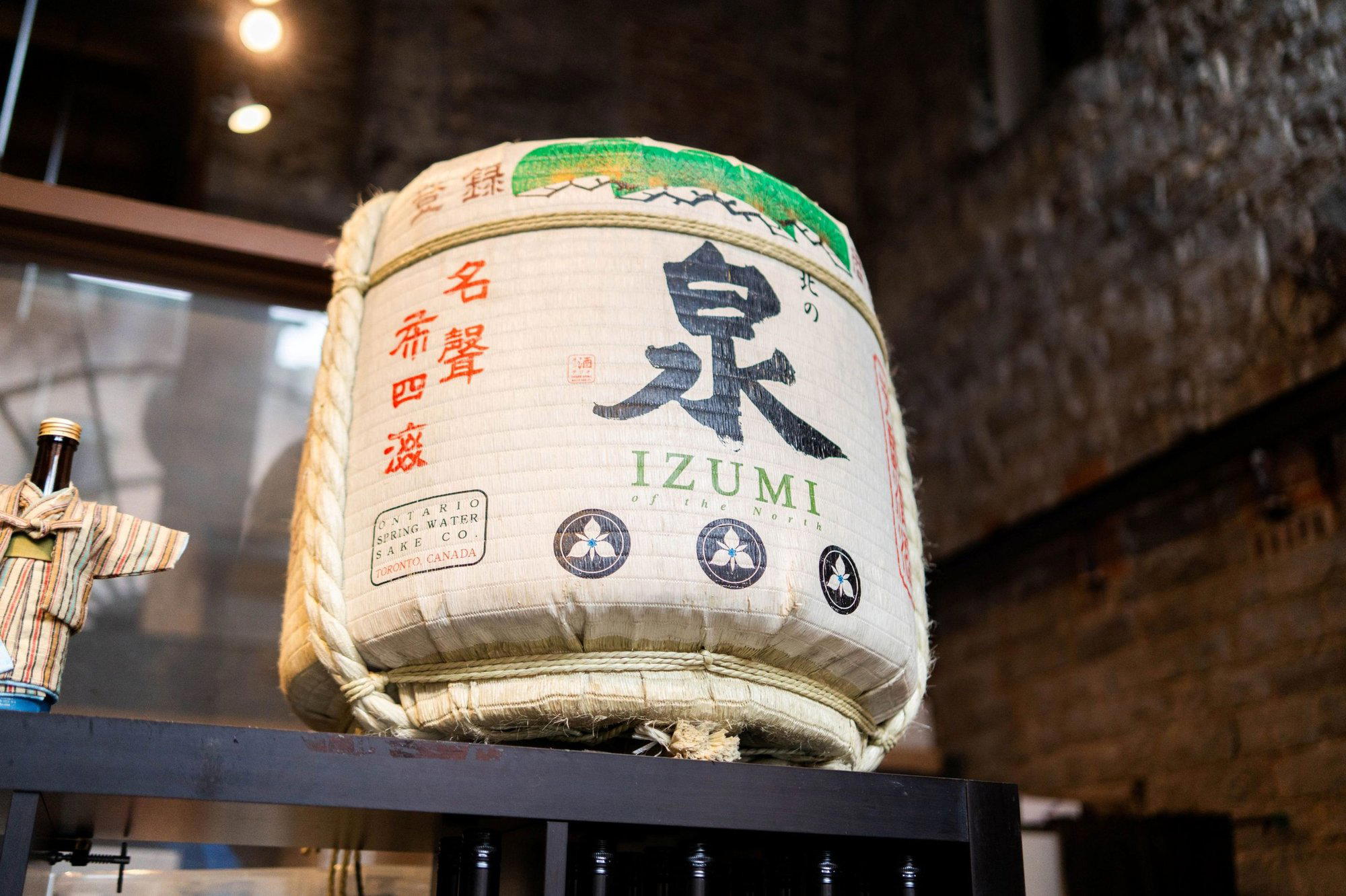
Sake Brewing in a Whisky District
Toronto's Distillery District built its identity around nineteenth-century industrial architecture and, later, around craft spirits. That context makes IZUMI Brewery (Ontario Spring Water Sake Company), at 51 Gristmill Lane, a quiet anomaly: a nihonshu producer operating inside a neighbourhood defined by barrel aging and rye. Sake brewing shares much of its vocabulary with other fermentation traditions, water chemistry, grain selection, temperature control, and the Distillery District's existing infrastructure and foot traffic have supported it in ways a standalone industrial unit rarely could. Where bars like Bar Raval or Bar Mordecai represent Toronto's appetite for European-inflected drinking culture, IZUMI occupies the opposite corner of the room.
What Spring Water Does to the Brew
The brewery's full name, Ontario Spring Water Sake Company, signals its primary production argument. Water composition is one of the two or three variables that most dramatically shape sake character. Japanese regional styles are often traced directly to local water sources: the hard water of Nada produces drier, more assertive brews, while Kyoto's softer Fushimi water yields rounder, more delicate results. Ontario spring water sits in its own profile, and the brewery's decision to centre that source as part of its identity is a deliberate positioning choice, not incidental branding. It places IZUMI in a conversation about terroir-driven fermentation that extends well beyond Japan's borders, a conversation that natural wine producers and craft cider makers have been having for years. The specific mineral balance of the water used here shapes every batch.
The Ritual of Tasting Sake on Home Soil
The etiquette of drinking sake in a production environment differs from ordering it at a sushi counter. At a brewery, the sequence of tasting typically moves from lighter, more fragile expressions toward richer, more structured ones, a logic closer to white wine tasting than to the shot-culture occasionally projected onto sake in Western dining rooms. Temperature is part of the conversation: ginjo and daiginjo styles are generally served cold to protect their aromatic compounds, while some junmai expressions open up at room temperature or slightly warm. Visiting a production site changes the framing. You are drinking in the context of the process, and that context rewards patience and comparison rather than a single-glass transaction.
Toronto's bar circuit rarely offers that kind of structured engagement with sake. At venues like Bar Pompette or Civil Liberties, the emphasis is on cocktail craft or wine curation. IZUMI operates from a different premise: that the fermented grain itself, made here in Ontario, is worth the same sustained attention that those bars give to spirits or natural wine.
Canada's Craft Sake Scene and Where IZUMI Fits
Craft sake production outside Japan remains sparse. A small number of North American breweries have launched in the past decade, most of them concentrated in California, British Columbia, and Quebec. Ontario has no direct peer, which means IZUMI operates without a local competitive set to benchmark against. The nearest analogues are closer to the fermentation-forward drinking culture developing in Montreal or the ingredient-led bar programs found at venues like Botanist Bar in Vancouver. In that broader Canadian drinking conversation, IZUMI represents a production-side argument rather than a service-side one: it is less interested in how sake is mixed or presented and more focused on whether it can be made well on Canadian soil.
That focus connects IZUMI to a wider global trend. Sake's geographic boundaries have been loosening steadily since the early 2000s. Breweries in Australia, Brazil, and across Europe have demonstrated that the koji fermentation process and nihonshu standards can survive transplantation, provided water and rice sourcing are handled carefully. The question IZUMI answers, batch by batch, is whether Ontario can make that case with the same conviction.
The Distillery District as Context
Gristmill Lane sits within the broader Distillery District complex, which draws significant visitor traffic across seasons and supports both daytime and evening visits. The neighbourhood's industrial heritage, preserved Victorian-era brick, cobbled lanes, former barrel warehouses, gives IZUMI a setting that reads more like a European craft production district than a suburban industrial park. That matters for how you approach a visit. The area rewards slow movement: there is enough density of food, drink, and independent retail to anchor a half-day, with sake tasting sitting as one node in a longer circuit rather than a standalone destination requiring a dedicated trip. Visitors coming from elsewhere in Toronto should note the neighbourhood's position in the eastern end of downtown, accessible by streetcar along King Street.
For travellers already moving between Canadian cities, IZUMI represents a drink-specific stop that has no direct equivalent in the other major markets. Neither Humboldt Bar in Victoria, Missy's in Calgary, nor Bearfoot Bistro in Whistler addresses nihonshu production. Even further afield, venues like Grecos in Kingston and Bar Leather Apron in Honolulu occupy craft-drink niches without touching sake production. The specificity is part of the value.
Planning Your Visit
IZUMI's hours are Mon: Closed; Tue: 12–6 PM; Wed: 12–6 PM; Thu: 12–6 PM; Fri: 12–6 PM; Sat: 12–7 PM; Sun: 12–6 PM. The address, 51 Gristmill Lane, Toronto, ON M5A 3C4, places it within walking distance of the Distillery District's main pedestrian entry points, and the surrounding area has enough to fill a full afternoon. Reservations are recommended.
Cuisine and Recognition
Comparable venues nearby, for context on price, style, and recognition.
| Venue | Cuisine | Price | Notes |
|---|---|---|---|
| IZUMI Brewery (Ontario Spring Water Sake Company)This venue — the venue you are viewing | sake_bar | $$ | Not listed |
| Uh Bar | speakeasy | $$ | Trinity Bellwoods |
| YUBU | Bar | $$ | Kensington-Chinatown |
| Dark Horse Espresso Bar | lounge | $$ | Kensington-Chinatown |
| El Trompo | pub | $$ | Kensington |
| Bar Neon | cocktail_bar | $$ | Wallace Emerson |
Continue exploring
More in Toronto
Bars in Toronto
Browse all →
Restaurants in Toronto
Browse all →
Hotels in Toronto
Browse all →


At a Glance
- Industrial
- Modern
- Intimate
- Casual Hangout
- Special Occasion
- Historic Building
- Seated Bar
- Counter Only
- Sake
Current opening hours
- Monday
- Closed
- Tuesday
- 12–6 PM
- Wednesday
- 12–6 PM
- Thursday
- 12–6 PM
- Friday
- 12–6 PM
- Saturday
- 12–7 PM
- Sunday
- 12–6 PM
Hours can change for holidays and private events. Last verified .
Charming tasting bar in a dramatic historic industrial space with meter-thick limestone walls and 12-meter vaulted ceilings.