Bar Flora
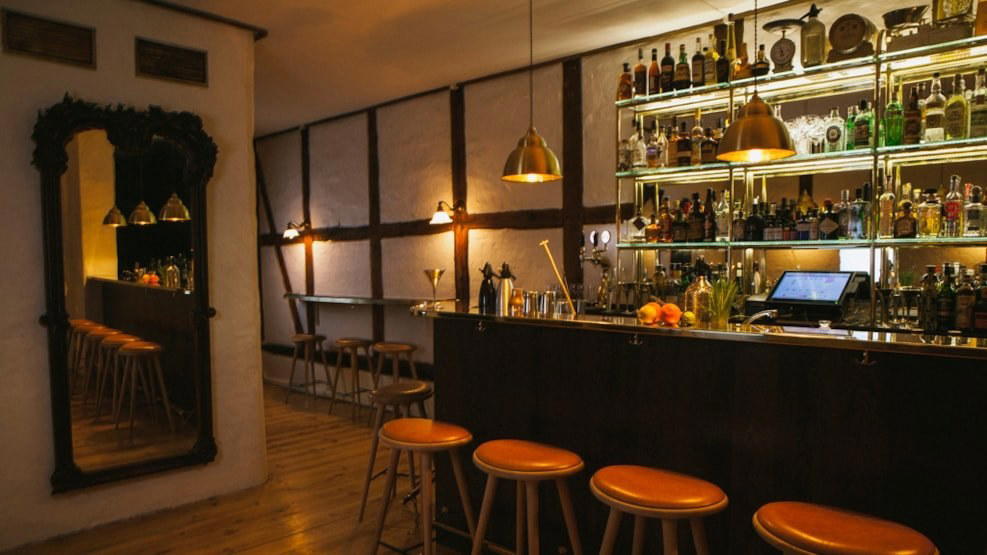
Bar Flora sits at Bremerholm 6 in central Copenhagen, a useful address for reading the city’s current cocktail mood: less speakeasy theatre, more compact rooms, sharp drinks, and neighbourhood-aware pacing. Public data does not list awards, prices, hours, or a named bar lead, so the sensible approach is to treat it as a scene-led stop rather than a credential-led trophy bar.
Pearl is the En Primeur Club membership app — saves, bookings, and concierge access live there. Same editors, same standards.
- Address
- Bremerholm 6, 1069 København K, Denmark
- Directions
- Get directions
 Saves & bookings on Pearl
Bremerholm, and Copenhagen's quieter cocktail register
Bremerholm places a bar inside the part of Copenhagen where the city changes tempo quickly: office streets by day, dining rooms and hotel lobbies by evening, late drinks once the restaurants begin to empty. That setting matters. Copenhagen cocktail culture has never depended solely on hidden doors or heavy spectacle. Its stronger current sits closer to the city’s design instincts: concise rooms, careful lighting, menus that do not need to shout, and service that reads the table before performing for it. Bar Flora, at Bremerholm 6, belongs to that central Copenhagen circuit, where a drink can be a first stop before dinner, a bridge between restaurants, or the whole point of the night.
The useful way to read this address is not as a trophy venue with a long list of public medals. The available record gives no awards, no published price range, no house cocktail list, no hours, no phone number, and no named bartender or chef. In a city where certain bars trade on international recognition and others on local regularity, this one has to be assessed through location, category, and the kind of night it appears built to serve. Bremerholm is not a remote drinking district; it is central, practical, and close to the rhythm of Copenhagen K. That makes the bar less of a destination pilgrimage and more of a tactical choice within an evening planned around restaurants, hotels, and a late central finish.
Copenhagen’s bar scene has matured in a notably Scandinavian direction. The drama of the 2010s speakeasy model, with password rituals and deliberate concealment, has less pull here than bars that make technique feel calm. The city’s serious cocktail rooms often borrow from the same habits that shaped its restaurants: fermentation literacy, restraint with sugar, house preparations, seasonal thinking, and a preference for balance over excess. Without verified menu details, no specific drink should be invented for Bar Flora. The broader point is still useful: a central Copenhagen cocktail bar now competes not by volume or novelty alone, but by whether it can make a concise programme feel intentional in a city already fluent in considered drinking.
The cocktail programme as the real test
For a modern cocktail bar in Copenhagen, the first question is not whether the room photographs well. It is whether the drinks have a point of view beyond familiar templates. The city has enough competent Negronis, Martinis, sours, and spritz variations that a new or lower-profile room has to earn attention through structure: how it handles dilution, bitterness, acidity, texture, and the relationship between spirit and garnish. The safer, more useful conclusion is that visitors should read the menu in person and look for house-built components, a tight list rather than an overextended one, and bartenders who can translate preferences without pushing the table toward the same drink.
This is where Copenhagen differs from louder cocktail capitals. New York and London often reward scale, concept, and brand mythology; Copenhagen tends to reward coherence. A bar can be small, central, and relatively undocumented online, yet still fit the city’s drinking culture if the programme is disciplined. Technique matters, but visible effort is not always the goal. The drink should arrive with the right temperature, glassware, and dilution, then get out of its own way. In that sense, the setting around Bremerholm is a useful proving ground: the audience may include locals leaving work, hotel guests from nearby addresses, and diners heading between reservations. A cocktail list in this part of town has to satisfy people who may be staying for one round as well as those building the evening around the bar.
Comparison helps. Ruby represents Copenhagen’s more established cocktail grammar, a benchmark for visitors who want a known address with a longer reputation. Bird points toward the city’s appetite for more specific bar concepts and music-led energy. Charlie's Bar sits in a different drinking tradition, closer to pub culture and beer than cocktail technique. That is not a weakness, but it does set expectations: go for the room, the list, and the convenience of the address, not for a published award narrative.
What to look for on the menu
Start by scanning how many drinks the menu tries to carry. Copenhagen bars with strong control often resist overlong lists, because fewer drinks allow fresher prep and tighter staff fluency. Then look at the balance between classics and house drinks. A menu that includes recognisable structures can be a strength if the variations are precise; novelty for its own sake often ages badly by the second round. If the bartender asks about spirit, sweetness, bitterness, and texture before suggesting a drink, that is a stronger signal than a rehearsed speech about inspiration.
For readers comparing a drinks-led night with dinner planning, the city’s restaurant culture is part of the same conversation. Copenhagen’s dining rooms have trained visitors to expect clarity and pacing, and those expectations have moved into bars. Before or after cocktails, Our full Copenhagen restaurants guide gives the wider culinary context, from tasting-menu seriousness to relaxed neighbourhood tables. For hotel-based itineraries, Our full Copenhagen hotels guide is the better planning layer, especially for travellers who want walking-distance drinks rather than a cross-city taxi plan.
How it fits the city's drinking map
Copenhagen’s cocktail geography is compact, but not uniform. The centre pulls in hotel guests, after-work drinkers, and restaurant traffic; other pockets lean more local, more wine-led, or more late-night. A central address like Bremerholm 6 gives Bar Flora an advantage for logistics. It can function within a plan that includes dinner in the inner city, a harbour-side walk, or a hotel bar comparison. The nearby hotel-bar category is worth noting, because Copenhagen has become better at treating hotels as public drinking rooms rather than private lobbies. 71 Nyhavn Hotel belongs to that hospitality-adjacent drinking circuit, where visitors often want atmosphere, comfort, and a controlled pace.
The city also rewards travellers who understand category before choosing a venue. A wine bar, a cocktail bar, a pub, and a hotel bar may sit within a short ride of one another, but they answer different needs. Copenhagen has serious wine culture, especially around natural and low-intervention lists, and that can make cocktail bars feel more focused by contrast. A cocktail room has to justify why spirits are the right medium for the night. That usually means better temperature control, more deliberate balance, and enough conversation from the bar to make the drink feel tailored without turning service into theatre.
Denmark’s broader drinking map is also relevant. A Copenhagen bar should not be treated as the whole national story. Visselulles Vinbar in Sønderborg points to a smaller-city wine-bar rhythm, where the value often lies in locality and regulars rather than international traffic. Bardok in Aarhus shows how Denmark’s second city can support its own drinking culture without copying Copenhagen outright. For a useful foreign comparison, Café La Trova in Miami sits at the opposite end of the spectrum: performance, music, and Cuban bar tradition are central to the experience. Copenhagen’s central cocktail rooms generally work in a lower register. The point is not less ambition; it is a different grammar.
Who should choose this kind of bar
A night here makes sense for travellers who want a central Copenhagen cocktail stop without building the evening around a heavily publicised award address. It is better suited to drinkers who judge a bar by pacing, balance, and conversation than by a checklist of famous signatures. The lack of public data on pricing and opening hours means it should not be treated as a guaranteed late-night solution without verification close to the date. That practical uncertainty is common with smaller bars and changing hospitality schedules, especially in cities where staffing, holidays, and private events can alter the rhythm of a week.
For a broader scan before settling on a route, Our full Copenhagen bars guide is the natural starting point. Travellers building a mixed itinerary can also use Our full Copenhagen wineries guide for wine-led context and Our full Copenhagen experiences guide for cultural planning around the evening. Those links matter because Copenhagen is compact enough to overplan. A stronger night often comes from grouping venues by mood and neighbourhood rather than chasing every recognised address across town.
Planning a night at Bremerholm 6
The confirmed practical information is limited but useful: the address is Bremerholm 6, 1069 København K, Denmark, placing the bar in central Copenhagen. That means planning should be conservative. Check current operating details through a reliable live source before travelling across the city, especially on Sundays, holidays, and early-week evenings, when hospitality schedules in Copenhagen can be narrower than visitors expect. If the evening involves dinner, place the bar either before the meal or after it rather than relying on it as the only fixed point in the itinerary.
Price expectations should also stay flexible. Copenhagen is not a low-cost cocktail city, particularly in the centre, and imported spirits, staffing, rent, and taxes all shape the final bill. Since no verified price range is, it would be careless to quote a number. The better benchmark is category: central Copenhagen cocktail bars usually sit above casual beer bars and below the cost of a full tasting-menu dinner, with the final spend driven by the number of rounds and any snacks or premium spirits. Visitors sensitive to budget should read the menu before committing to multiple drinks.
Reservations are another area where the public record does not give enough detail. For a small bar, that can mean walk-in culture, private social-channel communication, or simply missing public information. The practical stance is to verify the current process on the day and avoid assuming that a table will be available at peak weekend hours. Early evening usually gives more flexibility in central cocktail bars, while the post-dinner window can compress demand into a shorter period.
Continue exploring
More in Copenhagen
Bars in Copenhagen
Browse all →
Restaurants in Copenhagen
Browse all →
Hotels in Copenhagen
Browse all →

At a Glance
- Hotel Bar
- Craft Beer
Know Before You Go
- Getting there
- Bremerholm 6, 1069 København K, Denmark